


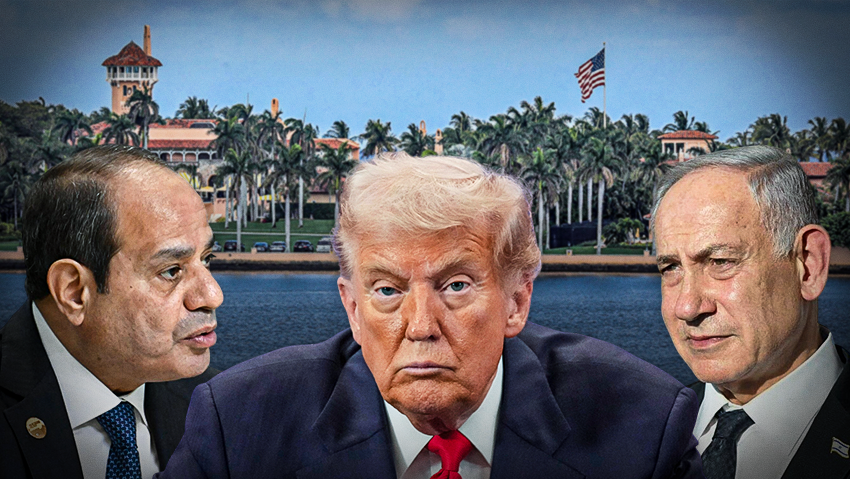
As Prime Minister Benjamin Netanyahu prepares to meet U.S. President Donald Trump at the end of the month, Washington is working behind the scenes to arrange a separate three-way meeting with Egyptian President Abdel Fattah el-Sissi.
However, Egyptian officials have conditioned el-Sissi’s participation on Israel signing a major natural gas deal involving the Leviathan offshore field, according to Israeli energy industry sources, who warn Netanyahu may agree without receiving concessions in return.
The sources said the proposed agreement is a roughly $35 billion gas deal between the Leviathan partners and Egypt, without a clear Egyptian commitment to curb weapons smuggling.
People familiar with the talks said el-Sissi is also linking the meeting to an Israeli withdrawal from Gaza’s Philadelphi Corridor, which stretches along the Egyptian border, and the Netzarim Corridor, which bisects the enclave, demands Israel opposes. Netanyahu and el-Sissi have not spoken since the start of the war in Gaza, and the Egyptian leader previously declined to invite the Israeli prime minister to a peace summit in Sharm el-Sheikh.
A source familiar with the talks criticized the dynamic, asking, “Since when does Israel hand out gifts before meetings?” The person said that if Netanyahu approves the gas deal before receiving Egyptian commitments to combat weapons smuggling and drop the demand for an Israeli withdrawal from the Philadelphi Corridor, “it would be absurd. On what basis does el-Sissi set such conditions? Israeli gas is a first-order strategic asset, and any agreement with Egypt must ensure Israel’s interests are protected.”
The person added that an agreement supplying gas to Egypt would cover roughly 20 percent of Egypt’s electricity needs and could limit Israel’s ability to export elsewhere. “Israel is giving them the whole cake and securing Egypt’s energy needs before securing its own,” the person said.
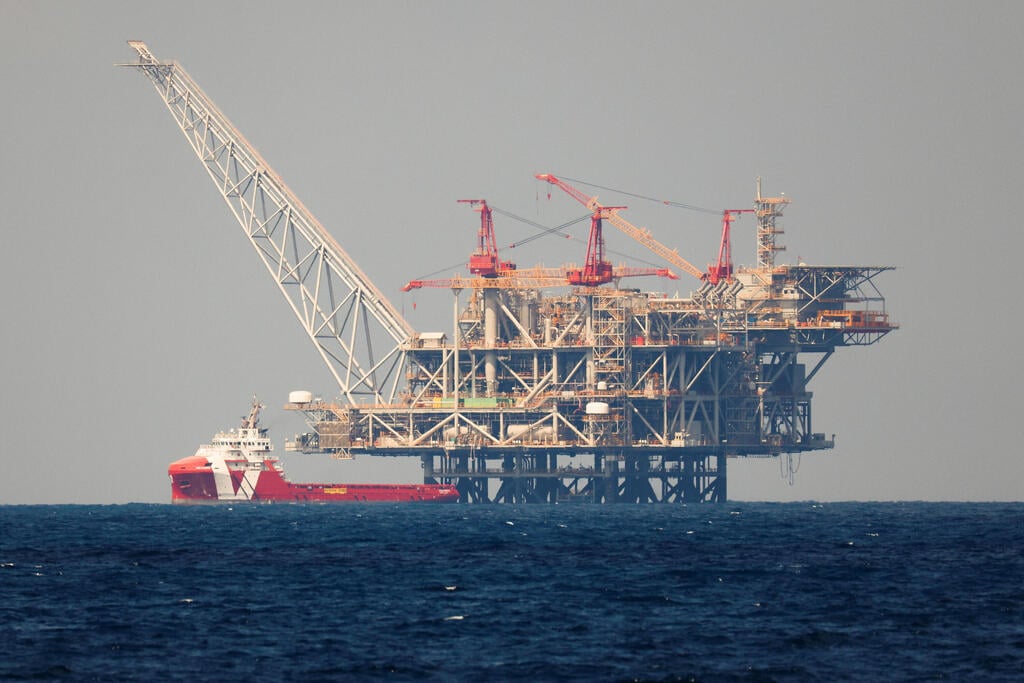
The Leviathan natural gas rig
(Photo: Reuters)
A senior Israeli official said Energy Minister Eli Cohen insists that Israel receive attractive pricing as a condition for signing the agreement with Egypt. The official said Cohen has indeed linked the Egypt deal to securing favorable domestic gas prices but added that there is “a good chance” the sides will reach understandings that allow a summit at Mar-a-Lago, since all parties have incentives to get there.
According to the official, the United States wants to strengthen regional stability and has an interest in a profitable deal for Chevron, which operates the Leviathan and Tamar fields. Israel stands to earn tens of billions of shekels in royalties from a finalized agreement, and Egypt seeks a large, stable source of gas.
“Minister Cohen is conditioning approval on guaranteed prices for the Israeli market, and there are very advanced talks to resolve this,” the official said. “Israel is not giving any gift. The deal with Egypt is at $7.4 per gas unit. The companies are the ones making the deal; the state only approves it. Israel will earn significant tax revenues.”
The senior official said Netanyahu is working to secure diplomatic gains with Egypt and that negotiations are focused on that goal. He said there is “a fairly good chance” the meeting will take place. “El-Sissi needs the gas, Trump is asking, and Israel profits from the sale. Their interests align, and the chances are reasonable. All three sides have an interest in advancing the deal,” he said.