

Unlike ordinary criminal cases heard in Israeli courts, indictments against Israelis accused of espionage and contact with a foreign agent have a different, tangible atmosphere. Defendants arrive in court, sometimes accompanied by family members. On the opposite side, however, there is no individual victim. In these cases, the injured party is the State of Israel, and the opposing bench remains empty.
Since the start of the war, dozens of Israeli citizens have been arrested on suspicion of carrying out missions for Iranian handlers. According to indictments, suspects sprayed graffiti, photographed sensitive sites in exchange for money, and in some cases even agreed to carry out assassinations of senior figures that ultimately did not take place.
Gallery
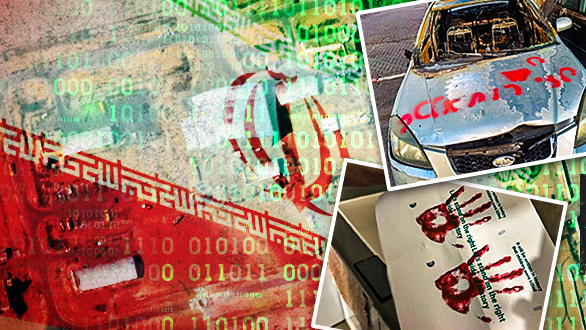
Dozens of Israelis accused of spying for Iran
(Photo: Office of the Iranian Supreme LeaderWANA (West Asia News Agency), Shuterstock, Planet Labs Inc/Handout via Reuters, Israel Police)
One of the best-known cases involved Moti (Mordechai) Maman of Ashkelon, who was convicted and sentenced to 10 years in prison after traveling to Iran and meeting hostile operatives.
Yet despite 35 indictments filed to date, involving 54 alleged Iranian spies, Maman remains the only defendant whose sentence has been handed down, following a plea deal.
In another case, that of Elimelech Stern, the first to be publicly revealed, an indictment was filed in July 2024. More than a year later, Stern, a yeshiva student from Beit Shemesh and the father of two young children, has been convicted of contact with a foreign agent, but his sentence has yet to be imposed. A hearing was held on Thursday, during which a Shin Bet agent also testified. Prosecutors are seeking a seven-year prison term.
A new sentencing framework
State prosecutors have recently formulated a new, across-the-board policy for what officials refer to as the “Iranian cases.” A security official frustrated by the prolonged proceedings said the delays are undermining deterrence.

Elimelech Stern
(Photo: Shalev Shalom)
“There needs to be harsher and faster punishment,” the official said. “If people saw that defendants immediately received 10-year sentences, that alone would deter others.”
One reason for the delays, prosecutors acknowledge, is a growing recognition that cases linked to Iran should fall under a more severe sentencing range than other offenses involving contact with a foreign agent, which carry a maximum penalty of 15 years.
According to the prosecution, these cases involve unique circumstances. Iran is at war with Israel. The contacts were established after October 7, during wartime, and in some cases even after Iran’s first missile attack on Israel. The phenomenon is expanding and becoming increasingly dangerous, prosecutors say, and must be stopped early.
After internal deliberations involving senior prosecutors, State Attorney Amit Isman issued a directive instructing prosecutors not to agree to mediation or plea deals in cases involving security offenses carried out on Iran’s behalf. The policy aims to secure harsher sentences, even though it means lengthy evidentiary trials that delay final rulings.

Vehicles allegedly set on fire by the suspect, Vladislav Victorsson
(Photo: Israel Police)
In practice, hearings have repeatedly been postponed. A hearing in Stern’s case was canceled about a month ago due to illness. On another occasion, prosecutors themselves requested a delay, citing the need to finalize a comprehensive sentencing policy due to the severity and sensitivity of the phenomenon.
‘This is a growing phenomenon’
“We cannot ignore the fact that this is a real phenomenon,” said Chief Inspector Meir Goren, commander of the explosives unit at the Lahav 433 national crime unit. “It has expanded since the war. There is hardly a week without a new arrest.”
Goren said Iranian handlers cast a wide net, sending hundreds of messages until someone responds. “At first, they mostly recruited normative people. Today, we also see suspects with criminal backgrounds, but there are still reservists and career soldiers with no prior record.”
Delays in court proceedings, he added, weaken deterrence. “That applies to all criminal cases. There are murder trials that last many years,” he said. “In 99 percent of cases, suspects know they are dealing with an Iranian entity and lower their moral barriers. They get paid, through money changers or digital currency. We warn everyone: it’s simply not worth it.”
Court backlog and judicial shortages
Despite the new prosecution policy, the cases are not expected to conclude soon. A Justice Ministry report from August 2023 found that Israel leads the world in the length of criminal proceedings. On average, a criminal case lasts about 16 months, even though full evidentiary hearings take place in only about 15 percent of cases.
Well-known cases in the Jerusalem District Court have been dragging on for years, including Prime Minister Benjamin Netanyahu’s trial, which began in January 2020, and cases dating back to 2015.

(Photo: Dado Ruvic/ Reuters)
According to the courts administration’s latest annual report, 897,000 cases were opened in 2023, while 838,000 were closed. About 60,000 cases are added to the backlog each year, which already stands at roughly 500,000 cases.
Compounding the problem, 50 judicial positions remain vacant amid tensions between Justice Minister Yariv Levin and Supreme Court President Isaac Amit, following the freeze of the Judicial Appointments Committee.
‘A disciplined, polite spy’
Stern, 21, is a married yeshiva student affiliated with the Vizhnitz Hasidic community. According to the indictment, he communicated with a Telegram profile named “Anna Elena” and was asked to carry out missions in Israel, including placing a sheep’s head at the home of Israel’s ambassador to the IAEA.
He was also instructed to hang posters in Tel Aviv, hide money in various locations, deliver packages containing severed animal heads or dolls alongside knives and threatening messages, and even burn a forest, a task he refused. Investigators said he also refused to commit murder.
At Thursday’s sentencing hearing, Jerusalem District Prosecutor Ishi Zigman said the state is seeking a seven-year sentence to reflect the seriousness of the Iranian cases. For comparison, former Energy Minister Gonen Segev, convicted in 2019 of severe espionage for Iran before the war, received an 11-year sentence.
Stern’s defense attorney, Akiva Meir, said his client cooperated fully upon arrest and handed over his phone. “He did not carry out the acts himself,” Meir said. “Once he understood the potential harm, he refused.”
Family members and acquaintances testified to Stern’s character. His teacher, Rabbi Grinberger, said “his personality was crushed,” describing him as disciplined and respectful. Another teacher called him “a diamond of a young man.”
Whether such character testimony will outweigh the prosecution’s push for harsher punishment remains to be seen, as Israel’s security establishment presses for swift sentences it hopes will finally deter others.