


The ceasefire agreement in Lebanon, announced Friday by the United States for the fifth time, does not mark the end of the campaign but moves it into a critical strategic phase, as the new rules of the game are being shaped on the ground. The IDF is deploying its forces while seizing key positions meant to deny Hezbollah the vast strategic assets the terrorist organization has built over decades in southern Lebanon with Iranian funding and guidance.
The IDF says the advance of its forces has been halted in accordance with instructions from the political leadership, but that fire has not stopped and there is no order to withdraw. The military is firmly established inside what it calls the “forward defense area,” a kind of dominant strategic strip from which it does not intend to move backward in the security zone. Despite those claims by the IDF, after another day of heavy exchanges of fire, an Israeli official said earlier that the military had been instructed to hold fire after Iran threatened to launch missiles in response to what it called ceasefire violations.
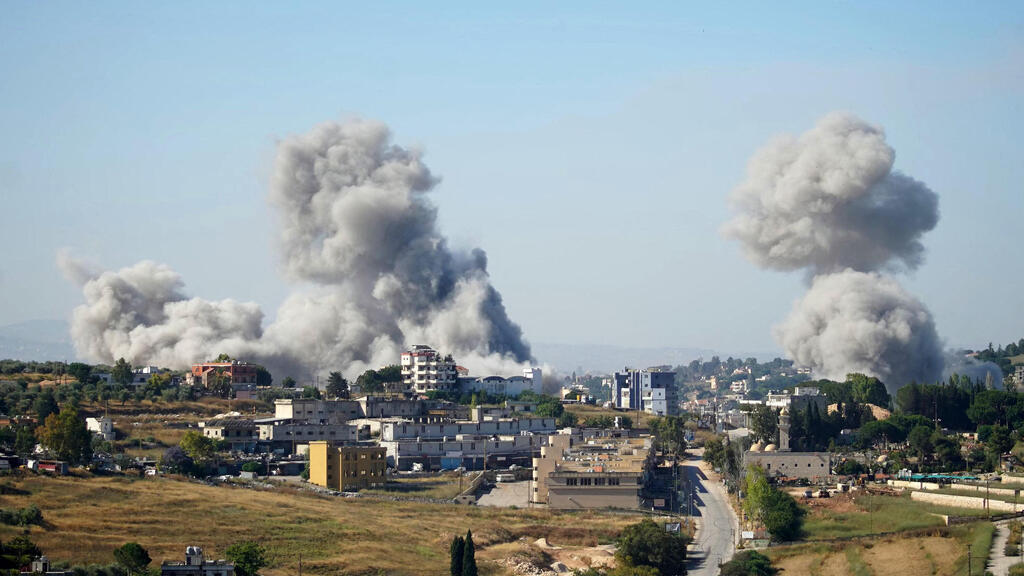
The strategic significance of holding territory in southern Lebanon is that it gives the IDF fire control around two Hezbollah centers of gravity: Nabatieh and the Tyre Valley. The operational presence of 36th Division forces in the village of Tebnit, in the Nabatieh area, and at certain points on Ali Taher Ridge creates an available, direct and immediate threat to Nabatieh, the organization’s main stronghold in the eastern sector. In the western sector, the deployment of 91st Division forces in the village of Majdal Zoun and the surrounding area gives the IDF direct fire and observation control over the Tyre Valley, another critical area where Hezbollah has built up its strength for years.
The Lebanese army question, and the trapped terrorists
At every point where the IDF is now deployed, there are developed terrorist infrastructures that threatened residents of northern Israel, even if not all of them can be used to fire rockets at Israeli communities. Destroying those assets in depth, the IDF says, is a condition for the safe return of residents to their homes. The military aims to complete the destruction of the infrastructure even under the limits of the current ceasefire, though it is possible that, as part of negotiations, responsibility for dealing with the infrastructure will be transferred to the Lebanese army.
However, the IDF is under no illusion and says the chances that the Lebanese army will genuinely act against these infrastructures are not high. In effect, at the points where the IDF is now deployed, it holds two “fists” along the borders of the yellow line, which has been reshaped to create a strategic advantage over the terrorist organization. On one hand, this creates a direct threat to Hezbollah centers while the destruction of its assets continues. On the other, it strengthens the military’s ability to defend residents of the north.
The military stresses that the deeper the IDF advances in Lebanon, the lower the level of threat. But it is also clear that the IDF is not currently seeking to maneuver deeper, but rather to maximize its achievements so far. It is also unclear for now how, or whether, the ceasefire has affected the advance of the forces, alongside the impact of the serious incidents around the village of Tebnit in recent days, in which five soldiers were killed. The IDF stresses that there was no problem with the use of firepower, which is generally employed before seizing territory to “soften the ground,” and that the forces received the support they needed.
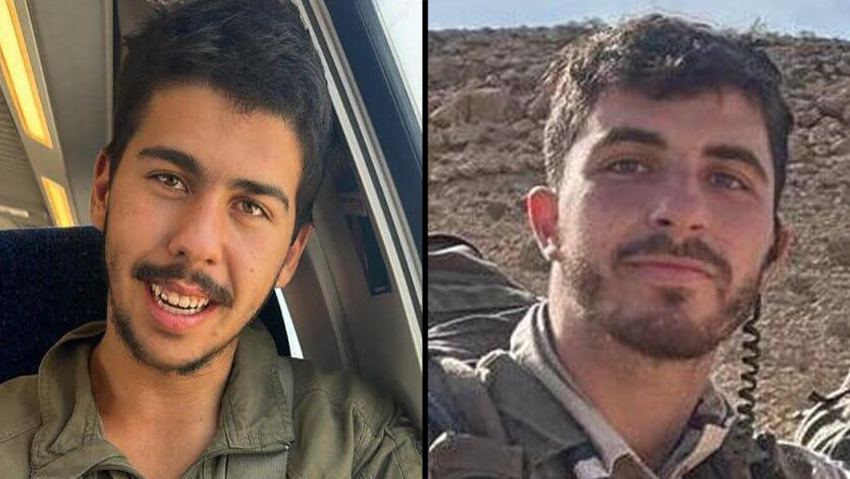
The human toll: Sgt. First Class Nir Ben Ari and Staff Sgt. Yoav Klein, who fell in Lebanon
(Photo: IDF Spokesperson)
The answer to what the ceasefire will look like in practice is being shaped on the ground in real time. A clear example is the operational drama unfolding in the village of Tebnit. IDF forces are encircling dozens of Hezbollah terrorists trapped inside a large and significant underground infrastructure stretching over more than a kilometer. The terrorists, under heavy pressure after fighting above and below ground, represent a direct test of the agreement’s implementation.
The IDF wants to deal with that infrastructure and the terrorists inside it, and says that as long as they pose a threat, they will be targeted. The military says the operation was launched to prevent direct fire at Israeli civilians, and that if the threat is removed in various ways, Israeli forces will not remain there. But as long as the threat exists, the army says, it will stay and act in a professional and focused manner.
That strategic foothold has come at a painful cost. On Saturday night, around 1:30 a.m., rockets, a mortar shell and an explosive drone struck a commando force in a staging area near the village. Sgt. First Class Nir Ben Ari, a fighter in the Maglan unit, was killed, and 13 other soldiers were wounded: two seriously, one moderately and 10 lightly. In response, the IDF launched a massive wave of strikes on the terrorist organization’s infrastructure in Nabatieh.
At the same time, the investigation continues into the tank disaster overnight Thursday into Friday, in which Lt. Col. Dor Ben Simhon, commander of the 52nd Armored Battalion, was killed along with three soldiers. On Saturday evening, it was cleared for publication that one of the three was Staff Sgt. Yoav Klein. The names of the two other soldiers have not yet been released. The investigation indicates that the incident was not a technical malfunction or an operational accident, but a clear penetration of the tank by a munition after a direct hit during the fighting. The assessment is that it was caused by an anti-tank missile or an explosive drone.
And while the forces are shaping the line of contact in southern Lebanon, attention is also focused on Iran, the main financier of the terrorist network. The defense establishment, led by the air force and Military Intelligence Directorate, is maintaining the highest level of alert and readiness for an immediate return to intense fighting, while closely monitoring the threats and political and military maneuvers Iran is trying to generate during negotiations. The military believes that every hour that passes under the current conditions can either erode the ceasefire or shape it. The IDF is making clear to the political leadership that there are points where achievements must be maximized, while also recommending that negotiations continue in order to reach understandings with the Lebanese government.