

France and Spain continued battling major wildfires Wednesday evening after a week of blazes that forced about one-third of a million people to evacuate at their peak.
Although firefighters reported growing optimism, not all the fires were under control. Spanish Prime Minister Pedro Sánchez said the next 12 hours would be “decisive” in the effort to contain a major blaze west of Madrid.
Drone footage: Widespread destruction from the massive wildfire near Bordeaux


Other southern European countries were also fighting wildfires amid another regional heat wave. In Greece, two firefighters were reported killed in a powerful blaze on the island of Crete.
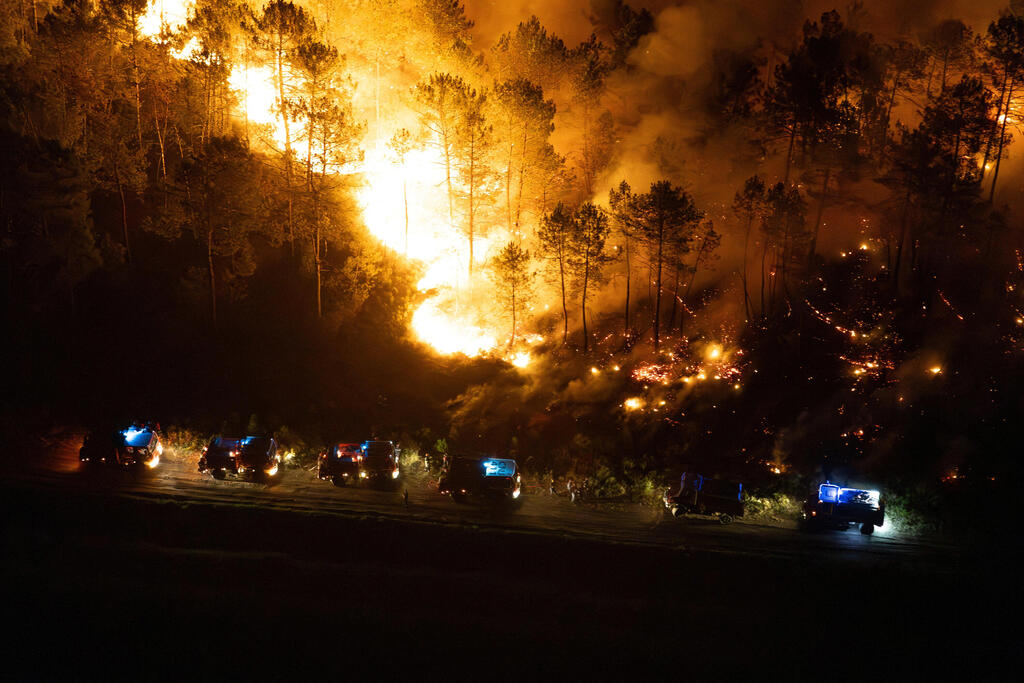
In France, the main fire was burning in the southwestern Gironde region. Firefighters brought several fronts under control over the past two days, and Bordeaux, the country’s renowned wine capital, was no longer considered at risk. Earlier this week, authorities had feared the city might also need to be evacuated.
At the height of the fire, about 220,000 residents and tourists were evacuated from the area in what was likely the largest peacetime evacuation in French history. Conditions have since improved, allowing about 60,000 people to return home.
Gallery
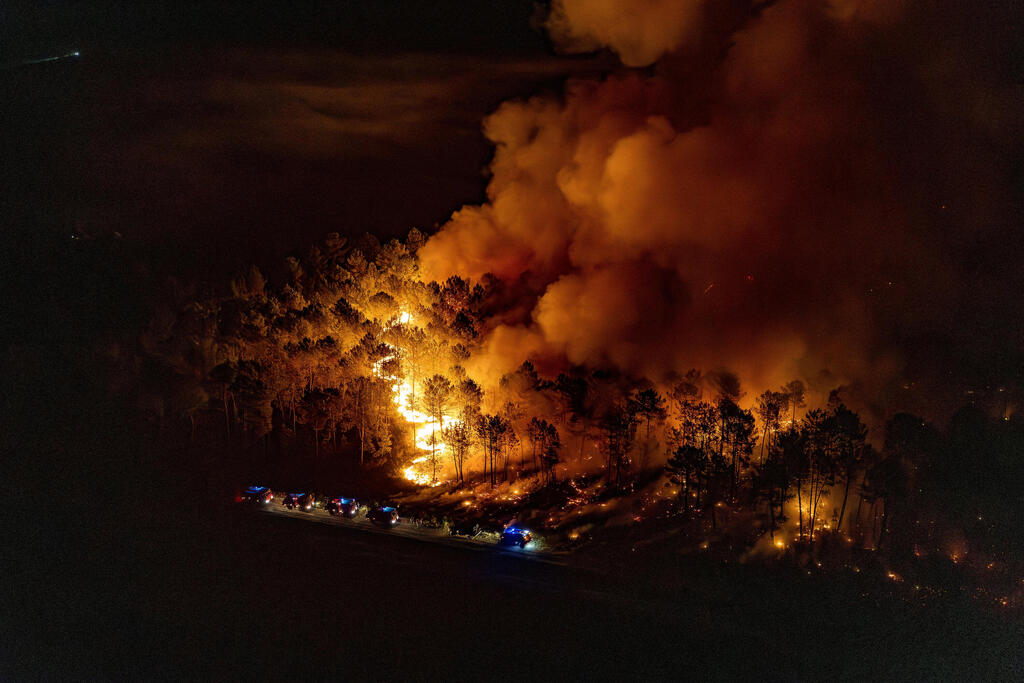
The fire continues to burn despite progress; the wildfire in the Gironde region near Bordeaux
(Photo: Benoit Vega/SDIS 33/Handout via REUTERS)
(Photo: Benoit Vega/SDIS 33/Handout via REUTERS)
(Photo: Pierre Crom/Getty Images)
(Photo: REUTERS/Yves Herman)
But the situation remained fragile. Evacuation orders were issued Tuesday night for 4,000 people in tourist areas near the Atlantic coast amid fears the fire could flare up again.
“The situation remains extremely complex. We are still not out of danger,” said Gironde prefect Sophie Brocas.
Concern grew over the past day that France’s fourth heat wave since the beginning of summer, with temperatures reaching 40°C, or 104°F, and stronger winds could fan the flames. No significant deterioration had been reported by Wednesday evening.
Firefighters hoped conditions would improve Thursday, with lower temperatures, higher humidity and possible thunderstorms forecast in the region.
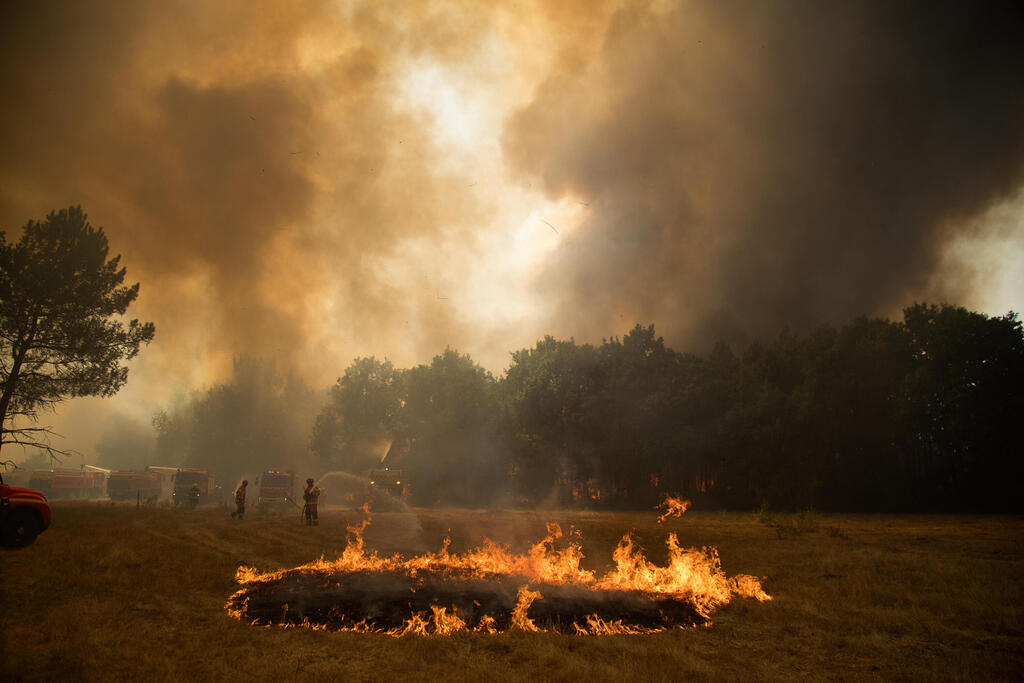
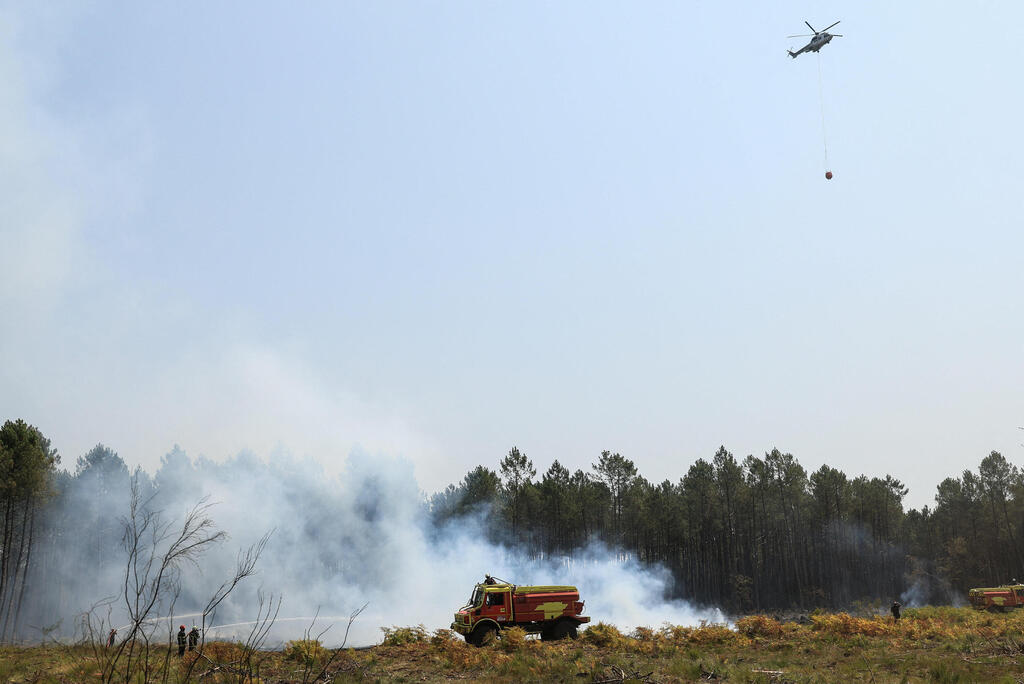
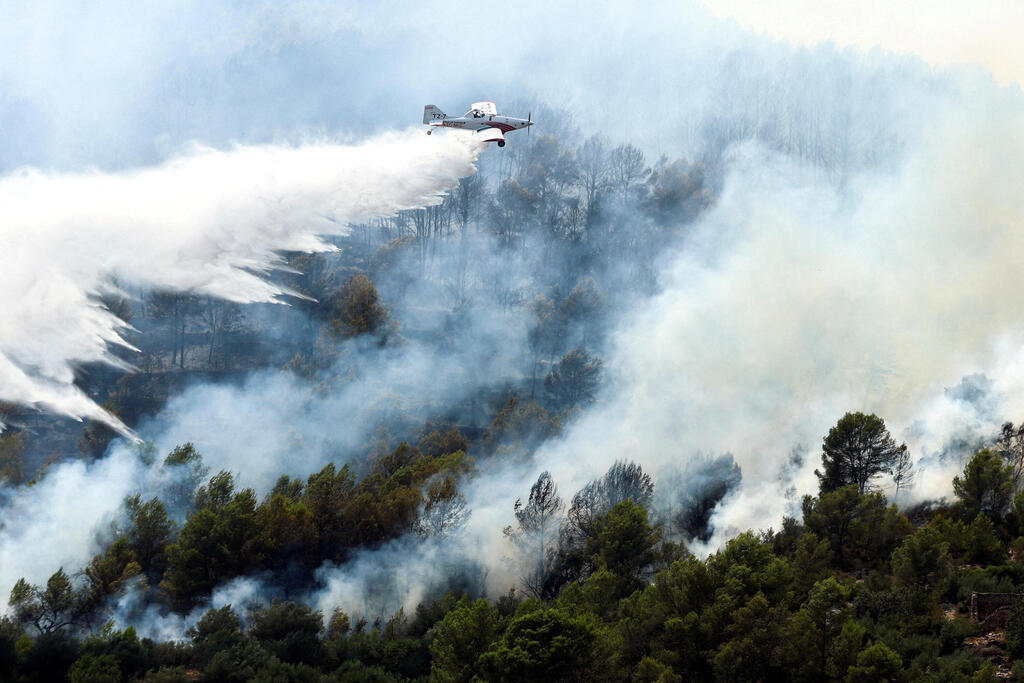
More than 2,200 firefighters were still battling the blazes in France, supported by more than 20 aircraft, including planes sent by other European countries.
“We attack quickly and forcefully at every new plume of smoke,” said Matthieu Jomain, head of the Gironde fire service.
The Gironde fire is considered one of the largest and most severe France has faced in decades. It has burned at least 420,000 dunams, about 104,000 acres.
More than 1.16 million dunams, or about 287,000 acres, have burned across France since the beginning of the year.
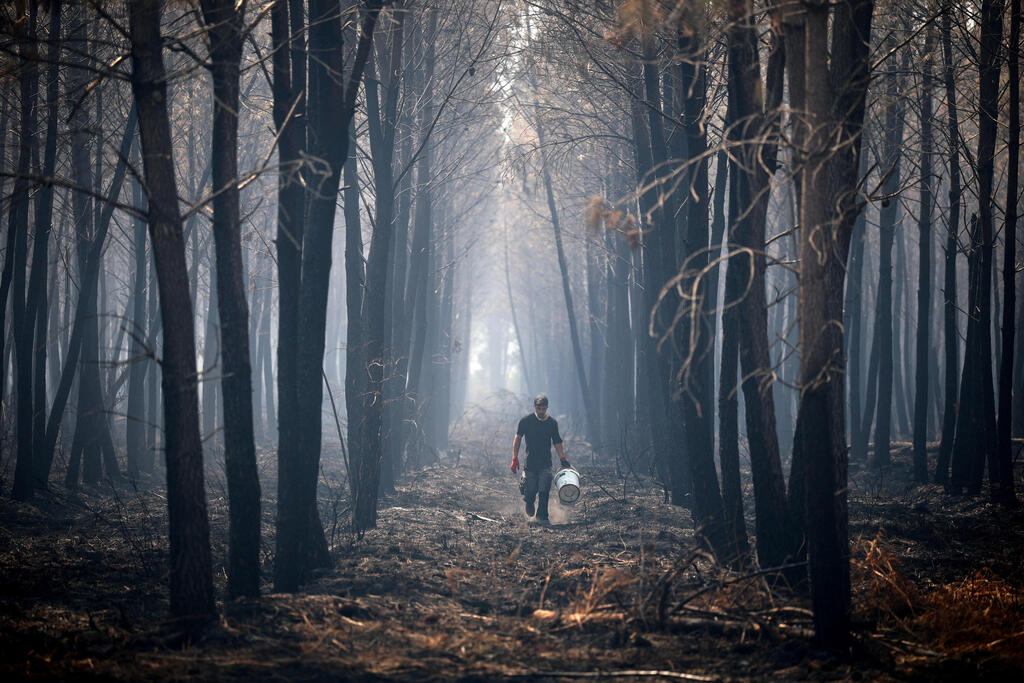
About 104,000 acres burned; destruction in southwestern France
(Photo: REUTERS/Sarah Meyssonnier)
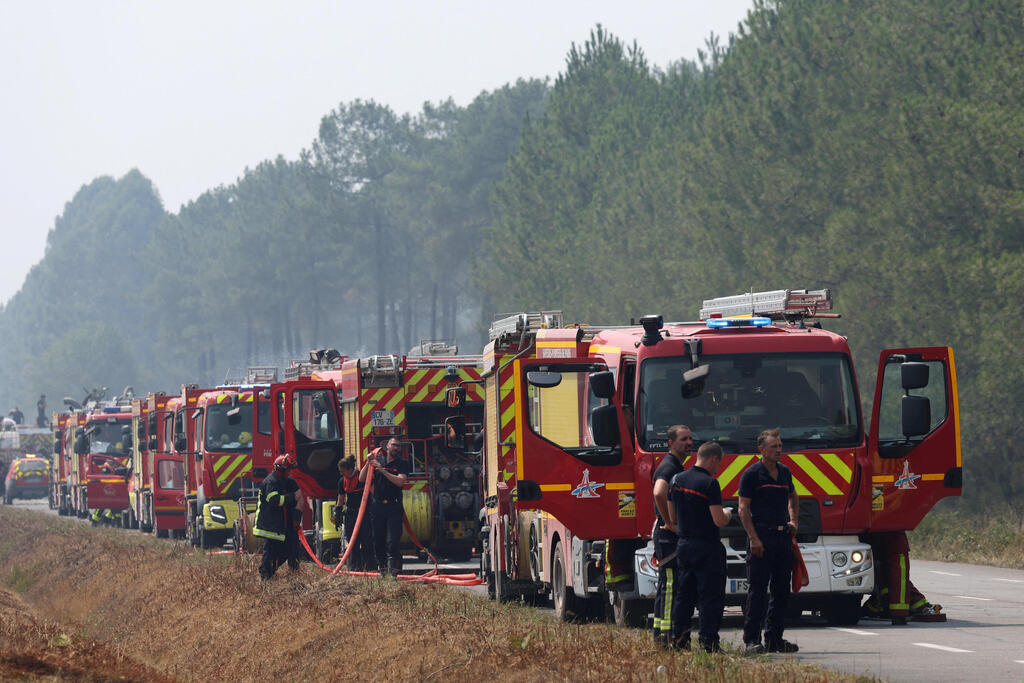
(Photo: REUTERS/Yves Herman)
The Gironde blaze, which investigators suspect may have been accidentally sparked during pruning work near a high-voltage power line, has drawn help from local residents and volunteers. Some were seen filling water tanks and wetting paths in an effort to slow the fire’s spread.
“If it is too late, at least we tried,” Hugo, 26, told the BBC. He returned from Mali to protect his mother’s home in the village of Arès and was refilling a water tank.
“Five hundred thousand dunams have already been destroyed. What will we tell our children?” he said.
Another volunteer, 23-year-old Maëlys, said: “It is terrible. This is our home, our region, our forest. This is where we grew up, where our family lives and where we live. I am very sad.”
Officials in France and across Europe have warned that the threat of major wildfires will intensify as global warming, which is being felt more acutely in Europe than on any other continent, brings more frequent heat waves, worsening drought and leaving vegetation increasingly dry.
The historic scale of the Gironde fire was underscored by a phenomenon never before documented in France: a pyrocumulonimbus, or “fire cloud.”
The phenomenon, more commonly associated with major wildfires in places such as Australia and Canada, occurs when a sufficiently intense blaze sends smoke, ash and water vapor high into the atmosphere, creating its own weather system. The resulting strong winds and lightning can intensify the fire and ignite new outbreaks.
“You can think of it like a chimney,” said David Bowman, a professor of fire science at the University of Tasmania. “The fire is at the bottom, and the smoke rises straight up the chimney into the stratosphere.”
Reuters published satellite images Wednesday of another giant fire cloud over a wildfire still burning in the Castellón area of Valencia in eastern Spain. That blaze had not yet been brought under control.
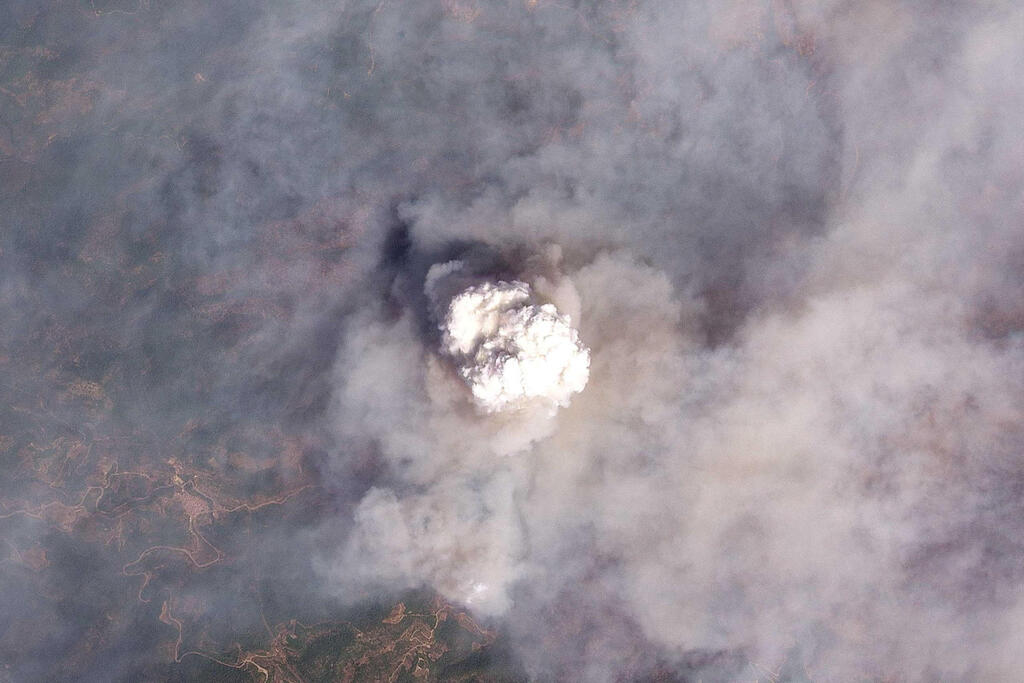
The 'fire cloud' captured by satellite over the wildfire in Castellón, eastern Spain
(Photo: 2026 Planet Labs PBC/Handout via Reuters)
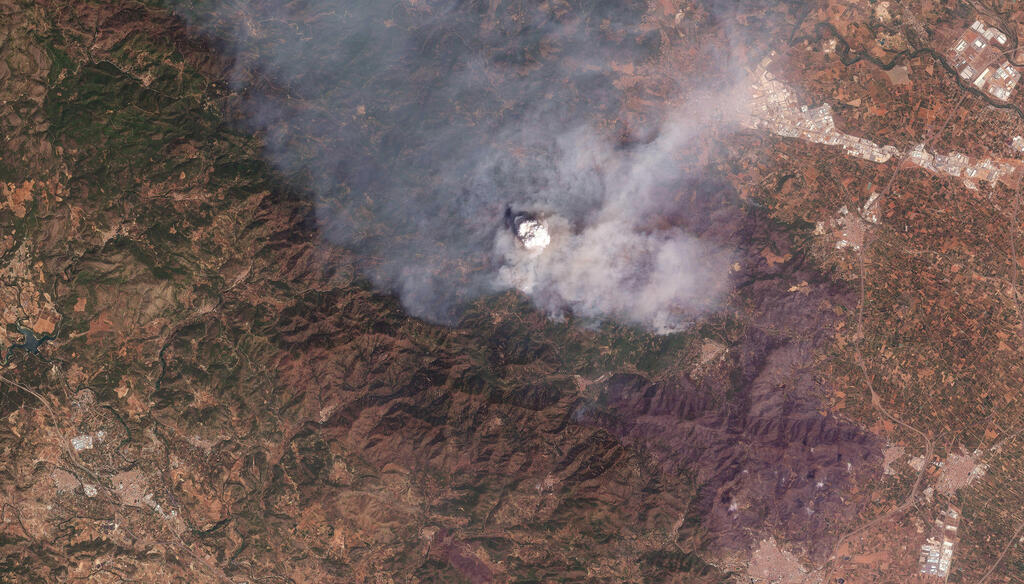
(Photo: 2026 PLANET LABS PBC/Handout via REUTERS)
(Photo: REUTERS/Pedro Nunes)
About 10,000 residents evacuated from the Castellón area had not been allowed to return home.
Progress was reported at other major fire zones in central Spain, west of Madrid and in Ávila, where evacuation orders were lifted for about 20,000 people.
The effort was not over. Sánchez said the following 12 hours would be critical, adding that conditions were improving but that extreme caution was still needed.
Interior Minister Fernando Grande-Marlaska also warned that Spain faced “three difficult days,” citing forecasts for continued high temperatures and strong winds that could reignite the flames.
A new wildfire was also reported Wednesday in the northwestern province of Zamora.
In Greece, two firefighters were killed while battling a blaze on Crete. Greek public broadcaster ERT reported that they were trapped in their vehicle while moving from one fire front to another.
The fire, near the tourist city of Rethymno, remained out of control and spread rapidly because of strong winds. Three villages were evacuated.
Wildfires were also reported on the Aegean islands of Paros and Lesbos and near the southern mainland town of Trifylia.
The European Union’s Emergency Response Coordination Center had earlier warned that Greece and Italy faced an elevated wildfire risk that would persist for several weeks.
Turkey, which recently sent two firefighting aircraft to Spain and two to France, was also battling fires across several areas, mainly in the south and west.
The Turkish newspaper Hürriyet reported that residents of at least 50 homes were evacuated in the tourist region of Antalya and that at least 10 of the houses were damaged.
The highway linking Antalya with the coastal city of Fethiye was also blocked because of the fire.
Turkish President Recep Tayyip Erdoğan said authorities were fighting 90 fires nationwide and had brought 81 of them under control.
He said 3,000 people were still working to contain blazes in Muğla, Balıkesir, Antalya and Çanakkale.
Authorities in Muğla province said about 200 residents, along with patients at a local hospital, were evacuated after a fire that began in an agricultural field spread into a nearby forest.