


Reserve battalion and brigade commanders reacted with surprise and anger to criticism from senior IDF officers following additional cuts to leave days, mental processing time and unit cohesion activities for reserve combat units.
A senior officer said he supports the political leadership’s decision to cut about 20,000 reservists this year, contrary to planning by the Operations and Planning directorates for 2026, a move that would increase the burden on those who remain.
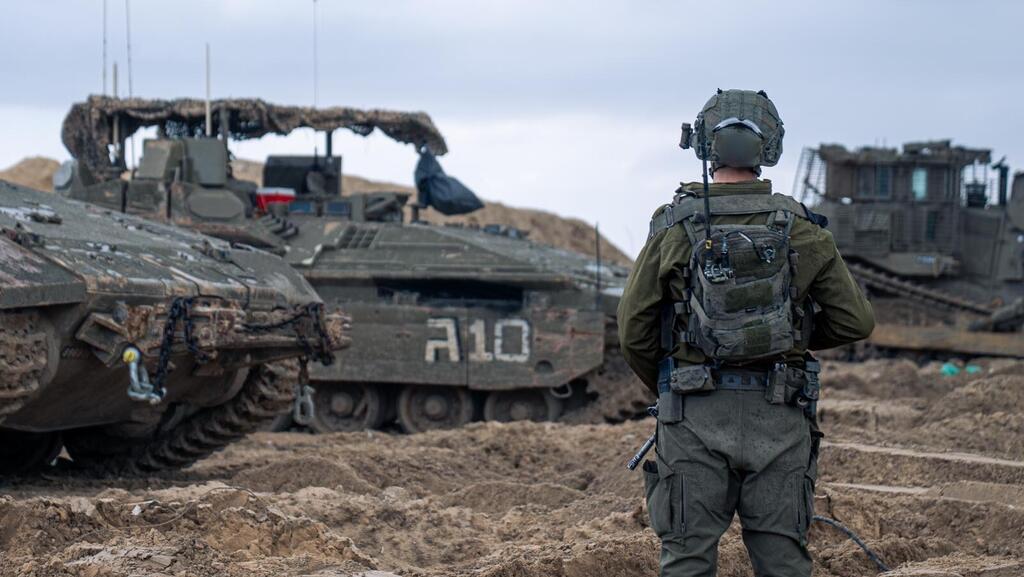
IDF forces in the Gaza Strip
(Photo: IDF Spokesperson)
“We are saving the reservists,” he said. “They are not obligated to receive a hotel stay at the end of operational duty, and the high number of reserve days during the war created improper phenomena, some even criminal, including trading reserve days, week-on, week-off arrangements, and soldiers who left their civilian jobs to work in the army. With the current cuts we will save 7 billion shekels. The battalion commanders demanded this.”
Reserve combat commanders argue that the IDF high command’s conduct led to waste and a loss of control over the phenomenon over the past two years, but say the cuts should be gradual, coordinated in advance with brigade commanders and applied first to rear units that remain “bloated” with noncombat reservists.
“Combat battalions deployed in Syria and Lebanon or along the buffer zone in Gaza should be the last to be touched,” a reserve infantry battalion commander said. “If fighters got used to week-on, week-off rotations so they could spend more time with their families, and it works for them, that should continue in 2026 as a transition year, not be cut in one stroke.”
He added that “the war ended only three months ago and could resume with new pressures and unplanned rounds. Cut reservists at headquarters in Tel Aviv and Glilot first.”
The senior officer who briefed reporters acknowledged that there are still reserve colonels whose service should be ended and headquarters that need to be streamlined. “It’s a process and we’re working on it. We also know there are reserve battalions that continue with week-on, week-off rotations,” he said.
The dispute is not over whether adjustments are needed in the postwar reality, in which the IDF maintains two to three times as many security troops across three fronts, most of them reservists, compared to prewar years. Rather, reserve commanders say the change should not be imposed as a directive from the political echelon, reportedly as a condition set by the Finance Ministry for approving the defense budget.
“They decided on a negative incentive: an immediate order, even during reserve duty or after call-up orders were already issued, to cut leave but not operational service days,” the senior officer said. “They should have kept the reserve quota at 72 days per soldier, at least until midyear, and given battalion commanders the authority to determine how much leave to maintain and how much to cut to save the army money. In return, the army could allocate reserve days for training, cohesion events or other unit needs. The high command created this bad situation during the war and blamed commanders for the problematic outcomes, and now they are blaming the battalion commanders again?”
Soldiers of the Alexandroni Brigade in Gaza, this week:
(Video: Yoav Zitun)


Maj. T., a company commander in a Southern Command reserve brigade who maneuvered for about a year and a half in the Gaza Strip, said: “We fought more than 100 days in Rafah, we were also deployed in Syria and recently restrictions were imposed that hurt the best people in this country. My company had about 100 fighters, and with the cuts I am limited to 72 soldiers at any given time. That means fighters who gave their best and sacrificed over two years of war cannot be called up, even if they want to serve.
“The army decided to move this year from week-on, week-off rotations to a 10-4 schedule” — similar to regular conscript service and not reservists with families and jobs — “and people have not yet rebuilt their personal lives. Cutting rest days is a breach of the contract the state has with us. People planned the coming months based on the length of time in their orders, and suddenly it was changed. Why treat them with such disregard? It creates financial losses because people adjusted their schedules, vacations and return to work accordingly.”
In response, the IDF said: “Contrary to the claims, clear and practical steps are being taken to reduce and ease the scope of reserve service. The 2026 operational framework was formulated with the goal of easing the burden on reservists and shortening deployments, including reducing the number of emergency call-up orders to about 40,000 per year. An average service model of about 55 days was set, based on a policy of 10 days of service and four days at home, alongside shortening preparation days to about three.”
The IDF added that field commanders have the authority to adjust processing and preparation days based on operational needs. The “mission closure” component was shortened from two days to one and includes all required elements.
Regarding battalion budgets, the IDF said a dedicated budget was transferred for use by reserve unit commanders performing operational missions in the first quarter of 2026, referred to as a “commander’s credit card.” Commanders were also given a designated toolkit for educational activities and strengthening cohesion, values and heritage in their units. As for additional allocations granted in 2025, the IDF said those were provided based on the budgetary capacity at the time and that in 2026, given current fiscal constraints, such capacity does not exist and alternatives will be considered within existing resources.