

A senior German pro-Israel figure who was the target of an alleged Iranian assassination plot says he may owe his life to the Mossad, accusing Germany’s own intelligence services of failing to detect the threat.
Volker Beck, head of the Germany-Israel Friendship Society and a former Green Party lawmaker, said in an interview with the German Jewish newspaper Juedische Allgemeine that Israeli and other foreign intelligence agencies helped uncover the plot against him, while Germany’s services were “blind.”
Gallery
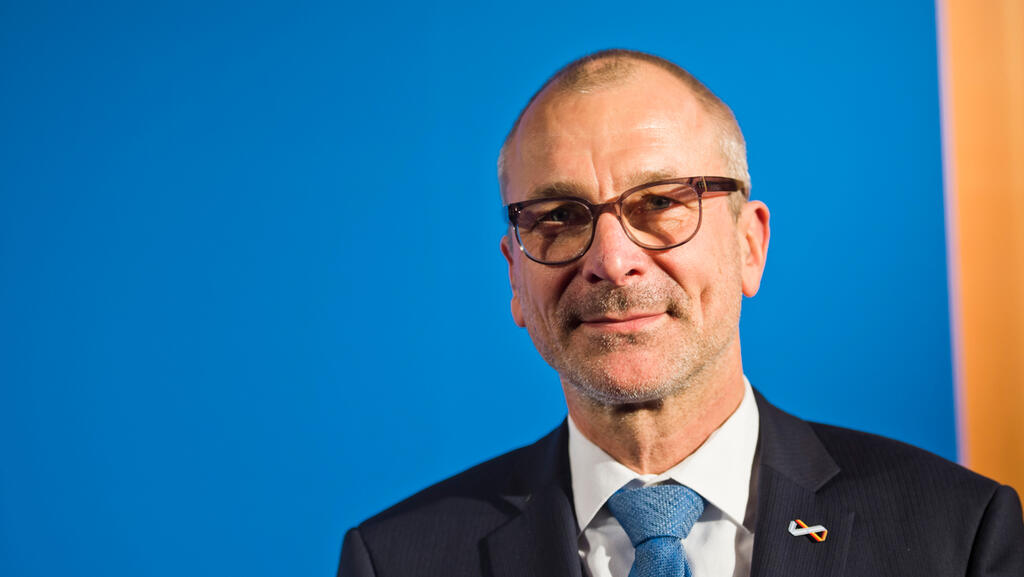
Volker Beck, head of the Germany-Israel Friendship Society and a former Green Party lawmaker
(Photo: Getty Images)
“Without the Mossad, I would probably have been dead for some time,” Beck said. “Our intelligence services were blind.”
According to Beck, German authorities later advised him not to leave his home without police protection. Even ordinary daily routines became security operations.
“Walking the dog was only possible in an armored vehicle,” he said. “I drastically reduced my meetings outside the house.”
The alleged plot was first reported last week by the German magazine Der Spiegel. According to the report, intelligence agencies around the world, including Israel’s Mossad, tracked Ali S., an alleged Quds Force operative who was suspected of planning to assassinate Beck and the president of the Central Council of Jews in Germany.
Ali S. was allegedly asked in January 2025 to help monitor figures connected to the Jewish community. A month later, he traveled by bus to Berlin and made his first report from there to his handlers. He later flew to Iran through Turkey and stayed there for two and a half months.
Reports from foreign intelligence agencies, including the Mossad, placed Ali S. on the radar. The information was passed to Danish intelligence, which opened a surveillance operation that eventually led to his arrest.
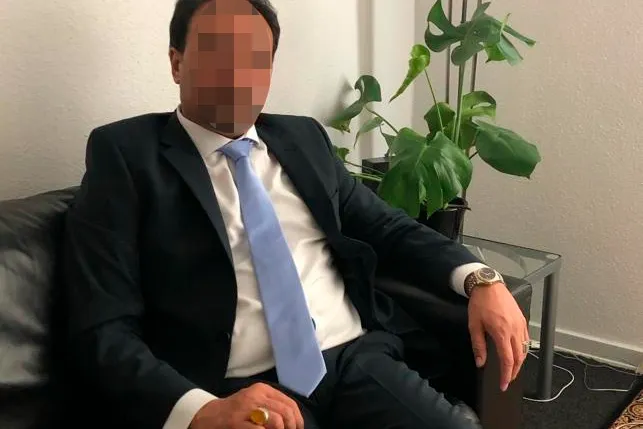
Ali S., the assassin sent by Iran
Beck said he was first informed of the concrete threat in late May or early June 2025.
“It must have been at the end of May or the beginning of June 2025,” he recalled. “On a Friday morning, state security called me and asked to arrange a meeting. During that meeting, I was told there was a concrete threat against me personally.”
In the hours and days that followed, security measures around him were tightened again and again.
“In such a situation, you cannot just go for coffee, go to the movies, or meet friends or acquaintances,” Beck said.
He described the loss of normal life as one of the most difficult parts of the experience.
“When six to 10 security personnel have to be mobilized for every leisure activity, you think twice,” he said. “That period still haunts me. In the end, you roam around your apartment like a tiger in a cage because you hardly have any real, spontaneous contact with other people. Nothing is normal anymore.”
Beck also criticized what he described as the lack of public outrage in Germany after the alleged plot was exposed.
“The targets of the attacks were exclusively Jewish and Zionist,” he said. “Apart from the Springer publishing house, there was no public outrage from the media or politicians.”
He said the German magazine Ruhrbarone had summarized the situation well: Victims of antisemitic threats and violence are left in silence.
“If these had been Islamist terrorists planning, for example, an attack on a Christmas market, the outrage would have been widespread, and above all, routine,” Beck said. “It is that simple, and that sad.”
Asked how Germany should respond, Beck said Berlin must take a harder line against Iranian activity on German soil.
“We have long known that Iran repeatedly plans attacks abroad against Jewish targets, opposition figures and even friends of Israel,” he said. “Since the attack at the Mykonos restaurant in Berlin in 1992, in which four Iranian opposition figures were shot dead, it has been clear how Iran treats its opponents. So far, there have been no consequences. That must change.”
Beck said the first step should be a drastic reduction in the activity of the Iranian Embassy in Berlin.
“The fewer people there are there, the fewer resources the Iranian regime has on the ground to plan attacks,” he said. “Of course, it will not stop just because its staff is reduced. But then it will have to look for other methods, more complicated and easier to monitor.”
He also warned that the broader protection of Jewish life in Germany remains inadequate.
“Hostility and attacks against Jews are only one side of the coin,” Beck said. “The other side is how non-Jews respond to them.”
He said Germany must decide whether it will stand openly with Jews when they are threatened, or leave them with the message that their danger is theirs alone.
“Either we succeed in conveying the feeling that we stand with Jews when they are attacked, or the message remains: Too bad for you, but it does not affect us,” he said.
Beck added that some Jews who leave Germany for Israel may not feel physically safer there, especially after months of rocket attacks that have forced people into shelters repeatedly. But he said there is one crucial difference.
“In Israel, they are not alone in their insecurity,” he said. “That is a decisive difference.”
The task of German society and the German state, Beck said, is to give Jews in Germany the same sense that they are not facing the threat alone.
“The threat does not affect everyone equally,” he said. “But society can stand against it together, or not. Germany has a choice.”