

The figures who appeared on television screens on June 13, 2025 wore helmets fitted with night-vision equipment and were busy installing some kind of system lying at their feet. In the black-and-white video supplied by the thermal camera, they looked for all the world like IDF soldiers. But the studio report stated that this was footage of Mossad personnel operating several hours earlier somewhere on Iranian soil as part of the surprise opening strike of Operation Rising Lion.
Now, based on reports in the international media, it can be said that these were not blue-and-white Mossad fighters but rather a team of Iranian agents trained in Israel, who returned to their country, resumed their ordinary lives as civilians and waited for their mission.
Gallery
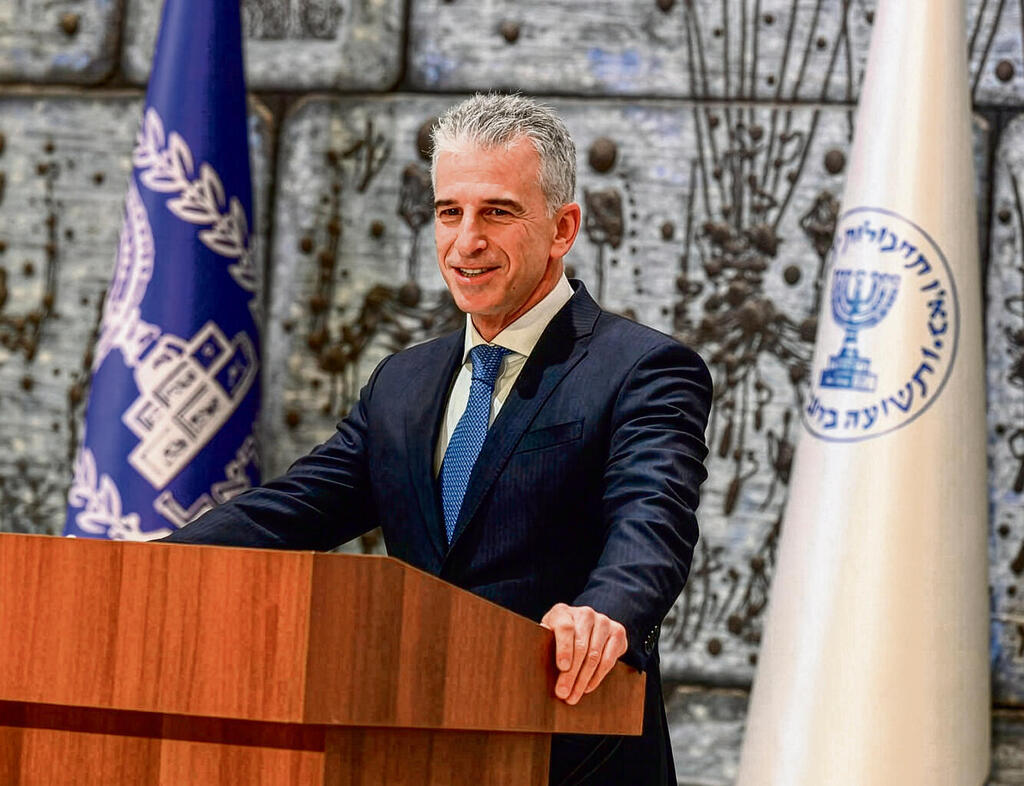
Mossad chief David Barnea watched the events unfolding in Iran that night from the command bunker
(Photo: Chaim Tzach)
They did not have to wait long.
In spring 2025, as part of preparations for the operation, a joint planning group of the Mossad and the Israeli Air Force (IAF) decided that this team would neutralize an Iranian air defense installation as part of the effort intended to achieve aerial freedom of action over Tehran.
At the next stage, the head of the agent team in Iran received a message through encrypted covert communications that he and his men would soon be activated to launch a missile at a critical target in the area. For fear of information leaks, and also for technical reasons, they were told that they would receive the target’s coordinates and the place and timing of their deployment in the field shortly before the operation.
In the meantime, personal equipment, weapons and mission-tailored combat gear were sent to them through concealed routes, including missiles, drones and warheads that had been dismantled into small components and hidden inside objects that would not arouse suspicion. The team members learned how to assemble them during their training in Israel.
Team of Iranian agents trained in Israel, who returned to their country, resumed their ordinary lives as civilians and waited for their mission
(Video: Mossad)


These were not the only agents operating on behalf of the Mossad that night. There were other agents assigned to different missions. For example, the one who helped the IAF "decapitate" the entire senior command of the Revolutionary Guards’ Aerospace Force. Or teams of anti-regime Iranian civilians who, that same night, worked to paralyze components within the Revolutionary Guards’ air defense and ballistic missile arrays in the Tehran region and western Iran.
Especially critical was the synchronization between the launches carried out by the agent teams on the ground and the flight paths of the IAF's aircraft and the waves of firepower they unleashed. There were several malfunctions, but the operation "worked like a clock," as a former senior Mossad official familiar with the events of that night recently recounted.
Mossad chief David Barnea watched the events unfolding in Iran that night from the command bunker at the Kirya together with Prime Minister Benjamin Netanyahu and IDF Chief of Staff Eyal Zamir.
According to people who were there, he initially appeared tense: he spoke little, quietly and remained highly businesslike.
But once it became apparent that the surprise opening strike was achieving its ambitious objectives, and when he saw on the video screens the Iranian agent teams operating properly, he was seen smiling — a lot.
Barnea had good reason to be satisfied.
That night he received final confirmation and validation of his ambitious vision for upgrading the Mossad’s operational and structural functions.
In Rising Lion, the Mossad activated for the first time during wartime a covert combat arm made up of non-Israeli agents that operated before and during the operation in cooperation with and alongside the IDF, carrying out intelligence missions for Military Intelligence and operational missions for the IAF in quantities and on a scale that had strategic impact.
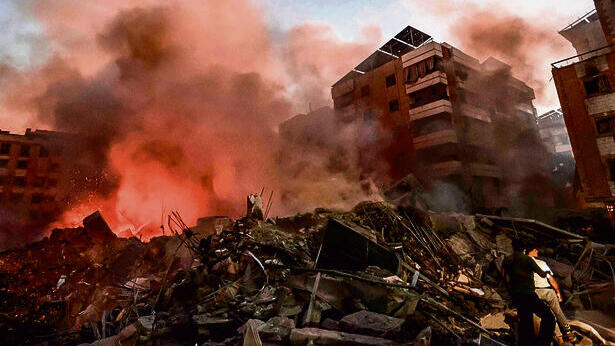
Nasrallah's assassination. Lebanese Mossad agents operated under fire
(Photo: AFP)
And no less important: Barnea proved that the agents he recruited could be trusted.
Although at least some of them knew the operation was about to be launched at the precise time it was carried out and knew its general framework, the secret did not leak, and the IDF succeeded in delivering the opening strike with complete surprise without the Mossad risking even one of its own personnel on Iranian soil.
Four division heads
The Mossad’s performance in the opening strike of Rising Lion and in the operations that preceded it in Iran and Lebanon demonstrated just how necessary and justified the reform Barnea had led since entering office about five years ago really was.
Until then, the "Institute for Intelligence and Special Operations" — its official name — operated mainly during periods between wars and dealt with the fields assigned to it by successive prime ministers, to whom the Mossad reports directly.
Those fields included collecting human intelligence beyond Israel’s borders, counterterrorism abroad, targeted disruption of enemy civilian and military targets, sabotaging Iran’s nuclear weapons program, secret diplomacy, assistance to IDF special operations and helping protect Jewish communities.
A great deal of intelligence work and pinpoint surgical operations, some of them imagination-stirring, whose executors were mainly Israeli Mossad personnel and fighters operating foreign agents.
Some of those operations, particularly within the effort to disrupt Iran’s nuclear and missile programs — for example the assassination of Mohsen Fakhrizadeh, "the father of the Iranian nuclear bomb," which was attributed to Israel — earned the Mossad a global reputation among counterparts in foreign intelligence services and a deterrent image across the region.
But for Barnea, this was not enough.
As the son of Holocaust survivor parents, as the father of four children currently serving in the IDF and as head of the organization responsible for the "Iran file," he views Iran’s military nuclear program as an existential threat to the State of Israel and its citizens, and believes that as Mossad chief he bears a personal and national duty to eliminate it entirely.
On more than one occasion, in closed discussions and in public, Barnea was heard declaring emphatically: "Iran will not have nuclear weapons — not on my watch and not afterward."
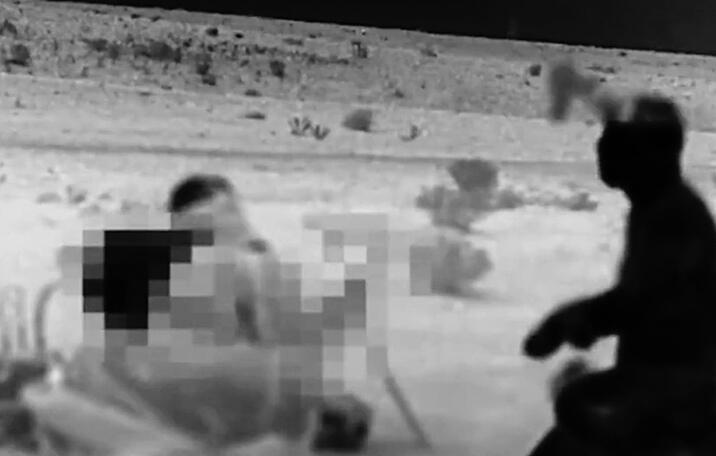
Mossad agents on Iranian soil Barnea watched them from the bunker in the Kiryat
This binding declaration stood out against the backdrop of the recognition within Israel’s defense and political establishment that in recent years Iran has not only failed to halt its nuclear program but has accelerated it, along with its ballistic missile program, with the declared aim of destroying Israel.
The intelligence, diplomatic and operational efforts invested over the years by Israel and international actors — going back to the tenure of the late Meir Dagan as Mossad chief — succeeded only in disrupting and delaying Iran’s nuclear weapons program.
That should not be dismissed lightly: delaying and disrupting a nuclear program for more than 25 years is no minor achievement, mainly by the Mossad.
But the existential threat to Israel only intensified.
And indeed, by spring 2025, Iran was only months away from the capability to produce its first nuclear device, while in the midst of a program to manufacture thousands of ballistic missiles which, if they landed in Israel’s rear areas, could have a destructive effect comparable to that of nuclear weapons.
Therefore, there was an urgent need to stop them through Operation Rising Lion and the Roaring Lion war.
People who worked alongside Barnea say that already upon taking office in June 2021, he was convinced that the Mossad could do much more and achieve incomparably more effective results in the struggle to stop the destruction plans of the ayatollah regime and its proxies, chiefly Hezbollah.
For that to happen, the Mossad needed to focus on three efforts:
- Maximizing the use of cyber, computing and cutting-edge technological capabilities.
- Building technological and human capabilities that would enable it to carry out, simultaneously, a large number of operations in different arenas and against different targets — usually in cooperation with the IDF, but also without it.
- Adapting the methods of operation of Mossad personnel, agents and fighters to a "working environment" in which the enemy uses biometric technologies such as facial recognition to expose their identities. This applied mainly to Israeli operatives working in target countries.
The Mabhouh assassination was the fault line. In January 2010, during Meir Dagan’s tenure, the Mossad dispatched more than 20 operatives to assassinate Mahmoud al-Mabhouh — a Palestinian involved in the murder of Israelis and a senior liaison in the network that smuggled weapons and money from Iran to Hamas in Gaza.
The mission was carried out successfully, but shortly afterward Dubai’s police chief managed, through biometric technologies and data cross-referencing, to expose the assumed identities — of real men and women holding citizenship in various Western countries — that the operatives had used to enter Dubai.
The countries whose passports had been forged demanded explanations and threatened sanctions.
None of the operatives was captured, but their images were published worldwide.
After that incident, it became clear that the era in which Israeli Mossad fighters could move around and perform missions while changing identities like chameleons had come to an end.
In June 2021, after brainstorming sessions, emotionally charged discussions and resignation threats from senior officials, Barnea decided on what he called "the reform."
He split the "Tzomet" division, whose mission had been recruiting and handling agents to obtain human intelligence, into three divisions.
The new "Tzomet," whose mission was changed to recruiting agents on a broad scale and collecting human intelligence for operations.
The old division had recruited and handled agents and sources, usually through personal contact and meetings with the collection officers — effectively the handlers who run agents.
The shift from extensive reliance on Israeli target-country operatives for missions in hostile territory to the activation of foreign agent-fighters was nicknamed by some Mossad personnel "Barnea’s biometric revolution."

The operation involving the booby-trapped pagers in September 2024
Its expression in the field is dramatic.
For example, in the operation to steal Iran’s nuclear archive from the heart of Tehran in early 2018, dozens of Israeli Mossad operatives and only a small single-digit number of Iranian agents took part.
In the opening strike of Operation Rising Lion, seven years later, the Mossad operated through local agents.
The second division is known as the operational division and is responsible for agent operations "that end with something exploding," in the words of a Mossad woman.
If foreign media reports are accurate, then the assassination of Ismail Haniyeh about two years ago at the Revolutionary Guards’ guesthouse in the heart of Tehran was managed by this division.
The third division is responsible for creating highly complex operations of strategic significance.
For example, the operation involving the booby-trapped pagers in September 2024, during which thousands of Hezbollah operatives were injured within seconds.
But most of the operations carried out by this division did not receive publicity and will not receive publicity.
The Technology Directorate was also split anew into three separate divisions: a cyber division; a digital division — including cloud computing, artificial intelligence and management of penetrations into data repositories and another division responsible for developing and manufacturing technological means for Mossad operations.
The three divisions were intended to serve the Mossad’s own intelligence collection missions and operational activities, but capabilities accumulated within them that, according to a source familiar with events inside the Technology Directorate, "exist in no other intelligence service, including the CIA."
The Mossad cyber division, for example, possesses capabilities that Unit 8200 of Military Intelligence does not have, and the two complement one another.
The splitting of major divisions and redistribution of responsibilities caused an organizational and personal earthquake inside the Mossad.
Although Barnea consulted, listened and tried to persuade, four division chiefs resigned. Barnea accepted their resignations, but despite the criticism continued with the reform and implemented his plans.
Within the defense establishment, especially inside the IDF, considerable criticism has been voiced regarding the organizational changes, chiefly over the absence of the senior officials who resigned.
His management style is businesslike and open. No drama, no shouting and no banging on the table. He is not afraid to argue with subordinates or to admit mistakes when necessary.
When internal surveys revealed complaints among employees — usually at junior ranks — that they did not know enough about what was happening inside the organization and about its operations, Barnea established an internal communications unit intended to share information with them, naturally within compartmentalization limits.
He also encouraged employees at all ranks and in all divisions to send him emails directly about matters they regarded as exceptionally important.
At the height of the judicial overhaul crisis, Barnea issued clear instructions explaining how, when and under what conditions Mossad personnel could take part in protests or demonstrations against it.
Barnea also managed his relationship with Netanyahu without drama or public crises. One crisis that did receive publicity concerned the appointment of Major General Roman Gofman as his successor.
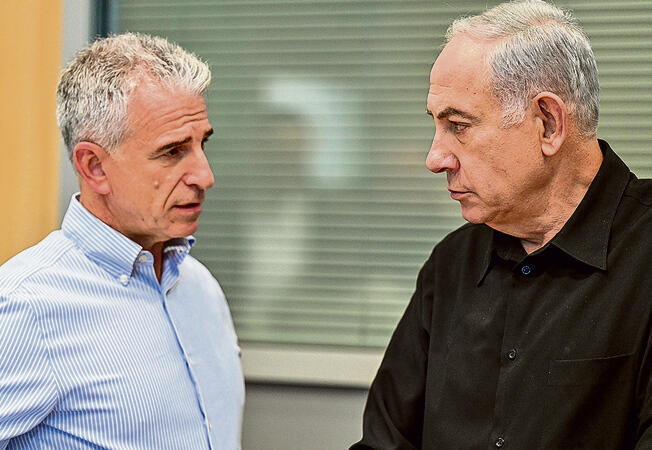
Barnea and Netanyahu
(Photo: Kobi Gideon)
Barnea proposed three candidates, all of them his deputies, and recommended that one of them be appointed. When Netanyahu decided to appoint Gofman, his military secretary, Barnea did not hesitate to express his opposition directly to him.
The Mossad chief reports directly to the prime minister, but whereas the Shin Bet chief is subject to a law regulating what he and his organization may and may not do, the Mossad has no such law.
That could create an opening for exploitation of the Mossad’s capabilities and prestige by the prime minister for political purposes, as Netanyahu did, for example, when he publicly revealed the operation to steal Iran’s nuclear archive.
As far as is known, that did not happen during Barnea’s tenure.
Inside the Mossad they say that between him and Netanyahu — who appointed him to the post — relations of trust and mutual respect prevail. Barnea, like Netanyahu, believes that the Joint Comprehensive Plan of Action (JCPOA) agreement signed by the United States and Iran during President Obama’s term brought Iran closer to nuclear weapons. He therefore welcomed President Trump’s withdrawal from the agreement.
The military thought differently, which led to a heated dispute between Barnea and then-Military Intelligence chief Aharon Haliva.
There were people in the military who believed Barnea was trying to please Netanyahu, especially around hostage release deals. This despite the fact that the Mossad chief was the driving force behind the first deal.
At the same time, Barnea did not hesitate to confront two prime ministers — Netanyahu and Naftali Bennett — regarding Qatari aid to Hamas. Barnea warned each of them separately that the funds Qatar transferred every month, ostensibly to pay salaries to Hamas government clerks, were in reality financing Hamas’ military buildup — the buildup that ultimately enabled the October 7 attack.
Opening the plug
Even while serving as deputy to Yossi Cohen, Barnea was troubled by the fact that Iran was managing to bury its nuclear facilities and ballistic missile sites deep beneath layers of rock in mountainous regions, giving them near-total immunity from airstrikes. Even American bombs, weighing more than 13 tons and dropped from B2 bombers, cannot penetrate rock thicker than 60 meters, and it takes at least three such bombs dropped in precise sequence to reach uranium enrichment halls.
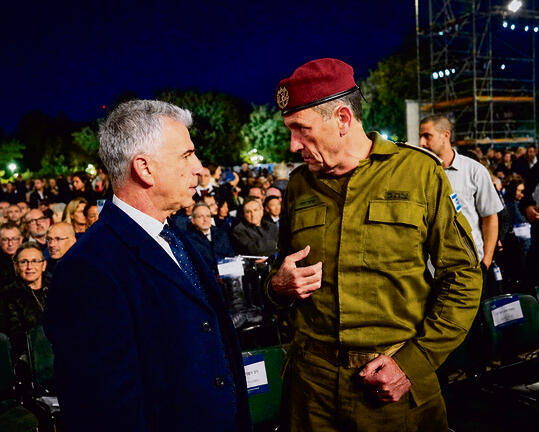
David Barnea former IDF chief Herzi Halevi
(Photo: IDF Spokesperson)
When the IDF went into Operation With All His Might, it had no ability to destroy the thousands of centrifuges spinning and enriching uranium at the Fordow facility. In Operation Midnight Hammer, the Americans succeeded in the mission, but the Iranians proved they could dig even deeper, in ways that would make even American bunker-buster bombs ineffective. They even dug such a tunnel in the mountains near the Natanz enrichment site.
It is possible to “plug” tunnels with airstrikes, but their contents remain intact and the “plug” can be reopened. Therefore, a capability is also needed for a surprise ground assault on Iran’s nuclear and missile facilities. But such an operation, more than 1,500 km from Israel, would require thousands of IDF soldiers and tons of equipment and explosives, would last a long time and could end in heavy casualties and severe defeat. A US ground operation in Iran is also almost out of the question for similar reasons. That is why Trump insists that the Iranians voluntarily remove, as part of a diplomatic agreement, the highly enriched uranium currently buried in Fordow, Natanz and Isfahan.
For Barnea as Mossad chief, according to people who worked with him, it was already clear before October 7 that the IDF had no ability to deal with Fordow from the air and no other viable operational plan to destroy the massive enrichment site under the mountain south of Qom. But as someone who previously headed the Mossad’s “Tzomet” division, whose personnel recruit and run agents, and as an intelligence officer who handled agents for decades, Barnea believed that with a large number of trained and well-equipped covert combat teams operating by surprise inside Iran in coordination with the IDF, it would be possible to overcome even the underground “protected spaces” the Iranians had built, including Fordow.
On the basis of this operational concept, the Mossad planned an operation to neutralize Fordow, whose name is still referred to only in initials, and for two years built, together with the IDF, the capabilities required to execute it. But when the plan was presented to Defense Minister Yoav Gallant, he expressed doubts about its feasibility and appointed a committee to examine it. The conclusions of the committee, headed by former IDF chief of staff and defense minister Shaul Mofaz, were not positive. Another committee, headed by former national security adviser Professor Yaakov Nagel, also reviewing the plan on behalf of the prime minister, did not reach decisive conclusions.
Shortly afterward, the horrific massacre took place and the IDF entered the war known as Swords of Iron. In these circumstances, with all the army’s strength and capabilities focused on fighting on four fronts, Barnea decided, together with senior Mossad officials, to freeze preparations for the Fordow operation. Later, Chief of Staff Herzi Halevi would claim that Barnea did not inform him of the decision, and that the IDF therefore continued gathering intelligence and preparing for the operation. The State of Israel invested billions in preparations, and when Barnea cancelled it, the General Staff was stunned. Israel lost what was supposed to be a “game changer” against Iran, and this is the source of Halevi’s anger.
Barnea’s camp rejects the claims. But the dispute added another layer to the strained relationship between the Mossad and Military Intelligence during the period of Halevi as chief of staff and Major General Aharon Haliva as head of Military Intelligence, and between them and Barnea.
Close associates of Barnea say the tension stems from differences in character and professional worldview.
Barnea, who preferred offensive initiative, opposed the containment approach that characterized the IDF in general and in Lebanon in particular, even during the tenure of Aviv Kochavi as chief of staff. (The Mossad operates both intelligence and operationally in the Lebanese arena, unlike the Palestinian arena, which is under the responsibility of the Shin Bet and the IDF.) Barnea believed Israel should strike and destroy the Hezbollah outpost established in Israeli-controlled territory in Mount Dov, and after the attack at Megiddo Junction carried out by Hezbollah operatives, he demanded a forceful response that would hurt Hassan Nasrallah.
Kochavi as chief of staff and Benny Gantz as defense minister did not adopt Barnea’s aggressive approach, but their relationship with him was based on mutual respect and trust. Herzi Halevi, by contrast, saw Barnea’s operational initiatives presented to the prime minister as interference and overstepping authority, especially while he was making enormous efforts to rebuild the IDF after October 7.
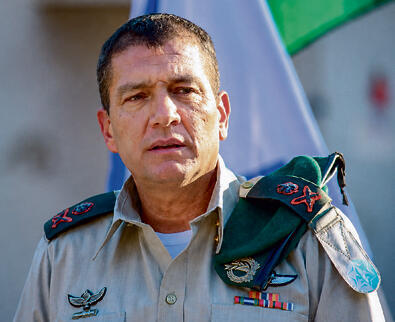
Aharon Haliva
(Photo: IDF Spokesperson)
This was the case, for example, in August 2024, when Barnea sent a letter to the prime minister proposing to shift the IDF’s main effort from Gaza to the Lebanese front. A few weeks later, when there was concern that Hezbollah, with Iranian assistance, would discover its booby-trapped pagers, Barnea demanded activating them in order not to lose the ability to simultaneously hit hundreds of senior operatives carrying them. The activation was to be carried out by the IDF, but Halevi opposed the timing, arguing it should only be done as part of a broader air and ground offensive, the Northern Arrows operation, which the IDF was preparing in order to surprise Hezbollah and severely damage its ability to invade the Galilee and fire tens of thousands of rockets and missiles at Israel’s rear. Halevi was even quoted calling the pagers “a toy” unworthy of dictating the timing of a major military campaign. In the end, that is exactly what happened. Netanyahu decided to activate the pagers within a day, and shortly afterward the IDF launched Northern Arrows.
But the dispute between Halevi and Barnea did not subside. It reignited, this time as a struggle over credit, around the assassination of Hassan Nasrallah. Barnea pushed Netanyahu to act and sent Lebanese agents who placed devices under fire to help guide the precision of the airstrikes on the bunker system where Nasrallah was located. The Mossad operation received commendation at the President’s Residence and positive media coverage. But in the IDF, credit was given instead to Military Intelligence, which provided the “golden intelligence,” and to the AIF, which carried out the strike with precision.
It can be assumed that the anger Halevi often displayed toward Barnea during his tenure as chief of staff caused pain on the Mossad chief’s side as well. Haliva’s sense of hubris as head of Military Intelligence was also deeply off-putting to him. But Barnea held his tongue. Patience paid off: when Eyal Zamir was appointed chief of staff and Shlomi Binder head of Military Intelligence, cooperation and mutual respect between the senior IDF and Mossad leadership improved significantly.
Operation Epic Fury
About half a year after the split between the Mossad’s operational and technological branches, Barnea added two strategic goals to his vision: first, the aspiration to topple the Iranian regime and replace it with a pro-Western one. Second, to end Hezbollah and its Iranian patrons’ stranglehold over Lebanon, thereby removing the threat to Israel from the north.
“Barnea is a realist and knows the Middle East well,” says a source close to him. “He understands that regime change, especially in a large country like Iran, can only be achieved through broad popular uprising, preferably with the participation of at least part of the regime’s power base.”
In late 2021, Barnea established the “Influence Directorate.” The Mossad had always had a psychological warfare unit, but Barnea concluded that in order to bring down the Iranian regime, the organization needed a dedicated directorate with the professional capabilities and resources to implement his plans on the ground.
Barnea succeeded in winning Netanyahu’s enthusiasm, and the prime minister approved the creation of the unit and equipped it with “unconventional strategic capabilities unlike anything in the Western world,” according to a person familiar with the new Mossad directorate. He refused to elaborate on what those “unconventional” capabilities were.
International experience shows that Russia, for example, runs influence operations to weaken Western Europe and the United States, which support Ukraine, mainly through social media and traditional media dissemination of facts, half-truths and outright fake news. Iran also floods Israel with disinformation. My interlocutor makes clear that the Mossad’s Influence Directorate tries to adhere to truth and is limited, under Barnea’s explicit directive, to operations in Iran and Lebanon. Despite having resources, including external experts in creative, marketing and other fields, the unit is not involved in improving Israel’s image internationally.
The Influence Directorate has already achieved results, but this is only the beginning. Most of what is known about its activity comes from relatively unflattering reports in the American press. For example, a report in the New York Times suggests that Netanyahu and Barnea promised Trump, in a meeting held at the White House on February 11 this year, that a joint U.S.-Israeli operation would bring down the Iranian regime. Barnea, according to that report, participated via video link from Israel. He presented a detailed operational plan which, if executed, would quickly collapse the regime.
Barnea’s associates confirm he did participate in the meeting and presented a plan that included Iraqi Kurdish fighters invading Iran’s Kurdish region in the northwest. The invasion was intended to spark rebellion among Iran’s Kurdish population, tie down large IRGC and Basij forces and serve as a model for other non-Shiite minorities to rise up as well, forcing the regime to disperse its forces away from Tehran. Israel was to assist by striking regime forces guarding border crossings.
Barnea also presented a list of individuals who could potentially lead a new government following such an uprising. But contrary to the New York Times report, he did not promise rapid results and certainly did not commit to a timeline, arguing only that there was a reasonable chance that, if everything proceeded as planned, the regime in Tehran could fall in the foreseeable future. IDF Chief of Staff Zamir also participated via video and presented military plans.
Regarding claims that Israel “lured” Trump, it should be noted that the meeting took place about two weeks after the US president called on Iranian protesters facing live fire in the streets to continue demonstrating and promised that help was on the way.
As is known, the Kurdish uprising did not materialize. The IAF did strike border crossings and Basij camps in the Kurdish area, but intelligence about the impending Kurdish incursion was leaked to Turkish intelligence and the American media. The Turkish government, deeply sensitive to Kurdish nationalist aspirations that threaten to fracture its southeastern region, moved quickly and persuaded Trump to halt the initiative. Thus, what was likely the largest influence operation ever launched by the Mossad’s new directorate was foiled.
Later, American media reported that former Iranian president Mahmoud Ahmadinejad, a well-known enemy of Israel, had been marked by the Mossad as a possible leader of a future regime in Tehran. The Mossad neither confirms nor denies the report, but it is clear that the source of the leak was a senior figure in the Trump administration who attended the same meeting and opposed the president’s decision to launch a war.
In the Mossad, and especially within the Influence Directorate, there is confidence that this is not the end of the story. “We are in the midst of very significant moves to bring down the Iranian regime,” says a well-informed source in the organization. “There is a chance of success. But if an agreement is signed between the US and Iran, it will give the regime economic oxygen and reduce military pressure, thereby severely undermining our efforts inside Iran. On the other hand, if pressure continues and the regime is not freed from sanctions, there is a chance it could collapse within one to three years.”
The intelligence officer who reached the top
Barnea, 61, a graduate of the military boarding school in Haifa and a former Sayeret Matkal fighter, joined the Mossad as an intelligence officer after the assassination of Yitzhak Rabin and the wave of suicide bombings in 1995. Next week he will complete his term as head of the organization in which he served most of his adult life. I asked, through an intermediary, whether he intends to enter politics. Contrary to expectations, he did not rule it out.
“I have a three-year cooling-off period ahead of me,” he said. “That is a long time to think, and I am in no hurry to commit.”