

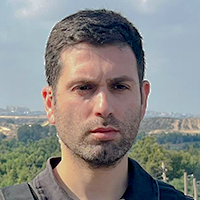
The two Israeli soldiers killed Sunday in Rafah, when Palestinian terrorists opened fire in defiance of a ceasefire, were identified as Maj. Yaniv Kula, 26, a company commander in the Nahal Brigade’s 932nd Battalion, and Staff Sgt. Itay Yavetz, 21, a combat soldier in the brigade’s Erez program. Both were from Modi’in.
The incident marked the deadliest breach of the truce since it began earlier this month and prompted an immediate Israeli response.
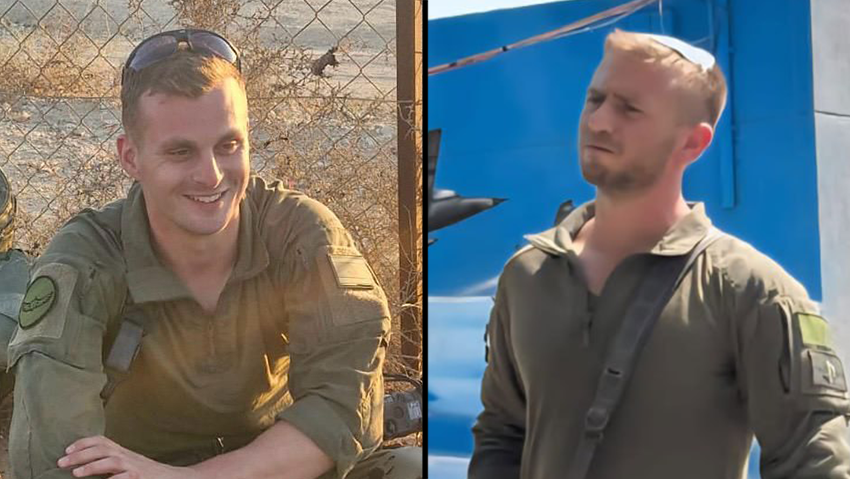
Staff Sgt. Itay Yavetz, Maj. Yaniv Kula
(Photo: IDF)
A reserve combat engineer was seriously wounded, and his family has been notified. In a separate incident nearby, two additional soldiers were moderately wounded.
According to the IDF, three separate firefights erupted simultaneously in the Rafah area around 10:30 a.m. Terrorists reportedly emerged from a tunnel, where they had apparently been trapped, and fired an anti‑tank missile at an IDF engineering vehicle. The 932nd Battalion team had been conducting a tunnel search and demolition operation when the missile hit, killing Kula and Yabetz and wounding the reservist.
Moments later, another terrorist squad opened sniper fire at a second engineering vehicle, wounding two soldiers. A third round of sniper fire was reported minutes afterward, though no additional casualties occurred. The IDF said 38 soldiers from Modi’in have been killed since the start of the war, and the total number of Israeli military fatalities has now reached 918.
Hamas denied responsibility, saying in a statement it “remains committed to all terms of the ceasefire across Gaza” and rejected reports of fighting in Rafah. The group said Rafah is “a red zone under full Israeli control” and claimed communication with its remaining fighters in the area has been cut since the war resumed in March.
Friday’s incident was the second major breach of the weeklong ceasefire. On Friday, terrorists emerged from tunnels in both Khan Younis and Rafah, attacking Israeli forces before being killed by return fire.
Under current ceasefire rules, Israeli troops along the buffer zones are operating under strict engagement limitations, allowed to open fire only when armed suspects directly threaten them. Distant sightings of armed Hamas members, even through drones or binoculars, are not grounds for engagement. Israeli security officials estimate roughly 7,000 Hamas operatives have redeployed throughout Gaza to reassert control over civilian areas after the withdrawal of Israeli ground forces.
The incident comes as implementation continues on U.S. President Donald Trump’s 20‑point plan for Gaza’s postwar stabilization. The next phase — still under negotiation — includes further Israeli withdrawals beyond the so-called “yellow line,” eventually transferring control to an international demilitarization force. About 200 U.S. troops are expected to deploy to Israel to monitor the process, with Vice President J.D. Vance scheduled to visit in the coming weeks.