

The crushing heat of the Tze’elim training grounds is familiar to the soldiers of the IDF’s 585th Desert Reconnaissance Battalion. This week, however, the hot Negev air carried something different: the sense of a new beginning, or at least a determined attempt to repair what had been broken.
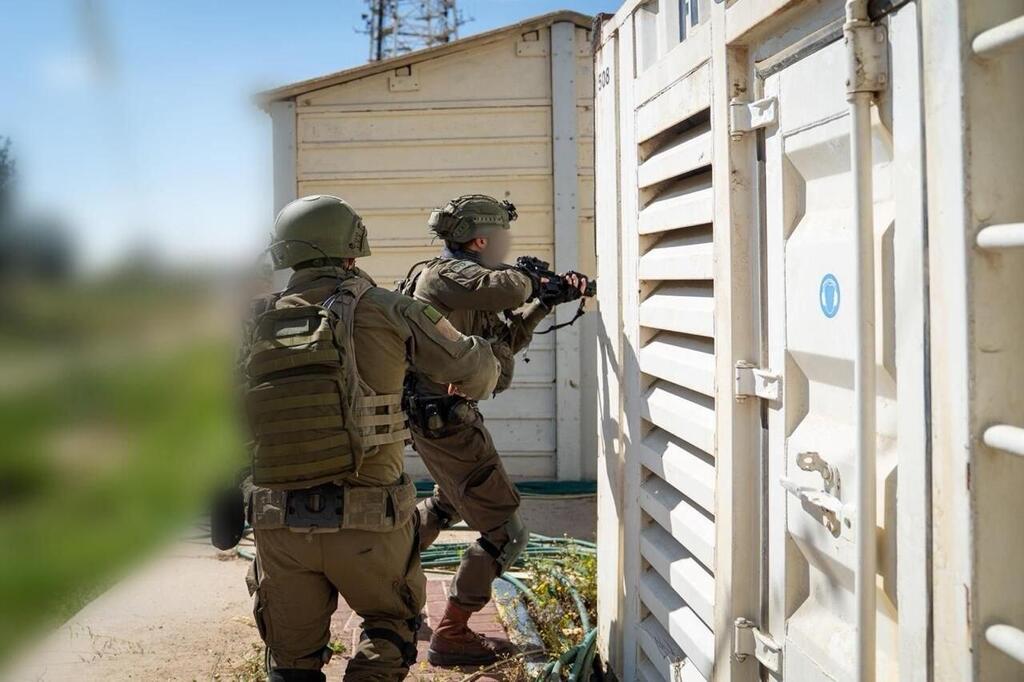
For the first time since October 7, the battalion, whose combat soldiers are members of Israel’s Bedouin community, has begun an intensive six-week field training program.
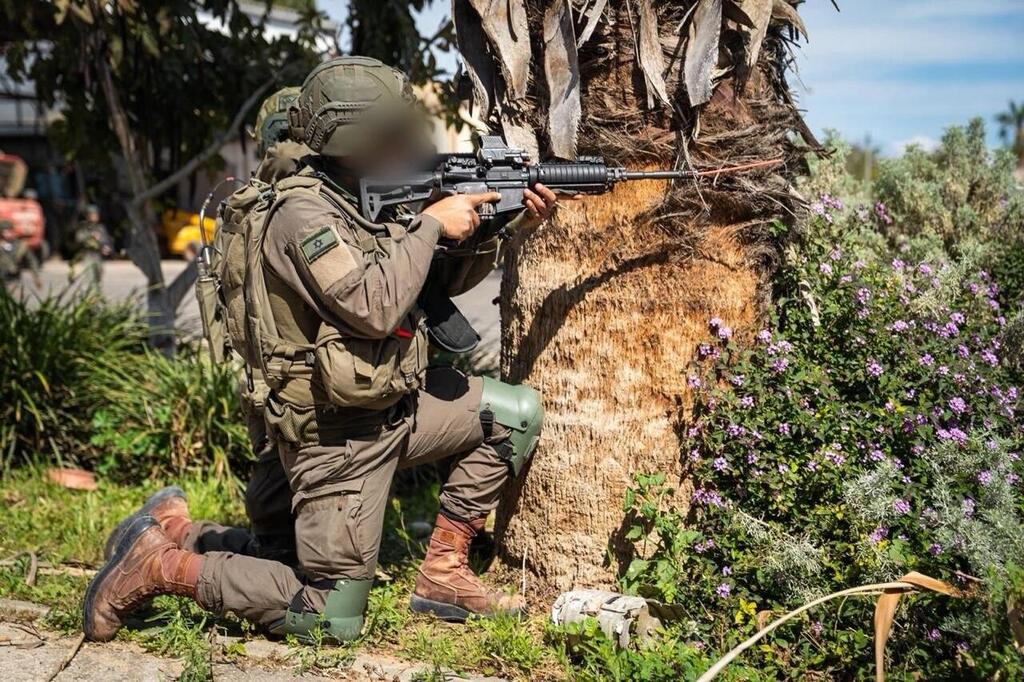
The IDF is clearly investing substantial resources in restoring the 585th’s image and operational standing. The decision to invite reporters to observe the training is itself part of an effort to demonstrate a deeper change in approach.
The facts behind the rehabilitation effort are stark.
For seven months, the battalion was effectively left without a permanent commander after its previous commanding officer was wounded. During that period, operational discipline deteriorated sharply.
The crisis culminated in a serious affair involving soldiers suspected of participating in smuggling operations into the Gaza Strip. The scandal shook the battalion and led to its removal from its original operational sector.
Senior commanders have now decided to invest the manpower, attention and resources needed to rebuild it.
A commander shaped by combat and culture
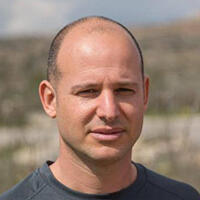
The sensitive task has been given to Lt. Col. S., an officer with an unusual background in the IDF.
He rose through the ranks of the Givati Brigade and comes from a family rooted in Andalusian musical tradition. His father is a well-known singer in the genre. He brings both cultural familiarity and the hard-edged command experience he gained during intense fighting in Gaza.
At the beginning of the ground offensive, S. served as deputy commander of Givati’s Shaked Battalion. In November 2023, he lost his deputy, Capt. Adir Portugal, in combat.
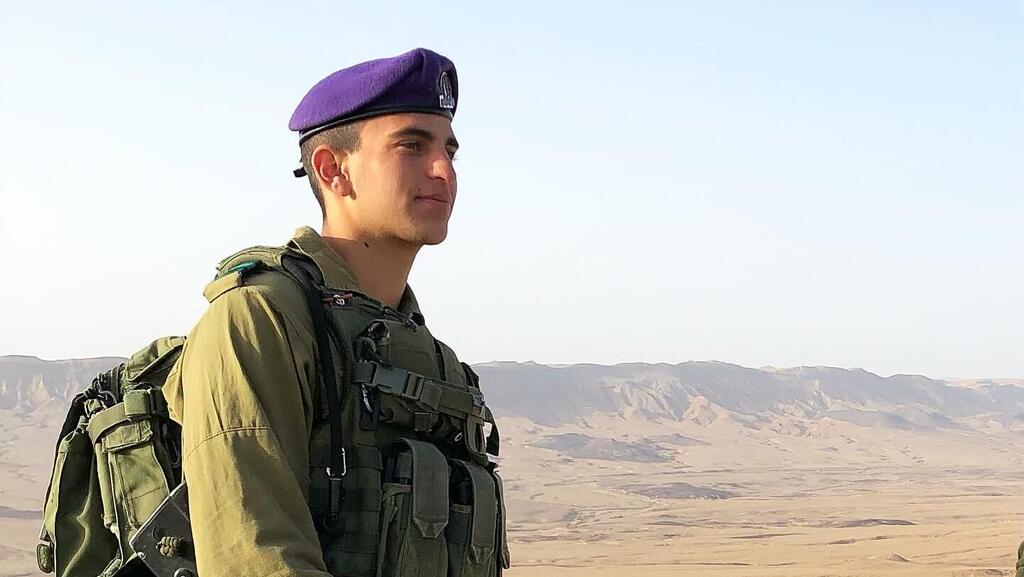
Capt. Adir Portugal
Later, while commanding a Givati training cycle, he was deployed to the West Bank and moderately wounded by an explosive device in Jenin. He returned to operational duty the following day.
That experience also left a psychological mark.
“When you are in a continuous sequence of operations, you do not get emotional about it, but when you come home, it catches up with you,” he told ynet.
“My wife told me, ‘You’re short-tempered. Go talk to someone.’ I did not believe in it, but I did what she said, and it helped me greatly.”
That personal experience shaped his understanding of what the battalion’s soldiers had endured.
“They fought continuously from October 7,” he said. “They killed terrorists face to face, and nobody talked to them.”
Mental health care adapted to Bedouin soldiers
S. concluded that psychological care for Bedouin combat soldiers had to be adapted to their cultural and social world.
“Speaking with a Bedouin soldier is something you have to prepare for and approach with an understanding of the mentality,” he said.
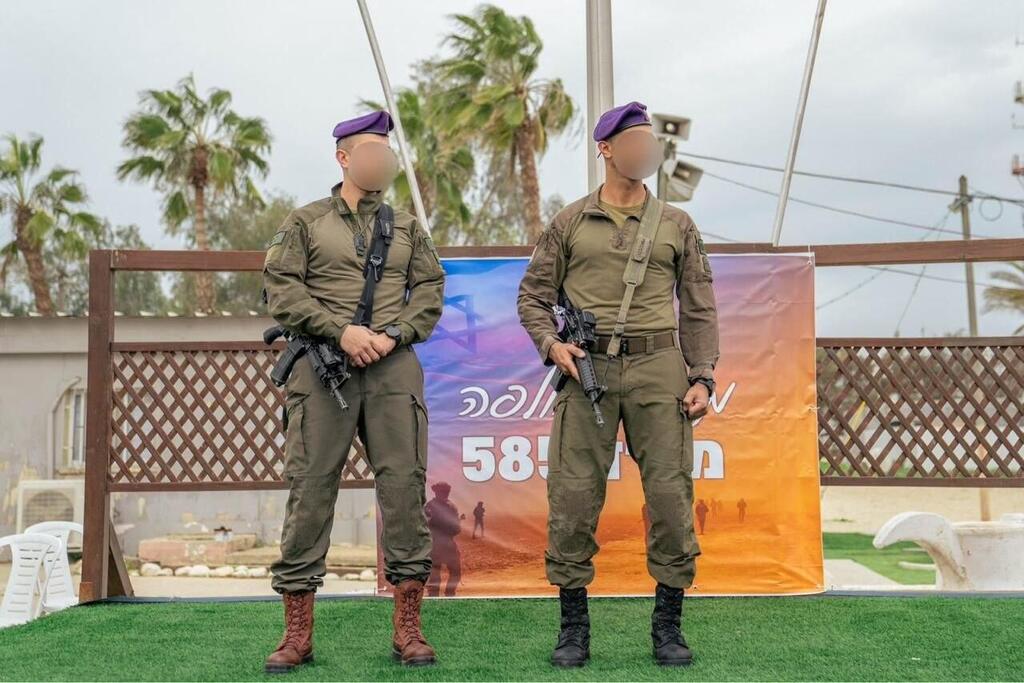
The 585th obtained the services of an Arabic-speaking mental health officer. During the training program, it will also hold a full day devoted to processing combat experiences, with 24 military mental health professionals participating.
“This is a six-week training program, and I am giving this enormous weight,” S. said.
(Photo: IDF)
The emotional rehabilitation is only one part of the process. The new commander has also sought to address the battalion’s severe disciplinary and reputational problems with uncompromising measures.
“When I entered the role, I established clear boundaries regarding values,” he said. “People who lied while serving in key positions were removed.”
The battalion began active cooperation with the Military Police, the Defense Ministry’s border-crossing security unit and the Shin Bet.
S. described one case in which a soldier sentenced to prison was brought directly into the battalion and arrested in front of the other troops.
“It sends a message so that others will see and be deterred,” he said. “The day I arrived, many people went to prison. Today, almost no one does. People understand that it is not worth it.”
Disputing sexual harassment claims
S. also addressed recent allegations of sexual harassment within the battalion.
“It really hurt me,” he said. “There are people who come only to harm the battalion for reasons unrelated to the military, with other motives.”
He said he personally reviewed the claims.
In one case, a soldier had allegedly harassed a female soldier on Instagram. He was warned, and the case was closed.
In another, a commander used crude language toward another commander in the presence of a female soldier. S. said he held a clarification meeting and considered the matter resolved.
“These were disciplinary and procedural problems,” he said. “To turn that into ‘allegations of sexual harassment in the battalion’ is a tendentious presentation.”
Asked about the roots of the wider crisis, S. returned to the absence of permanent leadership.
“The battalion had no commanding officer for seven months,” he said. “When a ship has no captain, it sinks.”
Rigid orders and inflexible thinking, he argued, would not be enough.
“This requires a pragmatic person with strong interpersonal skills who will make sure this rehabilitation continues even after I leave.”
The Bedouin community’s conflict with the state
The battalion’s difficulties do not end at the base gates. They are directly connected to the Bedouin community’s complex relationship with the Israeli state.
“Home demolitions in the south are a major issue that creates an inherent tension between the law and Bedouin culture,” S. said.
“A soldier who finishes his service and cannot find work feels that it is difficult to integrate. That affects the cousin or nephew who may be considering enlistment.”
(Photo: IDF)
The 585th has established a special program with organizational consultants to assist soldiers with civilian problems.
“We help soldiers close outstanding legal cases, obtain land rights and work with the National Labor Federation to find employment,” S. said.
He described the case of a soldier who had been prohibited by the Shin Bet from carrying a weapon because of an old suspicion that he had stolen a firearm component, an allegation that was never proven.
“We spoke with the attorney, the record was erased and he received authorization,” he said.
Recruitment begins to recover
The efforts are already producing early signs of change in enlistment.
Over the past decade, an average recruitment cycle brought only about 20 soldiers into the battalion. Some cycles had no new recruits at all.
In the next intake, 75 soldiers are expected to enlist.
Sixty of them are coming from a dedicated pre-military preparatory program in Hanaton, which was established only three weeks ago to direct young Bedouin candidates toward service in the 585th.
‘They see us and say, here comes another thief’
On the training grounds, between company-level exercises and reviews of military procedures, the soldiers expressed a mixture of frustration over the stereotypes surrounding them and hope that this time the change might endure.
“It is critical for us to train so we can feel that we belong to the IDF and are no less than anyone else,” said Sgt. B., a soldier in the battalion.
“When people see a soldier from the 585th outside, they say, ‘Here comes another thief.’ You give everything you have, and because of the mistake of one or two people, they judge the entire Bedouin community. It is frustrating.”
Reserve 2nd Lt. H., who has served in the battalion since 2009, said the smuggling affair shook him personally.
“I always fought for the battalion’s reputation,” he said. “Yes, there were mistakes, but it is easy to point at us as a sector.”
“Since October 7, we have fought continuously. We are no different from anyone else. In the past, nobody listened to us or sat with us. Now it suddenly feels as though someone is addressing the problems.”
Sgt. N., a company commander’s radio operator from Tur’an, hopes the changes will influence attitudes in his hometown.
“There are 22,000 residents in our village, and only three of us serve in the army. I am one of them,” he said.
“The change now taking place in the battalion is significant, and we hope it will bring more recruits.”
‘This is no longer the same battalion’
A significant part of the rehabilitation effort is based on welfare services and individual support for soldiers.
Under the new command, female welfare NCOs serving with the battalion were also invited to describe their experiences alongside the Bedouin troops.
“When I received this assignment, I did not know what to expect, and I arrived with stereotypes,” said Cpl. Roni, a welfare NCO.
“Once you arrive, you discover warm and respectful people. They always maintain appropriate boundaries. I have never felt uncomfortable.”
Cpl. Yael, another welfare NCO, said she had worked with the commanders for a year and had not encountered verbal or physical violence.
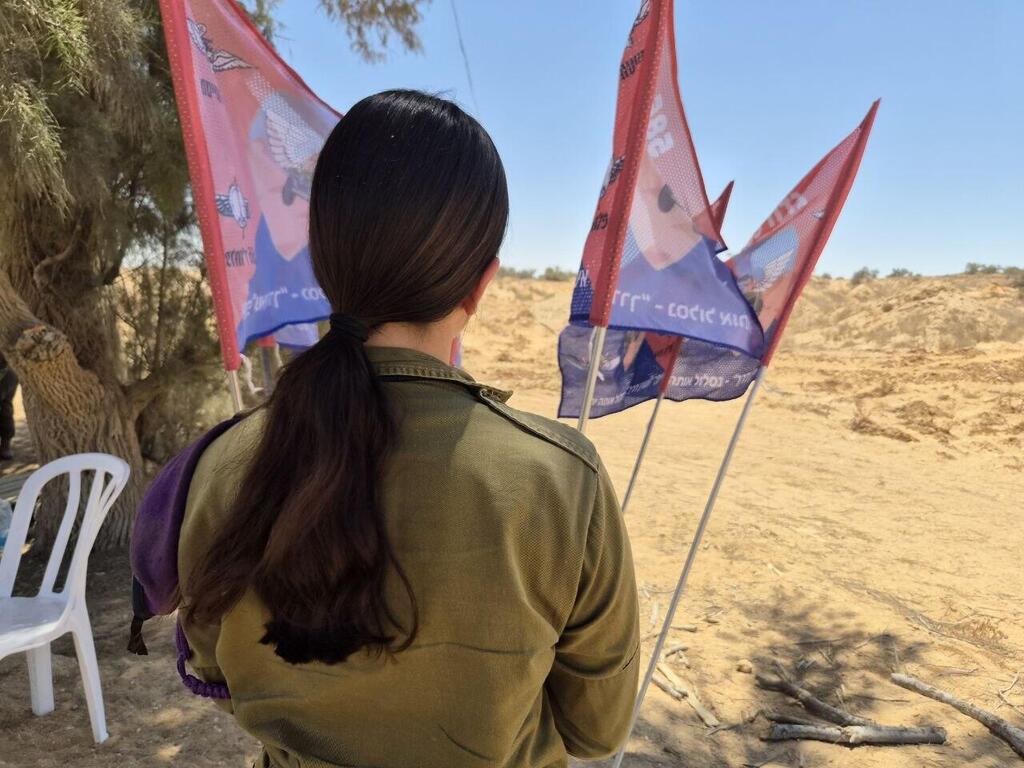
Cpl. Yael
“I have never experienced an incident of harassment,” she said. “My friends and my worried mother raised an eyebrow at first, but their concerns quickly faded.”
She said the support provided to soldiers was highly personal.
“We sit with them, help them deal with the Tax Authority and National Insurance Institute and resolve complicated debts,” she said. “Helping a soldier climb out of a financial hole is what gives us satisfaction.”
The coming months will be critical for the 585th.
The efforts of the IDF and its new commander are visible in everything from strict attention to uniforms and appearance to attempts to resolve the civilian problems waiting for soldiers at home.
Whether the changes can endure, overcome social barriers and produce a strong generation of Bedouin commanders remains unclear.
But Master Sgt. A., a member of the battalion commander’s command post, believes the transformation has already begun.
“There is a new reality here, attention to detail and order that did not exist for years,” he said.
“This is no longer the same battalion.”