

Amid growing fractures within the coalition, statements and briefings calling for the dissolution of the Knesset are now being issued primarily by the rabbinical leadership of the Degel HaTorah faction of the United Torah Judaism party. This shift comes after Agudat Yisrael—Degel's partner in the alliance—led last week's push toward dismantling the government.
Notably absent from the conversation for much of Wednesday was Shas chairman Aryeh Deri. Neither Deri nor his party’s rabbis made public statements regarding the unfolding coalition crisis. However, by late afternoon, Deri convened Shas ministers and Knesset members for an urgent meeting outside the Knesset. Following the meeting, it became clear that Shas is likely to back a bill to dissolve the Knesset.
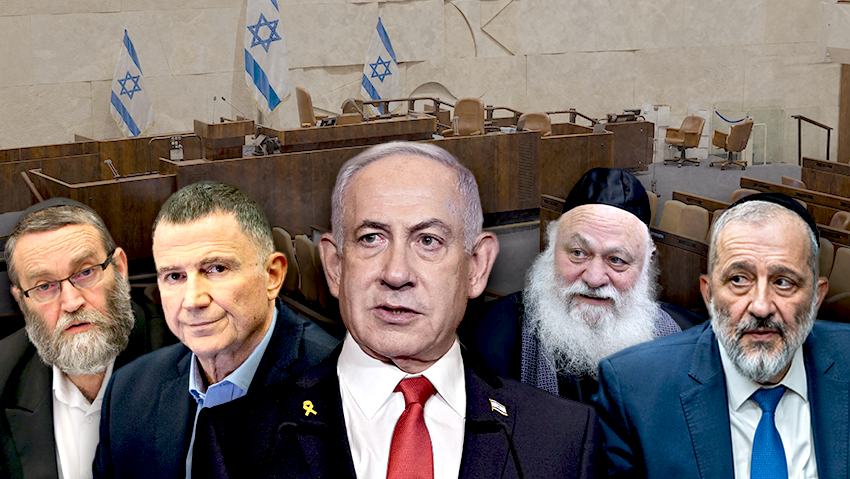
Shas spiritual leader Rabbi Reuven Elbaz, a senior member of the party’s Council of Torah Sages and a prominent opponent of military conscription, reportedly invited National Unity leader Benny Gantz for a private meeting.
During the party meeting, Deri pointed the finger at Likud lawmaker Yuli Edelstein, chairman of the Foreign Affairs and Defense Committee, accusing him of sabotaging the coalition out of personal vendetta. “Edelstein is blocking everything. He wants to bring down Bibi’s coalition out of revenge. He’s the reason we see no way forward. He’s dragging the right-wing bloc and the religious camp into an unprecedented political crisis because he didn’t get a cabinet post,” Deri said.

Shas Party head Aryeh Deri
(Photo: Alex Kolomoisky)
Sources in Degel HaTorah had earlier noted that Deri was fully informed of developments and would support the dissolution proposal. Last night, some sources indicated Deri was still attempting to broker a compromise—but emphasized that leaving the government had never been off the table.
In an attempt to de-escalate the crisis, Prime Minister Benjamin Netanyahu was scheduled to meet with Edelstein on Wednesday night. Shas officials, however, continued to single him out: “We can be flexible with everyone, but Edelstein is the problem,” they said following their party meeting.
Even if Shas ultimately supports dissolving the Knesset, it may allow United Torah Judaism to take credit for the move. Party insiders are reportedly concerned about backlash from Shas’s base—which includes many traditional voters, some of whom serve in the military and are loyal to Netanyahu—if the party is seen as actively breaking up the government.

Yuli Edelstein, chairman of the Foreign Affairs and Defense Committee
Strategically, Shas may be reluctant to bring down the coalition at a time when city rabbi appointments are imminent—positions the party hopes to fill with its candidates, including Deri’s nephew in Be'er Sheva. For that, maintaining control over the Interior Ministry and the Ministry for Religious Services would be advantageous.
Opposition leader Yair Lapid, meanwhile, struck a triumphant tone. Speaking in the Knesset, he announced that his party, Yesh Atid, would submit a bill to dissolve the Knesset next week. “This Knesset is finished. It has nowhere left to go. All it has brought to the State of Israel is pain, tragedy, bereavement and crisis,” he said.
“You cannot continue leading us from one disaster to the next. You will not pass a draft-dodging law while Israeli children are dying daily defending this homeland. It’s time for a coalition of hope, one that can heal this wounded nation,” Lapid added.
Notably, the opposition could have initiated the dissolution process this week, having been aware of the ultra-Orthodox deadline in advance. However, it only moved forward Wednesday morning after the rabbinic announcements were issued, submitting three separate bills to dissolve the Knesset.
'Netanyahu doesn’t grasp the moment'
The public statements from leading rabbis on Wednesday morning came as little surprise to observers who had noted increasingly harsh rhetoric from ultra-Orthodox leaders in recent days. On Tuesday, Degel HaTorah chairman Moshe Gafni delivered a message from Rabbi Moshe Hillel Hirsch: “If no solution is found by tonight, actions will escalate.”
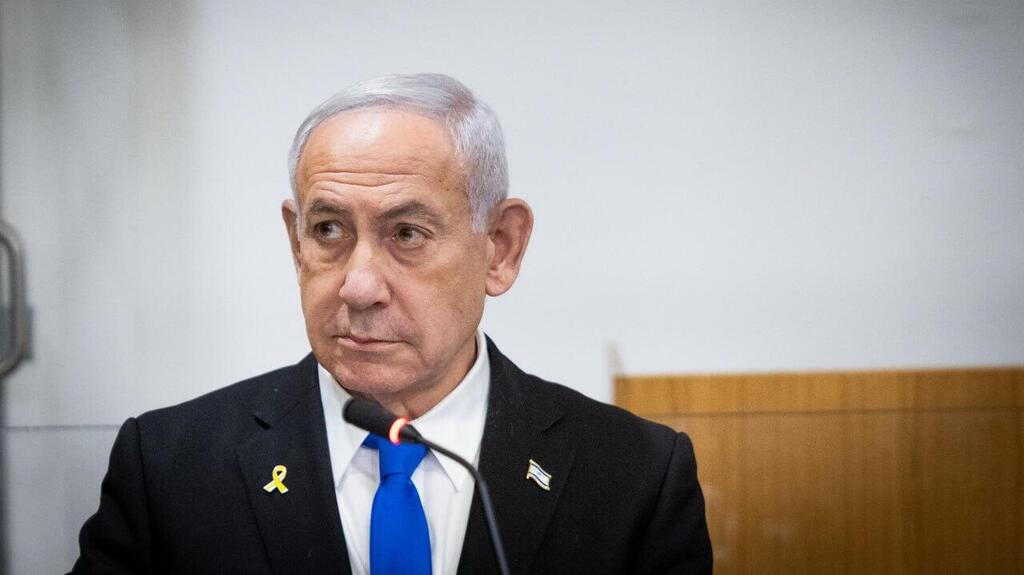
Prime Minister Benjamin Netanyahu
(Photo: Haim Goldberg)
Late Tuesday night, ultra-Orthodox representatives emerged frustrated from a lengthy meeting with Edelstein, who many in the bloc blame for the current crisis. Despite Edelstein’s characterization of the meeting as “positive,” participants described it as a failure. The core disagreement remains the terms of the draft law—particularly the imposition of sanctions on those who evade military service.
According to the ultra-Orthodox parties, Edelstein introduced additional conditions that had not previously been discussed, prompting the Council of Torah Sages to act independently of Netanyahu and issue statements indicating their readiness to either leave the coalition or support the dissolution of the Knesset—or both.
Get the Ynetnews app on your smartphone: Google Play: https://bit.ly/4eJ37pE | Apple App Store: https://bit.ly/3ZL7iNv
The rabbis also directed blame at Netanyahu himself. They accuse Edelstein of demanding sweeping punitive measures for draft evaders—including the cancellation of property tax discounts, revocation of income tax credits, exclusion from subsidized housing, imposition of purchase taxes on first homes, ineligibility for academic tuition subsidies, denial of driver's licenses and travel permits, and removal of public transit discounts.
Rabbi Dov Landau reportedly declined to speak with Netanyahu on Wednesday morning—a longstanding practice on his part—but notably, Rabbi Hirsch also refused contact, despite having spoken with the prime minister as recently as March. A source close to Rabbi Hirsch said: “If the prime minister wants to speak, he needs to bring something new.”
“Netanyahu doesn’t grasp the scale of the crisis we’re facing,” senior ultra-Orthodox political sources told Ynet. “Yuli is demanding conditions harsher than what even the opposition would settle for. So it’s not at all certain that we’d have a harder time negotiating with the opposition than with him.”