

Three months into his posting, European Union Ambassador to Israel Michael Mann says living in the country has reshaped his understanding of it, deepening familiarity gained during an earlier assignment. “You can read reports, but being here, speaking to people, feeling the atmosphere — it’s completely different,” he told ynet Global. “I’ve received a very warm reception.”
Mann arrived as Israel entered a fragile stage marked by the ceasefire, the return of hostages and early international efforts to stabilize Gaza. “There is still a lot to do,” he said, adding that the transition also presents opportunity.
European Union Ambassador to Israel Michael Mann
(Video: Yaron Brenner)


He rejects the view that Europe’s diplomatic weight is overshadowed by Washington or regional actors. The European Union, he said, is Israel’s biggest trading partner and second-largest source of investment, while also serving as the largest financial supporter of the Palestinian Authority. That position, he noted, gives the EU leverage to push for reforms in Palestinian governance, including education, economic viability and security structures — steps Europe sees as vital if the PA is to gain legitimacy over Gaza in the future. “We believe the PA, reformed and strengthened, should govern both the West Bank and Gaza,” he said. “There can be absolutely no role for Hamas.”
On the recent decisions by several European governments to recognize a Palestinian state, Mann stressed that the EU does not set recognition policy for its members. “We support a Palestinian state as part of a two-state solution, but timing is not in our hands,” he said. He added that Israel’s trauma after Oct. 7 makes the prospect of statehood impossible to accept in the near term. “We are not naive,” he said. “A Palestinian state is for the future — not tomorrow. But long-term, it is the only realistic resolution.”
Mann said the EU remains firm that Hamas must be fully disarmed. He confirmed that Europe has offered to expand training for Palestinian police, with assistance tied to reforms within the PA, as part of Gaza stabilization plans. He also addressed proposals raised last year for potential measures against Israel, saying they were not adopted, though some remain under discussion. The EU, he said, expects Israel to allow registration of international NGOs in Gaza, permit EU humanitarian teams and journalists to enter and release tax revenues owed to the Palestinian Authority. “These issues will be discussed next week by foreign ministers in Brussels,” he said.
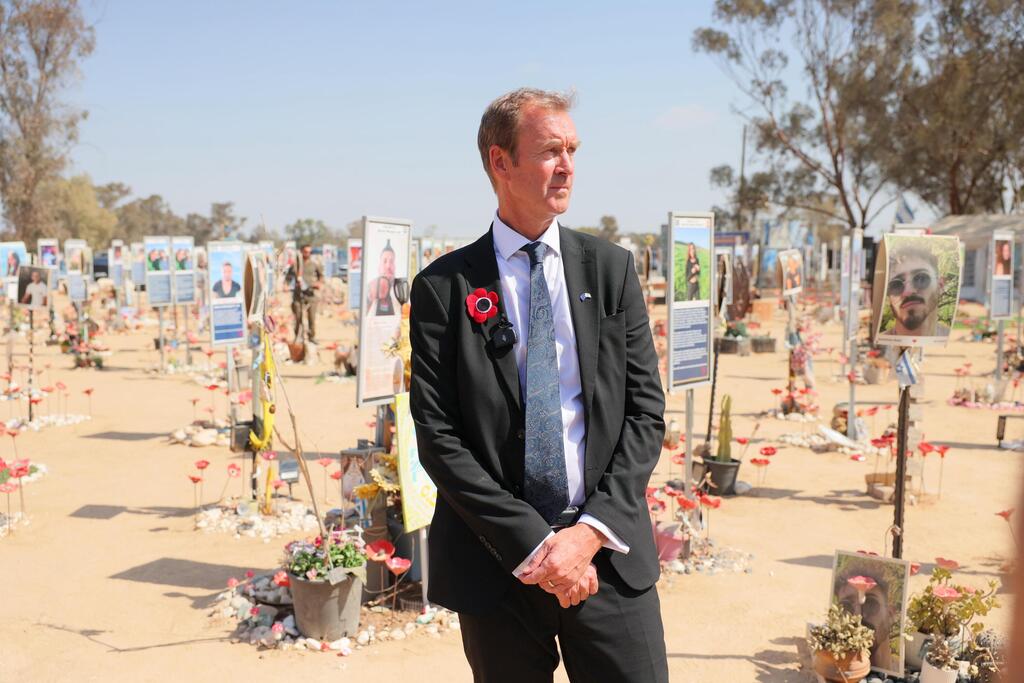
(Photo: Tal Sigron)
Responding to Israeli plans for new settlement construction, Mann repeated the EU’s long-standing legal position that settlements in the West Bank are illegal under international law and hinder prospects for a two-state solution. On regional tensions, he expressed guarded optimism about developments in Lebanon but deep concern over clashes along Israel’s northern border, as well as Iranian weapons transfers and nuclear ambitions. “We authored the JCPOA,” he said. “We want nuclear diplomacy back.”
Mann acknowledged criticism from Israelis who feel Europe does not fully grasp the depth of the country’s pain after Oct. 7. “The rise in antisemitism across Europe has been shocking,” he said, noting EU efforts on education, security funding and coordination through a dedicated commissioner, along with national programs in each member state. At the same time, he said, political criticism of Israel should not automatically be equated with antisemitism. “Sometimes we criticize Israel as a friend,” he said.
He added that Israelis often tell him Europe misunderstands the scale of their trauma. “That’s part of my job here — to ensure people in Europe understand Israeli pain and the existential concerns for the future,” he said. While reaffirming Europe’s support for Israel’s right to defend itself and its condemnation of Hamas, he said the EU believed the war had reached a stage of “too many deaths and diminishing returns,” prompting its diplomatic proposals. Diplomacy, he said, requires holding both truths at once.
As the interview ended, Mann reflected on the weight of his assignment. “I enjoy my job immensely. There is hope, there is challenge, but also great responsibility,” he said, before concluding: “Thank you, and have a good day.”