


The German government announced on Monday that it will lift the partial weapons embargo it imposed on Israel next week, following high‑level diplomatic contacts between Israeli and German officials.
Berlin’s move comes after Prime Minister Benjamin Netanyahu spoke with German Chancellor Friedrich Merz, and Foreign Minister Gideon Sa’ar held discussions with his German counterpart Johann Wadephul, who recently visited Israel. The discussion came amid a ceasefire in the Gaza Strip.
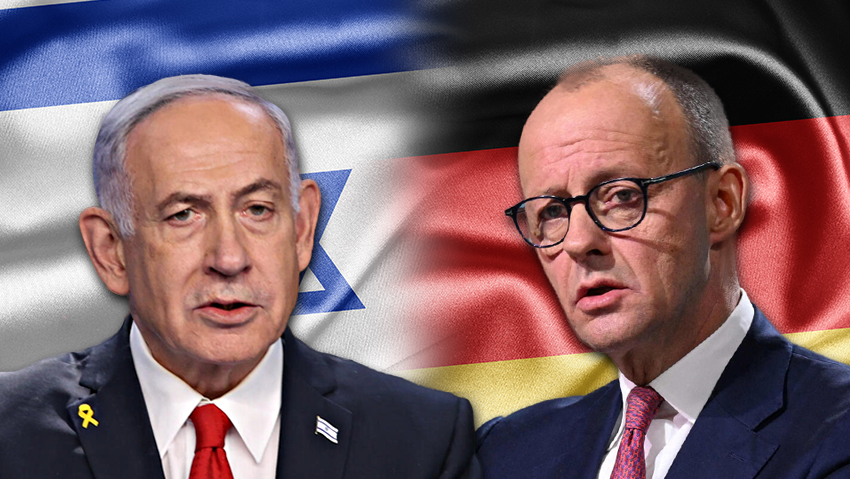
Prime Minister Benjamin Netanyahu, German Chancellor Friedrich Merz
(Photo: Ina FASSBENDER / AFP, Alex Kolomoisky, Ruskpp/Shutterstock)
"I welcome Chancellor Merz’s move to revoke the decision regarding the partial 'embargo,'" Sa'ar posted on X. "I call on other governments to adopt similar decisions, following Germany."
The embargo, announced by Merz in August, originally halted German military exports to Israel if the equipment could be used in the Gaza Strip, citing concerns about civilian suffering during Israel’s operations.
German officials had issued the ban earlier amid growing EU pressure, and the decision triggered strong backlash in Berlin.
“The government, as a rule, is returning to reviewing each case individually when it comes to arms export decisions and will respond to further developments,” said a German government spokesperson, adding that the partial arms embargo will be lifted on November 24.
The German government emphasized its continued commitment to “supporting a lasting peace between Israelis and Palestinians based on a two-state solution” and said it will “continue to support the reconstruction of Gaza.”
Germany is Israel’s second‑largest weapons supplier after the United States. The decision did not affect essential weapons for Israel that are unrelated to the war in the Gaza Strip, nor defensive systems used against external threats.
The German move at the time followed the Cabinet’s decision to seize control of Gaza.