

President Donald Trump has repeatedly signaled in recent days that he has decided, for now, against launching a new military strike on Iran. But his statements have appeared to conflict with reports in U.S. media that the American military is moving assets to the Middle East, including an aircraft carrier, while Trump himself has stopped short of ruling out a future attack.
Speaking to reporters late Thursday as he traveled from the White House to his Mar-a-Lago estate in Florida, Trump again avoided committing to military action after being asked whether his earlier promise to Iranian protesters that “help is on the way” still stood. “We’ll see,” he said, moments after thanking Iran’s leaders for what he claimed was their decision to cancel plans to carry out 800 executions of detained protesters. “I greatly respect the fact that all scheduled hangings, which were to take place yesterday (Over 800 of them), have been cancelled by the leadership of Iran. Thank you!” Trump said.
(Photo: Reurters)


Asked whether Israel and Arab countries had persuaded him not to strike Iran, Trump replied, “Nobody convinced me. I convinced myself.” He again said the alleged cancellation of mass executions had “a big impact.”
Military and political analysts have drawn comparisons to what they describe as deception tactics that preceded the U.S. strike on Iranian nuclear facilities during Operation Raising Lion in June, when Trump publicly said he would decide on an attack “within two weeks” shortly before the strike was carried out. As a result, tensions remain high despite Trump’s repeated signals that he has, at least temporarily, backed away from another attack. The Wall Street Journal reported this week, citing U.S. and Middle Eastern officials, that Trump may be buying time to allow military assets to move into place and to build sufficient “firepower.” A Qatari official told the newspaper the United States might need five to seven days to prepare for a full-scale attack.
Against that backdrop, Britain’s BBC examined what Iran’s Supreme Leader Ayatollah Ali Khamenei might do next. Khamenei is widely believed to be in hiding. “He will not be sitting on his balcony any time soon,” the broadcaster wrote, noting that Trump has recently referred to past U.S. operations such as the 2020 drone strike that killed Iranian Gen. Qasem Soleimani in Baghdad and the 2019 raid in Syria that killed Islamic State leader Abu Bakr al-Baghdadi.
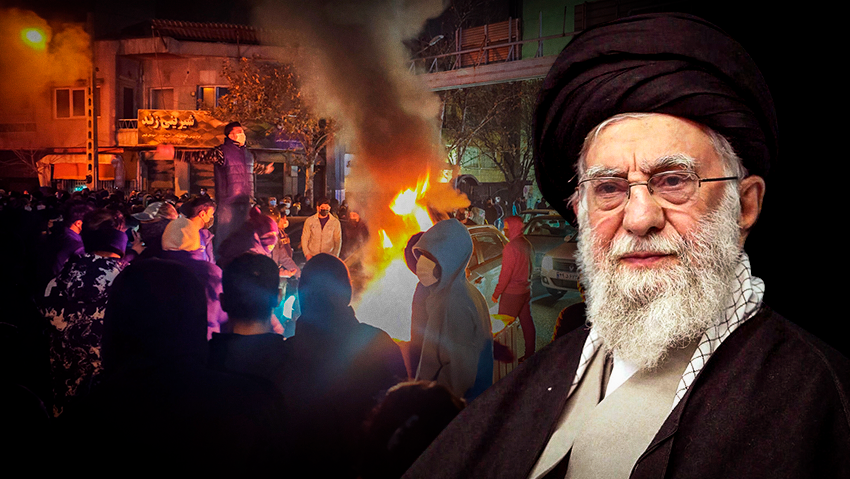
The BBC also said Khamenei would have to consider the fate of Hezbollah leader Hassan Nasrallah, having been killed by Israel in a massive airstrike in September 2024 that struck a bunker 18 meters underground in Beirut. The report added that the recent abduction of Venezuelan President Nicolas Maduro during a daring U.S. commando raid in Caracas would also weigh on Khamenei’s mind. Analysts cautioned, however, that even killing Iran’s supreme leader would not necessarily end the Islamic Republic, which relies on powerful control mechanisms led by the Revolutionary Guard, and could instead lead to military rule or chaos.
However, according to U.S. reports, Trump has so far refrained from ordering a strike in part out of concern that even large-scale bombing would not deliver a decisive blow capable of toppling the Iranian regime, a condition he has said would be required. He is also said to be seeking to avoid a broader conflict that could endanger U.S. forces in the region and anger isolationist supporters in his MAGA movement, who oppose involvement in what they describe as costly foreign wars.
Arab states have also reportedly pressed Washington to avoid regional escalation, and Prime Minister Benjamin Netanyahu has urged caution as well. CNN reported that Israeli officials were concerned about the condition of their air defense systems after heavy use in the previous conflict with Iran and believed a strike now would not bring down the regime.
Trump’s continued refusal to take the military option off the table could strengthen his hand in potential renewed negotiations with Iran over its nuclear and missile programs. In the months leading up to the June strike on Iran’s nuclear facilities, Tehran and Washington held several rounds of talks led by Iranian Foreign Minister Abbas Araghchi and U.S. envoy Steve Witkoff. During those talks, Trump repeatedly threatened military action unless Iran agreed to his demands, including a complete halt to uranium enrichment. Iran refused and was later attacked.
Iran is no longer enriching uranium after its facilities sustained heavy damage, which Trump has said were “destroyed,” but it still possesses a large stockpile of uranium enriched to 60%, enough, with further short enrichment, for at least nine nuclear bombs. At the same time, Iran has resumed production of ballistic missiles, a development that has heightened concern in Israel, which had considered striking Iran even before the current protests.
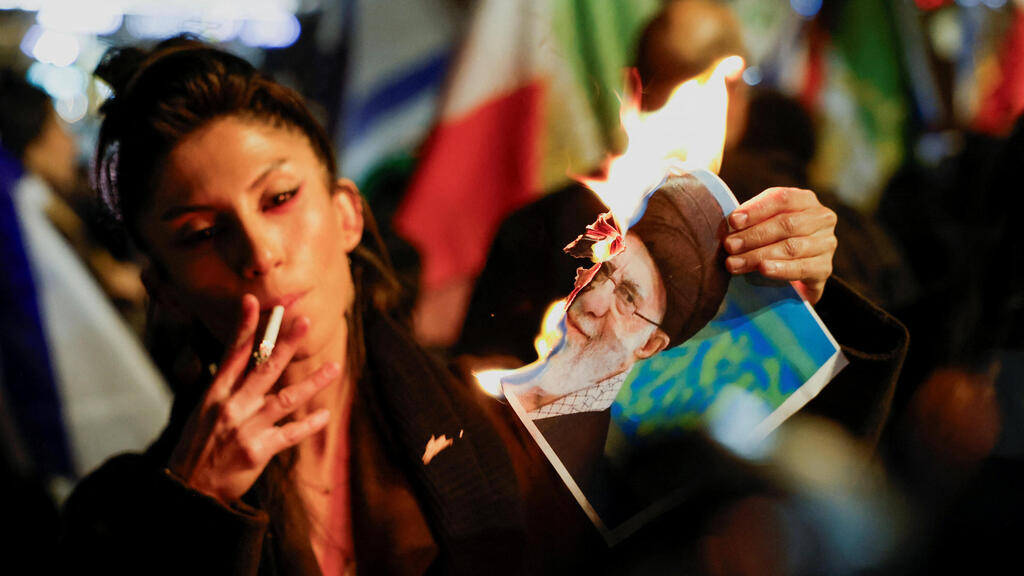
Protesters against the Iranian regime in Holon
(Photo: REUTERS/Ammar Awad)
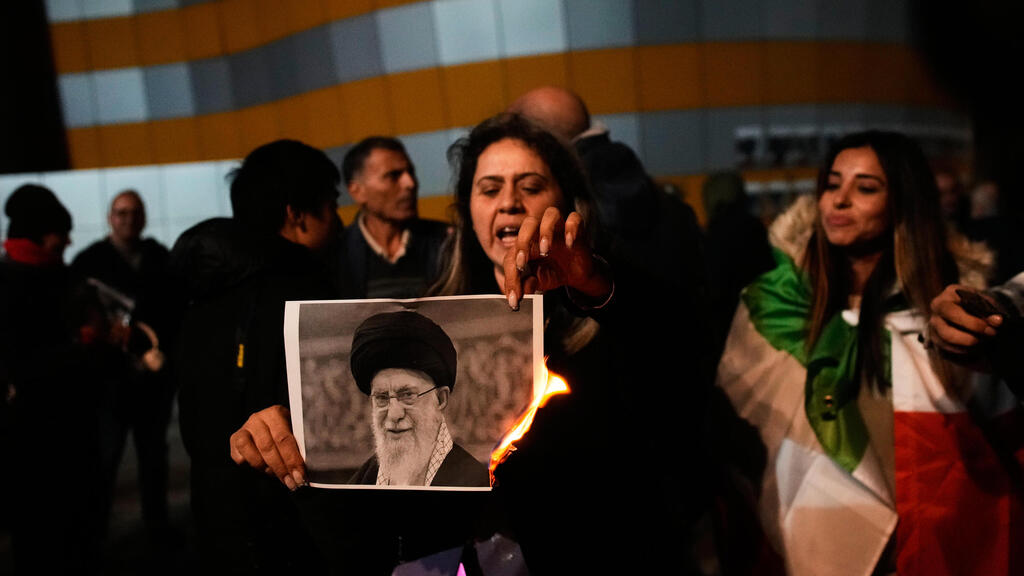
(Photo: AP Photo/Ohad Zwigenberg)
For Iran, a new agreement would be critical to efforts to stabilize its economy after the rial plunged to a record low of about 1.4 million to the dollar, a collapse that helped ignite the mass protests. Tehran is seeking relief from U.S. sanctions, compounded by renewed international sanctions last September after the expiration of the original 2015 nuclear deal. Iran has refused, however, to discuss its missile program and has insisted on keeping that issue separate from nuclear talks.
Witkoff has signaled that Washington will insist on addressing missiles this time. Speaking overnight Thursday into Friday, he outlined four issues coordinated with Israel: nuclear matters and enrichment, the missile stockpile, enriched uranium and Iran’s regional proxies. “There’s no water, there’s no electric, inflation is probably well north of 50%,” Witkoff said, adding that resolving the issues diplomatically would be preferable to the alternative.
Ahead of a possible resumption of talks, Mossad chief David Barnea arrived in the United States on Thursday for discussions on Iran and is expected to meet Witkoff in Miami. Netanyahu also spoke again with Trump on Thursday, the second call within 24 hours, following a conversation on Wednesday in which the Israeli leader asked him to delay any strike on Iran.
Trump’s messages are expected to unsettle and likely disappoint Iranian opposition figures. But Reza Pahlavi, the exiled son of Iran’s last shah, said Thursday he still hoped Trump would follow through on his pledges. “I believe Donald Trump is a man who keeps his word,” Pahlavi said at a news conference in Washington, describing the regime’s crackdown, in which thousands of protesters have been killed, as an “occupation” and urging the world to act quickly.
Pahlavi said he was confident the regime was in its final stages and would fall regardless. “With or without the world’s support, the regime will fall,” he said. “It will fall faster and more lives will be saved if the world turns its words into actions.”
Despite reports that Iranian authorities have temporarily suppressed the protests, Iranian activist Armin Navabi, who lives in Canada, said he believes the movement will continue, arguing that too much blood has been shed for a return to normal life. He said President Donald Trump remains unpredictable on the question of a strike on Iran and could change course at any time, making continued international attention crucial. Navabi also said the regime’s preparations for a possible U.S. attack, including moving Supreme Leader Ayatollah Ali Khamenei and other senior figures into hiding, may have exposed vulnerabilities by revealing emergency procedures and locations to U.S. and Israeli intelligence.