

Prime Minister Benjamin Netanyahu urged U.S. President Donald Trump to delay a planned strike on Iran in part out of concern that Israel’s missile defense systems were overstretched, CNN reported overnight Thursday.
According to the report, Israeli officials warned that the country’s air defense systems had been used extensively during last year’s direct conflict with Iran and that Israel did not believe the Iranian regime would collapse quickly without a prolonged military campaign. That assessment was one of several factors that led Trump to postpone an attack that many in Israel and abroad had expected to take place between Wednesday and Thursday night.
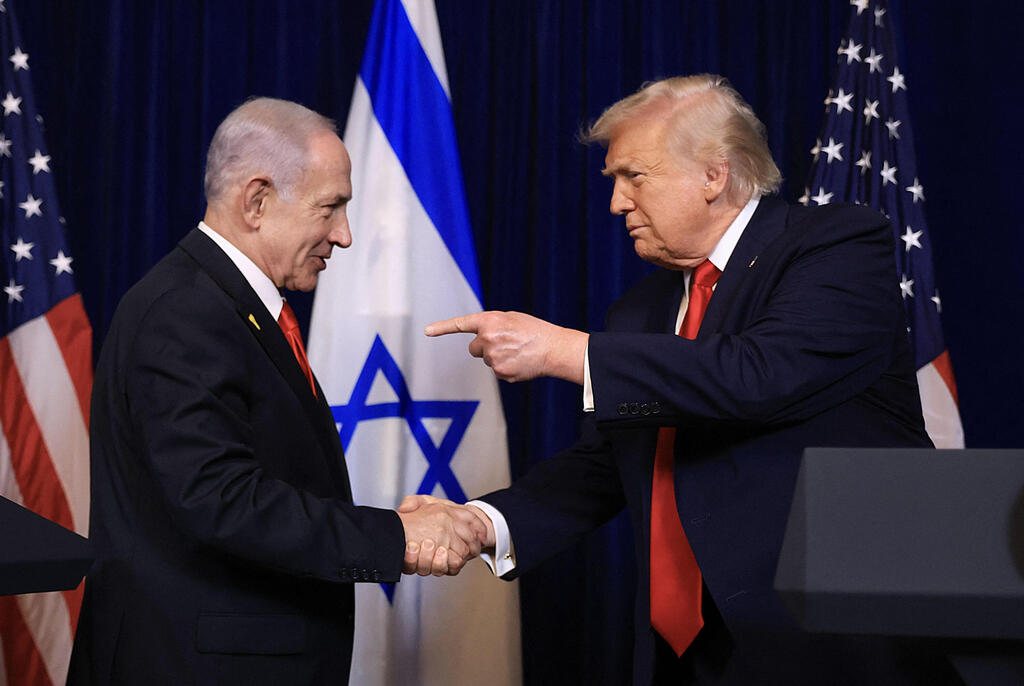
(Photo: JOE RAEDLE / GETTY IMAGES NORTH AMERICA / AFP)
CNN said Trump surprised allies after a series of hawkish statements by declaring that the killing of protesters in Iran had stopped, even as U.S. intelligence assessments reportedly contradicted that claim. Administration officials told Gulf states that Trump’s primary objective was to pressure Tehran to halt the crackdown and that he was looking for concrete signs of such a shift.
Iran’s announcement that it was delaying the execution of Arpan Soltani, described by Iranian opposition supporters as a symbol of the protests, was seen by U.S. officials as the signal Trump had been seeking, according to the report.
Concerns over Israel’s missile interceptor stockpiles have surfaced before. Even prior to the latest tensions with Iran, reports spoke of a “severe shortage” of interceptors in Israel — claims the Israeli government has denied. The United States has also reportedly struggled to replenish its own interceptor reserves after supplying Israel during the fighting.
Last week, Brig. Gen. (res.) Danny Gold, head of Israel’s Directorate of Defense Research and Development and widely regarded as the father of the Iron Dome system, told ynet and Yedioth Ahronoth that Israel is continuously preparing for future threats.
“All our defense systems are being upgraded constantly. We are learning all the time and trying to anticipate where the enemy will go,” Gold said. “We are accelerating production across all layers — Arrow, David’s Sling and Iron Dome. Some of this is produced in the United States, where we recently opened an Iron Dome factory, but the main expansion of quantities is happening in Israel.”
The Netanyahu–Trump conversation took place Wednesday, according to Israeli and U.S. media reports. Netanyahu pressed Trump not to strike Iran at this stage. CNN, other outlets and ynet military analyst Ron Ben-Yishai have reported that Israeli leaders doubted limited strikes would be sufficient to bring down the Iranian regime.
Ben-Yishai wrote that from Israel’s perspective, the timing was unfavorable. Officials in Jerusalem, as well as in other Middle Eastern capitals, feared that an attack might fail to topple the regime while exacting a heavy price on Israel’s home front and imposing enormous economic and security costs from another prolonged confrontation with Iran — one for which Israel was not fully prepared.
Even as Israel sought to delay an attack, intensive coordination continued with the United States on defensive measures. Military-to-military cooperation between the Israel Defense Forces and U.S. Central Command was conducted at a high level in recent days, according to Israeli officials.
Ben-Yishai added that Iran was itself under intense pressure and on high alert, heightening Israeli concerns about a possible Iranian response. Israeli defense officials assessed that Tehran might act either out of miscalculation — believing a U.S. strike was imminent and choosing to hit Israel first — or through a deliberate decision to launch a preemptive attack on Israel and U.S. bases in the region, either to deter an attack or to exact revenge in advance and bolster domestic support inside Iran.