


“Israel explicitly promised its friends in Europe that there would be no progress on construction in E1. This therefore crosses a red line and is a very bad development,” a European diplomat said Wednesday after the Housing Ministry published a tender for the construction of 1,234 housing units in the E1 area, beyond the Green Line between Jerusalem and Ma’ale Adumim. Under the terms of the tender, the deadline for submitting bids is October 19, about a week before the upcoming national election.
According to the diplomat, publication of the tender has caused an uproar among diplomatic officials in Europe and could prompt European countries, and even Britain, to consider imposing sanctions on Israel before the election.
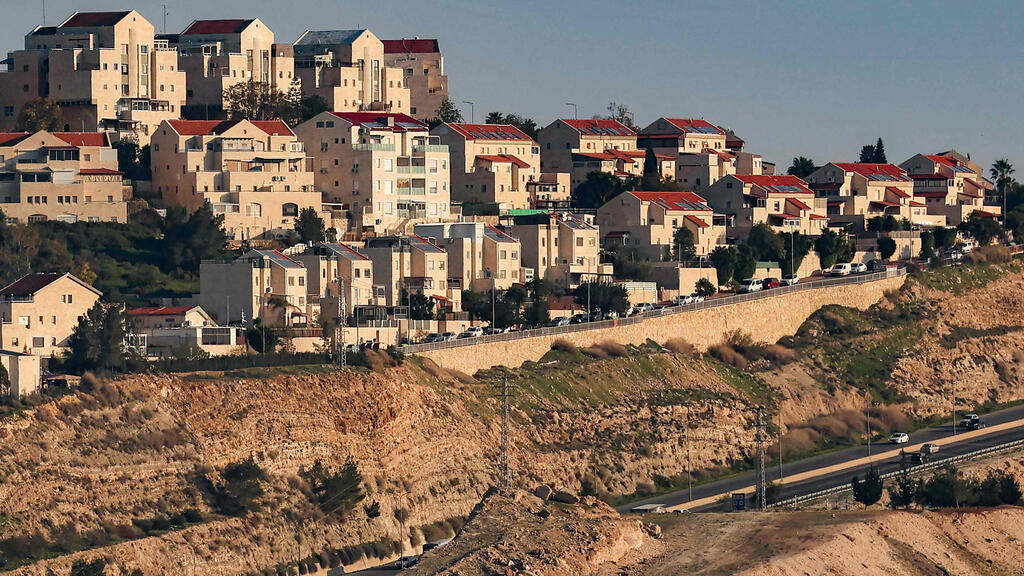
The E1 area is considered one of the most politically sensitive zones because of its strategic location. Opponents say large-scale Israeli construction there could sever the northern West Bank from the south, isolate east Jerusalem and prevent the creation of Palestinian territorial contiguity between Ramallah, east Jerusalem and Bethlehem.
U.N. Secretary-General António Guterres also expressed “deep concern” over reports of new Israeli outposts in the West Bank and the publication of additional tenders in the E1 area. Guterres warned that construction there would cut the connection between the northern and southern West Bank, and that “this would have grave consequences for the territorial integrity of the occupied Palestinian territory and would pose an existential threat to the two-state solution.” He called on Israel to refrain from further steps and to act in accordance with relevant U.N. resolutions and the advisory opinion of the International Court of Justice.
Last year, the government approved a plan to build 3,401 housing units in the area, but the advancement of tenders to carry it out was delayed several times amid international opposition and diplomatic pressure. In May this year, 11 countries — Italy, Britain, France, Germany, Norway, Canada, Australia, New Zealand, Spain, Belgium and the Netherlands — issued a joint statement calling on contractors not to participate in settlement construction tenders. The countries warned companies of possible legal and reputational consequences of taking part in settlement construction, including the risk of involvement in violations of international law.

Sanctions at this stage could actually strengthen Prime Minister Benjamin Netanyahu and right-wing ministers in his government
(Photo: Ohad Zwigenberg, Pool, AP)
When the plan was advanced last year, Finance Minister Bezalel Smotrich himself presented construction in E1 as a move intended to thwart the possibility of establishing a Palestinian state. “The idea of a Palestinian state has been erased,” he said at the time. The E1 area covers about 12 square kilometers between east Jerusalem and Ma’ale Adumim.
According to the European diplomat, discussions are now underway in Europe over whether to respond with measures against Israel even before the election, but some countries fear that sanctions at this stage could actually strengthen Prime Minister Benjamin Netanyahu and right-wing ministers in his government, including Itamar Ben-Gvir and Smotrich. The diplomat assessed that Smotrich is behind the advancement of the tender, knowing the move could trigger a European response.

Finance Minister Bezalel Smotrich presented construction in E1 as a move to thwart the possibility of establishing a Palestinian state
(Photo: Ryan Preuss)
“He is doing this for political reasons,” the diplomat said. “As a first step, we will likely see very soon a very harsh condemnation from the E4, the body that brings together the four strongest European countries: Germany, France, Britain and Italy.”
The European diplomat warned that, from the perspective of European countries, advancing construction in E1 is a development that could justify a significant shift in policy toward Israel.
“Construction in E1 is simply unacceptable,” he said. “For the Europeans, it means a severe blow to the possibility of establishing a Palestinian state. This is very serious, especially when it involves an explicit promise that was given to various countries. It seems Netanyahu is doing everything he can to destroy Israel’s foreign relations and lose the last friends you have.”
The original tender for all 3,401 housing units was published at the end of 2025, but its opening for bids was postponed several times. The human rights organizations Ir Amim, Bimkom and Peace Now, and Palestinian communities filed a petition against approval of the plan. As part of the proceedings, the state committed not to open the tender without prior notice to the petitioners, so they could ask the court to halt it until a ruling on the petition.
About a month ago, the State Attorney’s Office said the tender was expected to open within two to three months and reiterated its commitment to provide advance notice. Now, however, a new tender has been published covering more than a third of the planned housing units, and it was opened immediately for bids without any notice.
According to the BBC, more than 40 Bedouin communities are located in the area and could be affected by advancement of the plan. Jamal Juma, a Palestinian activist with the Stop the Wall campaign, said their residents could be required to leave as a result of the construction. “This is the destruction of communities, the destruction of families. It is a disaster,” he said. According to the organizations, the current tender concerns one of two plans approved in the E1 area, and splitting the plan could be interpreted as an attempt to advance construction while reducing public and legal scrutiny.
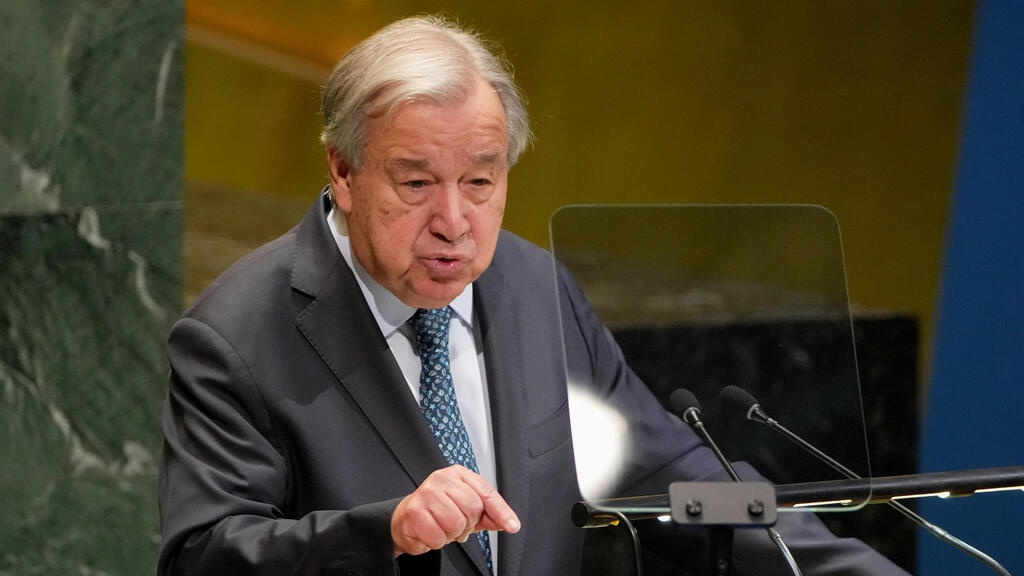
U.N. Secretary-General António Guterres
(Photo: Angelina Katsanis/AP)
“This is not just another settlement tender,” Peace Now said. “E1 is one of the most destructive construction plans in terms of the possibility of reaching a political agreement. It is designed to sever Palestinian territorial contiguity, cut east Jerusalem off from the rest of the West Bank and eliminate the possibility of a viable Palestinian state alongside Israel. That is why, for decades, Israeli governments refrained from building there.
“The goal is clear: to advance the selection of contractors and sign contracts before the election, in order to establish irreversible facts and make it harder for the next government to stop the construction. This tender is an election grab and part of a scorched-earth policy being promoted by a government at the end of its tenure. The Netanyahu-Smotrich government is trying to tie the hands of the next government and guarantee all of us many more years of occupation, conflict and bloodshed.”
At this stage, it is still unclear whether and when European countries or Britain will decide to take practical steps following publication of the tender. However, diplomatic officials assess that the timing, just weeks before the election, could make the question of sanctions especially politically sensitive.
Options reportedly under consideration include a ban on imports of goods from settlements into Europe, a tougher measure than product labeling, the creation of blacklists of violent settlers who would be barred from entering Europe and other measures. In Britain, there is heavy pressure on the government to announce sanctions as early as next month, alongside calls to treat Israel as South Africa was treated during the apartheid era.
Daniel Edelson contributed to this report.