


The IDF officially announced on Wednesday that it had killed Mohammed Odeh, who was appointed only 10 days earlier to replace Izz al-Din al-Haddad, Hamas’ top commander in Gaza, who Israel also killed.
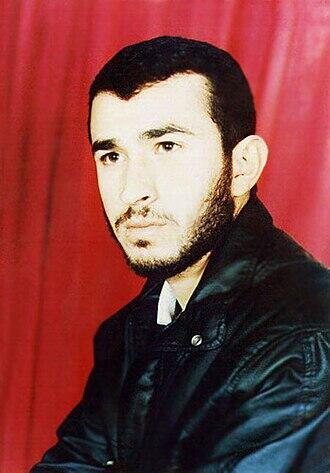
Aqel is considered one of the veteran and most secretive figures in Hamas’ military wing, the Izz al-Din al-Qassam Brigades. Over the years, he has been associated with field operations, sabotage and logistics, and is seen as one of the important figures in the group’s operational structure, working mostly behind the scenes and away from public view.
He was born in 1971 in the Jabaliya refugee camp in northern Gaza, a densely populated area marked by poverty and difficult living conditions. At a young age, he joined the local Islamist current from which Hamas later emerged. When the group’s military wing was established in the early 1990s, Aqel became involved in operational activity within the Qassam Brigades, first in junior roles and later in field and training positions.
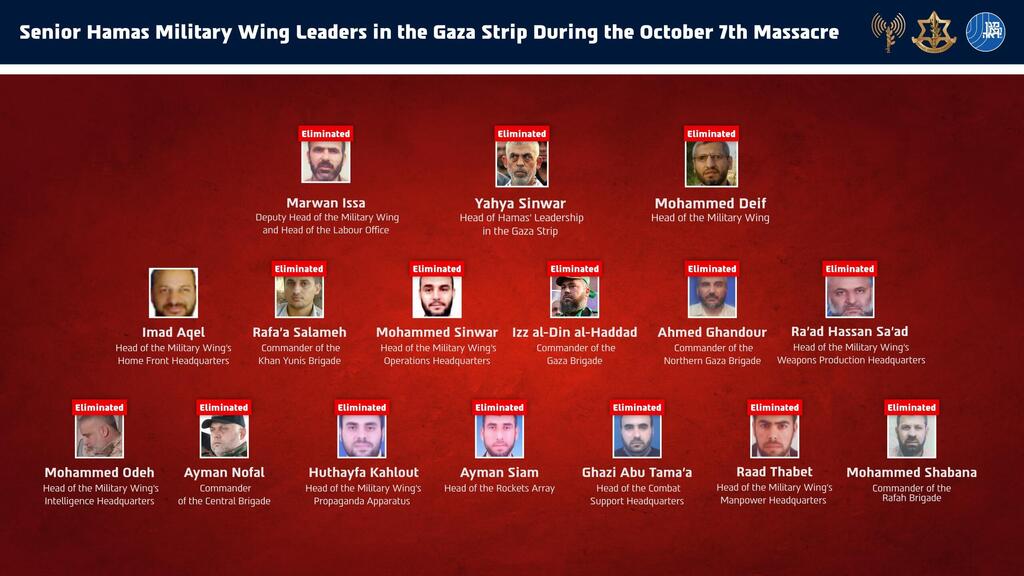
Hamas' military wing officials
(Photo: IDF)
During the 1990s and the first decade of the 2000s, Aqel was linked to armed cells that operated against Palestinian security forces and Israeli targets. On October 7, 2002, according to Palestinian sources, a cell led by him was behind the killing of Rajeh Abu al-Yahiya, a senior figure in Gaza’s security services. The incident sparked sharp tension between Hamas and the Palestinian Authority, which demanded that those involved be handed over.
In 2003, Israel was reported to have carried out an attempted targeted killing against him in central Gaza. Several people were killed and others wounded, but Aqel himself was not hit.
In the following years, Aqel continued operating within Hamas’ military wing and was considered a figure involved in building operational capabilities and providing logistical support. He was accused of involvement in, or indirect links to, attempted attacks, including the 2006 attempted attack at the Karni crossing carried out by cells from the Popular Resistance Committees.
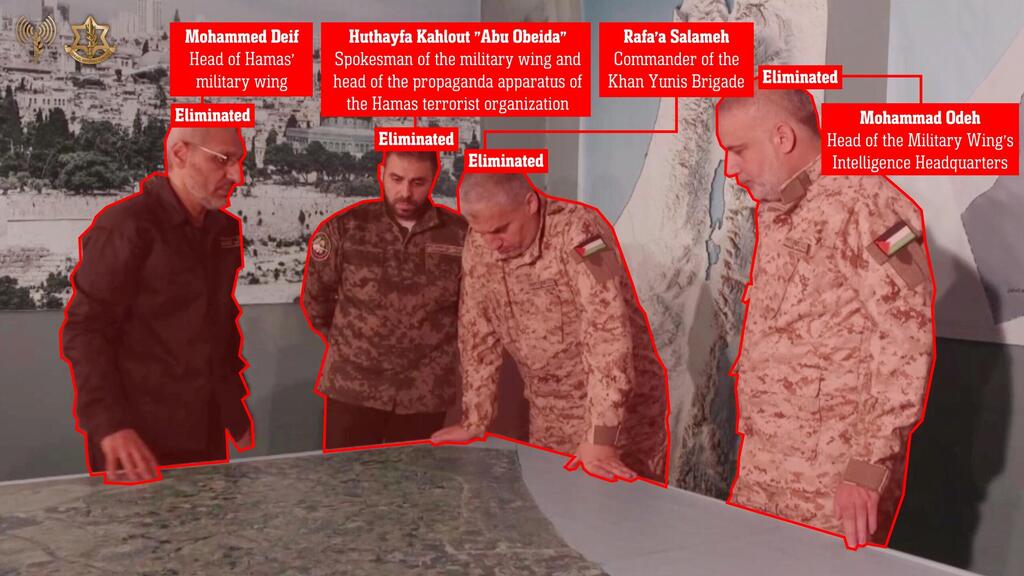
(Photo: IDF)
During Operation Cast Lead in 2009, his home in the Nuseirat refugee camp was bombed, but he was not there and was not harmed.
In recent years, various sources have described Aqel as head of the home front staff in Hamas’ military wing, a body responsible for logistics, infrastructure, weapons production and supply, and support for fighting forces. He also serves as a member of Hamas’ military council in Gaza and is considered one of the figures involved in preserving the organization’s operational continuity during wartime.
During the war, reports said his son, Mohammed Imad Aqel, was killed in Israeli strikes in Gaza.
Following Odeh’s killing Tuesday night, Prime Minister Benjamin Netanyahu and Defense Minister Israel Katz said: “We will continue to pursue everyone who took part in the October 7 massacre. Sooner or later, Israel will reach them all.”
As with Haddad’s killing, Odeh’s death is expected to affect negotiations over a future arrangement in Gaza. According to security officials, the killings weaken Hamas’ military wing in Gaza in relation to the group’s political leadership, whose senior figures are not in the enclave. The strike also sends a message to Hamas operatives in Gaza that they are still being hunted.
Israel is now watching to see who will be appointed to replace Odeh, and how the developments will affect the ongoing negotiations.