

Syria said Tuesday that nuclear material found at a secret site would remain in the country for “peaceful purposes,” reversing an announcement made only a week earlier that the material was expected to be removed under arrangements with the International Atomic Energy Agency.
Syrian Foreign Minister Asaad al-Shaibani announced the change during a joint press conference in Damascus with IAEA Director General Rafael Grossi, saying the material would remain under Syrian control but subject to safeguards agreed with the UN nuclear watchdog.
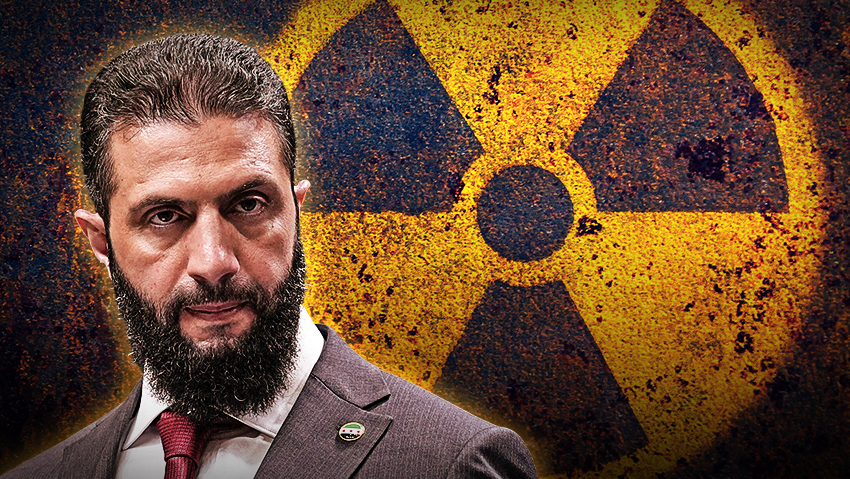
(Photo: MEHMET ALI OZCAN/Anadolu via AFP, shutterstock)
“Syria has the right to use the material for civilian purposes,” al-Shaibani said. “Cooperation between Syria and the IAEA has reached advanced stages. We are dealing with the legacy of the previous regime regarding nuclear activity, and the new Syria looks forward to cooperation.”
The announcement marked a reversal from last week, when Syria’s Atomic Energy Commission said an IAEA delegation was expected to visit the country and confirmed reports that nuclear material discovered at a secret site would be removed.
Israeli and U.S. officials told Axios at the time that the agency’s involvement followed understandings reached by the Trump administration with Syria and Israel after months of threats and intensive diplomacy.
The nuclear material is believed to be connected to the secret program developed under former Syrian President Bashar Assad, centered on the al-Kibar reactor in eastern Syria. Israel destroyed the reactor in a 2007 airstrike, largely dismantling Syria’s nuclear program, though several research, development and storage sites remained intact.
After Assad’s fall, the IAEA reached an agreement with Syria’s new government allowing inspectors to visit the former reactor site at al-Kibar and other locations associated with Syria’s past nuclear activity.
One facility closely monitored by Israel over the past two years was known as “Site 99.” Two Israeli officials told Axios that the Assad regime had stored nuclear material there that had been part of the al-Kibar reactor project.
A U.S. official said the material included yellowcake, a uranium concentrate that can later be processed and enriched as part of the nuclear fuel cycle. The official said the Assad regime had also stored debris and other remnants from the bombed al-Kibar site at the facility.
According to the report, the material at Site 99 could not be used directly to manufacture a nuclear weapon. It could, however, potentially be used in a “dirty bomb,” a conventional explosive designed to disperse radioactive material and contaminate an area rather than create a nuclear blast.
Israeli officials said the IDF bombed the entrances to the site shortly after the collapse of the Assad regime in an effort to prevent access to the stored material.
For more than a year, Israel and the United States discussed how best to deal with Site 99, according to a U.S. official. Senior officials in Israel and at the White House National Security Council worked closely on the issue, while an Israeli official said Jerusalem had made clear to the Trump administration that it would not accept the nuclear material remaining at the site.
Al-Shaibani’s announcement Tuesday suggests Damascus now intends to retain the material, albeit under IAEA safeguards and for what it says will be civilian purposes.
During the same press conference, al-Shaibani also condemned Israel over reported overnight strikes in Syria.
“Today we stand together to demonstrate our commitment to being a pillar of stability at the regional and international level, while Israeli forces persist in their policy of aggression and chaos,” he said. “We reaffirm Syria’s sovereignty and its call for an immediate end to Israeli violations.”