

Spanish Prime Minister Pedro Sánchez said Monday that Russia and Israel spread and amplified disinformation surrounding last month’s mass arrival of migrants in Spain’s North African enclave of Ceuta.
Sánchez cited research by the European External Action Service, the European Union’s diplomatic arm, and said it was “evident” that both countries had used the crisis to criticize his government.
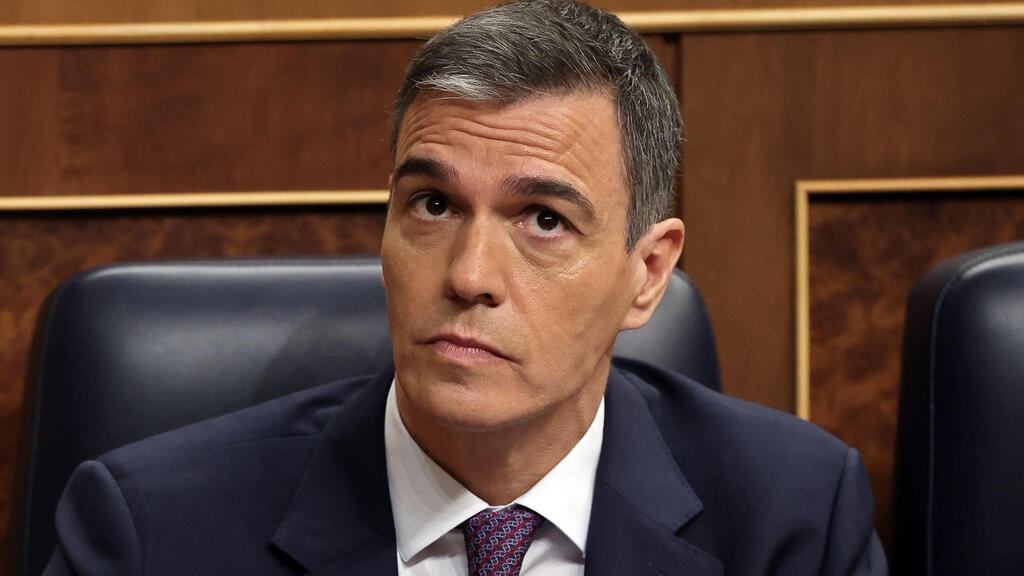
Spanish Prime Minister Pedro Sánchez
(Photo: Thomas COEX / AFP)
He linked the alleged activity to Spain’s broader disputes with Moscow over the war in Ukraine and with Jerusalem over the wars in Gaza and the wider Middle East.
The comments come after tens of thousands of migrants crossed from Morocco into Ceuta in late July, creating one of the most serious migration crises Spain has faced in years. Spanish authorities estimated at the time that about 49,000 migrants entered the enclave within 24 hours. Madrid later described the episode as a violation of Spanish territorial sovereignty.
The crisis also triggered wider political fallout across Europe. Italy threatened to suspend aspects of its Schengen arrangements with Spain, while testimony from migrants that Moroccan police had encouraged crossings fueled anger in Madrid and concern elsewhere in Europe.
Sánchez’s accusation against Israel comes against the backdrop of sharply deteriorating relations between Madrid and Jerusalem.
Spain recognized a Palestinian state in 2024 and has since emerged as one of Israel’s most outspoken European critics over the Gaza war. Sánchez has accused Israel of committing genocide in Gaza, promoted restrictions on weapons and fuel deliveries to Israel and called on other EU states to suspend the bloc’s free-trade agreement with Israel. Israel has strongly rejected the genocide accusation and has repeatedly accused Sánchez’s government of pursuing an anti-Israel policy.
Tensions escalated further after Sánchez said Spain lacked the military power, including nuclear weapons and aircraft carriers, to force Israel to halt its operations in Gaza. Prime Minister Benjamin Netanyahu’s office accused him of making a “genocidal threat,” prompting Spain to summon Israel’s top diplomat in Madrid and reject the remarks as false and defamatory.
More recently, Israel removed Spain from a U.S.-backed civilian-military coordination center in Kiryat Gat, citing what the Foreign Ministry called the Sánchez government’s “anti-Israel obsession” and saying Madrid could no longer play a constructive role.
Sánchez’s latest remarks add a new dimension to that dispute, placing Israel alongside Russia in an allegation that both countries sought to exploit the Ceuta crisis for political purposes.