

Most of the migrants who entered Ceuta have already returned to Morocco, but the unprecedented mass breach of the Spanish enclave continues to shake Madrid and reverberate across Europe. The dramatic images of tens of thousands of people entering the small territory by land and sea have ignited anger among right-wing leaders worldwide and raised urgent questions about how the border collapsed so completely.
The New York Times reported overnight Friday that at least some of the migrants said Moroccan police had encouraged them to cross into Spanish territory, telling them to “enter Spain.” Within 24 hours, at least 60,000 people reportedly entered Ceuta, a figure equivalent to nearly 70% of the enclave’s total population. Spain’s central government put the number slightly lower, at about 50,000.
After mass Ceuta breach, migrants expelled from Spanish enclave in Morocco


Ceuta is one of two Spanish enclaves on the North African coast bordering Morocco. The other is Melilla. Together, they form the European Union’s only land borders with Africa, making them highly sought-after entry points for migrants from Morocco and sub-Saharan Africa hoping to reach Europe without attempting dangerous Mediterranean crossings.
Ceuta’s border with Morocco stretches for about eight kilometers, while Melilla’s is roughly 12 kilometers long. Both are protected by fences, surveillance cameras and watchtowers, but large-scale breaches still occur every few years. In May 2021, more than 8,000 migrants entered Ceuta without authorization over two days. The mass crossing on Thursday, however, was far larger than any previous breach of the Spanish enclaves and, for many Europeans, recalled the continent’s 2015 migration crisis.
Videos from Tarajal Beach, the focal point of the latest crossing, showed large crowds, most of them Moroccan, walking around the breakwater and running along the beach and nearby paths toward Ceuta. Others reached the Spanish side using inner tubes and improvised flotation devices, while another group broke through a gate in the land border fence and ran deeper into the enclave.
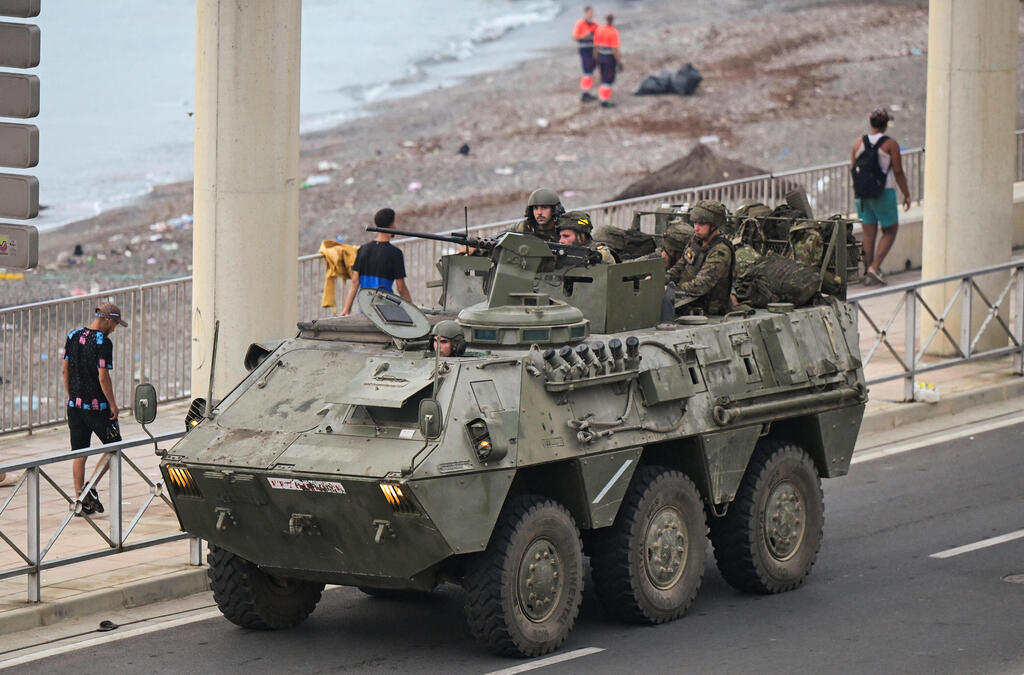
Spanish authorities described the situation as a total collapse. Madrid deployed the military to reinforce local security forces, and armored vehicles were seen patrolling the streets. By 6 p.m. Friday, the Spanish government said 48,300 migrants had already crossed back into Morocco. On Saturday morning, authorities said conditions had returned “almost completely” to normal.
Yet even as the immediate crisis appeared to ease, the central question remained unresolved: How had such an enormous number of people crossed the border so quickly? Testimony from migrants suggested Morocco may have done little to prevent the surge and may even have actively encouraged it.
Mohammed Ahmido told The New York Times that he traveled to the border after hearing on social media Thursday morning that it was open and unguarded. He joined a crowd numbering in the tens of thousands and said many were stunned when Moroccan police urged them to cross. According to Ahmido, officers told the migrants to “enter Spain.”
The crowds did so. Spanish authorities said that amid the chaos, at least 67 people were killed, either by drowning while attempting to swim to Ceuta or in crushing and trampling among those trying to cross the Tarajal breakwater on foot. “So many people came, so many,” Ahmido said.
Rachid Sebihi, who heads an association representing Spanish Civil Guard officers stationed in Ceuta, described the scene to The Associated Press while the breach was still underway. “The situation is complete chaos,” he said. “It is impossible to give exact numbers, but there are thousands of migrants crossing. The border has completely collapsed.”
Ceuta has a population of about 87,000. As the enclave filled with groups of young migrants, frightened residents shut themselves inside their homes and closed businesses. Streets, squares, courtyards, bridges and hillsides were crowded with new arrivals who had nowhere to go.
Arriving by sea, breaching the fence: the mass rush into Ceuta
Francisco Perez, 68, said he hurried his grandchildren into his car as migrants moved around them. He told the Times that his granddaughter asked why they could not go to the beach and why there were “so many Moroccans.” Perez said residents were frightened and furious with the government in Madrid, which he accused of having “abandoned” them.
The Times described migrants bathing in the sea amid discarded flotation equipment, including fins, inner tubes and wetsuits. Others drank from beach showers designed to resemble upright surfboards bearing the slogan, “Ceuta, where emotion is felt.” Some laughed as they tried exercise equipment at a beachfront playground, while Spanish troops watched from armored military vehicles nearby.
But many migrants said they were disappointed by the reception they received and returned voluntarily to Morocco. Ahmido said he entered Ceuta looking for work but found only soldiers and police urging him to leave. “There is no water, no food, no place to sleep, nothing,” he said.
As he waited in line to cross back into Morocco, he said Spanish soldiers shouted at him and the others to keep moving. “They had nothing for us,” he said. “They shouted, ‘Get out of Spain!’”
Hours after the mass entry, Reuters journalists at the border reported seeing Moroccan police fire tear gas to disperse additional migrants gathered near the fences. Water cannons were also deployed as hundreds of people continued returning from Ceuta, either through the official crossing or through holes in the fence.
“Honestly, I don’t even know why I came, and now I’m going back,” said one young man from Tangier. “I haven’t eaten since yesterday afternoon, even though I brought some money. What we are doing is not good and it is not enjoyable.”
Ayman, a 20-year-old barber from Larache, said he entered Ceuta on Wednesday after swimming for five hours. “There was no food inside Ceuta, and the army expelled us harshly,” he said.
‘When there are political problems, Morocco opens the doors’
Other migrants also claimed that Moroccan authorities had deliberately allowed the crossing. “I don’t know why they let us through,” 24-year-old Ayoub al-Arout told the Times. He said he, too, had learned on social media that the border was open.
“Maybe they had some political reason,” he said. “They opened the border and let everyone pass. When there are political problems, Morocco opens the doors and tells us to go.”
Douaa Thabit, 19, said rumors about the unguarded crossing spread virally through social media and by word of mouth, drawing people from across Morocco. Thabit, who speaks fluent English, French and Spanish, said she works as a nurse and photographer and made a spontaneous decision to take advantage of the opportunity. She climbed a fence and swam to the Spanish shore.
Like many others, she was disappointed by what she found. “No one had water, food or anywhere to sleep,” she said. Unlike those who returned, however, she insisted: “I’m not going back.”
The unprecedented breach followed several days in which about 1,500 migrants had already entered Ceuta. Spanish authorities have not formally accused Morocco of deliberately facilitating the influx.
Gallery
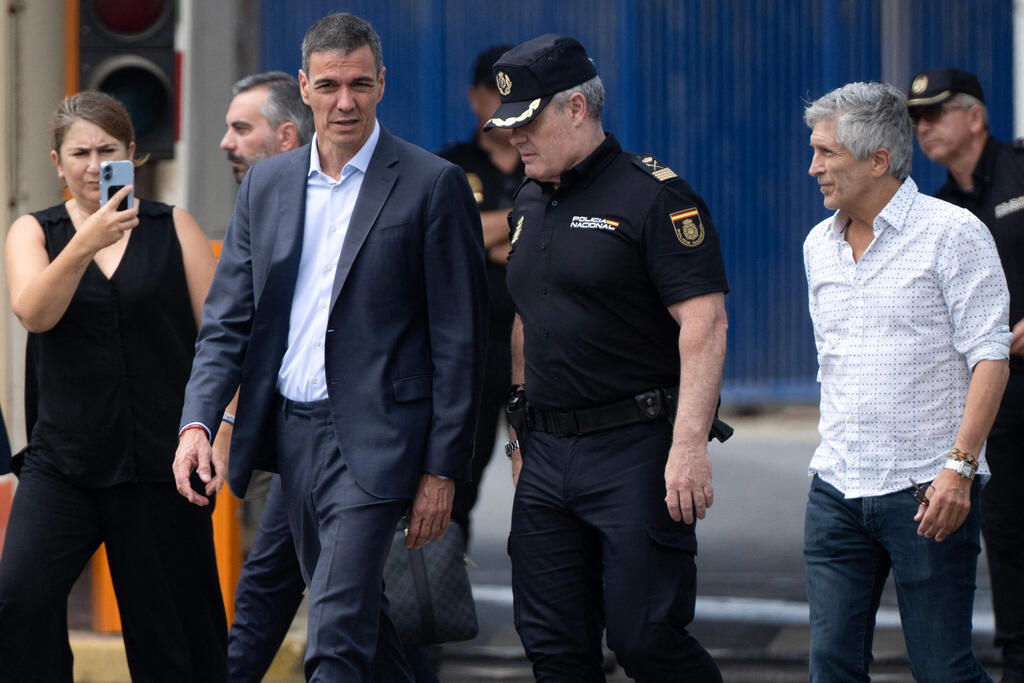
Pedro Sánchez visits Ceuta as police deploy a maritime barrier to prevent illegal crossings from Morocco
(Photo: JORGE GUERRERO / AFP)
Prime Minister Pedro Sánchez, who made a hurried visit to Ceuta on Friday as criticism of his government intensified, blamed human-smuggling networks. He said they had exploited a mistaken interpretation of a Spanish Supreme Court ruling issued last month.
The court ruled that migrants who reach Spanish territory by sea cannot be immediately expelled in the same manner as those who cross a physical land barrier. Sánchez said the misleading claim that sea arrivals would be much harder to deport “spread like wildfire within hours through smuggling networks.”
The ruling was largely technical. Judges found that immediate removal was not permitted under Spanish law because migrants arriving by sea had not crossed a physical barrier. To overcome that legal obstacle, Sánchez’s government announced that it would establish a physical barrier in the water using buoys.
Morocco has denied involvement in the mass crossing. Its ambassador to Spain, Karima Benyaich, said the events in Ceuta had occurred against Rabat’s wishes. “We have always prioritized legal, orderly and safe migration for everyone,” she said. She did not explain what had prompted so many people to head for Ceuta at the same time.
Morocco does not recognize Spanish sovereignty over Ceuta, which has been under Spanish rule since 1580, or over Melilla. Rabat regards both enclaves as occupied territory and has previously been accused of loosening border controls during periods of diplomatic tension with Madrid.
Such allegations emerged during the 2021 surge, when more than 10,000 undocumented migrants entered Ceuta over several days. At the time, the influx was widely seen as retaliation for Spain’s decision to provide hospital treatment to Brahim Ghali, leader of the Polisario Front.
(Photo: REUTERS/Fabian Bimmer)
The decision triggered a diplomatic crisis between Rabat and Madrid because the Polisario Front supports independence for Western Sahara, a disputed territory claimed by Morocco. The movement has long presented itself as the legitimate representative of the territory’s people.
It remains unclear whether a renewed dispute with Madrid could explain the latest events. European media have pointed to Sánchez’s visit last month to Algeria, Morocco’s bitter regional rival and a supporter of the Polisario Front’s demand for Western Saharan independence.
Under pressure from Morocco, Sánchez abandoned Spain’s previous support for a referendum in Western Sahara in 2022 and backed a plan to make it an autonomous region under Moroccan control. That move angered Algeria and contributed to years of diplomatic estrangement.
Sánchez ended the rupture last month when he traveled to Algeria after returning from New Jersey, where he had attended the World Cup final. During the visit, he and President Abdelmadjid Tebboune signed an agreement to strengthen diplomatic and commercial ties. Morocco has not publicly objected to the Spanish-Algerian agreement, and there is no confirmed connection between the visit and the events in Ceuta.
Meloni suspends Schengen arrangement, Trump calls it an ‘invasion’
Although most migrants have returned to Morocco, the images from Ceuta have shocked Europe and intensified anger at Sánchez’s left-wing government. For right-wing parties across the continent and beyond, the breach has become evidence of what they describe as the failure of Sánchez’s relatively permissive migration policy.
Earlier this year, the Spanish government advanced a plan to regularize the status of hundreds of thousands of undocumented migrants already living in the country, allowing them to work legally. The policy runs against a broader European trend in which centrist and right-wing governments have tightened immigration restrictions in an effort to deter new arrivals.
“Sánchez allowed an invasion of Spain through Ceuta,” conservative Spanish politician Isabel Díaz Ayuso said.
Italian Prime Minister Giorgia Meloni led criticism from European leaders, calling the scenes “shocking” and warning that “uncontrolled immigration” posed a threat to the entire continent.
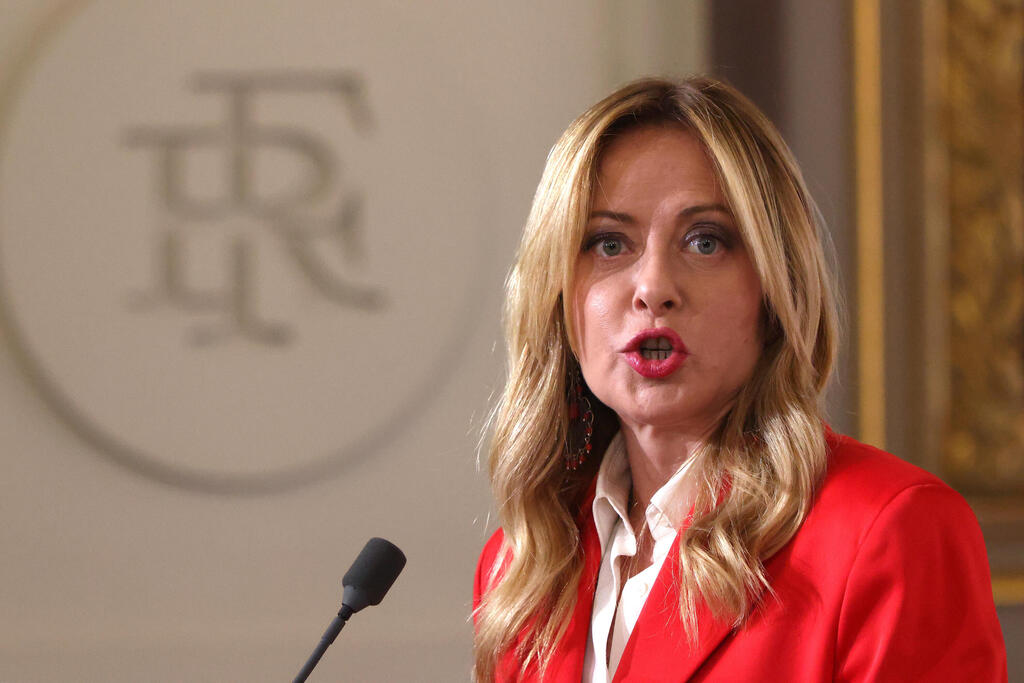
Italian Prime Minister Giorgia Meloni
(Photo: Tom Nicholson/Getty Images)
Concern has focused in part on the Schengen Agreement, which abolished routine border checks among 29 participating European countries and allows people to move between them without undergoing regular immigration controls. Because Spain belongs to the Schengen Area, migrants who enter the country unlawfully could potentially travel onward to other participating states.
Meloni announced Friday that Italy was suspending Schengen arrangements with Spain. The two countries do not share a land border, meaning the move primarily affects air travelers.
Italian Foreign Minister Antonio Tajani was more direct. “The images coming from Ceuta show how the Madrid government’s decision to grant Spanish, and therefore European, citizenship to more than 500,000 illegal migrants encourages human trafficking,” he said.
Spain’s Foreign Ministry protested the statement, saying such language was inappropriate for “a partner and friendly country, from which we expect European solidarity rather than partisan demagoguery.”
U.S. President Donald Trump, who has repeatedly clashed with Sánchez in recent months, also attacked the Spanish leader’s immigration policy. The disputes between the two have included Spain’s refusal to allow the United States to use its airspace for strikes against Iran.
“It looks like an invasion,” Trump said of the scenes from Ceuta during a televised Cabinet meeting at Camp David. He later used the episode to campaign for Republicans ahead of November’s congressional elections.
“What is happening in Spain, with tens of thousands of illegal migrants invading it, happened in the United States during the Sleepy Joe Biden administration,” Trump wrote on Truth Social. “And it will happen again, only worse, if the ‘Dumocrats’ ever return to power. Do not let our country be destroyed. Vote Republican, and be proud of the United States.”
The U.S. State Department also issued an official statement blaming Spain’s migration policy for the mass crossing. “We are considering measures to protect Americans at home and abroad from this threat and stand ready to assist other European allies considering similar options,” it said.
Sánchez responded Saturday by condemning what he called the “selfish approach” of some European governments.
“Such an approach, arising from prejudice, disinformation, ignorance or political interests, is not only contrary to European law, humanitarian law and the principles of solidarity that unite us, but also runs counter to Europe’s long-term interests,” he wrote in a letter to the heads of European Union institutions obtained by AFP.
He also called for a special video conference of the interior ministers of the EU’s 27 member states.