


The ceasefire between Iran and the United States remains in effect, and a new round of talks is expected to begin Friday in Islamabad, Pakistan’s capital, in an effort to reach an agreement between the sides. From Iran’s perspective, its demands are very clear: it has outlined them in 10 points, which include, among other things, a new order in the Strait of Hormuz and a halt to attacks against it and its proxies in the region. These clauses are meant to serve as a framework for opening negotiations, but they are vague, lack many technical details and have not won broad agreement.
The first significant gap was evident yesterday in the continued Israeli strikes in Lebanon. Iran and Pakistan view the ceasefire agreement as covering all fronts, including a halt to attacks against Hezbollah, while Israel and the United States maintain that Lebanon is not part of the agreement.
Gallery
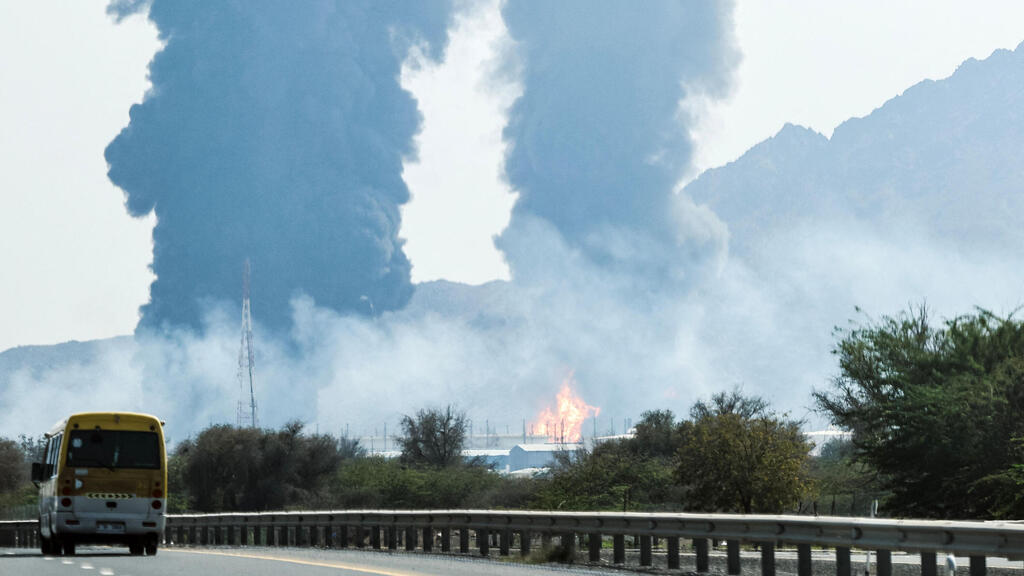
Smoke rises from Fujairah in the United Arab Emirates following another Iranian strike
(Photo: AFP)
However, the ambiguity surrounding the ceasefire terms and what comes next is not limited to Israel’s arena. Gulf states are also raising questions tied to issues more directly relevant to them, particularly the future control of the Strait of Hormuz after the war and the military threat posed by Iran.
The United Arab Emirates’ Foreign Ministry, which continued to face Iranian attacks even after the ceasefire took effect — including 17 ballistic missiles and 35 drones — said overnight that it had taken note of U.S. President Donald Trump’s announcement of the two-week ceasefire with Iran and is seeking further clarification on the agreement’s terms. The goal, it said, is to ensure Iran’s full compliance with an immediate halt to all hostile activity in the region and the complete, unconditional opening of the Strait of Hormuz.
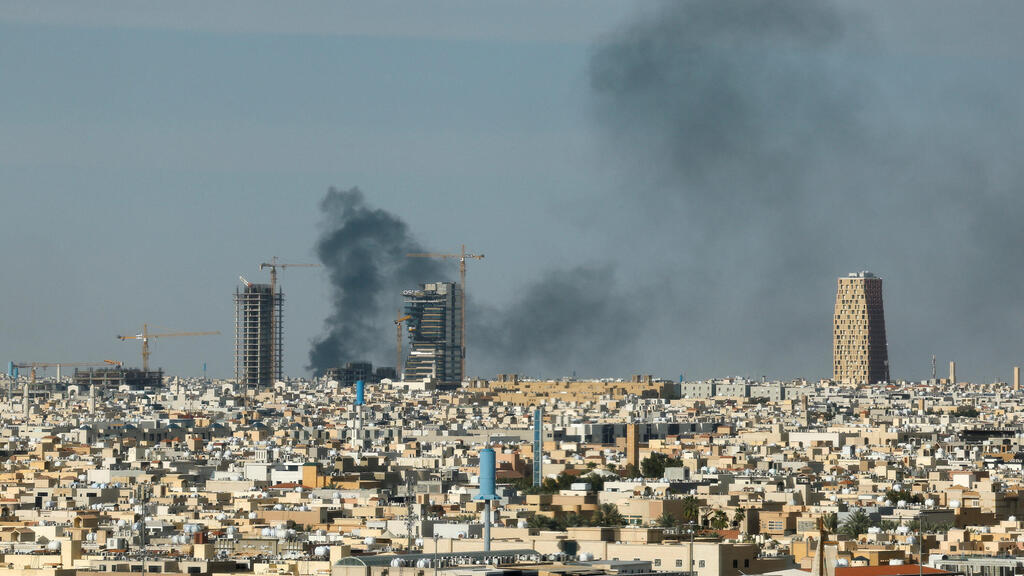
Smoke from Iranian strikes in the heart of the Saudi capital, Riyadh
(Photo: REUTERS/Stringer)

Anwar Gargash, an adviser to the UAE president
In its statement, the ministry said that Iranian attacks targeting infrastructure, energy facilities and civilian sites over the past 40 days — involving 2,819 ballistic missiles, cruise missiles and drones — caused casualties and property damage and require firm positions, including holding Iran accountable and ensuring full compensation for damages and losses. It added that addressing Iranian threats must be comprehensive, including “Iran’s nuclear capabilities, its ballistic missile and drone capabilities, its proxies and terrorist arms in the region, as well as stopping threats to maritime navigation and ending economic warfare and piracy in the Strait of Hormuz,” with the aim of achieving lasting peace for the region’s countries.
The UAE also stressed that it is not a party to the war and that it made extensive efforts to prevent it, adding that it is capable of defending its sovereignty, security and national interests.
This does not represent an escalation in Emirati rhetoric or a threat. The Foreign Ministry statement comes after weeks in which the country was under continuous Iranian attack and reflects its understanding that any future regional decision will affect it as well, prompting it to convey its positions.
Anwar Gargash, an adviser to the UAE president, wrote on the social platform X that there is no reason to be surprised by the UAE’s stance toward Iranian aggression against Gulf states. Such clarity, he said, is essential after what he described as brutal, premeditated aggression, adding that the time for niceties has passed and openness is required. “Our collective position must be firm and clear regarding the features of the next phase, in a way that strengthens stability and security in the region,” he said.
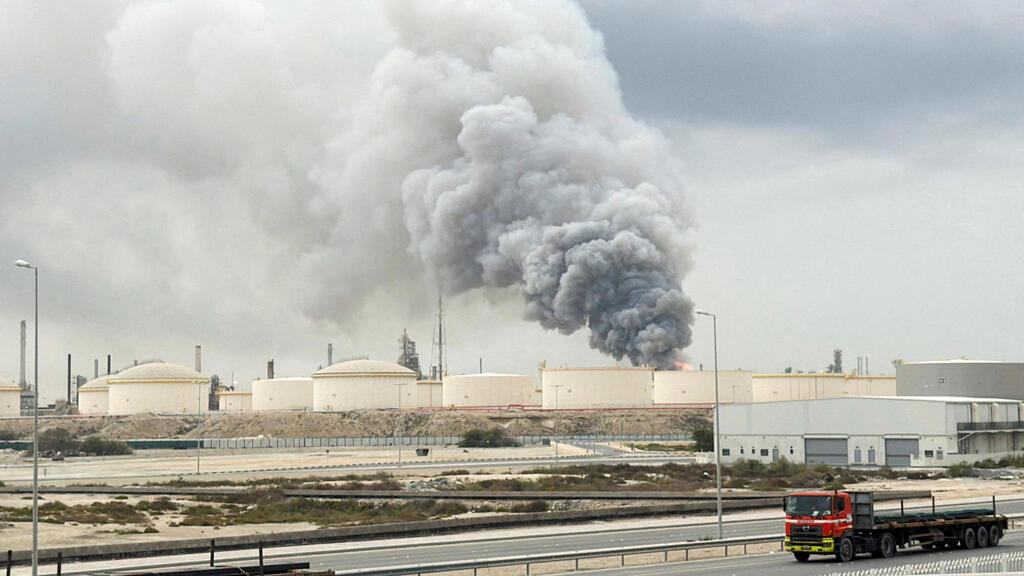
An attack on oil refineries in Bahrain
(Photo: REUTERS/Stringer )
Yoel Guzansky, a senior researcher at the Institute for National Security Studies (INSS) and a former senior official at Israel’s National Security Council, addressed the “day after” in the Gulf: “The war between Iran, the United States and Israel has placed Gulf states in a complex position and has even worsened their strategic situation. Despite the damage Iran sustained, the regime survived and demonstrated resilience while maintaining key leverage — especially the ability to threaten the Strait of Hormuz and energy infrastructure in the Gulf. At the same time, the war underscored for Gulf states the limits of the American security guarantee and the inability of alternative options — external powers, regional alliances or self-reliance — to provide real security.
“As a result, Gulf states are likely to continue a policy of hedging: combining continued reliance on the United States, deeper military buildup (particularly missile and drone defense), diversification of international partnerships and efforts to reduce tensions with Iran. At the same time, they may advance solutions to bypass the Strait of Hormuz and, over the longer term, even consider nonconventional deterrence capabilities if it becomes clear that Iran retains nuclear capabilities.”
According to Guzansky, “Ultimately, the war has not resolved the Gulf states’ security challenges and has highlighted that nearly all the strategic alternatives available to them are partial and problematic.”
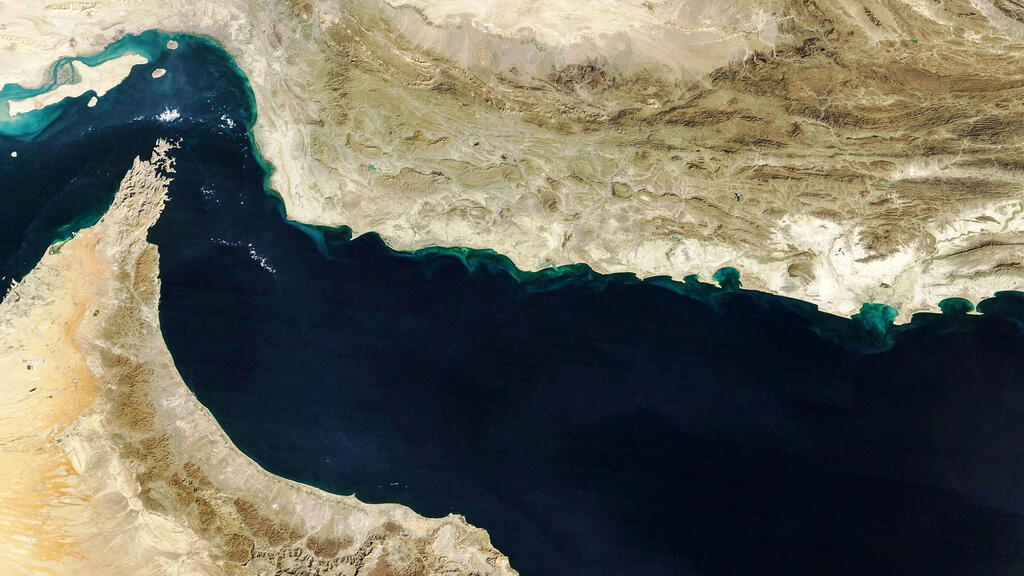
Strait of Hormuz
(Photo: AFP PHOTO / NASA)
As for the latest attacks on Gulf states, Qatar’s Defense Ministry said Tuesday evening that it had dealt with seven ballistic missiles and several drones launched from Iran during the day, all of which were intercepted. Bahrain also continues to face threats; according to a report Wednesday, it has already contended with 194 missiles and 515 drones launched toward its territory. Kuwait’s military said Tuesday evening that within 24 hours, four ballistic missiles and 42 drones were launched at the country, targeting facilities belonging to the Kuwait Petroleum Corp. and power and desalination plants. Saudi Arabia’s Defense Ministry reported intercepting nine drones.