


Yemen's internationally recognized government announced Sunday the start of a large-scale ground offensive against the Iran-backed Houthis, as fighting escalated across the country and reports indicated the rebels were continuing to advance in southwestern Yemen.
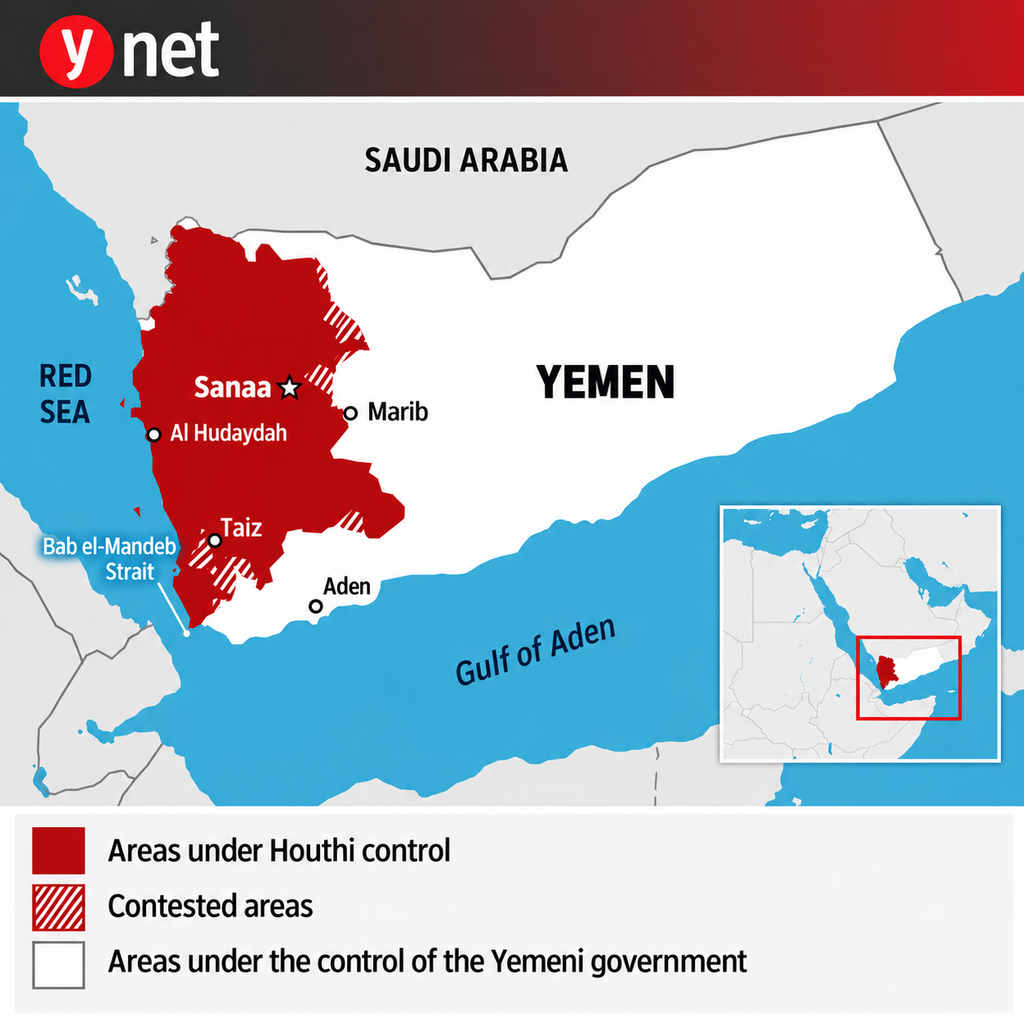
The operation comes amid repeated Saudi airstrikes against Houthi positions and follows a Houthi offensive last month that gave the group control of strategically important areas overlooking the Bab el-Mandab Strait, a vital shipping route linking the Red Sea with the Gulf of Aden and, through the Suez Canal, Europe and Asia.
"We have moved from the preparation phase to the action phase," Rashad al-Alimi, chairman of Yemen's Presidential Leadership Council, said in announcing the operation.
"We declare the battle for the state, until Yemen is liberated from the Houthis," he said. "Our position today is to assume national responsibility for confronting the Houthis, after all opportunities to calm the situation have been exhausted. This is not a war against our people in Sanaa, Saada or any other province, and it is not directed against any tribe."
Reports over the weekend said the Yemeni government and Saudi Arabia were preparing a broad campaign aimed at pushing back the Houthis and restoring pro-Saudi forces' control of the Bab el-Mandab Strait.
Reuters reported that the plan calls for about 100,000 Yemeni troops to take part in the operation under Saudi supervision and with support from Saudi airstrikes.
The announcement came as the Houthis appeared to be making further gains on the ground. The group surprised pro-Saudi Yemeni forces last month with a ground offensive that seized large areas of southwestern Yemen, including territory commanding the Bab el-Mandab Strait.
The strait's importance to the global economy has grown further since the Strait of Hormuz was blocked during the war with Iran.
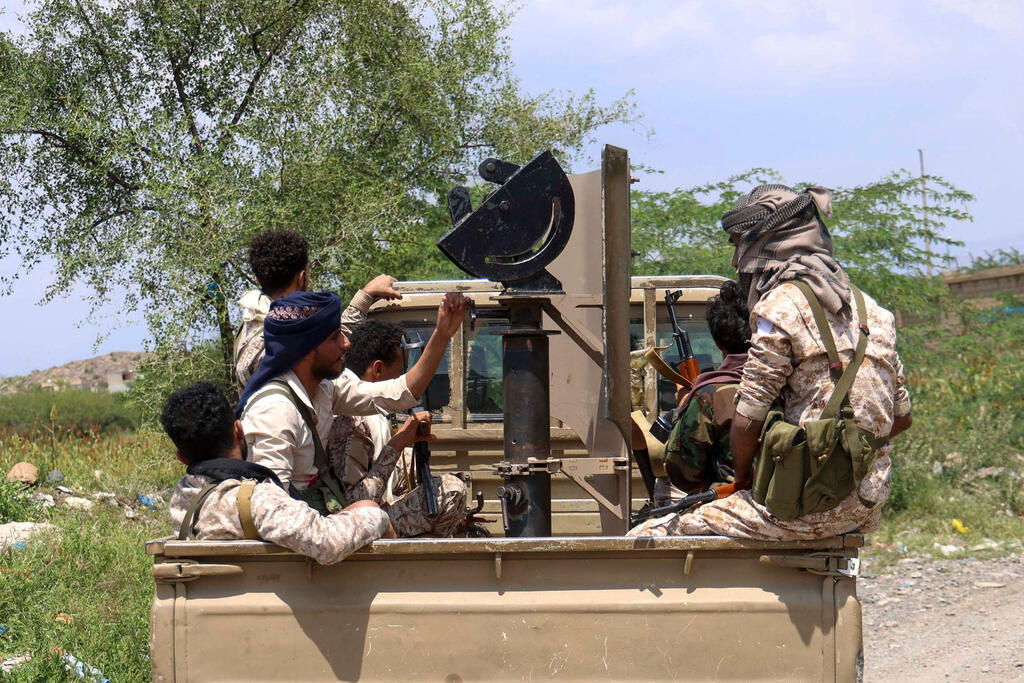
Yemeni government forces in the Taiz area, October 3
(Photo: Ahmad AL-BASHA / AFP)
As the government announced its new offensive, several international news organizations reported that Houthi forces were either close to encircling or had already encircled Taiz, Yemen's third-largest city and a major stronghold of government forces.
Military officials told Reuters on Sunday that the Houthis had made gains over the previous 48 hours in fighting for strategic hills near Taiz and were advancing toward the last route connecting the city with Aden, Yemen's second-largest city and the seat of the internationally recognized government since it was driven from the capital, Sanaa, early in the country's civil war in 2014.
Houthi control of the road would allow the group to cut off reinforcements and supplies to Taiz, a city with hundreds of thousands of civilians and large numbers of fighters, effectively placing it under siege.
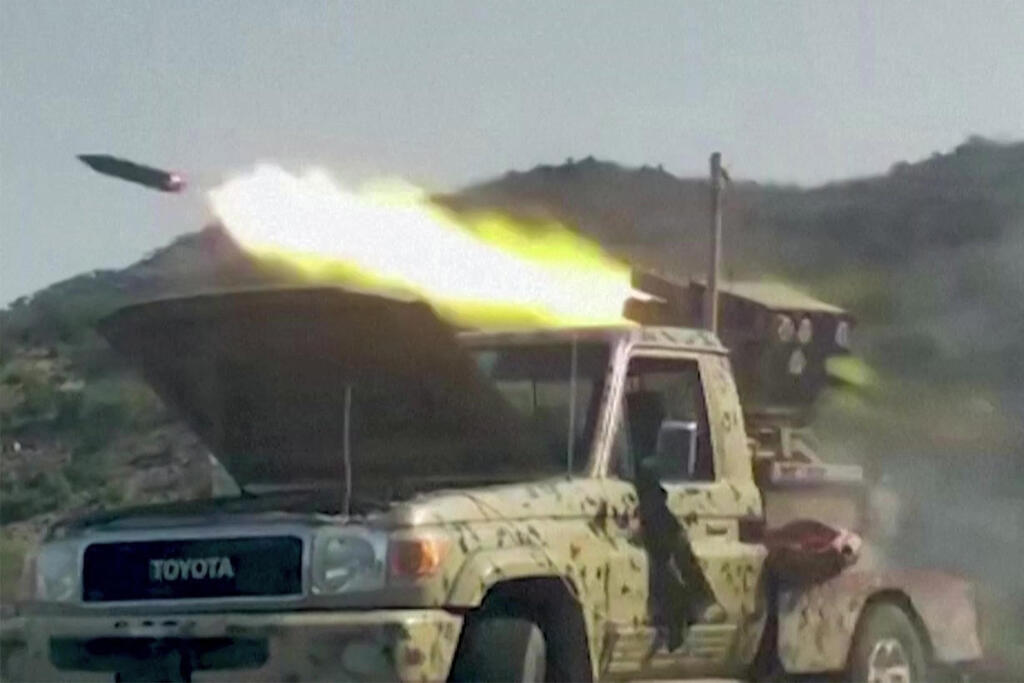
Saudi-backed Yemeni government forces battle the Houthis in the Taiz area of southwestern Yemen, Sept. 8
(Photo: AFP PHOTO / NATIONAL RESISTANCE FORCES IN YEMEN / HANDOUT)
AFP, meanwhile, cited security officials as saying the road between Taiz and Aden had already been blocked by the Houthis, meaning the city was effectively surrounded.
"We were told that the Houthis seized the al-Safiya area, cut the main road and took control of the police station," a local police official told AFP.
Three other sources from Yemeni government forces also confirmed that the Houthis had seized the area and the supply route south of Taiz. Witnesses reported hearing heavy fighting in al-Safiya and al-Samsara, two communities along the route between Taiz and Aden.
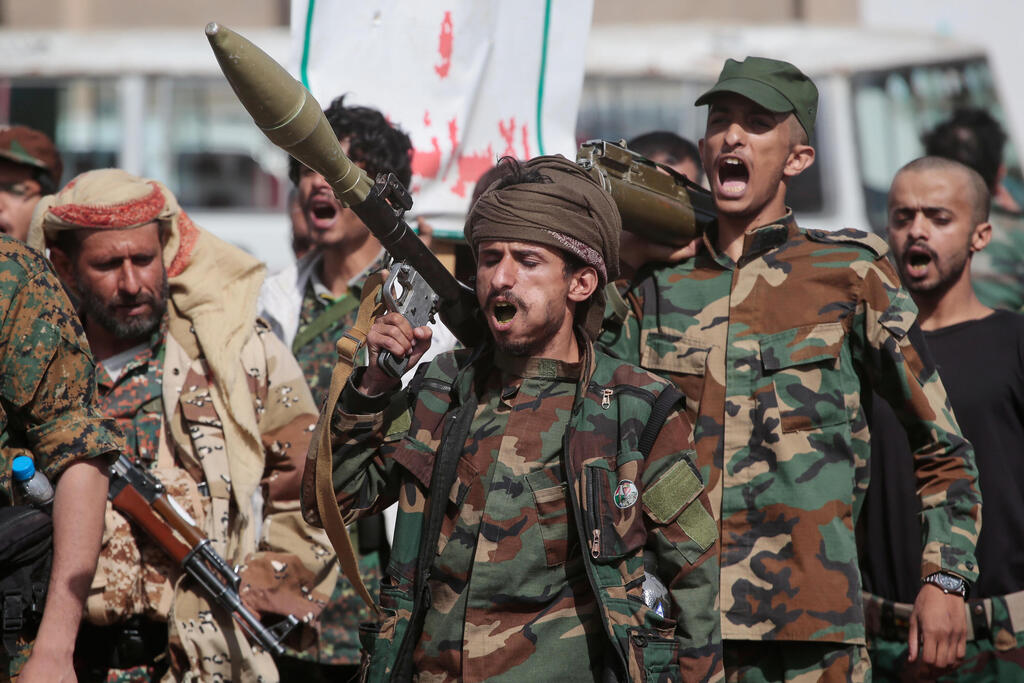
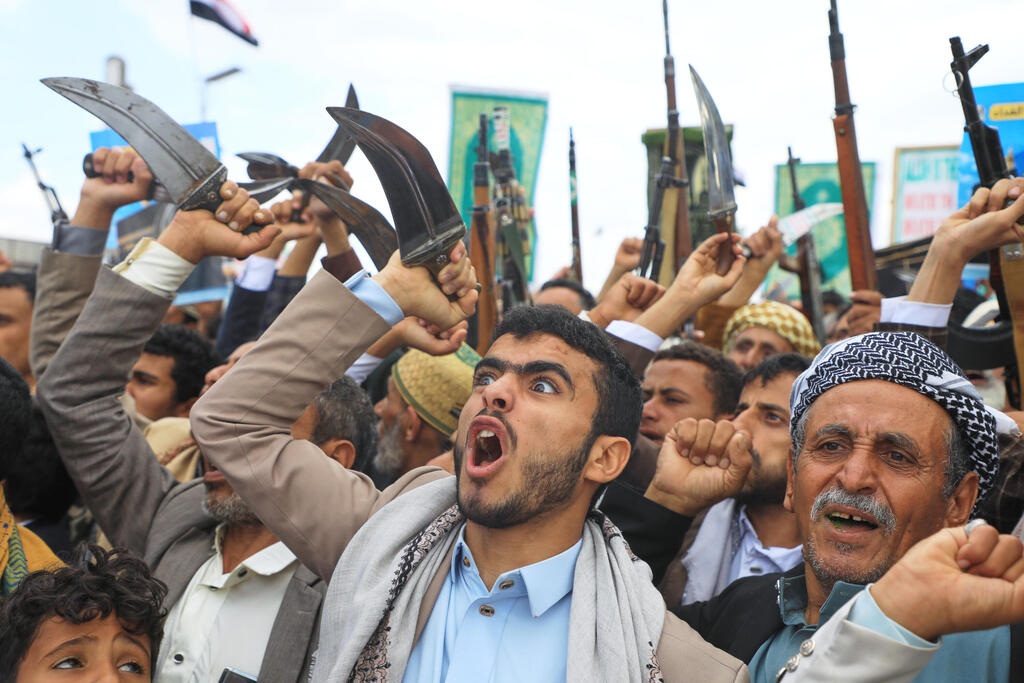
Houthi supporters in Sanaa, Yemen
(Photo: AP Photo)
Mohammed al-Qadhi, a veteran Yemeni journalist and analyst from Taiz, told Reuters that the Houthi advance would further consolidate the group's grip over areas farther west along the coast overlooking Bab el-Mandab by giving it control of mountainous territory in the countryside west of Taiz.
"This will help them protect their back in case of any operation against the coastline, and make recapturing those areas much more difficult," he said.
The Houthis had not immediately responded to the government's announcement of a new ground offensive. Their military spokesman, Yahya Saree, however, said Sunday afternoon that Houthi forces had repelled what he described as an attempt by Saudi-backed forces to advance toward their positions in the northern province of al-Jawf.
Saree said the operation resulted in the destruction of vehicles belonging to what he called the "Saudi enemy," as well as deaths and injuries among Saudi-aligned forces. He said Houthi forces pursued the retreating troops and attacked enemy concentrations with ballistic missiles and drones.
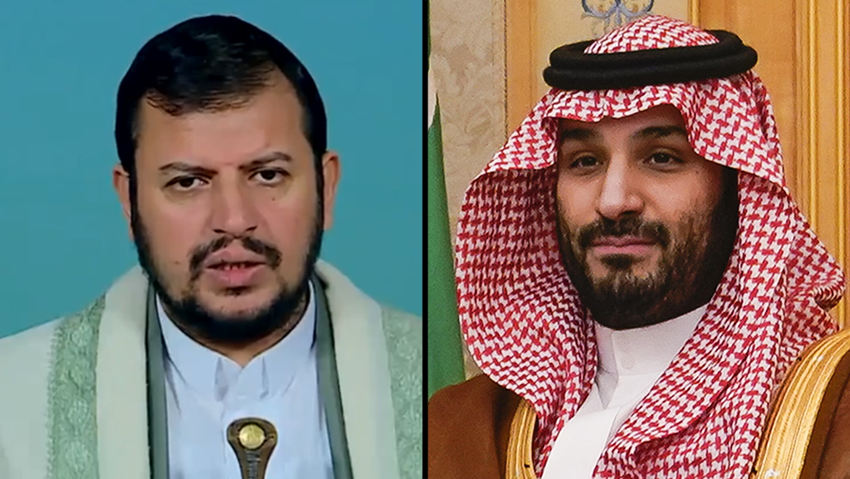
Houthi leader Abdul Malik al-Houthi, Saudi Crown Prince Mohammed bin Salman
(Photo: Nathan Howard, AP)
Saree later claimed responsibility for missile and drone attacks targeting facilities belonging to Saudi oil giant Aramco in the capital, Riyadh, and the Khurais area.
"The forces will continue to strike the bases and oil facilities of the Saudi enemy using Yemeni-made missiles and drones, weapons that have proven their ability to hit targets with great precision and successfully penetrate Western defense and interception systems," he said.
Civil war reignites after four-year truce
Yemen's civil war erupted in 2014 following years of political turmoil that grew out of the Arab Spring protests. Those demonstrations led in 2011 to the removal of longtime President Ali Abdullah Saleh, who had ruled the country for decades.
Three years later, exploiting the weakness of Yemen's new government, the Houthis launched a major offensive and seized Sanaa.
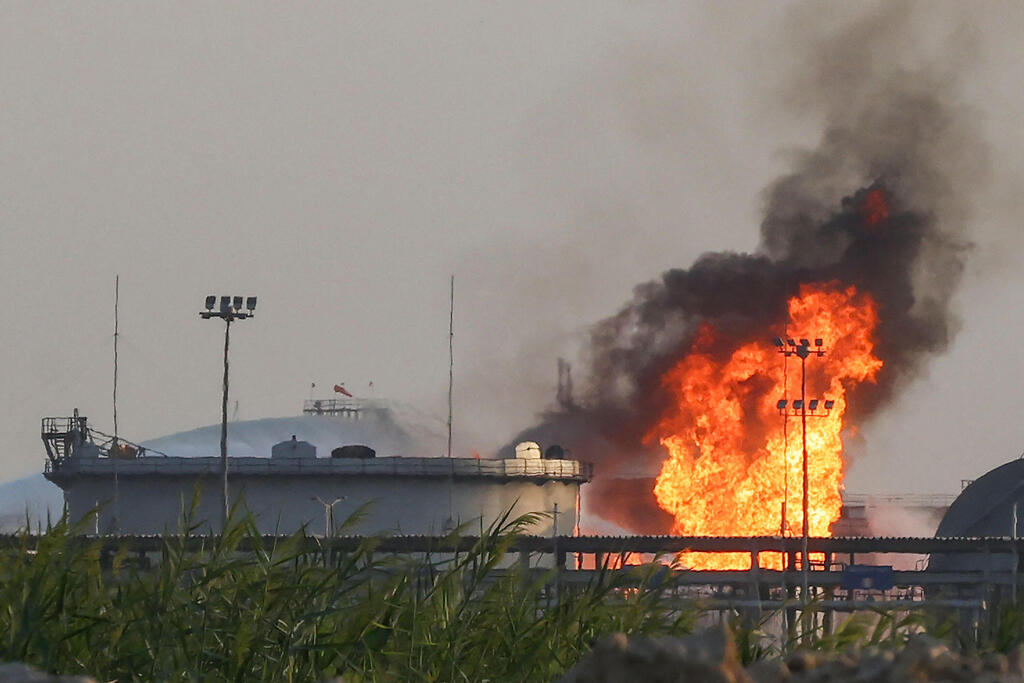
A Saudi oil facility catches fire after a Houthi attack
(Photo: AFP)
Saudi Arabia viewed the Houthi takeover as a direct threat to its security and regional influence. In 2015, Riyadh assembled a coalition of Arab states and launched a military intervention that included thousands of airstrikes, a naval and air blockade and support for Yemeni government forces.
Although the Saudi-led coalition prevented the Houthis from taking control of the entire country, it failed to defeat them. The group maintained control over northwestern Yemen and over the years launched missiles and drones at Saudi cities, airports and oil installations.
The conflict also produced one of the world's worst humanitarian crises, while the Saudi-led coalition faced intense international criticism over civilian casualties and damage to infrastructure.
Against that backdrop, Saudi Arabia changed course and reached a ceasefire with the Houthis in 2022. The truce remained largely stable for four years before collapsing in July amid the war with Iran, when the Houthis sought to break an air and naval blockade imposed on them by the Saudi-led coalition.
Bab el-Mandab becomes key battleground
During the renewed fighting, the Houthis also declared what they called a "naval blockade" against Saudi Arabia and attacked Saudi tankers and ships attempting to pass through the Bab el-Mandab Strait.
Their territorial gains in southwestern Yemen last month, which tightened their control over the strategically critical waterway, were therefore seen as a major setback for Riyadh.
Saudi Arabia has sought international support in recent weeks for its renewed campaign against the Houthis. But U.S. President Donald Trump, seeking to avoid another military entanglement in the Middle East, rejected appeals from Saudi Crown Prince Mohammed bin Salman for the United States to join strikes against the rebels.
U.S. representatives have also met with the Houthis and received assurances that American vessels would not be attacked.
Meanwhile, the so-called Mecca Alliance signed in August by Saudi Arabia, Turkey and Pakistan has so far produced no direct military intervention. Under the agreement, the three countries pledged that an attack on one would be considered an attack on all. Turkey and Pakistan, however, have so far limited their responses to condemning Houthi attacks.