


Prime Minister Benjamin Netanyahu last week released his responses to questions from the state comptroller as part of the review of the events of October 7. In a 55-page document that included partial quotations, half-truths and distortions, the prime minister blamed the security establishment for the failure.
Among other things, he wrote: “The core of the failure stems from the loss of the intelligence and defensive advantage vis-a-vis Hamas. The intelligence and security bodies determined unequivocally that the policy of deterrence and weakening was effective and that Hamas was under deep deterrence, and they recommended continuing to adhere to it.”
However, a review of Netanyahu’s statements over the years outlines a different chain of responsibility. As early as 2009, as opposition leader and a candidate for prime minister, Netanyahu pledged to topple Hamas’ rule. In the years that followed, throughout his terms in office, he repeatedly declared that Hamas was deterred, arguing that the terror organization had suffered “severe and unprecedented blows” and that its leaders had learned the lesson. These statements indicate that the conception of Hamas being deterred was not imposed on him by the security establishment but was formulated and adopted by him over many years.
In 2009, after Operation Cast Lead, Netanyahu, then the opposition leader and the Likud candidate for prime minister, delivered a statement in Ashkelon, saying: “We will not stop the IDF, we will complete the mission, we will topple Hamas’ terror rule.” In November 2013, a year after Operation Pillar of Defense, Netanyahu said: “We are marking a year since Operation Pillar of Defense. The numbers are clear: There has been a drop of about 98% in rocket fire. It appears that the total fire, most of it ineffective, amounted to 35 launches. There is no doubt that significant deterrence was achieved.”
“At the same time, we are not fooling ourselves,” he added. “We know that Hamas and the other terror organizations continue to arm themselves in various ways. They are also trying to develop the ‘underground dimension,’ namely the tunnels, and we are required to find responses to all these threats, while at the same time continuing the strong deterrence that we have achieved and that we maintain. Ultimately, that deterrence is achieved by the enemy’s knowledge that we will not tolerate attacks on our communities and our soldiers and that we will respond with great force. That is the foundation of our deterrence. The means serve that feeling and that policy, but that is the foundation of deterrence.”
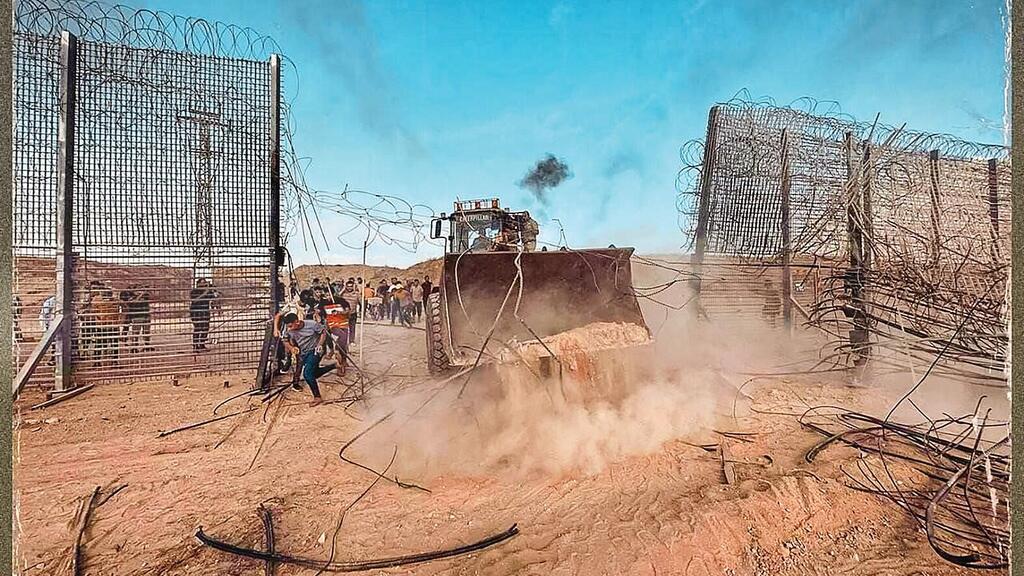
In a media statement about half a day after a ceasefire took effect during Operation Protective Edge in August 2014, Netanyahu said, among other things: “I said that Hamas would suffer blows it never dreamed of. And that is exactly what happened. Here is what we did: First, we neutralized the offensive tunnel weapon. When Hamas tried to assault us this time, it ran into an iron wall, a concrete wall, impassable. Hamas knew that above ground, if it tried to enter our territory, it would come under fire, so it tried to build terror tunnels underground to infiltrate our territory. That is what the terrorists did in Protective Edge. They wanted to break into dining halls in the kibbutzim and thought they could do it this time as well, but now they discovered that they are blocked thanks to a steel wall.”
At the Negev Conference in April 2016, Netanyahu said Hamas had suffered an unprecedented blow: “In a few months we will mark two years since Operation Protective Edge. Those who attacked us from the Gaza Strip suffered an unprecedented blow. We will not hesitate to act forcefully against anyone who seeks to endanger the residents of Israel.”
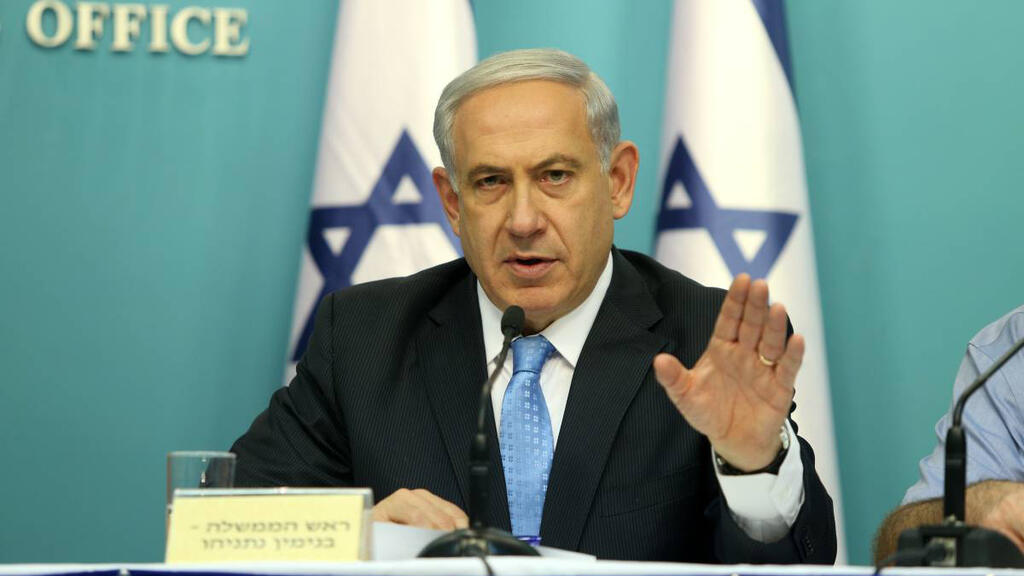
Benjamin Netanyahu
(Photo: Amit Shabi)
In September 2019, Netanyahu was asked on Reshet Bet radio about toppling Hamas. “When you are in command, you have to decide how you manage the war, and I will not start it a moment, not even a second, before the conditions are optimal,” he said. “A terror actor that wants to destroy us knows that it will also take the blow. Apparently, that will happen and we will have no choice but to enter a campaign to stop the attacks.”
In May 2021, after Operation Guardian of the Walls, Prime Minister Netanyahu held a situation assessment at Southern Command and toured the Hatzor Air Base. “Hamas received blows it did not expect. We set it back many years,” he declared. “We will continue as long as necessary to restore calm to Israel’s citizens. Our enemies around us see the price we exact for aggression against us, and I am sure they will draw the lesson.”
Earlier that month, as the ceasefire took effect, Netanyahu said: “We changed the equation. What was will not be what will be. We will respond with different force to any manifestation of aggression toward the border communities and toward any other place in Israel.”
In an autobiography published in 2022, when he was again opposition leader, Netanyahu wrote that “Hamas was effectively deterred,” explaining that he did not want an all-out war with the terror organization in Gaza because he wanted to focus on Iran. “I had bigger fish to fry,” he wrote about the fighting with Hamas.
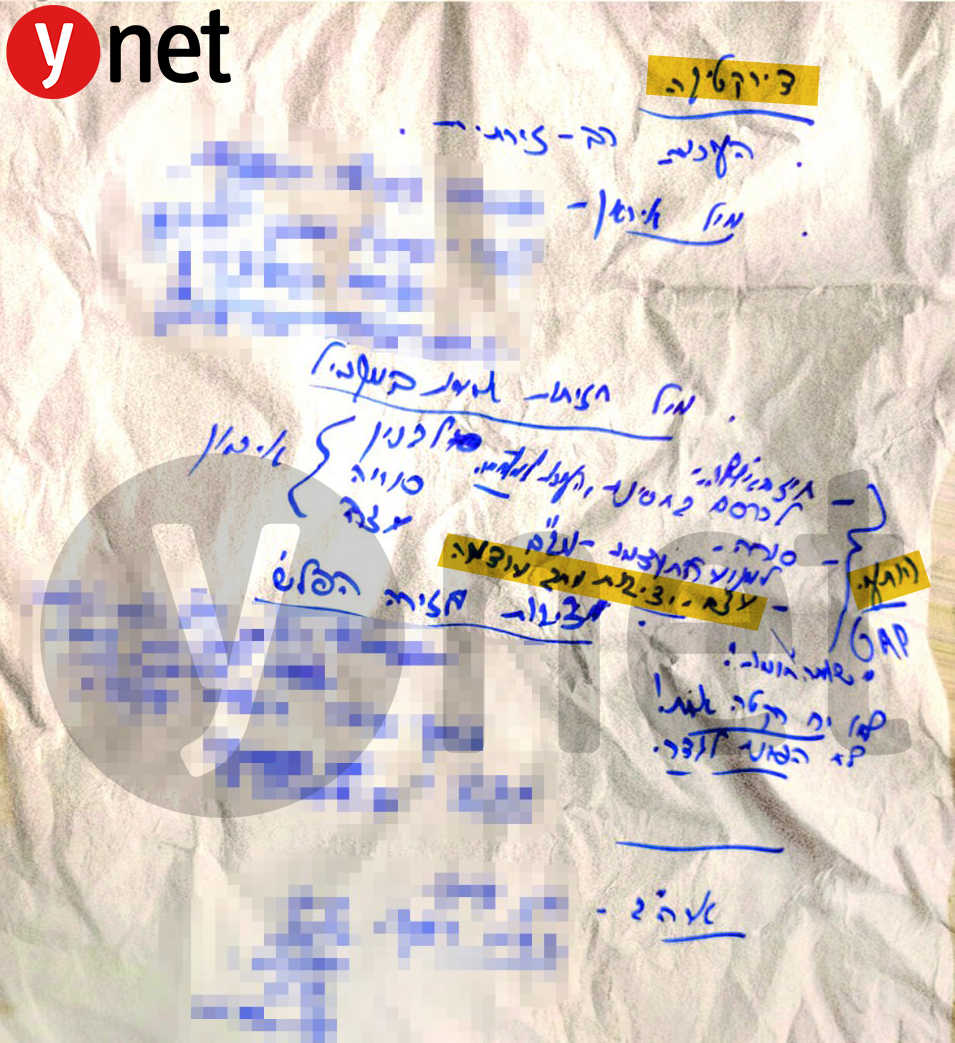
A note discarded in 2023 in which Netanyahu wrote: ‘Gaza — stability through strength'
In May 2023, about six months before Hamas’ surprise attack, Netanyahu said at a Likud meeting: “How many rockets has Hamas fired into our territory since Guardian of the Walls? To the best of my knowledge, zero. I don’t know, maybe one. They didn’t fire into our territory because they are deterred. Operation Guardian of the Walls delivered the hardest blow in Hamas’ history, destroyed its aerial and naval capabilities and its underground capability. That caused a change in the deterrence equation, and at least it works every year or two. Our intention in Operation Shield and Arrow” — which Israel initiated against Palestinian Islamic Jihad in Gaza — “was to change the deterrence balance with Islamic Jihad as well, and that produced the result.”
That same month, at a Cabinet meeting in connection with the operation, he declared that Israel had succeeded in “changing the equation” with Islamic Jihad, after claiming that the IDF and the Shin Bet had eliminated “the entire leadership of the organization in Gaza,” thereby fulfilling the directive he said he had set for them before the operation, which he summarized in two words: “surprise and initiative.” Netanyahu argued that the operation strengthened Israeli deterrence: “For months since the formation of the government, I have been repeating and saying: Whoever harms us, whoever tries to harm us, whoever will try to harm us — his blood is on his own head. Today Israel’s enemies in Gaza, and far beyond Gaza, know that even if they try to hide, we can and are prepared to reach them at any time. This understanding was significantly strengthened in Operation Shield and Arrow. We changed the equation.”
The PM’s handwriting exposes the lies
At the end of a discussion in the Knesset Foreign Affairs and Defense Committee on June 13, 2023, just four months before Hamas’ surprise attack, Netanyahu left behind a note that was thrown into the trash. The note, whose contents were revealed yesterday on ynet and in Yedioth Ahronoth undermines some of the prime minister’s claims regarding his responsibility for the October 7 massacre, as he presented them in his responses to the state comptroller.
For example, State Comptroller Matanyahu Englman asked Netanyahu: “Did the directive that held that Hamas is deterred and interested in calm affect the attention paid to border defense in Gaza?” The prime minister replied: “The statement that ‘Hamas is deterred’ was not a ‘directive.’” However, Netanyahu’s own handwritten note bears the title he denied to the comptroller: “Directive.”
Netanyahu told Englman that it was not he who spoke about Hamas being deterred but rather “the unified intelligence assessment supported by all intelligence bodies in Israel.” In Netanyahu’s handwriting, by contrast, it is written that he instructs — “directive” — the security and intelligence bodies: “Gaza — stability through strength.” He did not ask the professional officials whether stability existed; he ordered it.