

“Full, immediate and safe reopening of the Strait of Hormuz.” That was the condition set by U.S. President Donald Trump when he announced a temporary ceasefire with Iran. But in practice, the waterway remains far from open.
Just four ships passed through the strait yesterday, compared with an average of about 100 per day before the war, underscoring the fragility of the ceasefire and raising fears it may not hold.
Trump renewed his threats against Iran Thursday, warning that if what he described as the “real agreement” is not fully implemented, “the fire will break out” on a scale “bigger, better and stronger than anything anyone has ever seen.” He reiterated that Iran would not obtain nuclear weapons and that the Strait of Hormuz would be “open and safe,” adding that the U.S. military is now “resting and rearming” ahead of what he called America’s “next conquest.”
While Trump has portrayed the war as a “total victory,” claiming Iran’s military capabilities were severely degraded, skepticism has emerged even among his allies. According to a report in The Wall Street Journal, some senior advisers believe the president is overstating the outcome, noting Iran still retains significant military capacity.
A U.S. official said that although roughly half of Iran’s missile launchers were destroyed, many remain buried deep underground. About 90% of Iran’s navy was sunk, but Tehran still possesses small boats capable of threatening shipping in the strait. Even without them, it retains the ability to strike vessels using drones or missiles.
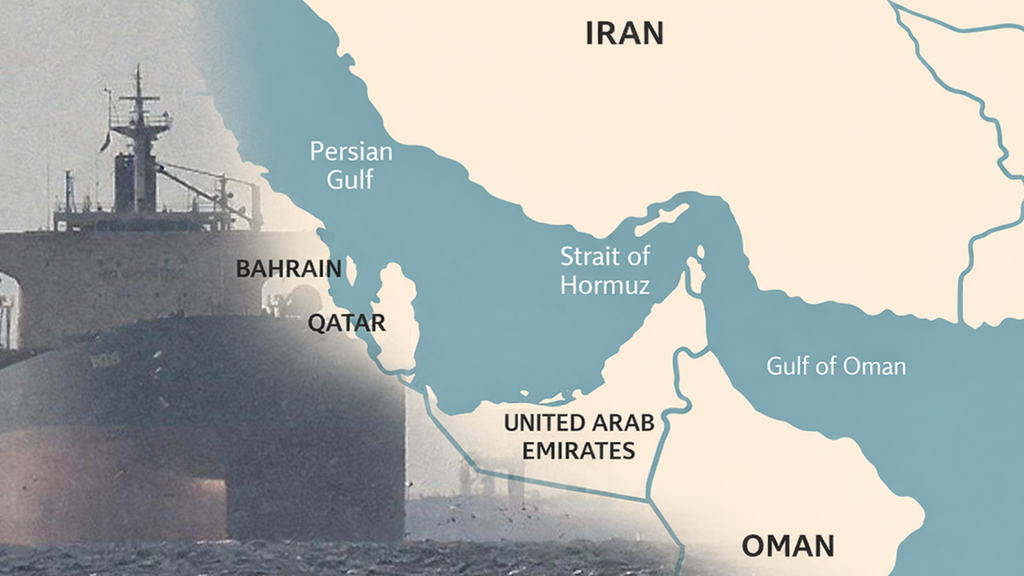
The Strait of Hormuz, located between the Persian Gulf and the Gulf of Oman, is the world’s busiest oil shipping route, carrying about one-fifth of global oil consumption in normal times.
After the war began on February 28, Iran declared it would attack any vessel entering the strait without its approval, jolting global energy markets and driving up oil prices. The move increased pressure on Trump to halt the fighting.
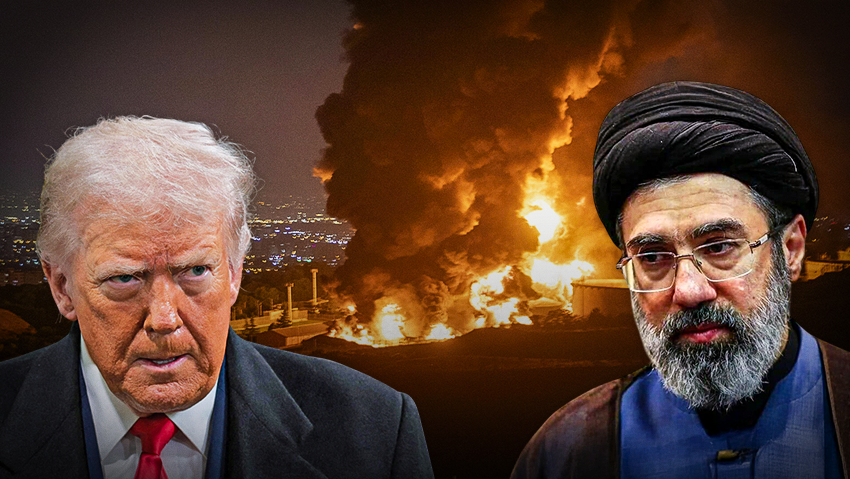
Trump renews threats. The American president and Iran’s new supreme leader, Mojtaba Khamenei
(Photo: Anna Moneymaker / AFP, Stringer / Getty Images)
Tehran has since used the conflict to implement a strategic shift. Despite international law guaranteeing free passage, Iran has asserted control over the strait, demanding payment from ships and effectively imposing restrictions on transit for the first time.
According to The New York Times, the new reality gives Iran “naval power at the most important point for the global economy.” Analysts warn that control over such a critical choke point could strengthen Tehran’s regional and global influence despite damage to its military.
“Control of the Strait of Hormuz is now a different kind of leverage, one that is clearly visible in global markets, can be sustained over time and is less dependent on lengthy negotiations and diplomatic processes,” said Hamidreza Azizi of the German Institute for International and Security Affairs.
Danny Citrinowicz, a former head of the Iran branch in Israeli military intelligence, told The Wall Street Journal that the strait has become as strategically important to Iran “as missiles and the nuclear program.”
Despite U.S. claims that Iran agreed to reopen the waterway, traffic has not resumed. Ships in the area were warned over radio communications that they must obtain authorization from Iran’s navy before passing.
“You must receive permission from the ‘Sepah’ naval unit to transit the strait. Any vessel that passes without authorization will be destroyed,” a broadcast message said, according to a recording obtained by the newspaper. “Sepah” refers to a naval commando unit of Iran’s Revolutionary Guards.
Iran also published a map showing what it said were naval mine zones, alongside designated “safe” shipping routes.
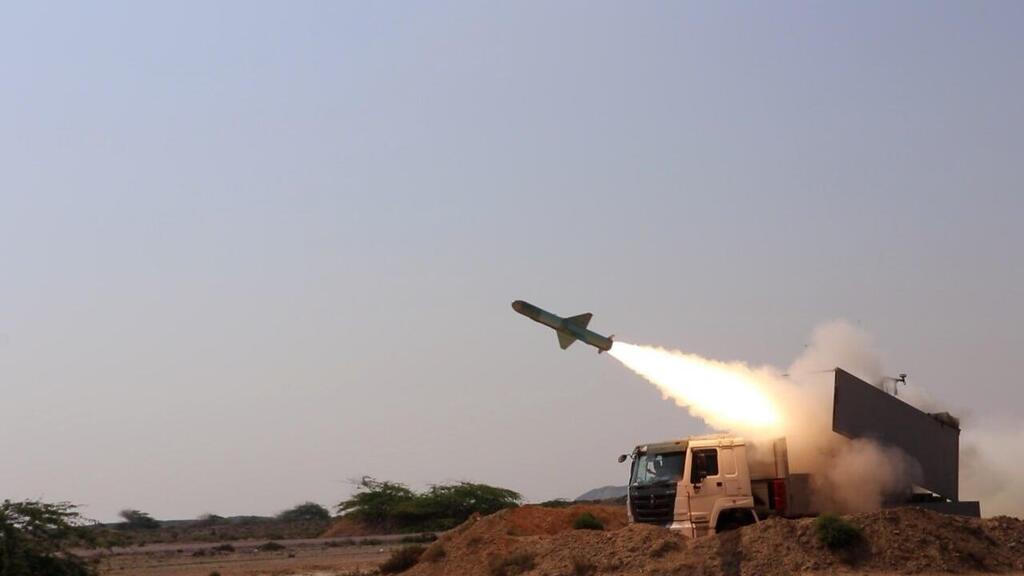
A missile launched from the Iranian coast during a Revolutionary Guards exercise, shortly before the war broke out. The navy may have been sunk, but Iran still has 'naval power'
Under the temporary arrangement, Iran has insisted that transit will continue “under coordination” with its military forces. According to The Wall Street Journal, Tehran has told mediators it will cap daily ship traffic at around 12 vessels and continue collecting fees.
The system reportedly differentiates between ships. Vessels carrying Iranian goods are exempt, those from friendly countries pay reduced fees, and ships linked to U.S. or Israeli allies are barred entirely.
Shipping industry sources said payments are required a week in advance and are made in cryptocurrency or Chinese yuan. Fees vary by vessel size, with large tankers capable of carrying around 2 million barrels of oil paying up to $2 million per passage.
Approved vessels are directed to an alternative route between Iran’s Qeshm and Larak islands, closer to the Iranian coast, instead of the international shipping lane.
Although Trump suggested in an ABC interview that he is considering a “joint venture” with Iran in the strait, calling it a “beautiful thing,” the White House later clarified that his priority remains full, unrestricted access.
“The president’s immediate priority is opening the strait without any restrictions, whether in the form of payments or otherwise,” press secretary Karoline Leavitt said. Secretary of State Marco Rubio also rejected Iran’s demands, calling them illegal and dangerous.
The policy has raised alarm among Gulf states, which accuse Iran of violating international agreements, including the 1982 United Nations Convention on the Law of the Sea that guarantees freedom of navigation.
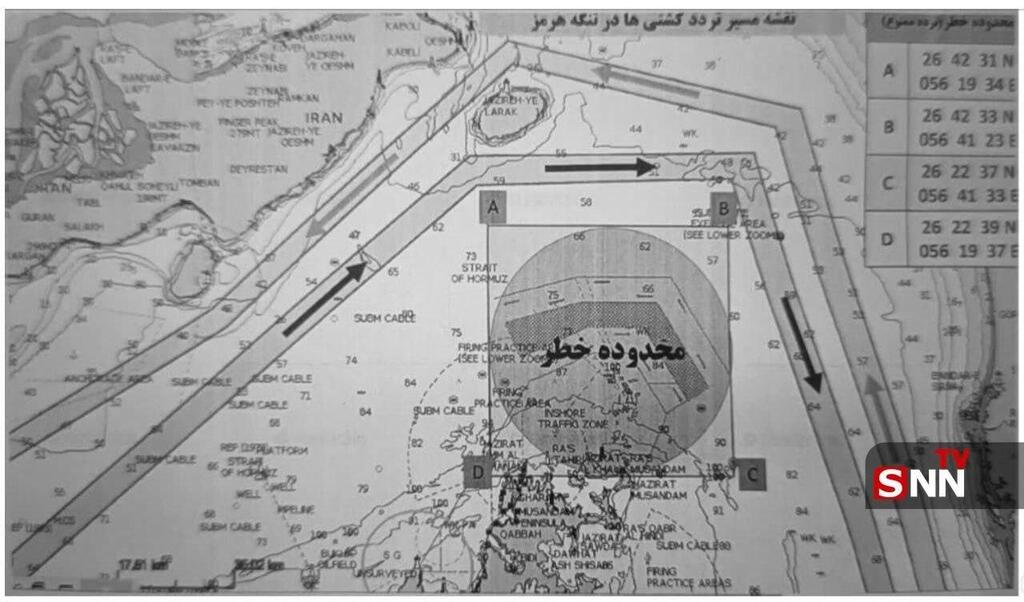
The 'safe' shipping lanes in the strait, alongside an area with mines. The map Iran published
While Iran has compared its policy to Egypt’s tolls in the Suez Canal, legal experts note that international law does not allow fees in natural waterways such as Hormuz, the Strait of Gibraltar or the English Channel.
Arab Gulf states fear they will bear the cost of the new reality, especially if it becomes entrenched. Analysts warn that Iran could leverage its control to assert itself as a regional hegemon.
“Iran is the only one satisfied with this outcome. They have reaffirmed their status as the policeman of the Gulf,” said Mohammed Baharoon, head of a Dubai-based policy research center. “We woke up to a deal that does not reduce risk but replaces it with greater risk.”
Mahdi Ghuloom, a Bahraini researcher, added: “Trump chose compromise, and with that compromise he sidelined his Gulf allies.”
Publicly, however, Gulf states have avoided direct criticism. Saudi Arabia emphasized the importance of free navigation, while European countries dependent on Gulf oil issued similar calls.
British Prime Minister Keir Starmer, speaking in Riyadh after meeting Saudi Crown Prince Mohammed bin Salman, said the U.K. would work with international partners to ensure the restoration of free passage through the strait.
During the war, a coalition of about 40 countries affected by soaring oil prices pledged to act to reopen the strait once fighting ended. Many of those allies, including European nations, Japan and Canada, had previously declined Trump’s request to deploy naval forces during the conflict.
Now, according to Bloomberg, the United States is pressing European allies to present concrete plans within days to help secure the waterway. A senior NATO official said Washington is seeking firm commitments to ensure freedom of navigation in the strait, as concerns grow that the fragile ceasefire could collapse and fighting resume.