

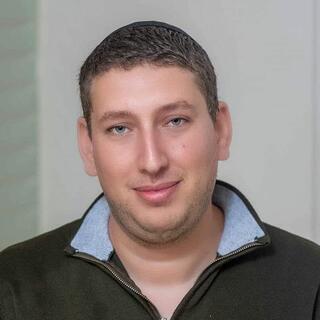
A special education institution serving approximately 300 children and teens with disabilities was severely damaged in a nighttime attack. Founder of the ALEH network, Rabbi Yehuda Marmorstein called it a "profound pain" and added that "we must rebuild swiftly.”
“We rushed to the rooftop, saw the missiles exploding in the sky—and then a massive boom,” according to a local resident. The body of an elderly man in his 80s was recovered from the rubble of a nearby building.
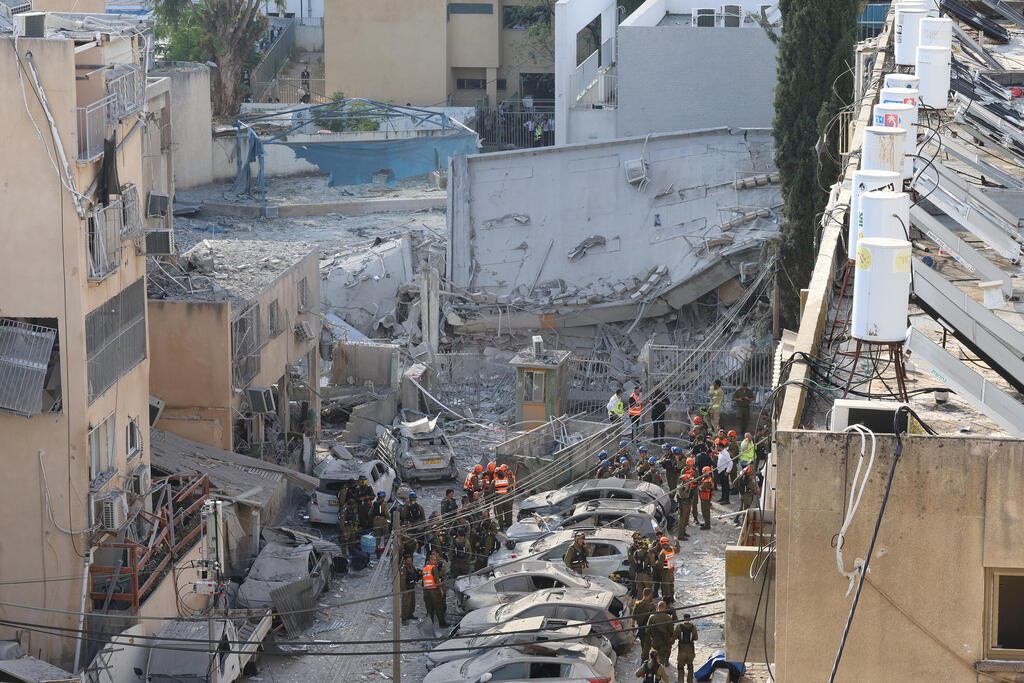
In a devastating escalation of hostilities, the sprawling campus of ALEH—an educational and rehabilitative network for children with disabilities—suffered a direct hit from a missile launched from Iran in the early hours of Monday. The impact caused widespread destruction. An elderly man in his 80s was killed in a neighboring building. A nearby municipal school building collapsed entirely, and the ALEH facility, which serves some 300 children and youth with complex needs, sustained severe structural damage.
Notably, the ALEH school, inaugurated five years ago, includes a shelter meant to serve the neighborhood’s residents. However, when residents attempted to seek refuge there during the attack, they found the door locked and were forced to flee to another shelter—ultimately saving their lives. Had they entered the closed shelter, many might have been buried beneath the rubble.
Rabbi Yehuda Marmorstein, founder and CEO of the ALEH network, expressed his sorrow. “First and foremost, I thank God that there were no physical or emotional casualties among our staff and students," he said. "But the scenes of destruction and devastation were overwhelming. The most painful part is that hundreds of children with severe disabilities are now left without access to the vital care they receive here. We must restore this place—urgently—for them and their families.”
Damage at the ALEH building
(Video: Shilo Freid)


Rabbi Zechariah Shalom, principal of a Bnei Brak school that took a direct hit, described the moment that the school's neighbors tried to enter the shelter. “Local residents had received the shelter key. When the sirens sounded, they ran to the shelter but couldn’t get in. For some reason, the key wouldn’t work—which is extremely rare. The moment they stepped out to seek another hiding place, the building collapsed. Thank God, no one was hurt.”
“We don’t have a protected room, so we went up to the roof," Yaakov, a student at a nearby yeshiva, recounted. "We didn’t film, but we saw the missiles exploding in the sky—and one heading toward the school. Then there was a deafening boom. Moments later, the shockwave hit us. Everything flew through the air. We thought debris would hit us any second and ran downstairs.”
Tzipora, who lives near the impact site, showed the damage to her home. “When the siren went off, I ran to a room near the bathroom. I heard explosions from all directions,” she said. She pointed to the shattered glass scattered across her bed. “I was sleeping here. It’s a miracle I survived,” she said.
“We were at home on the fourth floor, me and four children. We woke up at the end of the siren—too late. I ran to the window and felt the shockwave inside. We have kosher phones, and most of them got alerts—but we didn’t,” Menachem Deutsch, who sustained minor injuries, said.
Despite assumptions that the locked shelter may have inadvertently saved lives, Bnei Brak City Council member Yaakov Vider voiced concern. “We are in the midst of one of the most intense wars, in the most densely populated city in Israel—yet shelters are closed. Further down the street, we had to break a lock by hand just to enter a shelter. It is unthinkable that at this stage of the war, shelters remain inaccessible,” he said.
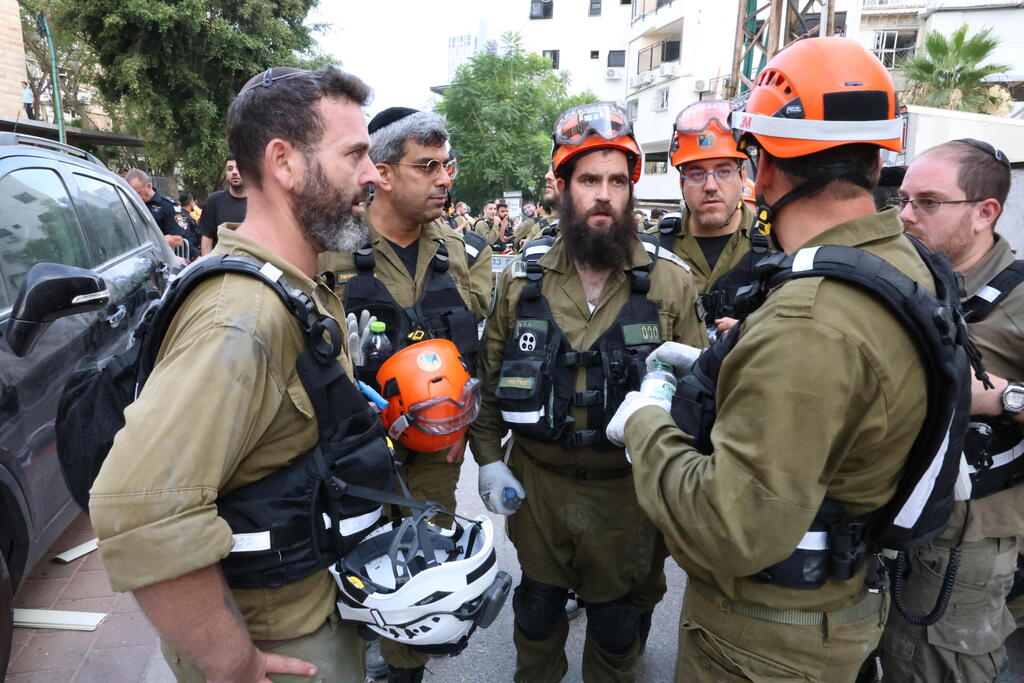
At the site of the impact in Bnei Brak
(Photo: Shaul Golan)
The elderly man who was killed in the strike was found under the ruins of a nearby structure. According to emergency teams, he had refused to leave his apartment and was not in a fortified room.
Magen David Adom paramedic David Suissa described the scene. “While scanning the wreckage with Home Front Command, we found him unconscious and trapped. We assisted in the rescue operation, but unfortunately, had to pronounce him dead at the scene. MDA teams remain deployed at multiple sites where casualties are likely and are ready to treat and evacuate the wounded,” he said.
Throughout the night, seven additional people were killed in two separate locations: Petah Tikva and Haifa. In Petah Tikva, two women and a man in their 70s died when a missile struck between two protected rooms in a residential building. A fourth body was later recovered from the same building. In Haifa, the bodies of three people trapped under rubble were also discovered. Over 200 injured individuals were evacuated to hospitals across the country.
Just a few kilometers away and a few days earlier, the same wave of Iranian aggression reached into the private life of Ohad Basos, a young Israeli soldier. Ohad had already seen the horrors of war up close. He served for over six months in Rafah as part of a combat unit in Gaza. During one mission, a technical malfunction forced him to fire a missile without ear protection. The result: he lost 50% to 60% of his hearing and sustained a minor shrapnel injury to his hand.
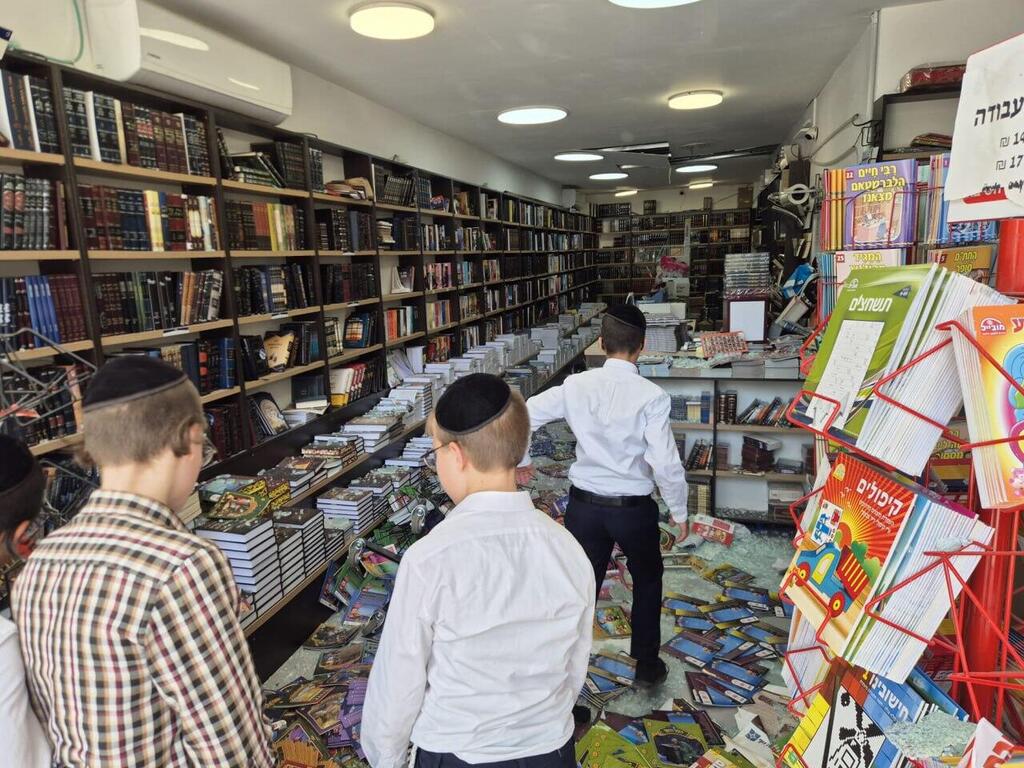
Damage in the book store
(Photo: Yariv Katz)
Since then, Ohad has been undergoing daily rehabilitation at Belev Echad, a non-profit organization that supports wounded soldiers through emotional therapy, physical recovery, and long-term reintegration into society. Its healing center, located in Kiryat Ono, has become Ohad’s lifeline.
Get the Ynetnews app on your smartphone: Google Play: https://bit.ly/4eJ37pE | Apple App Store: https://bit.ly/3ZL7iNv
“Ohad is one of many heroes who returned from battle with invisible wounds,” according to Rabbi Uriel and Shevy Vigler, the founders of Belev Echad. “He is strong and determined—but even the strongest need someone to walk beside them. That’s what Belev Echad is for.”
But as the missiles began to fall, the trauma of combat followed Ohad into the heart of his family home. “It was Shabbat. We were sitting around the table for Kiddush,” Ohad recalls. “I had just poured the wine. And then—boom. The explosion threw everything apart. The door, the table, even the shirt I had folded on the couch—all destroyed. My room, my safe place—gone.”
Photos taken later show a mangled interior: shattered glass, torn furniture, and the unmistakable signs of chaos. For Ohad, it wasn’t just a building that was hit—it was his sense of stability. “The battlefield followed me home,” he said quietly. “Even in my parents’ house, during the holiest moment of the week—I wasn’t safe.”