

Negotiations between Iran and the United States in Geneva were temporarily suspended around noon Thursday and, according to reports in Iran, are set to resume later in the evening.
Iran’s official IRNA news agency said the negotiating teams left the Omani Consulate, where the talks were held, for “internal consultations” after three hours of indirect contacts mediated by Omani Foreign Minister Al-Busaidi. The mediator quickly confirmed the reports, saying: “Today in Geneva we held creative and positive exchanges of ideas, and now both the American and Iranian delegations have gone on a break. We will resume talks later today. We hope to achieve further progress.”
Gallery
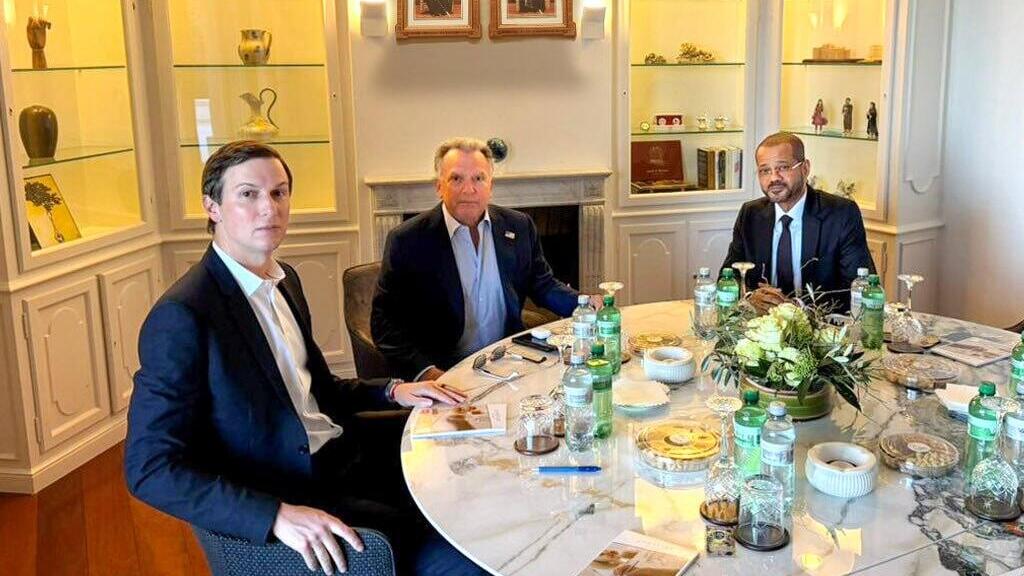
Witkoff and Kushner with Omani Foreign Minister al-Busaidi in Geneva on Thursday morning
(Photo: Omani Foreign Ministry)
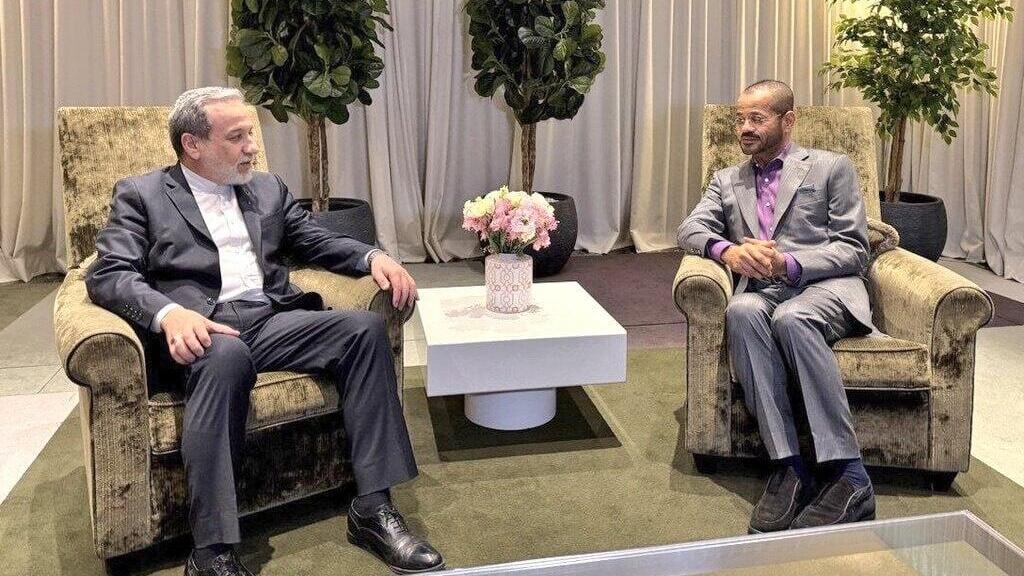
Omani Foreign Minister Al-Busaidi with Iranian Foreign Minister Abbas Araghchi on Wednesday night
Iranian Foreign Ministry spokesman Ismail Baghaei described the morning talks as “intensive and serious.” He said they would resume around 5:30 p.m. local time. “Important and operational proposals were raised in the areas of the nuclear issue and sanctions relief,” he said. Baghaei added that new ideas had been presented that require consultations in Tehran and argued that an agreement is possible “if the United States seriously separates nuclear from non-nuclear issues.” He acknowledged that gaps remain.
The U.S. delegation is led by President Donald Trump’s senior advisers, special envoy Steve Witkoff and the president’s son-in-law Jared Kushner. In an unusual move, immediately after their talks with the Iranians they continued to a separate round of negotiations with Ukrainian representatives, part of the Trump administration’s efforts to end the war with Russia. There is little optimism for a breakthrough in those talks. Ukraine said earlier Thursday that Russia launched a massive overnight attack of 420 drones and 39 missiles, wounding dozens of people and damaging critical infrastructure in eight regions.
Alongside the announcement of the pause in the nuclear talks, The Wall Street Journal reported that the United States has presented five central demands in the negotiations, including the complete dismantling of the Fordow, Natanz and Isfahan nuclear facilities — the three sites the United States bombed in Operation Midnight Hammer during the 12-day war in June last year, which Trump later said had already been “destroyed.”
Under the reported U.S. proposal, Iran would also be required to transfer all enriched uranium in its possession to the United States, rather than to a third country such as Russia, as previously discussed. In addition, the United States is demanding that any agreement reached be permanent, in contrast to the original 2015 nuclear deal signed under President Barack Obama, which faced sharp criticism because some of its restrictions were time-limited. Trump withdrew from that agreement in 2018. Since then, Iran has enriched increasing amounts of uranium to levels close to weapons-grade, until the 12-day war, during which its nuclear facilities sustained extensive damage.
According to current assessments, Iran is not presently enriching uranium on its soil, but Tehran retains the expertise needed to restore the facilities and resume enrichment in the future.
The Wall Street Journal also reported that the Americans are insisting on a principle of “zero uranium enrichment.” However, the newspaper said they are open to a compromise proposal under which Iran would be allowed to retain its Tehran research reactor and continue minimal enrichment there for medical purposes.
Another dispute centers on the lifting of U.S. sanctions. Iran is demanding their full removal, while the United States insists that only minimal relief be granted initially, with additional sanctions lifted later if Iran complies with the agreement.
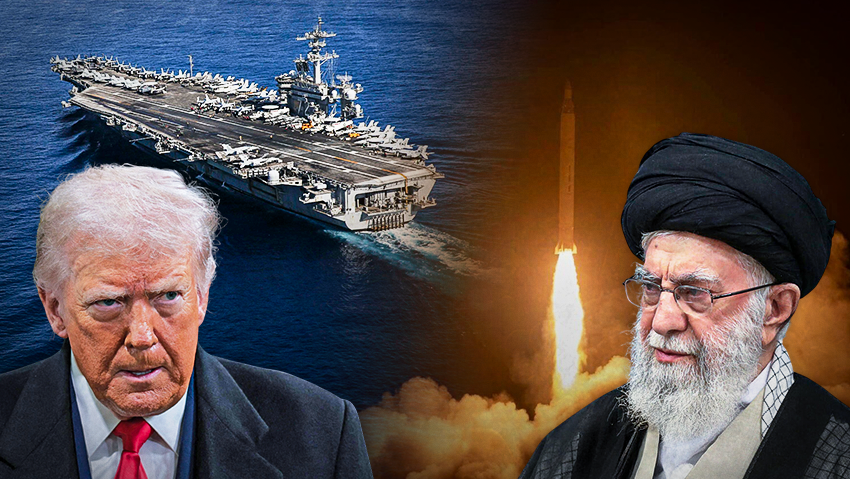
(Photo: Anna Moneymaker/AFP, KHAMENEI.IR/AFP)
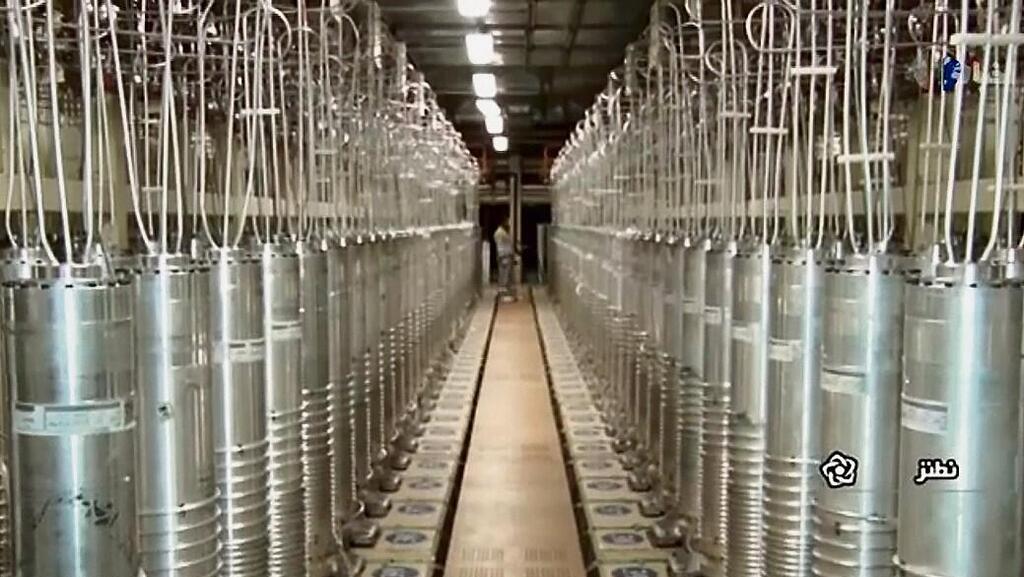
Centrifuges at the Natanz nuclear facility before it was struck during the 12-day war
(Photo: AP)
It is unclear whether Iran can accept the U.S. demands, especially as it continues to insist on its fundamental right to maintain an independent nuclear program.
At the same time, The New York Times reported that Iran’s updated proposal was structured in a way that would allow Trump to “declare victory” while enabling Tehran to enrich uranium in limited quantities. According to four Iranian officials, the proposal includes suspending nuclear activity and uranium enrichment for a period of three to five years. After that, Iran would be able to join a regional “nuclear consortium” and enrich uranium on its soil to a very low level of 1.5% for medical research purposes.
As for its existing stockpile — more than 400 kilograms of uranium enriched to 60%, considered close to the 90% level required for a nuclear weapon — Iran is proposing to dilute it in stages while allowing inspectors from the International Atomic Energy Agency, the U.N. nuclear watchdog, to monitor implementation of the agreement. IAEA Director General Rafael Grossi took part in Thursday’s talks in Geneva, as he did in the previous round about a week ago.
As in the two previous rounds, the Geneva talks are being mediated by Al-Busaidi, who met separately with Iranian Foreign Minister Abbas Araghchi and with Trump’s representatives, Witkoff and Kushner. There may have been some form of direct encounter between the American and Iranian representatives, as in the past, but Tehran previously said such contacts amounted at most to symbolic handshakes and that the talks themselves were conducted indirectly.
Earlier Thursday, Al-Busaidi said both sides were showing “unprecedented openness to new and creative ideas and solutions, creating a supportive environment for progress and reaching a fair agreement.”
Trump: Iran wants to develop missiles capable of reaching the United States


The negotiations began three weeks ago against the backdrop of Trump’s threat of military action and the largest concentration of U.S. forces in the Middle East since the 2003 invasion of Iraq, including two aircraft carriers, numerous destroyers and hundreds of fighter jets. The aircraft carrier USS Gerald R. Ford, the world’s largest and most advanced, sailed Thursday morning from the port of Souda on the island of Crete, where it had docked Monday, and is now making its way toward Israel. Reuters reported that the Ford is expected to arrive near the coast of Haifa as early as Friday.
In his State of the Union address to Congress on Wednesday, Trump publicly laid out his justification for possible military action, arguing that Iran is working to restore its nuclear program and develop intercontinental ballistic missiles capable of striking the United States. He stressed that he is still pursuing a diplomatic agreement that would prevent Tehran from obtaining nuclear weapons.
“We are negotiating with them. They want to make a deal, but we haven’t heard the magic words: ‘We will never have a nuclear weapon,’” Trump said. On Feb. 19, Trump set a deadline of “10 to 15 days” to reach an agreement and warned that without one, “very bad things” would happen to Iran.
Iran, which has long insisted it does not seek nuclear weapons, responded Thursday to Trump’s claim that it had refused to declare it would forgo such arms. President Masoud Pezeshkian said shortly before the Geneva talks began: “We do not seek to possess nuclear weapons.” He cited a fatwa issued in the early 2000s by Supreme Leader Ayatollah Ali Khamenei banning the development of nuclear weapons, arguing that it proves concerns over Iran’s nuclear program are unfounded — although Western intelligence agencies have assessed that Iran previously pursued a weapons program.
Ali Shamkhani, secretary of Iran’s Supreme National Defense Council, also said at midday that Iran does not seek nuclear weapons. “If the core of the negotiations is Iran’s non-acquisition of nuclear weapons, then an agreement is possible immediately,” he said.
Aircraft carrier Ford sails from Crete en route to Haifa
(Video: X)
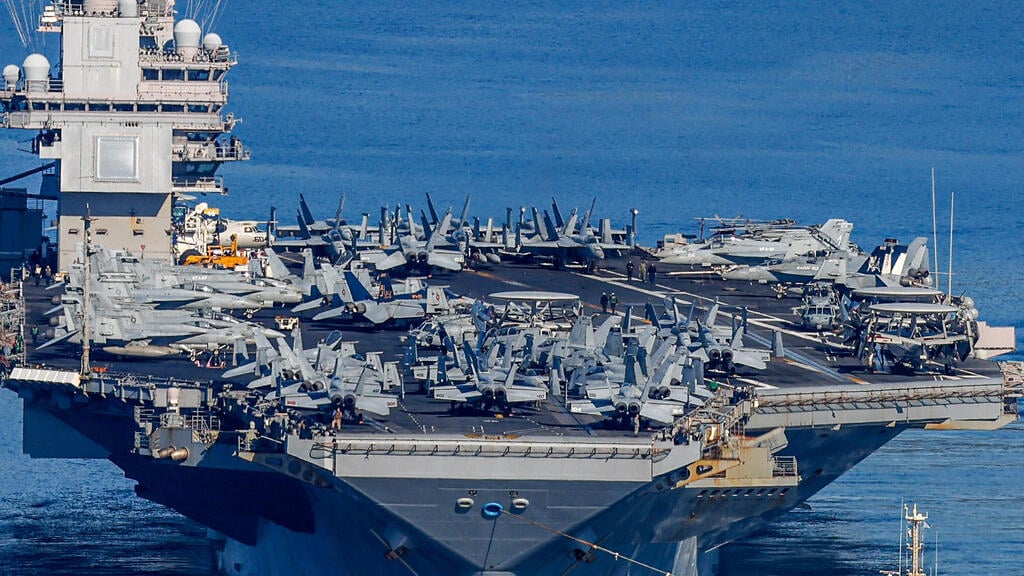
(Photo: Costas METAXAKIS / AFP)
In Israel, there is deep pessimism about the chances that the talks between Tehran and Washington will produce a deal. An Israeli official said Wednesday night that there is a high likelihood of a U.S. strike in the near term. Another official said, “It is hard for us to see the Americans backing down.”
The backdrop is the wide gaps between the sides: Iran rejects the U.S. demand for an agreement that would completely bar it from enriching uranium, and there is also disagreement over the fate of its existing enriched uranium stockpile. In recent days, however, compromise proposals have been reported that would allow Iran to continue enrichment on a symbolic scale.
In addition, Iran is firmly refusing to discuss limits on its missile program or to halt its support for militant groups and militias in the Middle East. U.S. Secretary of State Marco Rubio said overnight that the current round of talks in Geneva will focus primarily on the nuclear issue, but added that Iran’s refusal to discuss its missile program poses “a very big problem.”
“The president wants diplomatic solutions and prefers them,” Rubio said. “So I would describe the meetings in Geneva as another round of talks, which I hope will be productive. But in the end, we will want to discuss issues beyond the nuclear program.”