

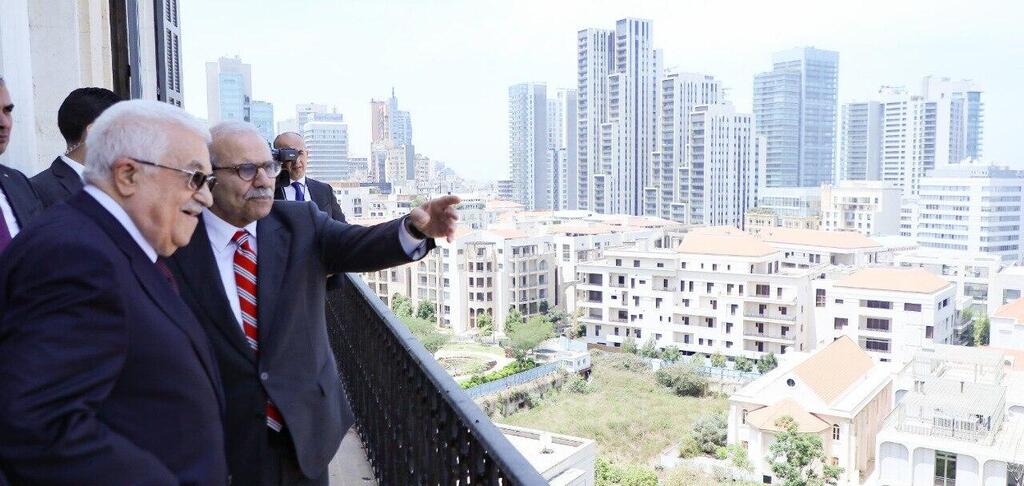
Palestinian Authority Chairman Mahmoud Abbas was received in Beirut on Wednesday with a lavish ceremony. Following the reception, he proceeded directly to a meeting with Lebanese President Joseph Aoun at the presidential palace in Baabda, after which an unusual joint statement was issued.
In addition to the routine condemnation of Israeli strikes in Gaza and Lebanon, the statement addressed the main issue that brought Abbas to Lebanon: the disarmament of Palestinian refugee camps in the country, a process the Lebanese government is expected to begin in June.
Lebanon hosts 12 official Palestinian refugee camps: Beddawi, El Buss, Rashidieh, Mieh Mieh, Burj Barajneh, Burj Shemali, Shatila, Dbayeh, Ain al-Hilweh, Mar Elias, Wavel and Nahr el-Bared. As early as March, reports emerged that the United States and Israel were pressuring Lebanon to formally decide to disarm the camps—“by force if necessary”—and to halt the activities of Palestinian factions operating within the country.
Abbas’s visit was preceded by significant preparations, including advance visits by his son Yasser Abbas and Palestinian General Intelligence Chief Majed Faraj. According to reports, Faraj focused on the weapons issue—not only in camps south of the Litani River, but in all camps across Lebanon. He reportedly proposed that the Palestinian Authority assist in the transition phase, with its security personnel assuming responsibility within the camps, under coordination with designated Lebanese government officials. Why is this all happening now?
'Waiting for someone to see them as human beings'
Since the ceasefire was declared between Israel and Hezbollah last November, "New Lebanon"—led by President Joseph Aoun, Prime Minister Nawaf Salam and Parliament Speaker Nabih Berri—has been striving to achieve an unprecedented goal: establishing the state’s exclusive monopoly on the legitimate use of force, thereby bringing all armed groups under state control.
This is standard practice in any sovereign country, but Lebanon has long defied such classification. Transforming it into a “normal” state will not be easy; Hezbollah, though weakened, remains a powerful organization with substantial influence and a strong support base.
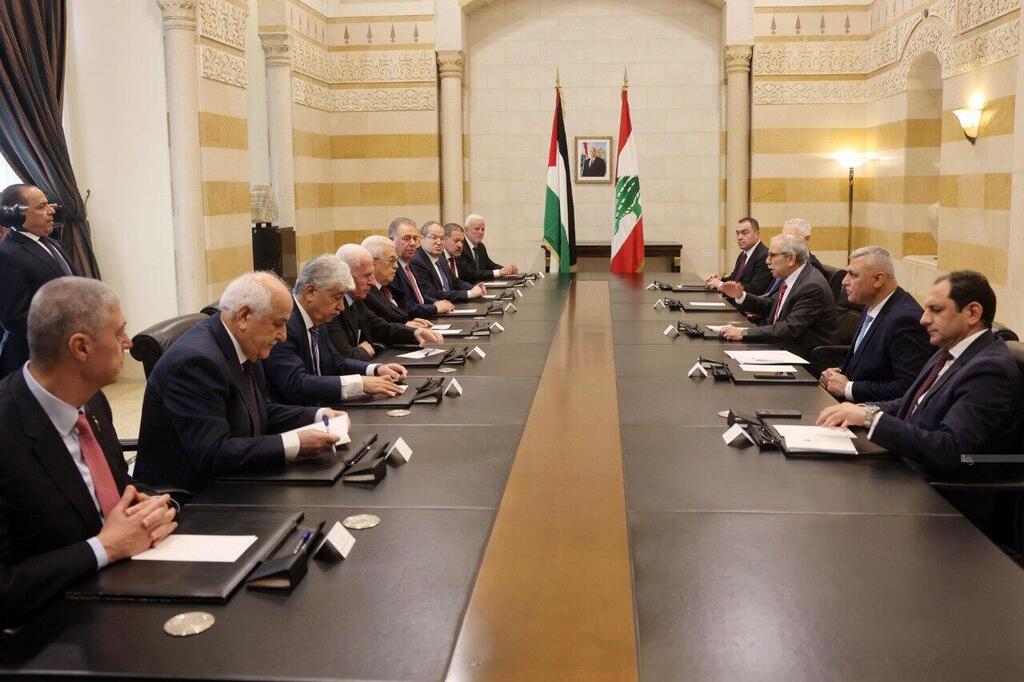
Lebanese and Palestinian delegations meet in Beirut, Lebanon
As a step toward this goal, Lebanon is pursuing "small victories," with the disarmament of Palestinian refugee camps—a legacy of the Fatahland era and the First Lebanon War—set as a primary target.
On May 6, the Hezbollah-aligned Lebanese newspaper Al-Akhbar reported escalating tensions between Lebanese authorities and Hamas, stating that a decision had been made not only to disarm Hamas but also to disrupt its activities across the country, similar to the approach taken with Palestinian Islamic Jihad.
It was reported that some Hamas members involved in the March rocket fire into Israel had been handed over to the Lebanese army.
According to the paper, international pressure on Lebanon to expel Hamas members is increasing. Regardless, the principal strongholds of Palestinian terrorist organizations remain the 12 refugee camps, which have long posed a threat to Israel, well before the October 7 terrorist attack.
Estimates vary on the number of Palestinians in Lebanon. Al-Akhbar reports about 520,000 registered residents, but the actual number is believed to be around 280,000, with only about 230,000 enrolled in UNRWA’s emergency program.
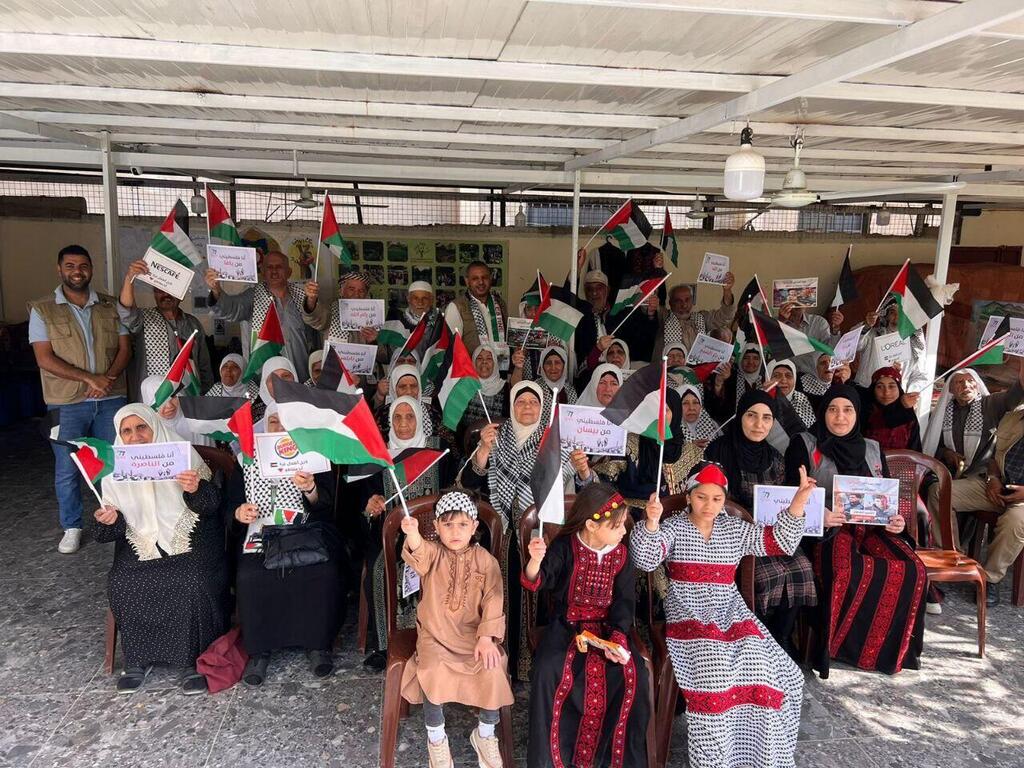
ציון ה"נכבה" במחנה הפליטים נהר אל-בארד בצפון לבנון
The camps suffer not only from arms proliferation but also from deteriorating humanitarian conditions. Education, healthcare and aid services provided by UNRWA have been reduced to a minimum.
Residents face systemic discrimination and a lack of rights compared to Lebanese citizens. Palestinians are barred from working in many professions—such as medicine, pharmacy, nursing, law, engineering and education—and can enter these fields only when there are significant labor shortages. Consequently, many take on low-paying menial jobs and face demeaning treatment.
“Residents are waiting for someone to see them as human beings, not as a group living in an isolated area called a ‘camp,’ and not as a political or security issue,” a Palestinian named Walid told Al-Akhbar.
Arabic media describe the camps as facing a dire and anarchic reality. Over the years, Syrian refugees have also arrived, but Palestinians remain the majority. Ali al-Rifai, head of the Palestinian Popular Committees in Beirut, said the Mar Elias camp nearly burned down a few weeks ago because fire trucks couldn’t access the fire’s location in the camp’s center. He added that transporting a sick person or holding a funeral often requires using rooftops, and that extensive illegal construction is endangering residents' safety.
Armed clashes in Beiruts Shatila refugee camp


Drug use is also rampant in the camps. Earlier this week, clashes between drug dealers in Beirut’s Shatila camp resulted in injuries. Following the violence, UNRWA announced it had suspended all activities in the camp on Monday to ensure staff safety. Videos posted the same day showed gunfire in the camp and residents fleeing. The clashes continued into Tuesday.
Hezbollah stays quiet, Palestinians fire
On Wednesday, following the meeting between Aoun and Abbas, a joint Lebanese-Palestinian statement was issued, aimed at addressing both the dire conditions in the refugee camps and the issue of weapons. The statement was divided into three sections: political agreements, accords on the legal status of Palestinians in Lebanon and commitments related to national security and stability.
The statement affirmed both sides' commitment to a "just solution" for Palestinians that would allow them "to return to the homes from which they were uprooted in their homeland (Israel)," and rejected any "resettlement" or "displacement" initiatives.
It effectively reaffirmed the Palestinian refugee crisis as a permanent reality, emphasizing support for UNRWA and calling for increased funding so the agency can meet its obligations. The parties agreed to establish a joint Lebanese-Palestinian committee to monitor conditions in the camps and work to improve refugees’ living standards while respecting Lebanese sovereignty and law.
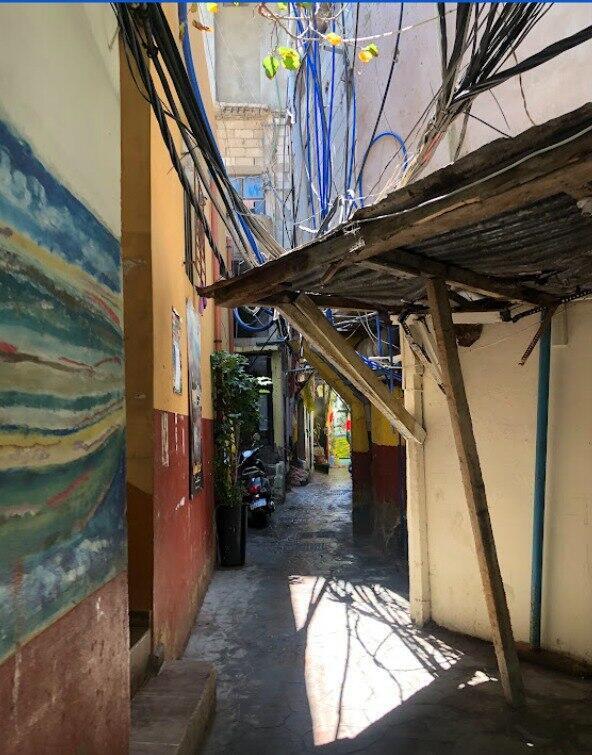
The whole camp nearly burned down: The narrow alleys of Mar Elias
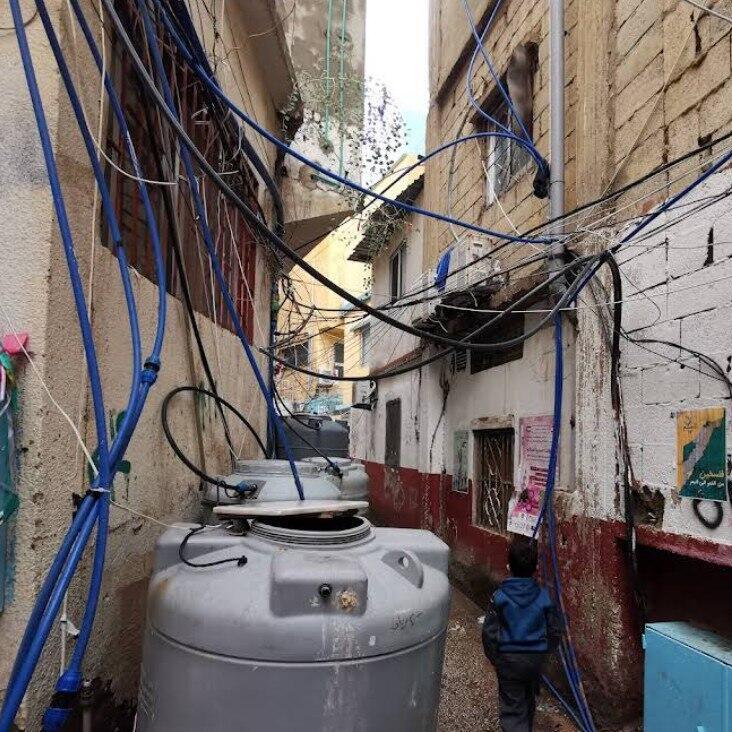
They also reaffirmed their “commitment to ensuring dignified living conditions” for Palestinian refugees in Lebanon, “without undermining their right of return or their national identity.”
On matters of security and stability, the declaration stated that “both parties confirm their commitment to the principle of state monopoly on weapons,” adding that “the era of weapons outside state control has ended, particularly given the decades of sacrifices borne by both Lebanese and Palestinians.”
Abbas and Aoun emphasized the need to enhance coordination between Lebanese and Palestinian authorities to maintain stability within and around the camps. The Palestinian side pledged not to use Lebanese territory for military activity and to respect Lebanon’s policy of non-intervention in foreign conflicts. Both sides also agreed to strengthen cooperation in combating terrorism and extremism, ensuring the camps do not become sanctuaries for radical organizations.
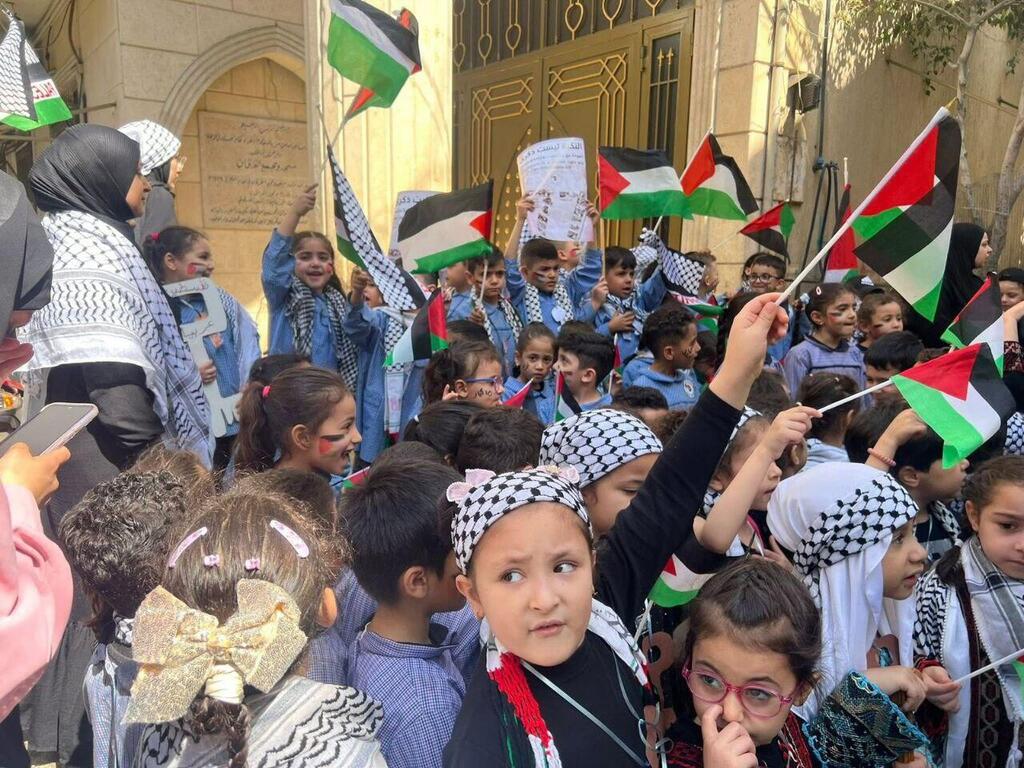
Lebanon and Abbas reject resettlement: Commemorating the Nakba in Burj al-Barajneh
However, the statement carries a major caveat: Abbas has never represented the Islamist terrorist factions, and it is unlikely that these groups within the Palestinian community in Lebanon will heed his authority.
Prof. Eyal Zisser, an expert on modern Lebanese and Syrian history and vice rector at Tel Aviv University, explained that Abbas is largely indifferent to Lebanon’s effort to monopolize arms—since the pressure falls on Hamas. Abbas, Zisser noted, does not care whether refugees in the camps are armed.
Get the Ynetnews app on your smartphone: Google Play: https://bit.ly/4eJ37pE | Apple App Store: https://bit.ly/3ZL7iNv
“Historically, Lebanon’s problems began in the refugee camps,” Zisser said. “Palestinians formed an armed militia in the 1970s, which started the downward spiral. Moreover, Palestinians initially supported the Shiites and Hezbollah. Imad Mughniyeh, a top Hezbollah figure killed in 2008, was originally with the PLO. So you can’t deal with one issue without addressing the other. The camps are also hotbeds of radical Islam. For Lebanon, they are no less important than Hezbollah—and far easier to address first.”
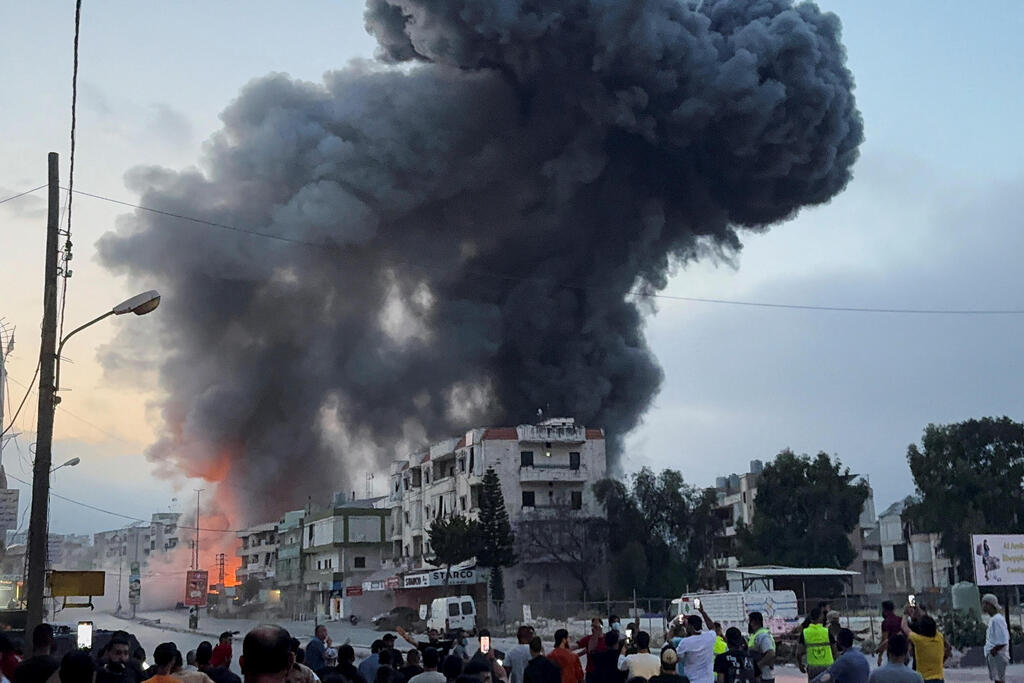
Israeli airstrike in Nabatieh, southern Lebanon
(Photo: REUTERS/Ali Hankir)
Zisser added that while disarming Hezbollah is more complex, Hezbollah has at least remained quiet, honoring understandings with the government and refraining from retaliating against Israeli strikes.
By contrast, “it’s the Palestinians who occasionally open fire and stir trouble.” In the past six months, he said, Hezbollah has proven more disciplined. “If you strike a deal with Hezbollah Secretary-General Naim Qassem, it holds. But Hamas just suddenly fires rockets.” He stressed that while the March rocket fire into Israel made disarmament more urgent, the issue was bound to surface regardless.
The real challenge
Despite Abbas's declarations, the Palestinian Authority will not take part in the disarmament process—it lacks the power to do so. However, according to Prof. Zisser, Lebanon currently enjoys both international and inter-Arab support on the issue, and Palestinian factions do not pose as formidable a threat as they once did. Therefore, it is plausible that these terrorist groups will be disarmed.
“The Lebanese army razed the Nahr el-Bared refugee camp to the ground 18 years ago when it dealt with extremist Islamist forces,” Zisser noted. “So if the Lebanese want to, they can do it.”
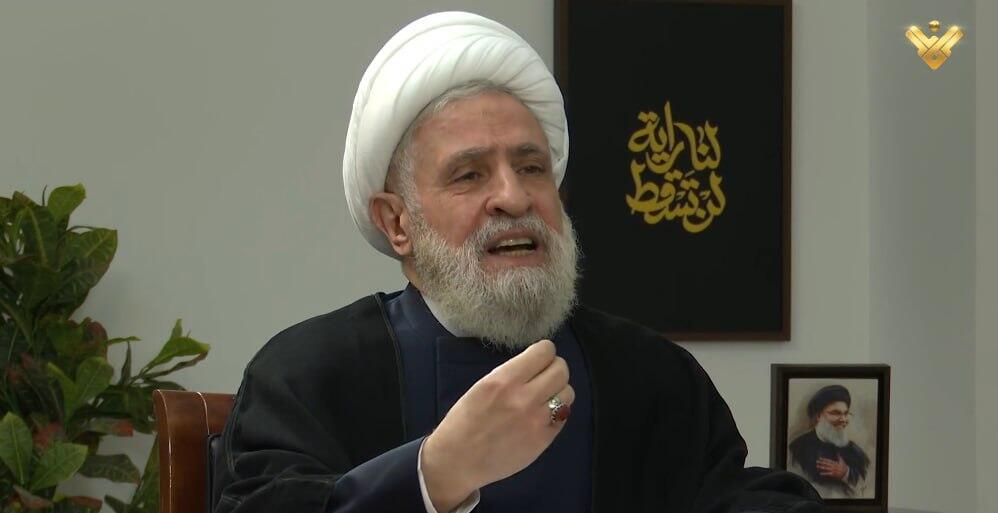
Hezbollah Secretary-General Naim Qassem
But in facing this task, Lebanon confronts a far greater, more significant challenge: the disarmament of Hezbollah. The Iran-backed terrorist organization has evolved into one of the most heavily armed non-state militaries in the world. “Hezbollah has no choice but to accept the state’s framework,” Lebanon’s president recently said, emphasizing that the group has a right to “political participation” within that framework.
Hezbollah Secretary-General Naim Qassem staunchly opposes disarmament. At the end of April, reports surfaced that Hezbollah seeks to integrate its arsenal into Lebanon’s “defense strategy.” Anonymous sources claimed the group would only give up its weapons if Israel withdraws from Lebanese territory, Lebanese prisoners are released and Israel ceases its violations of Lebanese airspace—conditions that no authority is likely to guarantee.
Nevertheless, Hezbollah today is significantly weaker than it once was, as is its patron, Iran. Time will tell whether this historic opportunity will be missed as well.