

Iranian Revolutionary Guard advisers were on the ground helping Houthi rebels direct their lightning offensive along Yemen’s Red Sea coast, according to an Associated Press investigation that details Tehran’s most direct battlefield involvement with the group since Yemen’s civil war erupted in 2014.
The Houthis needed less than 48 hours to seize a 115-kilometer stretch of coastline from forces aligned with Yemen’s Saudi-backed, internationally recognized government, capturing the strategic port city of Mokha and nearby islands that give the group greater ability to threaten shipping in the Red Sea. Recent AP reporting has documented the Houthis’ capture of Mokha and expansion toward the Bab el-Mandeb Strait, a critical maritime chokepoint.
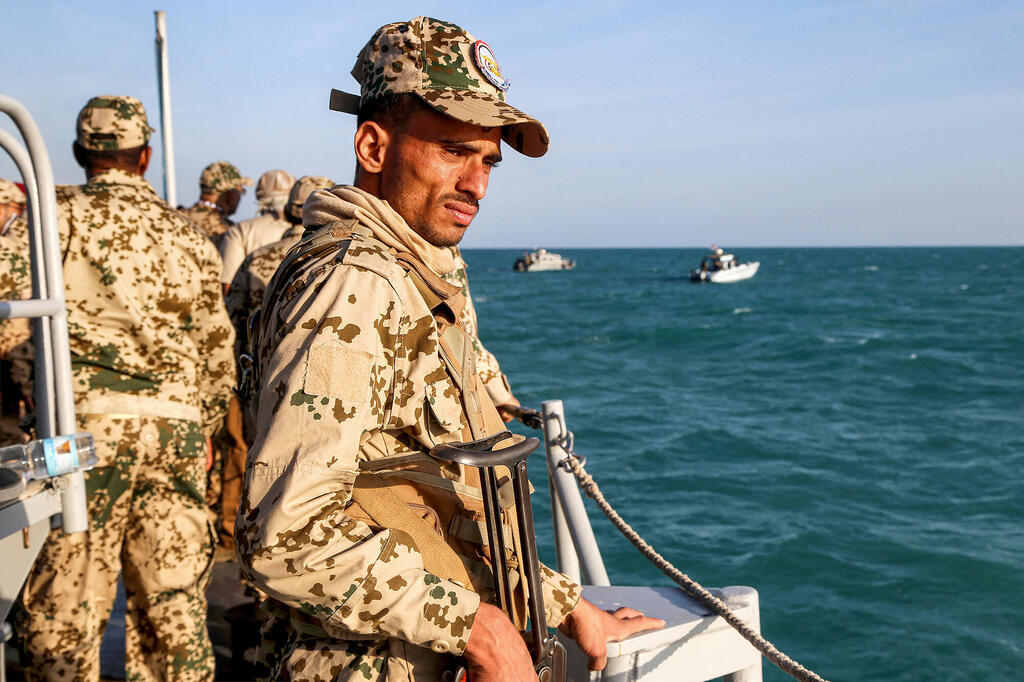
The operation dealt a major blow to Saudi Arabia and other U.S.-aligned regional actors at a time when the Houthis have also renewed attacks on Saudi targets and the kingdom is facing pressure on its oil export routes. A separate drone attack recently disabled much of Saudi Arabia’s East-West Pipeline for several weeks, further restricting oil flows toward the Red Sea.
The AP interviewed 10 officials and soldiers for its account, including a senior Houthi official, two regional officials, a senior Yemeni military commander and a member of Yemen’s Presidential Leadership Council. They spoke on condition of anonymity to discuss internal decision-making.
Iranian advisers move closer to the front
Iran has supported the Houthis for years, but people familiar with the latest offensive told the AP that Revolutionary Guard advisers assumed a far more direct role than before.
A senior Houthi official said Iranian advisers had previously focused mainly on strategic planning, away from front-line operations. During the latest campaign, however, they were “present at all levels,” including tactical planning and work with battlefield commanders.
Two regional officials regularly briefed on developments in Yemen also told the AP that Iranian support contributed directly to the speed of the Houthi advance.
Security analyst Mzahem Alsaloum, who has tracked Iranian-backed groups for nearly a decade, said Iranian advisers also helped analyze intercepted communications and satellite intelligence, capabilities he said the Houthis previously lacked.
Iran’s mission to the United Nations did not respond to the AP’s request for comment.
The growing Iranian role followed months of expanded training and logistical assistance. Alsaloum said Tehran had increased support for more advanced missiles, drones and uncrewed attack boats during the past year.
In July, tensions escalated further after the Houthis accused Saudi Arabia of striking the airport in the rebel-held capital, Sanaa, apparently in an effort to prevent an Iranian flight from landing.
That flight later arrived carrying Revolutionary Guard advisers, according to Alsaloum and the senior Houthi official. They joined other Iranian and Hezbollah advisers already based in Yemen.
Rivalries weakened government defenses
The Houthis’ rapid advance was also made possible by deep divisions among the forces opposing them.
The National Resistance, which fields about 30,000 fighters, had been the strongest pro-government force along the coast but had not fought a major campaign there since 2017.
For about a month before Mokha fell, Houthi forces bombarded National Resistance positions with 130 ballistic missiles and 145 suicide drones, according to Maj. Gen. Sadiq Dwaid, a spokesman for the force.
He said government fighters were spread across a front roughly 170 kilometers long and were facing an estimated 75,000 Houthi fighters.
The Giants Brigade, another anti-Houthi force, moved in to support the National Resistance in early September and initially helped push the rebels back. But the deployment was poorly coordinated, according to a Yemeni government official, and revived longstanding rivalries between the two forces.
Those tensions reflected the broader competition between Saudi Arabia and the United Arab Emirates over Yemen’s anti-Houthi camp, a struggle that preceded the UAE’s withdrawal from Yemen in January.
“There was no unified command,” a senior Yemeni military official told the AP. “This was a priceless opportunity for the Houthis.”
Communications breach fuels collapse
On Sept. 9, Houthi forces pushed south through a narrow mountain valley toward Mokha while heavily bombarding government positions.
The Houthis had penetrated the National Resistance’s internal communications, one government official told the AP, allowing them to monitor troop movements and exploit confusion among commanders.
By that afternoon, the rebels had taken a mountain road and nearby military base, cutting supply lines to Mokha.
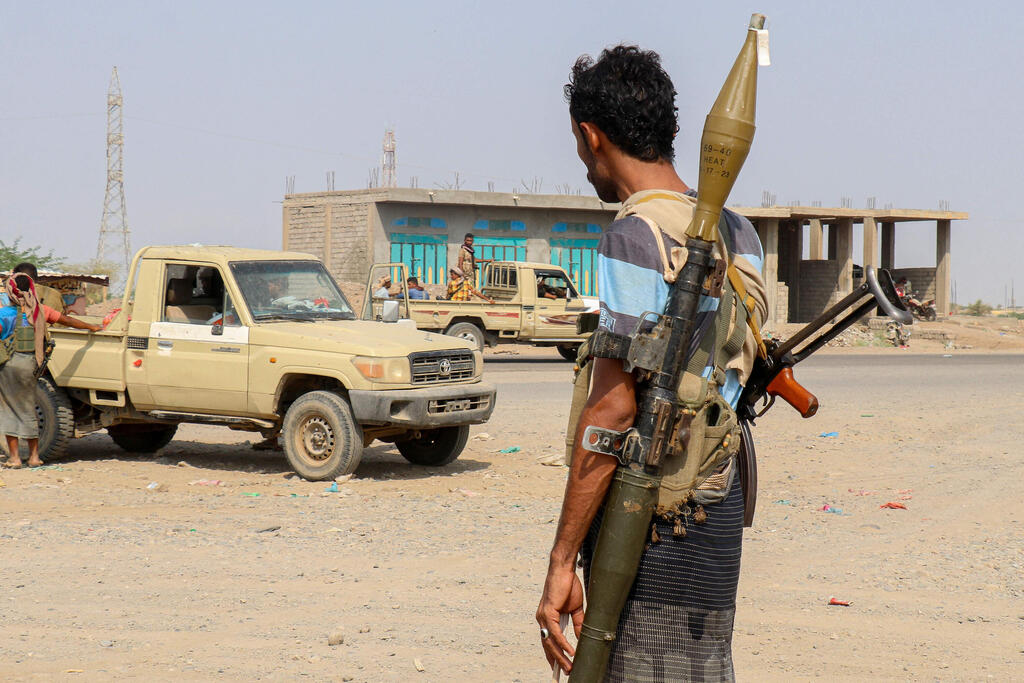
Fighters loyal to Yemen’s Saudi-backed government man a checkpoint near Hodeidah amid renewed fighting with the Houthis, Sept. 5
(Photo: Khaled ZIAD / AFP)
Lt. Gen. Tariq Saleh, head of the National Resistance, fled the area and later took refuge in Saudi Arabia.
At around 6 p.m., retreat orders were issued to National Resistance units. As thousands of fighters poured back toward Mokha, troops already stationed in the city mistakenly believed a major Houthi assault was about to begin and also started withdrawing, two fighters told the AP.
Resident Issa Gubwani said he watched military vehicles and pickup trucks stream out of the city.
“They left us to face our fate,” he said.
Tens of thousands of civilians joined the exodus. When Houthi forces entered Mokha early on Sept. 10, the senior Houthi official said, “the city was empty.”
The seizure of Mokha and nearby islands significantly expanded Houthi control along one of the world’s most important shipping corridors. The Houthis have since been building defensive positions in the newly captured territory, according to the official. The wider conflict has displaced large numbers of Yemenis and revived fears of a return to full-scale civil war.
Questions over Saudi response
Yemeni government forces were also surprised that Saudi aircraft did not strike the advancing Houthi columns, according to the senior military official.
The Saudi government media office did not respond to the AP’s request for comment.
The Houthis captured weapons and military equipment left behind by retreating forces, including armored vehicles, rockets, artillery shells and ammunition, two Yemeni officials said. Much of the equipment had originally been supplied by Saudi Arabia and the UAE.
The National Resistance said around 500 of its fighters were killed during the battles, a figure the AP could not independently verify. The Houthis have not disclosed their losses.
Government forces are now trying to regroup while rival anti-Houthi factions trade accusations over responsibility for the collapse.
“Losing the West Coast is not the end of the battle; rather, it marks the beginning of a fiercer battle,” Brig. Gen. Walid Ziyad, a senior National Resistance commander, wrote on social media.