

The Houthis are pressing ahead with the next phase of their sweeping offensive in Yemen, turning their attention to the strategically crucial provinces of Taiz and Marib after seizing much of the country’s western coastline and gaining effective control over the Bab el-Mandeb Strait.
Their apparent goal is increasingly ambitious: to break the remaining strongholds of Yemen’s internationally recognized government and potentially bring the entire country under Houthi control.
Smoke at Riyadh’s main airport after a Houthi attack, Saturday
(Video: Reuters)


According to CNN, the Iran-backed rebels are preparing for further advances against Saudi-supported government forces, with the cities and provinces of Taiz and Marib now emerging as their principal targets. The southern port city of Aden, the government’s main stronghold, could eventually come under pressure as well.
Capturing mountainous Taiz and oil-rich Marib would deliver two very different but potentially decisive advantages. Taiz controls vital transport corridors connecting government-held territory, while Marib contains Yemen’s largest oil and gas fields.
Mohammed al-Basha, a Yemen analyst, told CNN that the two cities are among the most important remaining government bastions.
“If the Houthis capture both, it is game over,” he said, while stressing that their defenders were still putting up strong resistance.
Taiz and Marib: the next front
The Houthis’ latest push follows their rapid seizure of Yemen’s Red Sea coastline, including the port of Mocha and the strategically important island of Perim, also known as Mayun, at the entrance to Bab el-Mandeb.
Those gains have given the group far greater leverage over one of the world’s most important shipping routes, particularly at a time when traffic through the Strait of Hormuz has already been severely disrupted by the continuing US-Iran war.
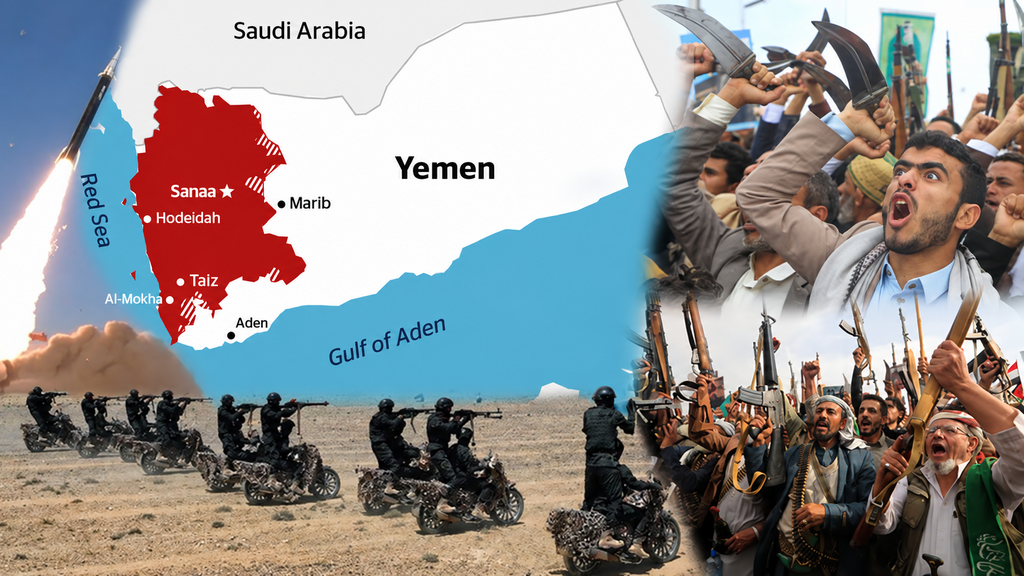
The Houthis are now advancing toward Taiz, where control of the mountainous terrain and road network could allow them to sever transport and supply links between areas still held by government forces.
Al-Basha said the rebels have encountered stiff resistance from local tribes, while government troops have so far avoided the kind of collapse seen on Yemen’s western coast, where entire areas, including Mocha, fell within hours.
As of Monday, government forces still controlled a critical road junction connecting Taiz with Aden. The surrounding area is also home to hundreds of thousands of Yemenis displaced by years of civil war.
Heavy fighting is also underway farther east in Marib Province, an energy-rich region near the Saudi border that has long been one of the Houthis’ most coveted objectives.
Government forces there have used artillery and rockets, backed by increasingly intense Saudi airstrikes, to repel Houthi advances, according to analysts cited by CNN. A senior Yemeni commander has claimed his forces have now moved from defense to offense.
The Institute for the Study of War said last week that the Houthis were likely seeking control of Marib in part to exploit its energy resources.
“The Houthis likely seek to capture the area in order to try to extract and export oil through the Red Sea, which could fund Houthi political and military activities,” the Washington-based research group said.
The Houthis already control much of western Yemen, home to more than 70% of the country’s population, including the capital, Sanaa. Forces loyal to the internationally recognized government retain territory in southern and southwestern Yemen, including Aden, as well as the country’s sparsely populated east.
Whether the Houthis will eventually move directly against Aden remains unclear.
Analysts told CNN that much will depend on whether government forces can improve coordination, strengthen their defenses and learn from their rapid defeat along the western coast.
Ibrahim Jalal, a political analyst and researcher at the Washington-based Middle East Institute, said the Houthis do not need to defeat Saudi Arabia directly to achieve their aims.
“The Houthis do not need to defeat Saudi Arabia militarily and near certainly cannot,” he told CNN.
Instead, he said, their strategy is to influence how much financing, intelligence, logistics, air defense and potentially air power Riyadh is prepared to commit to Yemeni forces capable of reversing Houthi gains.

After seizing Yemen’s Red Sea coast, Houthis turn toward Taiz, Marib and potentially Aden
(Photo: Mohammed Huwais/AFP)
That helps explain why the Houthis have generally sought to avoid costly urban warfare, instead maneuvering around government forces and attempting to isolate their positions.
Jalal told The New York Times that the Houthis also appear determined to maintain pressure on Saudi Arabia in hopes of extracting concessions from Riyadh while strengthening their own position across the region.
Yemen’s internationally recognized government said Monday that its forces had struck Houthi troops and supply routes in areas overlooking Bab el-Mandeb and in the central province of Bayda. It released footage purporting to document the attacks, although the claims could not immediately be independently verified.
Saudi Arabia escalates its air campaign
Saudi Arabia, meanwhile, has sharply intensified its effort to halt the Houthi advance.
Houthi military spokesman Yahya Saree claimed Monday that Saudi forces had carried out 157 air or missile strikes across four Yemeni provinces in a single day, bringing the total since the latest escalation began to 917.
Saudi Arabia did not immediately confirm those figures, which could not be independently verified. Saree vowed that the strikes would be met with a response.
The renewed fighting is also imposing a mounting economic cost on the kingdom.
Saudi oil exports have already been badly disrupted by the crisis in the Strait of Hormuz and the continuing conflict between the United States and Iran. About two weeks ago, the kingdom’s East-West oil pipeline, which carries crude toward the Red Sea port of Yanbu and serves as a key alternative to Hormuz, was knocked out in an attack believed to have been carried out by an Iran-backed Iraqi militia.
The disruption contributed to rising oil prices and forced Riyadh to seek alternative export arrangements.
Reuters reported Tuesday, citing three sources familiar with the matter, that Saudi Arabia had restarted the pipeline and could resume exports from Yanbu later in the day. Two sources said, however, that flows through the pipeline remained below normal levels.
Trump called off US strikes at the last minute
Saudi Arabia is still fighting without direct American participation, despite repeatedly asking Washington to join the campaign.
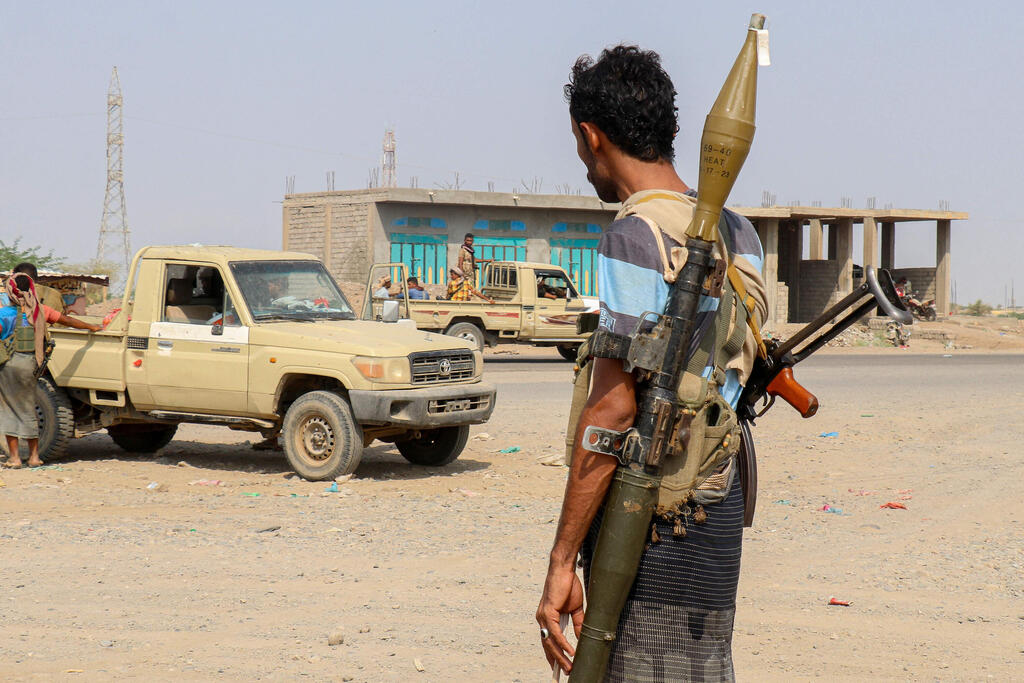
Houthis eye Yemen’s oil heartland
(Photo: Khaled ZIAD / AFP)
Targets were approved and munitions were being loaded onto aircraft, according to the report, before Trump reversed course and canceled the operation only hours before it was expected to begin.
NBC News reported Tuesday that the question exposed a divide among senior US military officials.
Some Pentagon officials have argued that opening another front in the Middle East would be a mistake, particularly as the United States remains engaged in its conflict with Iran and faces concerns about dwindling weapons stockpiles.
They have also noted that the Houthis are not currently attacking American ships, following reports of direct US-Houthi contacts in Oman in which the group said it remained committed to its previous ceasefire with Washington.
Other US military officials favor some form of action, particularly after the Houthis claimed to have shot down a Saudi F-15 fighter jet. They argue that Washington has an obligation to support a major regional ally and worry that continued US restraint could be viewed in Riyadh as abandonment.
The United States has not confirmed the Houthi claim regarding the F-15.
Britain offers Saudi Arabia limited support
Britain, however, has agreed to provide Riyadh with limited military assistance.
British Prime Minister Andy Burnham said Monday that he had approved a Saudi request for what he described as “defensive air-to-air refuelling” for a limited period.
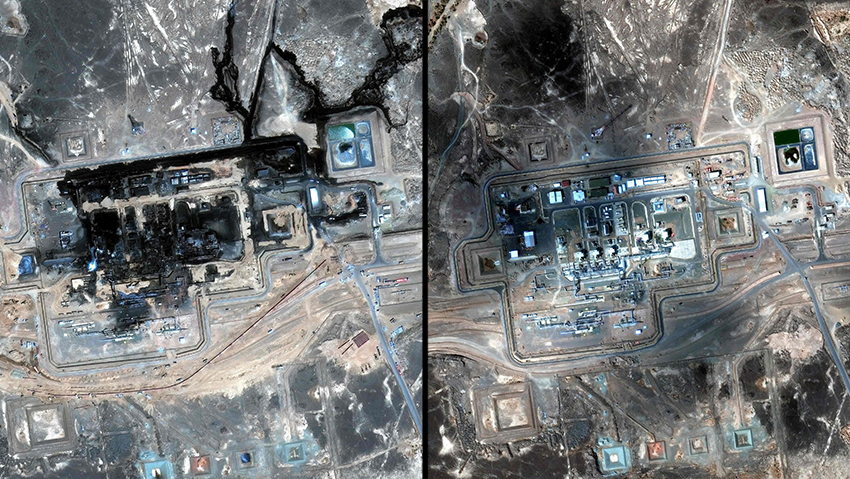
The damaged ‘Hormuz bypass’ seen from satellite. Right: before the strike, Oct. 29, 2025; left: Sept. 13
(Photo: AFP PHOTO / Satellite image ©2026 Vantor)
Britain’s Royal Air Force will provide refueling support to Saudi aircraft, a move Burnham said was intended to help stabilize the wider region.
Britain and Saudi Arabia have maintained close military ties for decades, and the UK remains one of the kingdom’s major arms suppliers.
The Group of Seven countries also issued a joint appeal Tuesday calling on the Houthis to halt their attacks on Saudi Arabia, end threats and attacks against civilian shipping and return to the political process “in good faith.”
The G7 leaders also called on Iran to stop arming and supporting the Houthis, saying Tehran’s assistance violates previous UN Security Council resolutions.
For now, however, the decisive battles are being fought inside Yemen.
Government forces and local tribes are still holding positions around Taiz and Marib, and the Houthis have yet to reproduce the rapid collapse they triggered on the western coast. But the stakes are considerably higher.
If the rebels can cut the roads through Taiz and seize the oil and gas resources of Marib, the internationally recognized government could lose both a vital economic base and the territorial links holding its remaining strongholds together.
And beyond them lies Aden.