


For two years, Shlomo Efrati served as a reservist at Camp Shura, the military facility near Ramla where the bodies of those murdered in the Oct. 7 massacre were brought for identification and, later, where fallen IDF soldiers from the ground campaign in Gaza were prepared for burial.
The exposure came at a severe psychological cost. Yet Efrati, 39, says he does not regret answering the call on Oct. 7.
Gallery
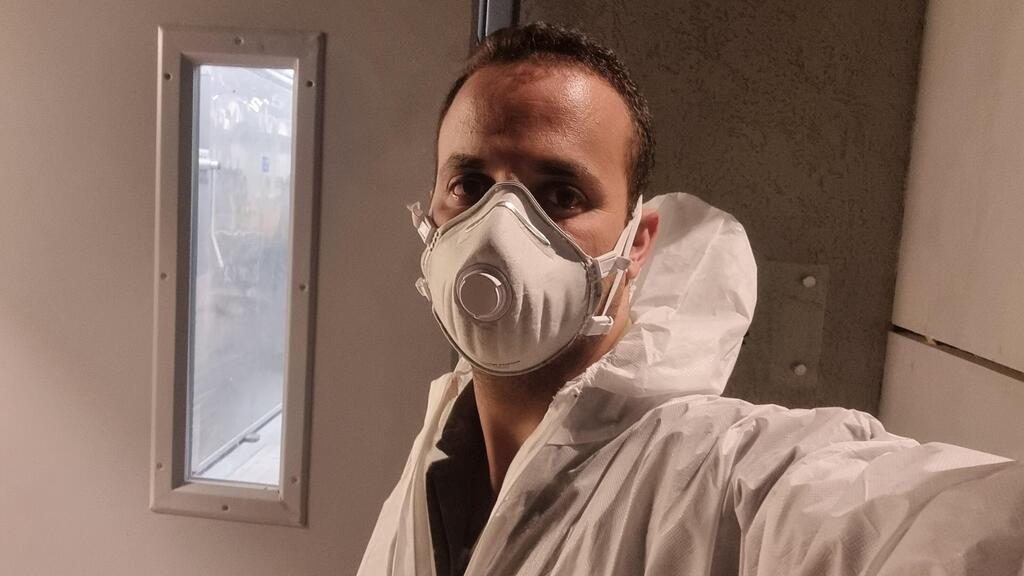
Shlomo Efrati at Camp Shura, the military facility near Ramla where the bodies of those murdered in the Oct. 7 massacre were brought for identification
“I would have been willing to pay this price another thousand times if necessary. I’m talking to you after four nights without sleep,” he told Ynet. “I wish none of it had happened, all the suffering of those who were murdered and their families. But once it did happen, I feel that my service at Shura was the mission of my life.”
During the first two weeks after the Hamas-led attack, Efrati and his fellow reservists took fingerprints from about 700 murdered civilians from the Nova music festival, the Gaza border communities, Zikim Beach, Sderot, Ofakim and elsewhere, helping identify victims so their families could bury and say goodbye to their loved ones.
He later began handling the bodies of fallen IDF soldiers and preparing them for burial.
His experiences at Shura have now been collected in the Hebrew book Bein Chalal Lechalal (“Between the Fallen”), published by Yedioth Books, a harrowing poetic diary edited by Yondav Kaplan and illustrated by Barak Toito.
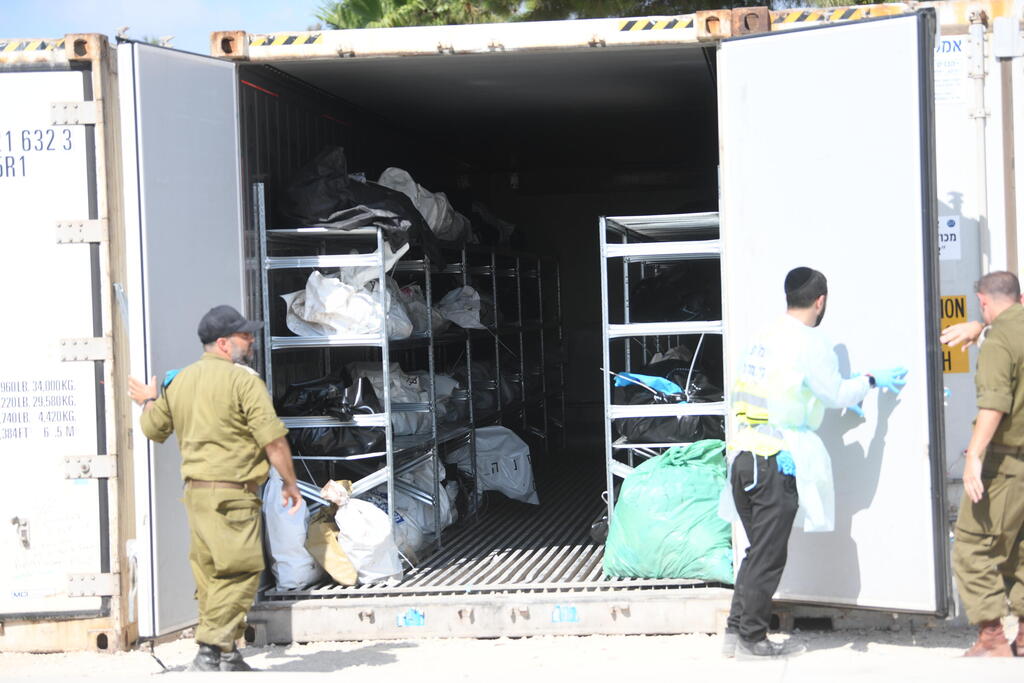
Shura body identification center in Ramla after the Oct. 7 massacre
(Photo: Yair Sagi)
On Oct. 7, 2023, Efrati was called up under an emergency reserve order to the IDF’s casualty data collection unit, part of the Military Rabbinate command responsible for handling the fallen. His reserve commander contacted him after the Simchat Torah holiday ended that Saturday night.
“I drove to Shura and had no idea what I was going to encounter,” he recalled. “There was a long line of refrigerated trucks at the entrance and lots of stretchers with bags on them.”
“I was trying to understand how this was supposed to work. They gathered us together and I sat next to someone. I asked his name and he said, ‘Oded.’ I told him, ‘I’m Shlomo, and from now on we’re together.’ From that moment until the end of our reserve service, we were inseparable. His name is Oded Kind, and I dedicated the book to him.”
In one poem, written after the birth of his daughter Ori Sheva in July 2025, Efrati juxtaposed the blood of childbirth with the blood he remembered from Shura:
After the birth of my daughter, Ori Sheva, yesterday, as I rolled the metal crib down the corridor, with the baby inside, I noticed: my shoes were stained with blood. from the birth I remember well another metal bed and other blood staining my shoes.
A lack of coordination between IDF and police records meant Efrati and his colleagues were asked to help identify murdered civilians by taking fingerprints from their bodies.
“A very high percentage of those murdered were identified that way,” he said.
Returning to what he saw remains emotionally difficult, but Efrati believes testimony matters, particularly in a world where some deny the Oct. 7 massacre.
He describes victims who arrived with their legs bound and bodies bearing signs of gunfire and severe injury around the groin and genital areas.
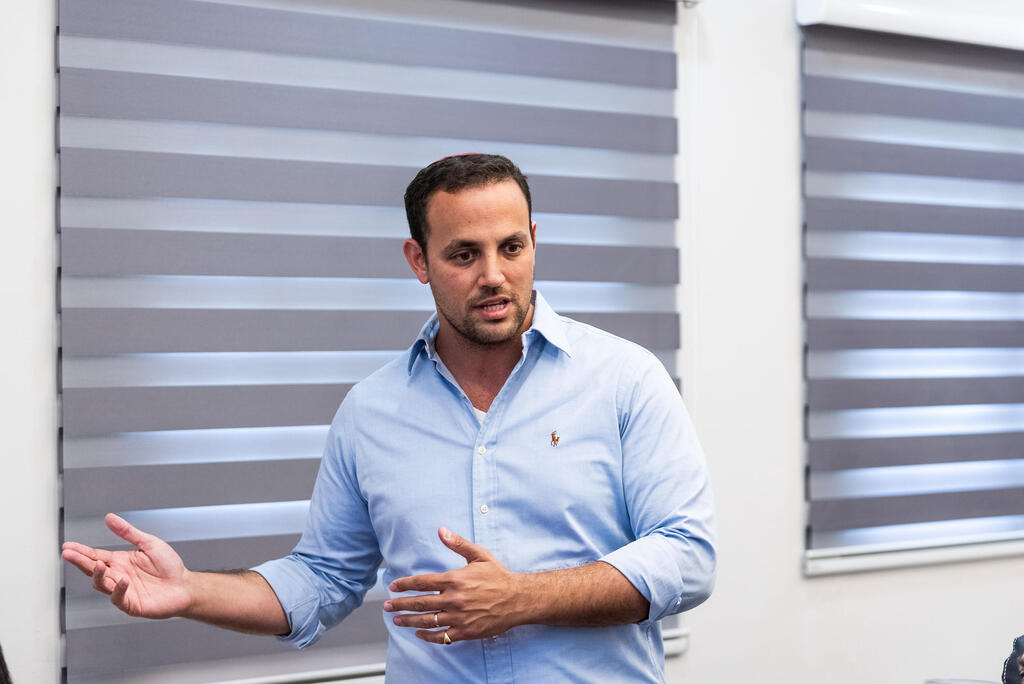
Efrati. ‘Religion is the most wonderful and the most terrible thing in human existence’
(Photo: Mor Shkifi)
“When victims came to me with their legs tied, I could only imagine where they had been taken from, where they had been and exactly what had happened,” he said. “I remember people whose legs were tied with ropes, or who had bruising in the groin area, or bullets in those areas.”
“Sometimes there was a severed hand or a severed leg. Some bodies arrived completely burned. We couldn’t take fingerprints from them, but under the procedures we still had to go in and examine them.”
The terrorist’s body
In his book, Efrati describes how the body of a Palestinian terrorist who participated in the attack was mistakenly brought to his team.
Three grenades and an opened package of condoms were found in the man’s pockets, Efrati said. He also recalled that the man was wearing flip-flops, leading him to believe he may have been a civilian who joined the terrorists entering Israel rather than a trained member of Hamas’ Nukhba force.
In a passage written on Oct. 28, 2023, he described the encounter:
One day in the valley of slaughter, the body of a terrorist arrived by mistake. How much darkness entered the room. The body lay helpless on the table. How vulnerable he is now, I thought. And in his pocket was the essence of evil: three grenades and a pack of condoms. Suddenly, an ancient melody from the Yom Kippur prayer began playing in my head: Have mercy upon Your creations. How much compassion is missing from our world. What a tragedy that there are people imprisoned for an entire lifetime inside this evil. I am uncomfortable admitting it, but I felt pity for him. Not for his death, but for the life he lived, for his ability to choose good and for the choice he made: evil.
“Everyone treated him respectfully, just as they treated every other body, but the conversations among the guys were difficult,” Efrati said.
He found himself separating the terrorist’s choices in life from the body left behind after death.
“He chose to do the worst things a person could possibly do with his life. But once the soul is no longer in the body, only the second part remains, his body. And the body contains what we call tzelem, the image of God.”
“At that point, his body is like my body. I see a human being lying in front of me, and the part that chose to commit the atrocities is no longer there.”
“This is a person who, in my eyes, represents absolute evil, without question, and it is good that he died. It would have been better if he had died before committing the terrible acts he committed. But after he dies, his body still bears the image of God, and it must be treated with sanctity and respect.”
Asked about writing that he even felt pity for the man, Efrati described what was found in his clothing.
“It was terribly difficult. We emptied his pockets and he had grenades, a lighter and an opened packet of condoms. He also had a small Quran, like those pocket-sized editions of Psalms.”
“You see absolute evil there. This man came to murder and rape. That is what he came to do. In my internal dialogue with God, I said: How does a person reach a point where this is his choice in life? How does that happen?”
For Efrati, the question became inseparable from his faith.
“Just as there is an encounter with God through good, there is an encounter with God through what is not good,” he said. “I walked around Shura with God in my pocket.”
“Of course I had grievances. I have a profound grievance with God. At the same time, I have a deep recognition of the value of my life and of the soul inside a human being. I have profound gratitude for the privilege of living this life and accomplishing whatever can be accomplished here.”
The bitter contradiction, he acknowledged, is that the terrorist himself may also have believed he was acting in God’s name.
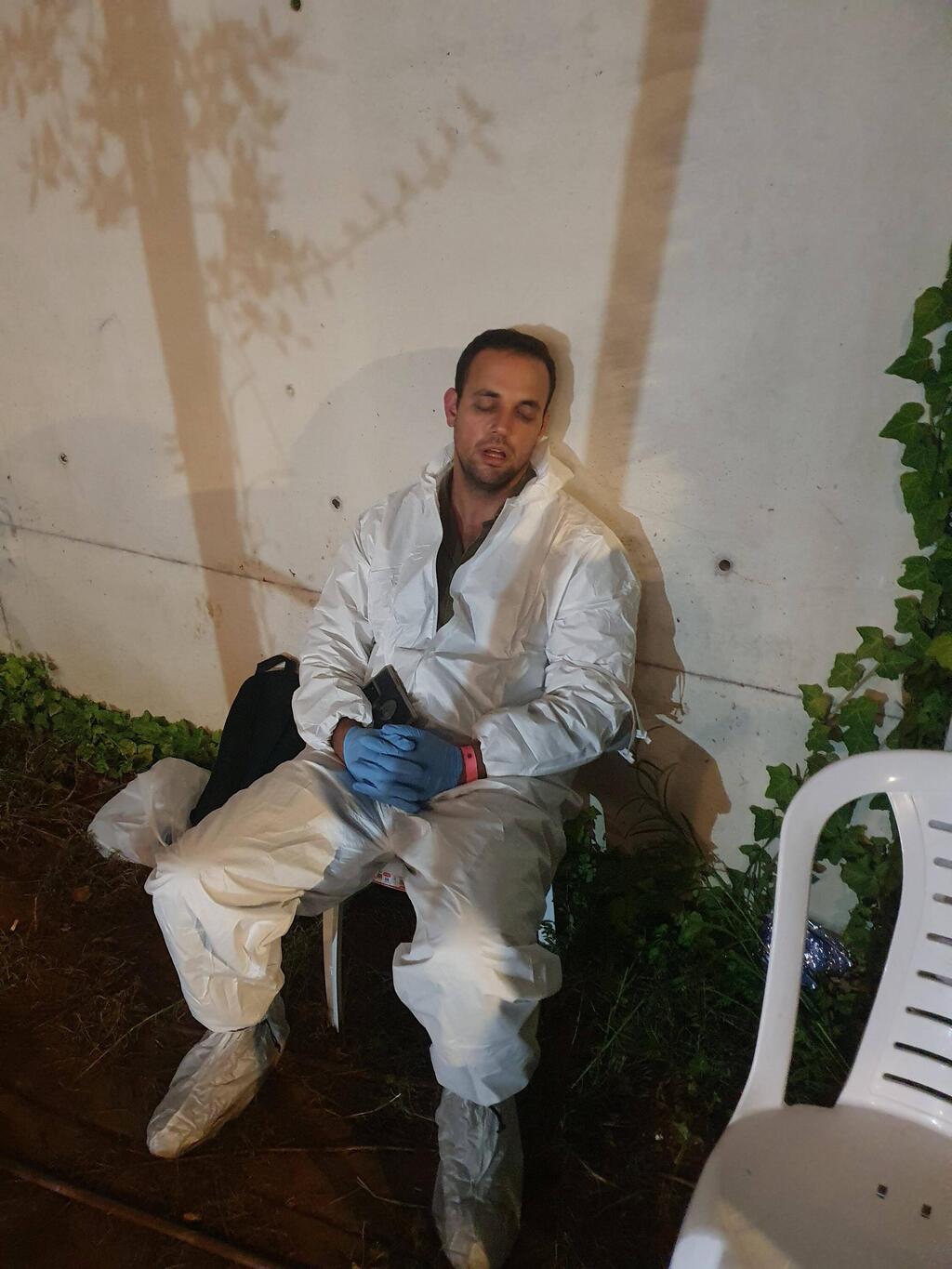
Shlomo Efrati on the night of Oct. 7-8, 2023
(Photo: Oded Kind)
“That’s absolutely right. Religion is the most wonderful thing in human existence and the most terrible thing in human existence,” Efrati said.
“It is responsible for a great many wars, atrocities and hatred between people, and it is also responsible for a great many good deeds and for people’s desire to do good. It depends on where you take it.”
Efrati distinguishes religion from the spiritual experience he underwent at Shura.
“Religion is clothing. I am a religious person, but that is my clothing. It is the mother tongue I grew up speaking. My way of speaking with God is through religious elements, prayers and commandments, and that is how I am raising my children.”
“But it is one language, and I do not fool myself into believing it is the only language that exists. I have great respect for people who speak other languages.”
Oded Kind, who served alongside Efrati, confirmed to Ynet the details Efrati described, including the objects found on the terrorist’s body and the signs of abuse and severed limbs encountered by the unit.
On the edge of infinity
Efrati lives in Harish with his wife, Maayan, and their five children. Their youngest daughter, Ori Sheva, was born during the war.
He grew up in Givat Shmuel in a religious Zionist household, and his writing is steeped in Jewish texts and imagery.
He previously served as assistant director-general of the Harish municipality, director-general of the West Bank community of Etz Efraim and director-general of the Oranit local council. Today he works independently advising local authorities on large-scale projects.
During his mandatory IDF service, Efrati originally enlisted in the Nahal Brigade. Knee problems during advanced training led to his transfer to the Military Rabbinate, where he served in a religious affairs role. Only during his reserve service was he assigned to casualty identification work.
The investigation of Manar Mahmoud Muhammad Kasem, who admits to the sexual violence he committed against an Israeli woman on October 7th
(Video: IDF)


The pieces in his book were originally written as messages on his phone.
“It was the most readily available outlet I had for unloading what I was going through,” he said. “At first I wrote in a WhatsApp group with my siblings, then with some friends from the reserves.”
Some of the writing later appeared in Haaretz’s culture and literature supplement. Former supplement editor Benny Ziffer compared Efrati’s work to Haim Nahman Bialik’s poem “In the City of Slaughter,” written after the Kishinev pogrom.
The first poem in the book was written on Oct. 8, 2023, after his first night at Shura.
“In the morning I step outside for a moment / and there is light in the sky! / As if, thankfully, at least this / the Holy One remembered today / to do as He should.”
“That was written at the end of the first night,” Efrati said. “We had entered a conveyor belt. We didn’t even have time to sit down and breathe.”
“More and more bodies kept arriving. We saw things I never imagined I would see in my life. At some point I felt as though I had entered a loop and that night would never end. Like I had entered an episode of ‘Black Mirror’ and it was going to continue forever. Then suddenly there was light in the sky.”
Despite all the unanswered questions, Efrati still defines himself as a believer.
“My conversation with God is not one of doubt, but obviously these were days of a tremendous hiding of God’s face,” he said.
“Every fallen person there tells a story through their clothing or their tattoos. You try for a moment to categorize them: She is an elderly woman from Ofakim, he is a cool guy from the party with long hair, she has glitter around her eyes.”
“Every body tells a story. But at the same time, the body has been separated from the soul. It emphasized to me that a living human being is a divine creation, a creation of the soul, because I know what the body looks like without a soul.”
“When you spend so much time on the edge of the abyss, on the edge of infinity, life can no longer be taken for granted. A living person is not something to take for granted.”
‘The triggers are endless’
Like many who served at Camp Shura after Oct. 7, Efrati was diagnosed with post-traumatic stress disorder and recognized by Israel’s Defense Ministry as a disabled IDF veteran. He was eventually released from reserve duty along with the rest of his unit.
Even mundane moments can bring the images rushing back.
“Lots of everyday situations remind me of Shura,” he said. “I have a thing about gel nail polish because of the fingerprints we took.”
“I can remember Shura when I stretch sheets over my children’s beds. It can remind me of burial shrouds. In the community garden below my home there are long wooden garden beds where I grow tomatoes, and they look exactly like coffins.”
“The triggers are endless. For two years I handled many hundreds of bodies. There was a time when I took a phone out of a soldier’s pocket and saw that his mother was calling.”
‘They abused the Thais too’
Some passages in Efrati’s book concern Thai agricultural workers murdered in the Gaza border communities.
“There was severe abuse of the Thai victims’ bodies,” he said. “You could see that they had been sprayed with gunfire, including long after they were dead.”
“You see it and think about the person who did it: Seriously, what is wrong with you? What do you have against the Thais? Why? What did they do to you?”
“You came to fight over land, fine. Leave the Thais alone. What do you have against them? Say you didn’t like that they received a paycheck from the Zionists, so you killed them. Fine. Why abuse their bodies?”
“There was something there that made clear to me how much of it was simply evil. How much of it was sitra achra,” he said, using the Aramaic Jewish term for the forces of evil. “There is a sitra achra in the world.”
In another poem, written in February 2025, he wrote:
Dear doctor, I need a prescription for breathing. And while we’re at it, if possible, how does one breathe inside a dream?
Much of Efrati’s writing has now been translated into English and was published on Oct. 7 in a digital edition of the journal Liberties. The intention is eventually to publish the full book in English.
“At the deepest level of what we do in this world, we did not come here in order not to suffer,” Efrati said. “We came here to fulfill our souls, to let our souls shine. I felt this was my life’s mission.”
Asked whether that meant all the large municipal projects he had managed now seemed insignificant compared with his work at Shura, Efrati went further.
“I was assistant director-general of Harish when they were building the city. We implemented projects worth billions. We built schools, kindergartens, roads, streets and neighborhoods. I was part of a national project, and in my eyes that is nothing compared with this mission.”
“I felt there was nothing better on earth that I could be doing at that moment than being there and caring for those who had been murdered. I feel I was given a different internal, spiritual language.”
Amid colleagues doing everything they could to respect the dead and allow families to say goodbye, Efrati says he reached another conclusion.
“I understood that good is infinite, and what is not good is infinite too,” he said.
“Humanity is constantly trying to create technology that is more sophisticated and advanced, and the artificial intelligence that erupted during these years is the ultimate technology, the ultimate machine.”
“In that situation, what remains for a person is to make their soul shine. If all knowledge exists and a machine can tell me everything, now is the time to define what I know how to do. What do I know how to say? What can the divine part within me create in this world?”
In other words, AI is pushing you to be more fully human?
“Exactly. You were created, so create. Make art,” he said. “Publishing the book and having the text recognized as possessing artistic value makes me think I need to answer that call and reveal my art to the world.”
Despite everything, Efrati remains optimistic about Israel’s future.
“In the story of the war and the way it developed, you see God speaking with us,” he said. “The pager operation and Hezbollah, Syria, Iran. Just as God blinded our eyes for several hours on Oct. 7, God knew how to open them and show us which room in Iran Haniyeh was in and when to eliminate him.”
“It is clear to me that the story with Iran is not over. Evil wants to destroy itself. What did Sinwar think, that he would manage to destroy us? Evil has some deep death wish.”