


More than 20,000 new immigrants from over 100 countries moved to Israel during the past Hebrew year despite the country’s prolonged security challenges, with Russia, France and the United States accounting for the largest groups and new figures showing a sharp rise in interest in aliyah across several Western countries.
The figures, released by the Aliyah and Integration Ministry and the Jewish Agency for Israel ahead of Rosh Hashanah, cover the period from Sept. 23, 2025, through Sept. 3, 2026.
Gallery

More than a third of Israel’s new immigrants are young adults as aliyah tops 20,000
(Photo: Kinneret Rivkind)
They show that 5,685 immigrants arrived from Russia, followed by 4,364 from France and 3,333 from the United States. Another 975 came from Britain.
Other countries sending significant numbers of new immigrants included Ukraine with 797, Belarus with 491, Canada with 440, Australia with 247, Argentina with 243, Georgia with 241, South Africa and Germany with 210 each, and Brazil with 200.
The data offer a snapshot not only of who is moving to Israel, but also of a potentially significant shift in where future aliyah, Jewish immigration to Israel, may come from. While Russia remains the largest single source of new immigrants, the number of people beginning the aliyah process has risen substantially in several Western countries.
That trend will be among the issues in focus Tuesday, Sept. 8, when ynet Global holds its Global Aliyah Live Summit, a special international live broadcast devoted to both the decision to move to Israel and the practical challenges that begin after arrival.

ynet Global’s Sept. 8 Aliyah Live Summit
(Photo: Yonit Shiller)
Broadcast in Hebrew, English, Russian and French, the summit will bring together government officials, aliyah and integration organizations, experts and new immigrants themselves to address questions ranging from employment and banking to housing, health care and the first 24 hours in Israel.
Western aliyah interest climbs
More than 28,000 Jews around the world opened aliyah files over the past year through the Jewish Agency’s Global Aliyah Center in Jerusalem, which operates with support from the Ministry of Aliyah and Integration.
France recorded a 31.5% increase, with 7,033 files opened this year compared with 5,349 the previous year.
In the United States, the number rose 17.1%, from 5,745 to 6,725. Britain recorded a 68% increase, from 1,348 to 2,264, while Australia saw the sharpest rise among the countries detailed in the figures, jumping 89.7% from 311 to 590.
Canada recorded a 10.7% increase, from 864 to 956, and South Africa rose 14.3%, from 322 to 368.
Thousands more took part in aliyah fairs held during the year in France, Britain, the United States, Argentina, Brazil, Azerbaijan and Australia. The events were organized by the Ministry of Aliyah and Integration, the Jewish Agency and other organizations involved in encouraging and supporting immigration to Israel.
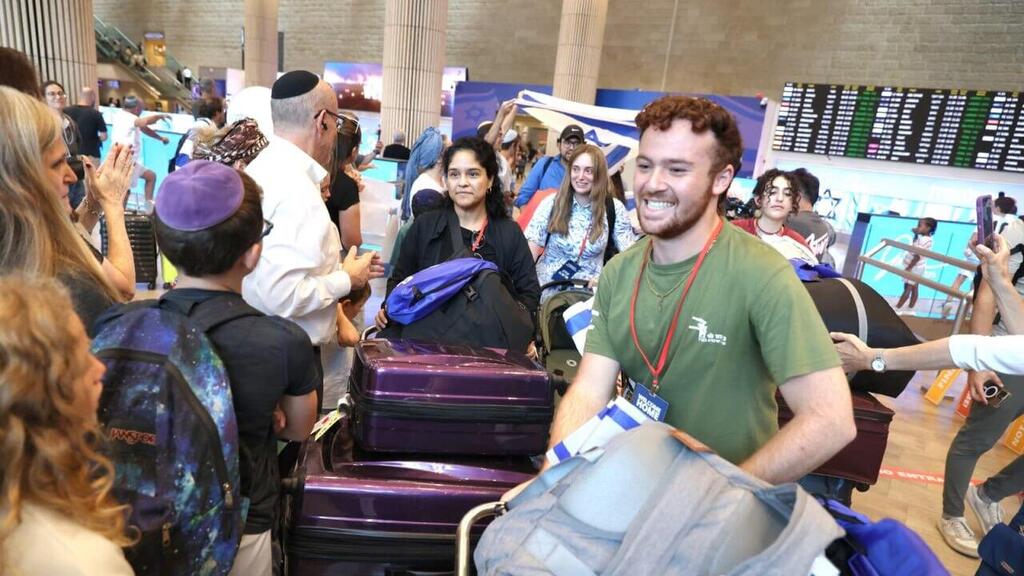
Aliyah from North America
(Photo: Sivan Shachor)
Aliyah and Integration Minister Ofir Sofer said the trend from Western countries was expected to continue.
“More than 20,000 new immigrants are celebrating their first Rosh Hashanah at home, in the State of Israel,” Sofer said. “Precisely in a complex and challenging year, the choice to make aliyah and build a future here is a powerful Zionist and national statement.”
He pointed particularly to developments in France and Britain, linking the growing interest in aliyah to the war in Israel, political developments abroad and rising antisemitism.
“The trend of aliyah from Western countries is expected to continue and strengthen, and this is a national opportunity that the State of Israel cannot afford to miss,” he said.
More than a third are young adults
The age profile of the new arrivals is another significant element in the data.
Some 35% of immigrants who arrived during Hebrew year 5786 were between 18 and 35, a group Israeli officials view as particularly important to the country’s labor market and economy.
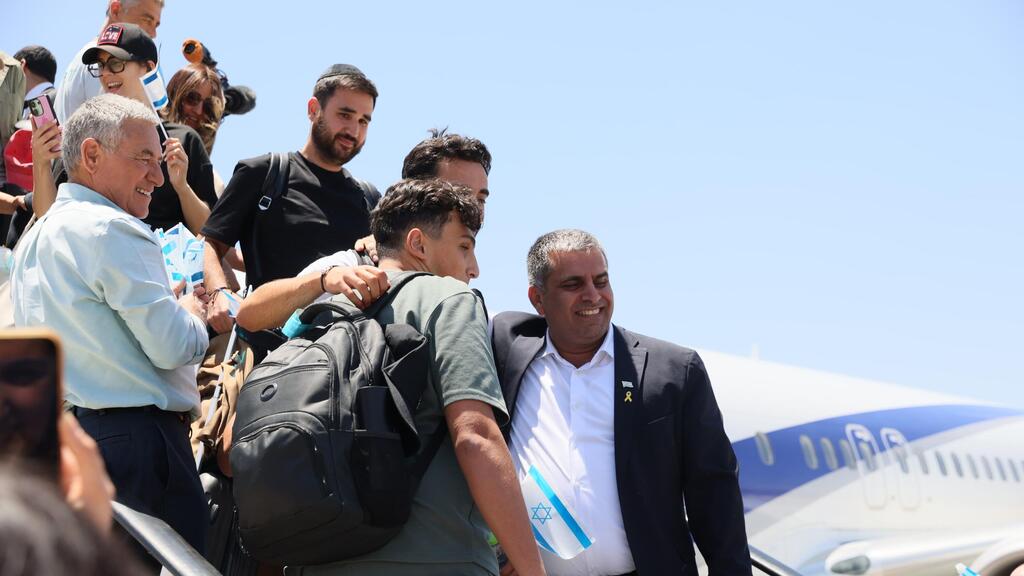
Aliyah and Integration Minister Ofir Sofer with some of the olim
(Photo: Elisha Hankin)
Another 24% were children and teenagers up to age 17, while roughly 18% were ages 36 to 50. Nine percent were between 51 and 60, 5% were ages 61 to 65 and 10% were 66 or older.
At the extremes were two 102-year-old immigrants, one from Russia and the other from France, who were the oldest people to make aliyah during the year. The youngest was a two-week-old baby who arrived from Mexico with his family.
Among the new arrivals were 414 doctors from around the world. The Ministry of Aliyah and Integration and the Jewish Agency said efforts were made during the year to help immigrant professionals enter the Israeli workforce through professional training, job placement programs and connections with employers.

Aliyah from North America
(Photo: Sivan Shachor)
A tax reform initiated by the finance minister and the Aliyah and Integration minister was also launched with the goal of easing new immigrants’ integration into the Israeli economy.
The challenge of transferring an established career to Israel will be a major focus of ynet Global’s Aliyah Live Summit. Employment experts will address how immigrants can adapt résumés to the Israeli market, build professional networks, navigate professions requiring Israeli licensing and avoid having years of overseas experience become an obstacle to continuing their careers.
The summit will also examine the financial side of immigration, including opening an Israeli bank account, transferring money from abroad, dealing with foreign assets and income, mortgages and the question of when buying a home in Israel makes sense for a new immigrant.
Where new immigrants are settling
Tel Aviv absorbed more new immigrants than any other Israeli city during the year, with 2,762 newcomers.
Netanya was second with 2,224, followed by Jerusalem with 2,134, Haifa with 1,504 and Ra’anana with 1,042.
Bat Yam received 957 new immigrants, Ashdod 846, Beit Shemesh 680, Ashkelon 534 and Rishon Lezion 450.
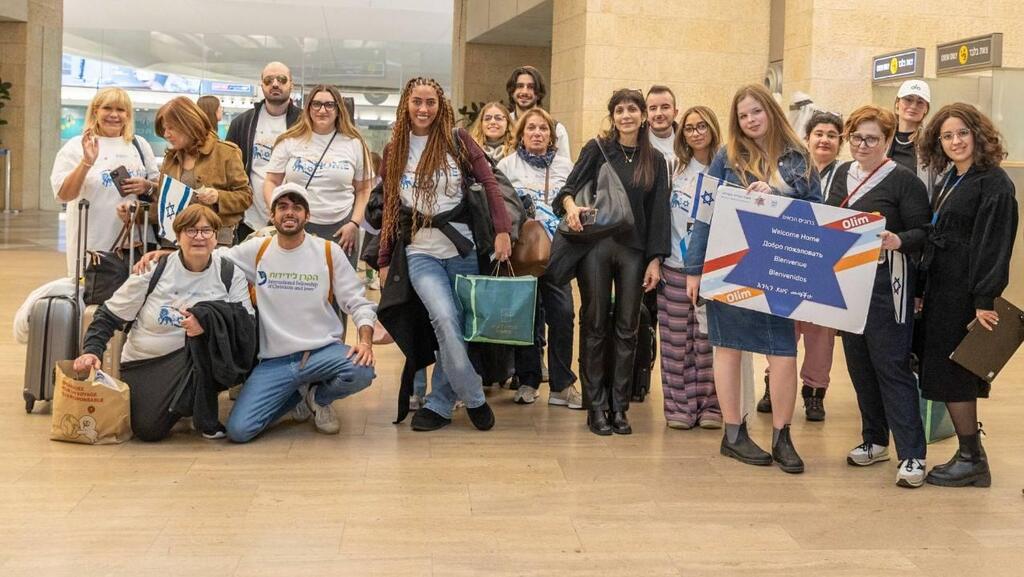
(Photo: Elisha Henkin/Aliyah and Integration Ministry)
Nahariya, the northernmost city highlighted in the figures, received 307 immigrants, while Eilat, the southernmost, absorbed 132.
Overall, about 31% of the year’s immigrants settled either north of Hadera or south of Ashdod. Some 3,862, roughly 20% of the total, settled from Hadera northward, while 2,247, or about 11%, settled south of Ashdod.
The Jewish Agency has also been promoting special immigration tracks aimed at strengthening northern and southern Israel demographically, economically and socially. One initiative brings groups of young immigrant families to Israel together so they can establish themselves as a group within the same communities and municipalities.
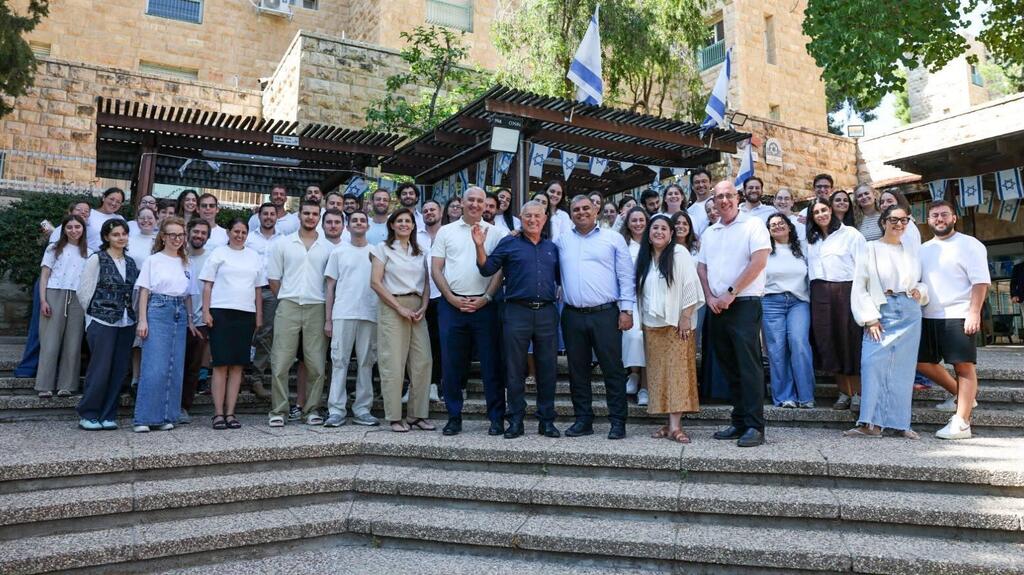
Aliyah and Integration Minister and Jewish Agency chairman with new olim at Ulpan Etzion in Jerusalem
(Photo: Elisha Hankin)
Making aliyah is only the beginning
For many immigrants, however, landing at Ben Gurion Airport is where some of the most complicated questions begin.
Tuesday’s Global Aliyah Live Summit will devote discussions to the first 24 hours in Israel, including the documents new immigrants receive, registering with government agencies, choosing a health fund and opening a bank account.
Health professionals will explain how Israel’s health care system works for newcomers, including registering with a health fund, choosing a doctor and making appointments. The summit will also address emergency medical care, including how to contact Magen David Adom through Israel’s 101 emergency number and what information callers need to provide.

New immigrants taking part in the broadcast will also discuss the less formal side of integration: finding housing and employment, dealing with bureaucracy, adjusting to a new language and culture and discovering what they wish they had known before boarding the plane.
Sofer and Jewish Agency Chairman Maj. Gen. (res.) Doron Almog are also expected to address the broader question of how Israel can turn rising interest in aliyah into successful long-term integration.
Almog said the decision to immigrate in such a difficult period reflected confidence in Israel and in the future of the Jewish people.
“Aliyah to Israel is a profound expression of unconditional love, of faith in the future of the State of Israel and in the Jewish people’s ability to build the next chapter of the Zionist enterprise here together,” he said.
“Even in a complex and challenging year, thousands of Jews from around the world chose to take the major step and call Israel home. That is the essence of Zionism.”
He described aliyah as a source of growth for Israel and called for greater efforts to welcome and integrate those arriving.
The figures released ahead of Rosh Hashanah suggest that the challenge for Israel is increasingly twofold: attracting those considering aliyah and ensuring that those who make the move can build sustainable lives once they arrive.
That second half of the journey, from the airport to employment, health care, housing, finances and community, will be at the center of ynet Global’s Global Aliyah Live Summit on Sept. 8.