

Fleur Hassan-Nahoum, Israel's special envoy for trade and innovation and outgoing deputy mayor of Jerusalem, said in a special interview with ynet Global that Israel faces an ongoing communications battle even as military operations wind down. She warned that the country lacks an adequate strategy to counter hostile narratives in international forums.
"Even though we have a ceasefire, the war on us in terms of communication and narrative is not over. In fact, I would even go so far as to say it's only beginning," Hassan-Nahoum said. "Unfortunately, in this country, we still haven't managed to get a strategy together."
Interview with Fleur Hassan-Nahoum at the Ynet studio


The British-born diplomat, who was raised in Gibraltar by a Sephardic Jewish family before making aliyah, said she conducts hostile media interviews nearly every day to defend Israel against what she calls blood libels and false headlines.
"We still haven't managed to really find a solution or at least put together a real army for the communications war the way that we have such an incredible army for the military war," she said. "Sometimes we're not even in the arena."
Hassan-Nahoum criticized Israel's slow response to misinformation, noting that it often takes the IDF Spokesperson's Unit two days to counter false narratives. "The lie goes around the world before the truth gets the chance to get its pants on," she said, quoting Winston Churchill. "We're not putting our pants on on time."
The envoy said her trade and innovation role is becoming increasingly relevant as the Abraham Accords expand. She pointed to Kazakhstan recently joining as a regional economic partner and expressed hope that Saudi Arabia and Indonesia would follow.
"This is something that in my role in the Foreign Ministry, I'm positioned to try and build those bridges between businesses in Israel and businesses in these countries," Hassan-Nahoum said.
She has launched a new initiative called Campus Israel, an organization designed to bring international students to study full degrees in English at Israeli universities. The program aims to expose students to Israel's innovation ecosystem while providing an alternative to universities where Jewish students face hostility.
"Unfortunately, around the world, the situation in campuses is not getting better. It's going to get worse," she said. "Instead of defense, crying about it, saying what do we do, offense: we're going to go and study in Israel."
Abraham Accords resilience
Hassan-Nahoum expressed surprise at the resilience of the Abraham Accords throughout the regional conflict. She said that if asked two and a half years ago whether the agreements would survive a multi-front war and negative narratives in the Arab world, she would have predicted their collapse.

L-R: Bahrain FM Abdullatif al-Zayani, PM Benjamin Netanyahu, US President Donald Trump and Emirati FM Abdullah bin Zayed Al-Nahyan at the signing of the Abraham Accords at the White House
(Photo: AFP)
"They did hold strong. So what does that say? It says that they're here to stay, that it's a strategic vision for the future," she said. The agreements effectively divide the Middle East into countries seeking destruction and jihadism versus those wanting peace and prosperity, she added.
Hassan-Nahoum highlighted the growth in Israeli-UAE trade, noting that bilateral commerce reached $3.5 billion in 2024, up from nothing five years earlier.
She called Saudi Arabia and the UAE's public acknowledgment of helping defend Israel during Iran's April 2024 attack a watershed moment. "In the Middle East, rhetoric and reality are two different things. They can be very friendly with us, but let's not make it too obvious," she said. "The fact that they came out saying we're on this side and not on the side of the Islamic Republic of Iran, that's huge."
Hassan-Nahoum said Israel is positioned to become a physical hub between East and West through initiatives like the IMEC corridor that U.S. President Donald Trump has discussed.
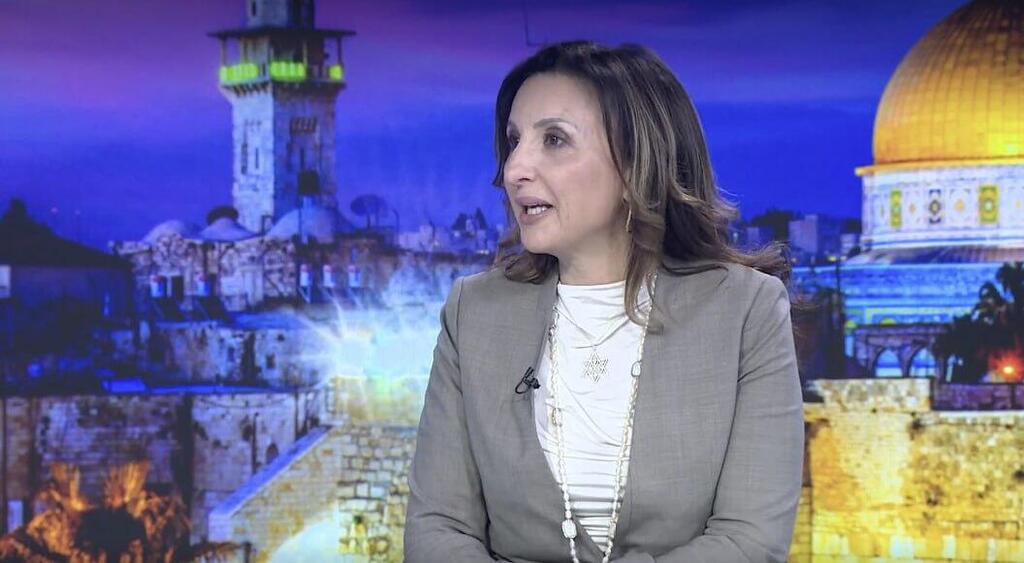
Fleur Hassan-Nahoum
She emphasized Israel's economic resilience during wartime, noting the stock exchange gained 30 points and the shekel remained strong. "We are the second technological superpower in the world," she said, attributing this to Israel's high concentration of AI talent and robust economy.
Women in leadership
Asked about women in Israeli politics, Hassan-Nahoum noted that female representation in the Knesset has declined from nearly 30% to 25%, while local government representation has fluctuated between 12% and 20%.
"We will only have a balanced world when women are 50% of the decision makers," she said. "What I would say to young women who aspire to be leaders: just do it. Yes, it's rough, but you have to do it because if they don't do it, nothing will change."
Hassan-Nahoum, who has navigated Israeli politics as both a woman and an immigrant, encouraged young women not to be intimidated by male-dominated political arenas. "The only way it's going to change is if they jump in. And that's the only way we're going to make real change," she said.