

The interception took place near Cyprus, hundreds of kilometers from Israel’s coast. As in previous flotilla incidents, Israel decided to stop a significant part of the convoy far from Gaza’s shores. Activists detained during the operation were transferred to a ship described by officials as a “floating jail,” from which they are expected to be taken to Ashdod.
Live from the flotilla ships


Some activists continued livestreaming from vessels that appeared to still be moving. During the takeover, live footage showed activists throwing mobile phones into the sea as IDF troops boarded some of the boats with weapons drawn and took control of them without clashes.
About 50 vessels and roughly 500 activists were taking part in the flotilla. Turkey’s state news agency reported that flotilla members said contact had been lost with at least 23 boats.
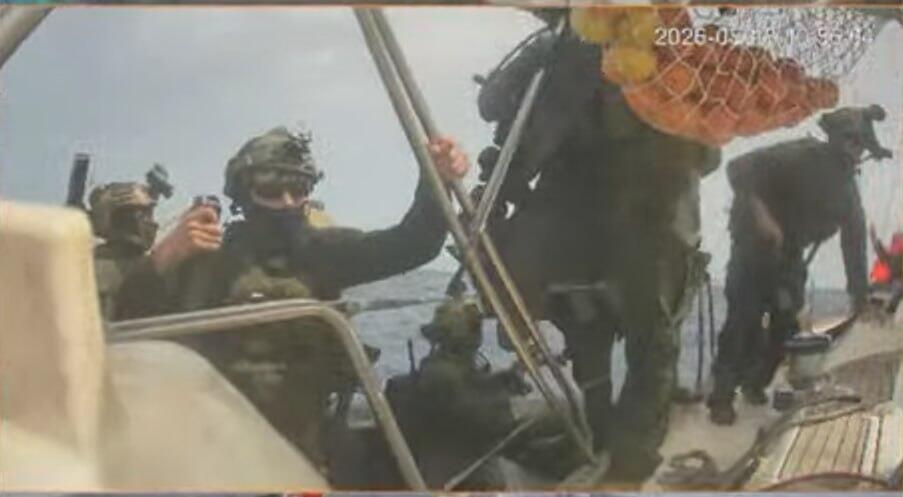
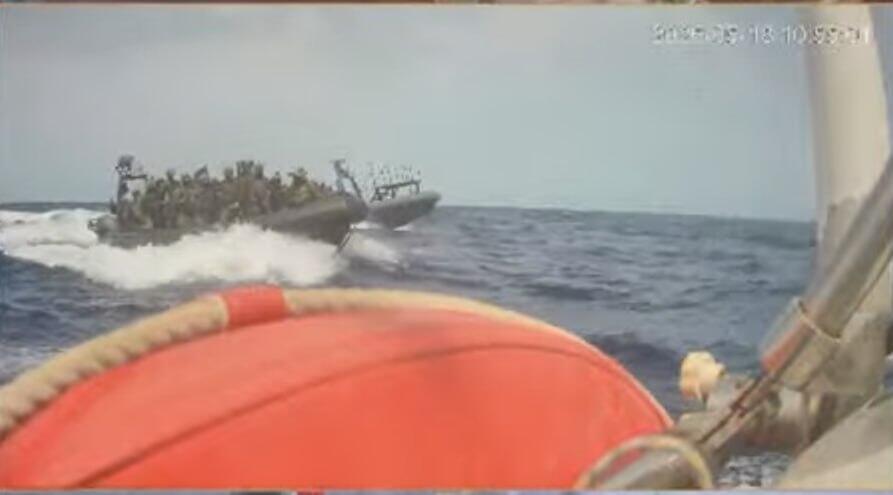
Israeli naval forces did not plan to seize every vessel on Monday. The goal was to take control of around 20 of the largest boats leading the flotilla, in the hope that the remaining vessels would change course and turn back. Because the convoy was still near Cyprus, Israeli forces had more time to carry out the operation slowly and in a controlled manner.
A flotilla spokeswoman told Qatar’s Al-Araby channel that contact had been lost with most of the vessels stopped by Israel.
“We expected Israel to seize the flotilla and prevent the breaking of the siege on Gaza,” she said. “We will sue it for violating the law of the sea and for piracy against the flotilla’s ships.”
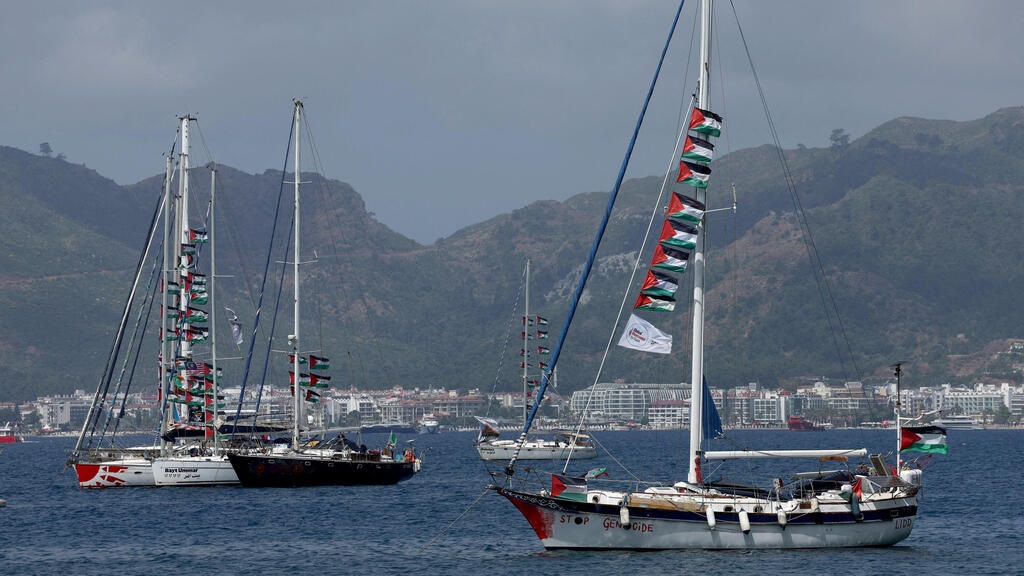
The Global Sumud Flotilla
(Photo: Mehmet Emin Caliskan/ Reuters)
The Foreign Ministry issued a sharp warning shortly before the takeover began.
“Once again, a provocation for the sake of provocation: another so-called ‘humanitarian aid flotilla’ with no humanitarian aid,” the ministry said. “This time, two violent Turkish groups, Mavi Marmara and IHH, the latter designated as a terrorist organization, are part of the provocation.”
The ministry said the flotilla’s purpose was “to serve Hamas, to divert attention from Hamas’s refusal to disarm, and to obstruct progress on President Trump’s peace plan.”
“Israel will not allow any breach of the lawful naval blockade on Gaza,” the statement said. “Israel calls on all participants in this provocation to change course and turn back immediately.”
Following a security assessment on Sunday, an Israeli official said forces expected resistance during the operation.
“We will take control of them and bring them down to a floating jail,” the official said. “We know resistance to arrest is expected, and possibly also the use of edged weapons.”
A security official told ynet Monday morning: “Our fighters are prepared for every scenario.”
The navy had been preparing for days for the flotilla’s approach and expressed concern that the operation could turn violent because activists linked to IHH were aboard. IHH was behind the 2010 Mavi Marmara flotilla, which ended in a deadly confrontation with Israeli commandos.
Israel had also tried through diplomatic channels to prevent the flotilla from departing Turkey, but failed. As first reported by ynet, the United States also asked Turkey to stop the flotilla from leaving, without success.
Last month, the Israeli navy stopped the “Spring 2026” flotilla near Crete as it made its way toward Gaza. Hours later, Foreign Minister Gideon Sa’ar announced that all of its activists would be released in Crete. The following day, however, Israel decided that two of them, Palestinian-Spanish resident Saif Abu Kashk and Brazilian citizen Thiago Avila, would be brought to Israel for questioning over alleged “involvement in terrorism.”
After being deported, the two flew directly to Turkey and boarded vessels in the new flotilla. An Israeli official said this time they would not be released as quickly.