


Israel’s current hope is that what it sees as a problematic deal being pursued by U.S. President Donald Trump with Iran will ultimately fail to materialize. The current 60-day negotiation period, according to assessments in Jerusalem, is unlikely to produce a final agreement. A second Israeli assumption is that maintaining a firm hold in Lebanon is essential at least until November. Why November? Because after the U.S. midterm elections, a new window of opportunity may open for Israel to act again on the Iranian issue.
That same “window of opportunity” envisioned in Israel depends on the assumption that no permanent agreement will be signed between Washington and Tehran by then. Israeli officials, as noted, believe such a deal is unlikely. In that scenario, Israel could find itself in a position to tell the Americans: we warned you.
Trump: Iran must have missiles


The prevailing assessment in Israel is that Iran is not acting in good faith, but is instead using its negotiation skills to buy time and does not intend to meet the conditions it has accepted under the memorandum of understanding. If that proves true, officials say, November will mark the beginning of a new phase.
Israel’s major point of contention is expected to be the withdrawal from the IDF buffer zone in southern Lebanon. This is considered a red line by the prime minister, and significant diplomatic efforts will be made to prevent it. Senior officials in Jerusalem acknowledge that pressure for a withdrawal is ongoing, but say there is currently an understanding with the Americans that Israel will retain freedom of action in Lebanon.
Prime Minister Benjamin Netanyahu maintains a clear equation: if Hezbollah fires at Israeli cities, Beirut will pay the price. Iran, for its part, regularly warns that any Israeli strike in Beirut would trigger retaliation against Israel. Jerusalem, however, says it will not tolerate such an attack and would respond by striking within the Islamic Republic itself.
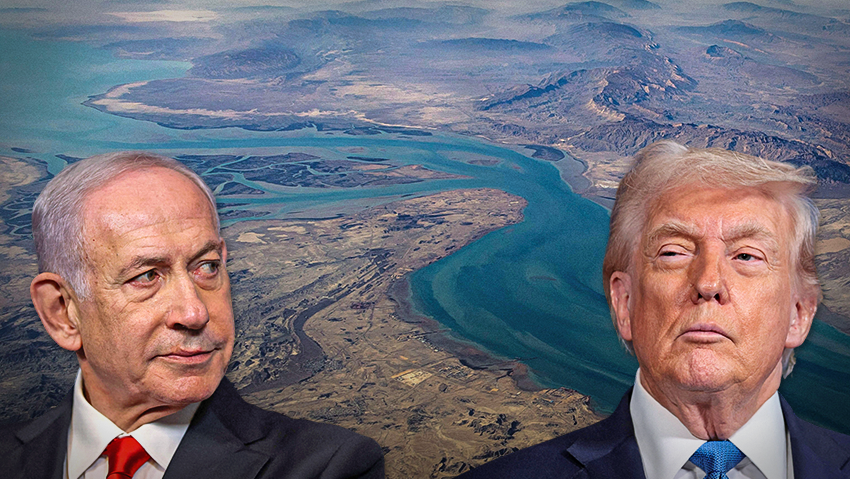
Prime Minister Benjamin Netanyahu maintains a clear equation: if Hezbollah fires at Israeli cities, Beirut will pay the price
(Photo: REUTERS/Stringer, JOE RAEDLE/AFP, REUTERS/Jonathan Ernst)
The “seed of escalation” in the emerging framework lies in a clause reportedly included in the memorandum of understanding, stating that the United States, the Islamic Republic of Iran, and their allies in the current conflict declare an immediate and permanent end to military operations across all fronts, including Lebanon, and commit not to initiate war or military operations against one another, and to refrain from the use or threat of force, while ensuring Lebanon’s territorial integrity and sovereignty.
U.S. officials, aware of the potential chain reaction from a strike in Beirut’s southern suburb that could lead to direct confrontation between Israel and Iran, are reportedly concerned. Trump has said Israel has the right to defend itself, but has also stressed the need for restraint. In other words, not every attack warrants a forceful response, and it depends on the level of casualties.
That approach is not acceptable to Israel. The IDF could strike the Dahiyeh stronghold in an effort to force Iran’s hand and undermine the agreement entirely. The Americans are aware of this and are expected to apply close pressure on Israel.
Accordingly, Israel’s strategy for the coming period is to maintain its hold in Lebanon, strike Beirut if Hezbollah fires at border communities, and wait for a renewed window of opportunity on Iran after the U.S. midterm elections in November.