

Israeli officials said Wednesday they were not surprised by the full text of the U.S.-Iran memorandum of understanding that was made public earlier in the day, but privately described the agreement as disappointing and problematic from Israel’s perspective.
Late Wednesday night, shortly after midnight, Iran’s Foreign Ministry announced that the presidents of both countries, Donald Trump and Masoud Pezeshkian, had “electronically” signed the finalized memorandum of understanding. Minutes later, the White House confirmed that Trump had signed the document.
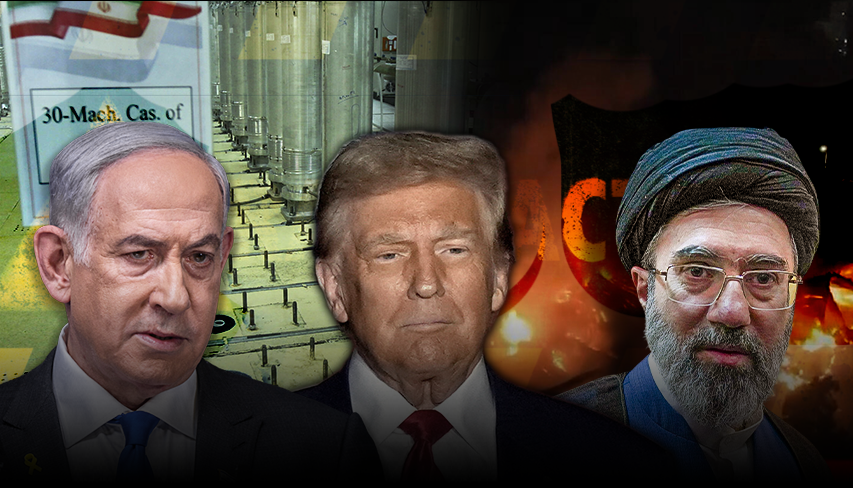
Prime Minister Benjamin Netanyahu, US President Donald Trump, Iranian Supreme Leader Mojtaba Khamenei
(Photo: Shutterstock, AP, Iranian Leader's Press Office - HandoutGetty Images)
The Iranian statement added: “The purpose of Friday’s meeting in Switzerland is not to sign the memorandum, and a decision on whether it will take place will be made in the coming hours.” At the same time, Axios reported that the agreement took effect from the moment of the renewed signing.
Prime Minister Benjamin Netanyahu’s office has not commented publicly on the document, but Israeli officials speaking on condition of anonymity said the emerging deal falls short of Israel’s expectations, even though Israel is not mentioned in the text. “This is not what we hoped for,” officials told ynet.
The agreement lays out a framework for future negotiations between Washington and Tehran and includes provisions on sanctions relief, Iran’s nuclear program and an end to military operations on multiple fronts, including Lebanon. U.S. President Donald Trump said Wednesday that the planned 60-day negotiating period should not be viewed as a strict deadline unless they “behave themselves.” Israeli officials identified several clauses as particularly troubling.
Immediate oil sanctions relief
Article 10 states that immediately after the memorandum is signed, the U.S. Treasury Department will issue waivers allowing exports of Iranian crude oil, petroleum products and related services, including banking, insurance and transportation.
Israeli officials believe the provision would effectively provide Tehran with billions of dollars before it makes significant concessions. Under a separate clause, frozen Iranian assets could also eventually be released.
Israeli officials argue that Iran’s economy had been under severe pressure and that the agreement gives Tehran financial breathing room.
Enriched uranium remains inside Iran
Article 8 reaffirms Iran’s pledge not to develop nuclear weapons but states that existing enriched uranium stockpiles would be handled through a mutually agreed mechanism, with the minimum requirement being dilution on Iranian soil under International Atomic Energy Agency supervision.
Israeli officials view that language as a significant retreat from previous U.S. positions because it does not require Iran to remove enriched uranium from the country.
Israeli assessments have long held that Tehran would refuse to surrender its stockpile or abandon uranium enrichment altogether. Trump recently signaled he could accept limited low-level enrichment.
Linking Lebanon to the broader conflict
Article 1 declares an immediate and permanent end to military operations on all fronts, including Lebanon, and commits both sides and their allies to refrain from future hostilities while preserving Lebanon's sovereignty and territorial integrity.
Israeli officials have opposed linking the Iranian and Lebanese theaters, arguing that doing so could indirectly shield Hezbollah from future pressure.
Meanwhile, officials noted that the memorandum does not require an immediate Israeli withdrawal from southern Lebanon and that any permanent arrangement would only be addressed in a final agreement following negotiations that could be extended beyond the initial 60 days.
Israeli officials said they do not expect a comprehensive agreement to be reached quickly.
According to Israeli officials, Lebanon's government also opposes linking the two theaters out of concern that Hezbollah could gain de facto immunity.
Military concerns
IDF officials have conveyed three priorities to the political echelon regarding any future arrangement in Lebanon.
According to Israeli officials, the military insists on preserving Israel's operational freedom throughout Lebanon, maintaining a buffer zone north of the border where Israeli forces are deployed, and ensuring the continued demilitarization of southern Lebanon — a goal that has guided Israeli ground operations and efforts to dismantle Hezbollah infrastructure in recent months.
The full memorandum is expected to be formally signed later this week.
In the meantime, negotiations with the Lebanese government are expected to continue, with progress toward a framework agreement. U.S. officials want to accelerate the talks, and a fifth round of political and military discussions is expected to take place next week in Washington.
Israeli officials believe pressure on Jerusalem will increase to avoid strikes in southern Lebanon except in cases of self-defense against emerging threats. An Israeli official said Israel opposes any withdrawal before an effective agreement with Lebanon is reached.
Iran interpreted the clause differently. “The continued occupation by the Zionist regime in Lebanon will constitute a violation of the memorandum of understanding, and the necessary measures will be taken,” Iranian Foreign Ministry spokesman Esmaeil Baghaei said Wednesday.
As the memorandum was published, Iranian Parliament Speaker Mohammad Bagher Ghalibaf said Tehran was entering the negotiations from a position of strength. “The difference between the current negotiations and previous negotiations is that today, victory on the ground, acknowledged by enemies and friends alike, is the basis for the negotiations,” Ghalibaf said. “Our forces defeated the enemy. The developments may be regional, but their effects are global.”
He claimed Iran had defeated “America and the Zionist regime,” which he called the world’s leading military powers.
An Israeli official said after the clauses were published that “Iran is the big winner and Israel the loser of the confrontation.”
“The stock market is falling because there was an expectation that Israel would become the investment center of the Middle East, but it is emerging as a loser,” the official said. “Iran has emerged as a global power, and Israel has gone from a regional power to the world’s punching bag. In such a situation, it will be very difficult for Netanyahu to oppose a withdrawal from Lebanon. The pressure will grow.”
Senior defense officials said the agreement’s greatest damage is to Israel’s image and to future deterrence. “The big drama of this war will meet us in the U.S. elections in two years,” the officials said. “As things look now, we will lose the next election at the national level, no matter who comes after Trump.”
The officials said Israel’s operational achievements and the degradation of enemy capabilities were important and impressive and would have an effect for some time.
Regarding the agreement, they said that on the positive side, despite its gaps, it could delay Iran’s nuclear program by 10 to 15 years, force Iran to focus on reconstruction and reduce its support for proxies.
But they said the justified bitterness in Israel stems from the gap between reality and political slogans, and from the fact that wars always end in arrangements. “The problem is not the agreement,” one official said. “The problem is the way it is perceived, going into it without planning the final step — not even the step before that — without a real strategy, and relying on Trump as the only support.”
The official also cited what he called the strategic ambush against Hezbollah that became a double-edged sword, and the lack of purpose in the Gaza Strip. “Netanyahu himself said many times in the past: The United States is not just a president. It has institutions,” the official said. “That was convenient with Obama and Biden. Now it is less convenient.”
First published: 23:26, 06.17.26