


Maj. Gen. Tomer Bar, commander of the Israeli Air Force, is ending his term and retiring from the IDF after an extensive 39-year military career. Bar, who was appointed to the post in April 2022, led the air force through one of the most complex and turbulent periods in its history and will complete his term next Tuesday.
His tenure was a roller coaster: from the height of internal tensions surrounding the reservists’ protest and the suspension of volunteer service, through the resounding failure of October 7, and into a multi-front war that included historic strikes in Iran and close cooperation with the world’s most powerful country, the United States.
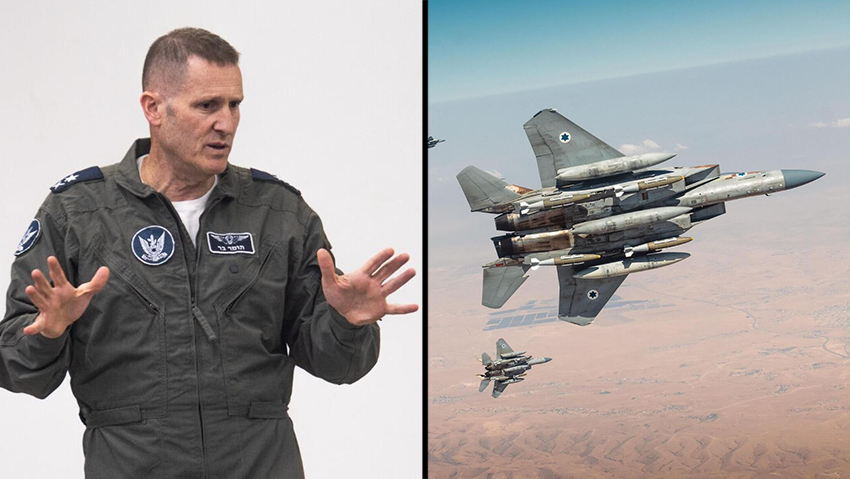
Under his command, the air force shifted from focusing on the “campaign between wars” to full-scale war, while forging an unprecedentedly close connection between the Israel Air Force and ground forces.
In a closed conversation with military correspondents, a senior military official detailed the failure on October 7.
“The events of that day will stay with me forever,” he admitted candidly. “Something deep broke, and all the military decision-makers understand that very well. The concept that preceded the disaster was wrong. We sat on the fence in the north and south while the enemy grew to enormous proportions,” he said, referring to the tent Hezbollah set up in June 2023 directly on Israel’s border, a move that did not receive an adequate response.
“We took comfort in the fact that the vacation cabins in the north were operating and that Hamas was deterred. I hope we never return to that.”
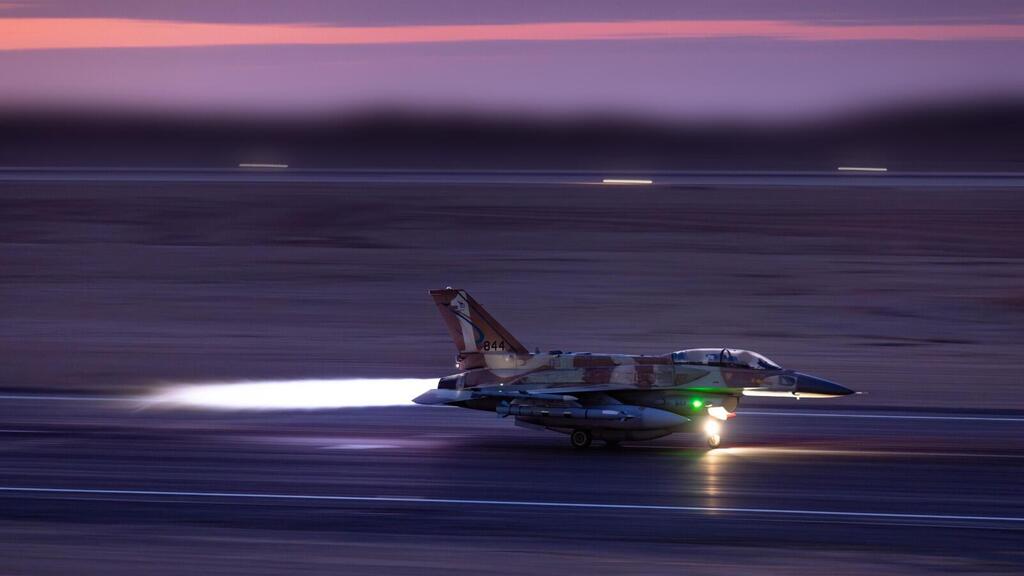
Israeli Air Force during Operation Roaring Lion
(Photo: IDF)
The official also addressed public sentiment regarding the air force’s performance at the outbreak of the war.
“What does it matter to a civilian if we killed 100 terrorists in a strike? He isn’t looking for your constraints in distant arenas. He looks up at the sky and wants to know that you are protecting him in his own home.”
He added, “I fear that the State of Israel will not bring the best people to the IDF. Criticism is an excellent thing. No one is free of mistakes.”
‘Our absolute freedom of action will not last forever’
Despite the Israel Air Force’s major operational successes during the war, the wars with Iran and operations in Yemen, officials in the air force are warning against complacency.
“The absolute freedom of action we have today, in which a quartet of fighter jets reaches Iraq and Iran without interference, will not last forever,” the senior official said.
According to him, a quiet military buildup is also taking place in Syria.
“Syria is rebuilding its army. Surface-to-air missile systems remain there, and they are working to restore them,” he said.
Israeli aircrafts heading to Lebanon
(Video: Israeli Air Force)


Regarding the direct campaign against Iran, the official said: “Already in October 2023, I knew we would reach Iran, even though we had no operational plans ready for that. We built everything during the war.”
The air force established an “Iran Department,” and the goals that had been set were achieved.
“Now we will see whether another ‘clarification’ is needed to make them sit down for negotiations,” the senior military official said, adding firmly: “Without a solution to the issue of uranium enrichment and the nuclear program, it will be one major failure.”
The official spoke openly about the changes the air force underwent, including cooperation with the Military Intelligence Directorate and other IDF bodies. He also emphasized the complex evacuations carried out by the fighters of Unit 669 during the war, in places and areas that were difficult to reach, often under fire.
One of the most significant achievements he highlighted was the connection with ground forces. Since the beginning of the war, more than 23,000 rapid strikes have been carried out at the request of forces in the field.
‘Do not use the uniform to exert political influence’
“We reached an amazing level of precision,” he said.
At the beginning of the ground maneuver, targets were struck 500 meters from forces. Today, strikes are being carried out as close as 180 meters from soldiers on the ground.
Beyond the operational connection, the air force also brought infantry officers into air force living quarters. At the same time, pilots visited infantry units, and in some cases even took part in routine arrest operations.
Footage from the cockpit of an Israeli Air Force jet during aerial refueling with a US Air Force aircraft
(Video: IDF)
On the issue of munitions stockpiles, the senior official confirmed that during the fighting there were cases in which ammunition levels dropped. He said this was done as part of calculated risk management, with the understanding that procurement deals would replenish stocks in time.
The official also addressed the threat of explosive drones, which has become a major challenge in recent days and killed two soldiers and a civilian in southern Lebanon over the past week.
“This is a complex challenge, and there is no generic magic solution,” he said. “The Jewish mind is working on solutions that will neutralize 80% of the problem, but until then, we must not be ashamed to use simple protective nets if they save lives. If it helps, then soldiers need to put up nets until a solution is found.”
Finally, the official addressed the storm that shook the air force on the eve of the war as part of the protest against the judicial overhaul.
“Cohesion must be placed above all else,” he said. “Do not use the uniform to exert political influence. If we had not put the disagreements aside on October 7, half the air force would not be here. The fighters reported for the mission despite the irrelevant criticism hurled at us. One moment they say we are ‘slaughtering children,’ and another moment they say we are ‘abandoning’ the ground forces. The reality is that we are acting together, with one heart, for the security of the state.”