

A 25-year-old man accused of contact with an Iranian agent and passing information that could benefit an enemy has asked a Tel Aviv District Court to reconsider his detention, arguing that a serious investigative error by the Shin Bet security service led to a dramatic revision of the indictment against him.
Binyamin Asher Weiss, from Bnei Brak, has been in custody for more than a year since his arrest in October 2024. In April 2025, the court ordered him held until the end of proceedings, citing dangerousness. That decision was upheld by the Supreme Court. His detention has since been extended several times, and the evidentiary phase of the trial has yet to begin.
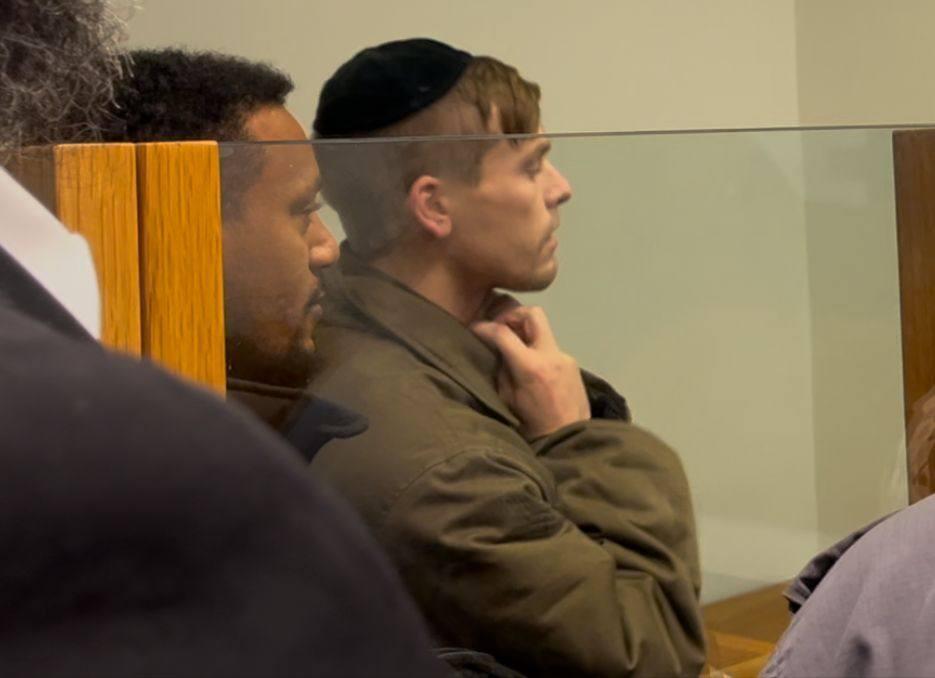
(Photo: Maya Cohen)
This week, his public defenders filed a request for a renewed hearing on his detention, arguing that the evidentiary foundation for his arrest has “collapsed.”
In the original indictment, Weiss was charged with contact with a foreign agent, passing information to the enemy with intent to harm state security — an offense punishable by life imprisonment — and obstruction of justice.
The central allegation involved a visit to the Weizmann Institute of Science in Rehovot, where Weiss allegedly photographed the home of a nuclear scientist and sent the material to a foreign contact. Prosecutors initially argued that Weiss knew the homeowner was a professor of nuclear physics, basing that claim on computer data showing a Google search for the scientist’s name conducted before the photographs were taken.
According to the defense, Weiss consistently maintained in questioning that he did not know the identity of the homeowner at the time of the documentation and only conducted the search after returning home. They argue that this claim was dismissed by investigators without adequate review.
Months later, after the defense obtained access to computer materials, an expert determined that the extracted data had not been adjusted to Israel time, creating a three-hour discrepancy. When corrected, the Google search was shown to have occurred at 5:50 p.m., after the documentation had already been completed.
Following the new findings, the State Attorney’s Office ordered a supplementary investigation that confirmed the time discrepancy. The indictment was subsequently amended.
The more severe charge of passing information to the enemy with intent to harm state security was replaced with the lesser offense of passing information that could benefit the enemy. As a result, the case was downgraded from a serious felony requiring a three-judge panel to a single-judge proceeding.
Even under the amended indictment, Weiss faces serious allegations. Prosecutors say that over the course of about a month he was in contact via Telegram with a person acting on behalf of Iran or a terrorist organization and carried out various assignments in exchange for tens of thousands of dollars in cryptocurrency payments.
According to the indictment, he distributed hundreds of flyers in Tel Aviv and Ramat Gan, sprayed graffiti with inflammatory messages, purchased a dedicated phone for covert communication, set fire to vehicles in several locations and placed objects on major roads to disrupt traffic. He is also accused of documenting infrastructure and roads and transferring the materials to the foreign contact.
The amended indictment also notes tasks he allegedly refused to carry out, including recruiting additional people, manufacturing explosives or Molotov cocktails, killing someone, setting fire to an ATM, purchasing weapons or sending materials to Turkey.
Defense attorneys argue that despite the significant changes to the charges and the lengthy delay in proceedings, the state continues to insist on Weiss remaining in custody. They say the delay — more than a year since the indictment was filed — is attributable to the prosecution and that the evidentiary weakness affects even the amended charge.
Hearings are currently scheduled between April and June 2026, with the trial unlikely to conclude then. The defense is seeking Weiss’s release to house arrest with electronic monitoring.
In a statement, the Shin Bet said Weiss was investigated by the agency and police on suspicion of security offenses and that a serious indictment was filed for contact with a foreign agent and passing classified information. “His trial is ongoing, and therefore we cannot comment further,” the agency said.
The court has requested the state’s response to the motion for reconsideration.