

Outgoing Northern Command chief Maj. Gen. Ori Gordin warned Wednesday that Israel must never again allow a security situation to develop that forces the evacuation of tens of thousands of civilians from the north, calling it “a grave mistake by me and my predecessors.”
Speaking at a change-of-command ceremony at the Dado base in Safed, Gordin said that for years, Israel had allowed Hezbollah to entrench itself along the northern border, creating a threat so severe that residents had to be relocated for their safety. “Now that this heavy threat has been removed, it is our duty to ensure no other emerges in its place,” he said.
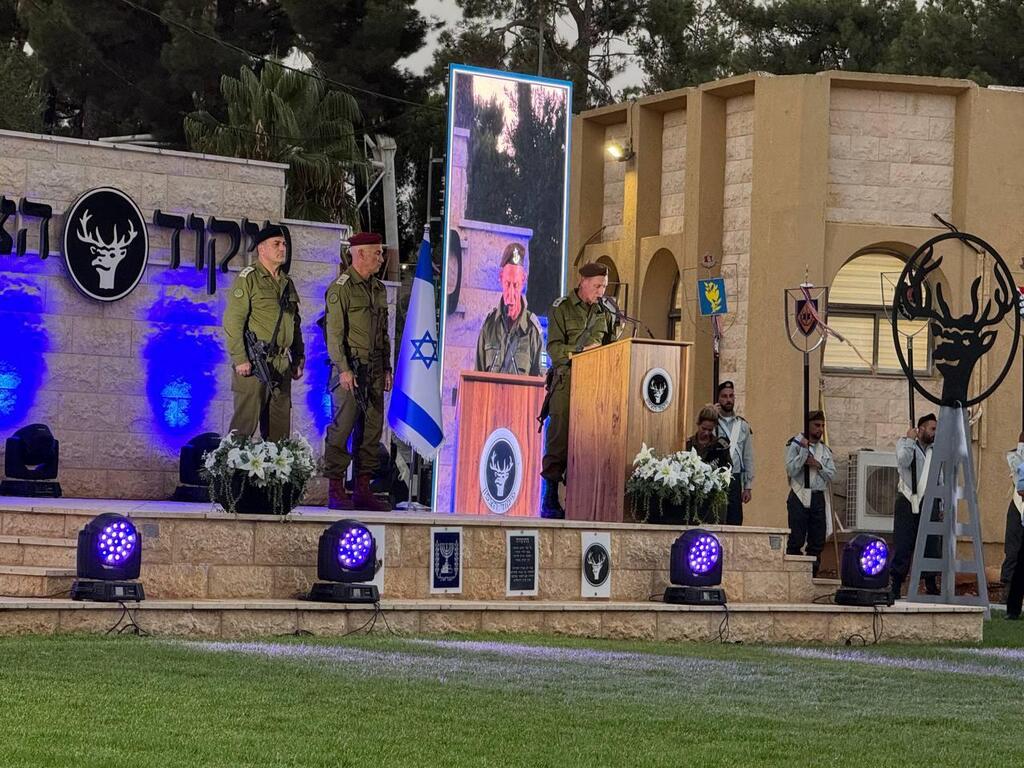
Gordin, who led the fight against Hezbollah during the ongoing war, said the campaign inflicted heavy damage on the Lebanese terrorist group, knocking out about 70% of its military capabilities, including rocket systems, command-and-control facilities and much of its elite Radwan Force. Still, he warned that Hezbollah is working quickly to rebuild, partly out of fear that Israel could strike again soon.
He opened his address by recalling the Oct. 7 Hamas terrorist attack, calling it “a painful failure” in the army’s basic duty to protect civilians. Hundreds were killed, dozens remain in captivity and, he said, Israel is obligated to bring the remaining hostages home. “From the failure and terrible pain, the people of Israel, civilians and soldiers, rose to fight bravely,” he said.
He credited the campaign in the north with eliminating the threat of a cross-border attack by the Radwan Force, destroying much of the terrorist group’s weaponry and leadership and breaking the Iran-backed “Shiite axis” after the fall of Syria’s Assad regime.
Maj. Gen. Rafi Milo, who until last month led the Home Front Command, succeeded Gordin as Northern Command chief. Milo praised his predecessor’s wartime leadership, saying he had shaped defense and enforcement strategies, facilitated residents’ return and “stood fully” in the test of war.
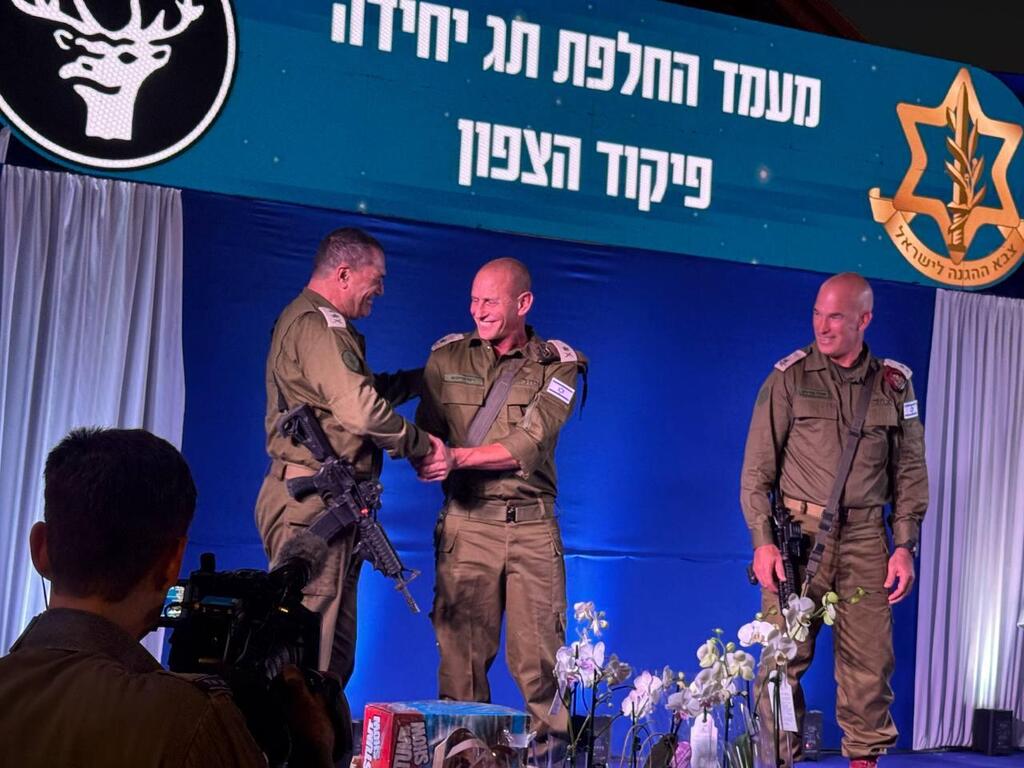
IDF Chief of Staff Lt. Gen. Eyal Zamir and incoming and outgoing Northern Command chiefs Maj. Gen. Rafi Milo and Maj. Gen. Ori Gordin
(Photo: Eitan Glikman)
Milo vowed to build on the gains of the war, return all displaced residents safely and turn the region into a “flourishing, thriving” area. “The war is not over,” he said. “We will continue until we meet all its goals.”
IDF Chief of Staff Lt. Gen. Eyal Zamir thanked Gordin for leading a “determined, precise” campaign that dealt heavy blows to Hezbollah, shifting Israel’s military doctrine away from containment toward coordinated strikes by ground, air and naval forces.
Addressing Milo, Zamir said the Northern Command under his leadership will remain “alert, prepared, proactive and offensive” to secure the border and strengthen public confidence as residents return.
Earlier Wednesday, Zamir visited Lebanon with 91st Division Commander Brig. Gen. Yuval Gez, 769th Brigade Commander Col. Y. and other senior officers. Speaking to troops, Zamir said the army had “changed the security reality in the northern sector,” citing unprecedented achievements since the ceasefire, including the killing of more than 240 terrorists and roughly 600 airstrikes.

(Photo: Eitan Glikman)
“In the morning, we approved plans for the takeover of Gaza and now we are in Lebanon,” Zamir said, noting operations are also underway in Syria, Yemen, the West Bank and with close monitoring of Iran. “We are in a multi-front war, adapting concepts to the threats. We initiate attacks in all arenas, neutralizing threats as we identify them. Our offensive approach and initiative are at the center.”
Zamir urged soldiers to use the current period to accomplish their missions while strengthening morale and readiness. “We face many more challenges ahead,” he said. “Our job is to shape our national security as we see fit. We will not go backward. We are operating under a new strategic concept — we will not allow threats to grow.”
Get the Ynetnews app on your smartphone: Google Play: https://bit.ly/4eJ37pE | Apple App Store: https://bit.ly/3ZL7iNv
Earlier, Lebanese Prime Minister Nawaf Salam met with Iran’s ambassador in Beirut and told him that recent remarks by several Iranian officials were unacceptable. Lebanese media reported that Salam said the statements — which included direct criticism of decisions made by Lebanese authorities, and in some cases “explicit threats” — represented a blatant departure from diplomatic norms and a violation of the principle of mutual respect between states.
“Neither I nor any Lebanese official allows ourselves to interfere in Iran’s internal affairs, whether by favoring one party over another or by opposing sovereign Iranian decisions,” Salam said. “Lebanon will not in any way accept interference in its internal affairs, and it expects a clear and explicit commitment from the Iranian side to these rules.”
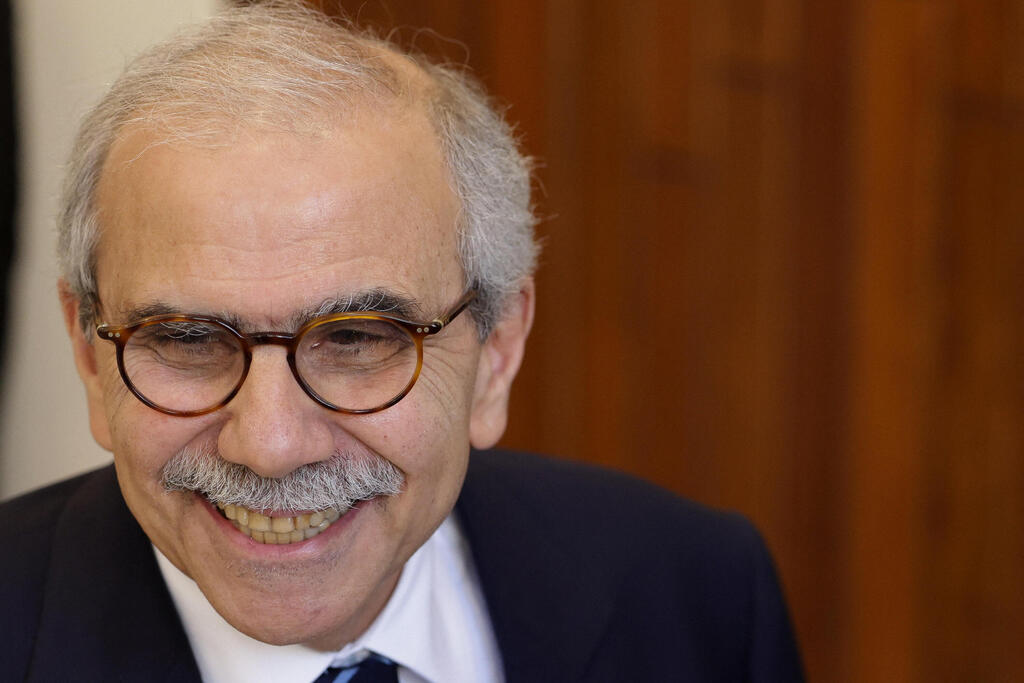
Lebanese Prime Minister Nawaf Salam
(Photo: REUTERS/Emilie Madi)
He added that Lebanese government decisions are not subject to debate in any other country, and that the country’s decision-making center is the Council of Ministers. “Lebanon’s decisions are made solely by the Lebanese, who take orders from no one.”
Salam stressed that Lebanon, “the first to defend the Palestinian cause and the one that has paid the highest price against Israel, does not need lessons from anyone.” He said the government will continue to use all available political, diplomatic and legal means to compel Israel to withdraw immediately from “occupied Lebanese territory” and halt its attacks.
All engagement with Lebanon, Salam added, must go exclusively through the country’s constitutional institutions, not via any political party or parallel channel, and any foreign aid will be welcomed only if it is delivered through official channels.