

The increasingly intense U.S. involvement in the implementation of the ceasefire agreement with Hamas is "frantic," one senior Israeli official described on Wednesday.
“They're going full bore,” the official said, reflecting growing frustration in Jerusalem as Washington tightens its supervision of the deal, particularly regarding the airlift of high-level envoys to Israel.
US Vice President JD Vance and Prime Minister Benjamin Netanyahu meet in Jerusalem
(Video: Omer Meron/GPO)


Israeli officials acknowledge they have limited ability to slow what one described as the “American locomotive,” and are instead focused on “damage control.” Despite tensions within Israel’s diplomatic ranks, officials admit the reality is clear: U.S. engagement in the region is expected to grow even more intensive. Washington, they say, is determined not to let the agreement unravel. Its top priority remains the return of all hostages to Israel.
U.S. Vice President J.D. Vance addressed the issue, noting that some deceased hostages are buried deep underground and will take time to locate. “We need to be patient,” he said, adding that Western media are covering each incident in a hysterical manner aimed at portraying the deal as a failure. Still, Vance struck an optimistic tone, pointing to a major effort underway to uphold the ceasefire.
At the same time, U.S. Central Command (CENTCOM) chief Adm. Brad Cooper is pushing forward with plans to establish an international stabilization force for Gaza. The force will include a multinational task unit deployed to search for the bodies of hostages.
According to the plan, the stabilization force will oversee Hamas' disarmament and the demilitarization of Gaza, while also ensuring Israel does not violate the ceasefire through military operations. Sources involved say the force is intended to counterbalance Hamas and provide the Palestinian population with a basic sense of security.
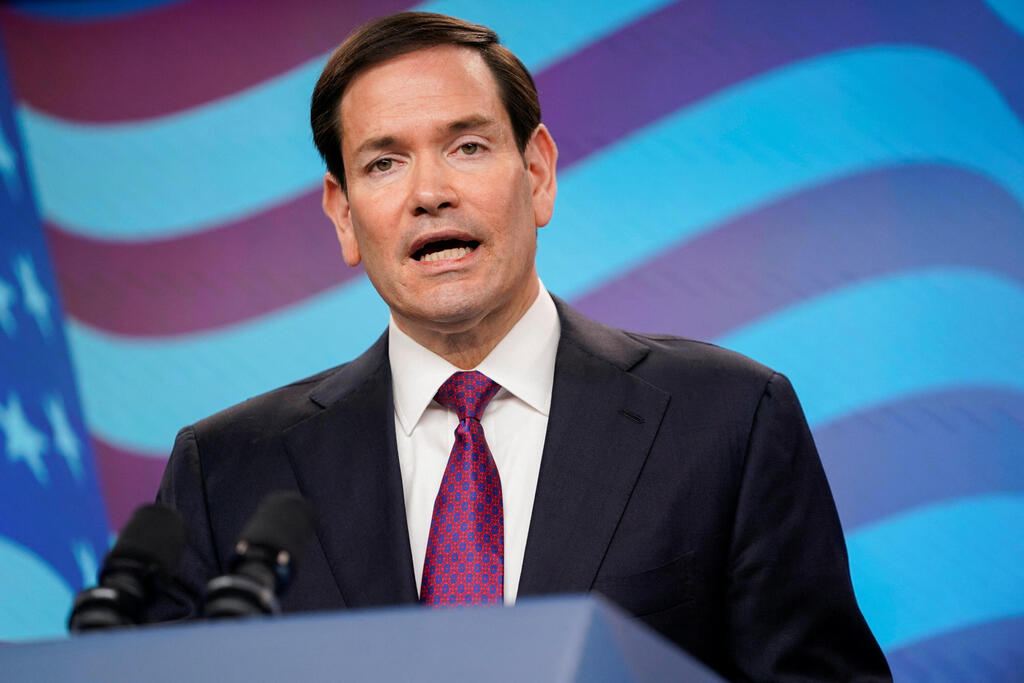
The heightened American oversight continues. Following Vance’s visit, U.S. Secretary of State Marco Rubio is expected to arrive in Israel Thursday at 5 p.m. for a 48-hour visit, during which he will tour the American base in Kiryat Gat and meet with Prime Minister Benjamin Netanyahu. “During his visit, the Secretary will reaffirm America’s unwavering commitment to Israel’s security and engage with partners to build on the historic momentum towards durable peace and integration in the Middle East,” the U.S. State Department said.
The back-to-back visits underscore how closely the U.S. is monitoring the situation. Only three hours will separate Vance’s departure at 2 p.m. and Rubio’s landing, marking a near-constant American diplomatic presence in Israel aimed at keeping the agreement on track.

Trump aides Jared Kushner and Steve Witkoff with released hostages Gali and Ziv Berman
(Photo: US Embassy in Jerusalem)
Meanwhile, U.S. President Donald Trump’s Middle East envoy Steve Witkoff and his son-in-law Jared Kushner traveled from Israel to the United Arab Emirates, where they met with UAE National Security Advisor Sheikh Tahnoun bin Zayed.
According to UAE state media, the meeting focused on recent developments in the Gaza ceasefire and U.S. efforts to solidify the agreement, part of Trump’s broader regional peace plan. Bin Zayed praised Trump’s efforts to end the war and promote Middle East stability, and thanked Witkoff and Kushner for their roles. The meeting also explored ways to improve regional stability and economic development amid the ongoing escalation.
Vance: Recovering the fallen and disarming Hamas will take time; Kushner: No reconstruction under Hamas control
(Video: US Embassy in Jerusalem)
During his visit to Israel, Vance met with hostage families and captives released as part of the deal, reiterating that Washington is committed to doing everything possible to secure the return of the remains of all hostages still held by Hamas. “I cannot guarantee everyone will come home, but we are working on it with our partners to make it happen as quickly as possible,” Vance said.
In a meeting with the families, Vance expressed support for their solidarity and mutual commitment, which he said had clearly grown since the war began. Family members urged the U.S. not to proceed with Phase 2 of the ceasefire agreement—likely involving additional diplomatic or territorial steps—until Hamas fulfills its obligation to return all the remains of fallen hostages. “Every family needs a proper burial and closure,” one representative said.
Also attending the meeting was Yehoshua Shani, head of the Forum of Valor and father of Capt. Ori Mordechai, who was killed on the first day of the war near Kissufim. Shani recounted his son’s last battle and spoke on behalf of hundreds of bereaved families. He called on the vice president to ensure that Israel is permitted to carry out the second phase of the agreement: eliminating the security threat from Gaza and dismantling Hamas. “We urge the United States to allow Israel to finish the job of destroying the enemy,” Shani said. Vance responded, “We are working on this with the Israeli government.”
Earlier in the day, Netanyahu told Vance that Israel opposes the entry of Turkish troops into Gaza as part of Trump’s plan. “That is a red line,” the prime minister said, according to sources familiar with the discussion.