

A confrontation between Israeli troops and residents in the Daraa area of southern Syria has exposed the increasingly complicated reality facing the IDF in the buffer zone, as direct contact with the local population continues and tensions steadily build.
The latest incident began when shots were fired at IDF forces stationed at a post on Tel Qudna, in southern Syria. The IDF responded with artillery and mortar fire, followed later by fire from an attack helicopter. Residents were forced to leave the area, and it has now emerged that during the incident one Israeli reservist lost a classified military cellphone, which was taken by a Syrian resident.
Classified IDF phone lost in Syria as village clash exposes rising tensions


One reservist stationed in Syria told ynet that the incident began with fire directed at Israeli forces at the post.
“There was a gathering of civilians. Many people came to the area of the post, and the soldiers had to pull back,” he said. “In the chaos and confusion, one of the soldiers lost the device, which contains secured information. It is a serious incident to forget something like that. As far as I understand, they realized it fairly quickly and locked the phone remotely to try to reduce the damage. These are our last days in this sector, and somehow things suddenly became active here.”
The IDF said, without detailing what was done to prevent information from leaking from the device, that “the incident is known, is being investigated and is being handled through the relevant channels.”
Footage published in Syria showed residents throwing stones at IDF troops. Later, artillery shells were fired toward the village of Abdin, whose residents left en masse for nearby villages. One Syrian reporter covering the area later reported several incidents in the sector and claimed that IDF troops attacked a crew from the Syrian Al-Ikhbariya channel and several other journalists while they were covering what he described as the forces’ “invasion” of the village. According to him, no one was injured.
The same reporter later claimed that the IDF had set up military tents west of Abdin. He also published a photo of stones placed in the path of Israeli forces and wrote: “This land does not grant invaders safe passage. These people do not accept or tolerate invasions. Even the children collected whatever they could find and placed stones in the path of the invading Israeli forces, as if to say: your passage will not go unanswered.”
Syrian channels on Tuesday covered what they described as the “day after.” Residents of Abdin began returning to their homes, UNDOF forces toured the village, and images were published of weapons and other military items allegedly left in the area, including the video of the military phone left behind.
Clashes between Israeli troops and residents in the Daraa area of southern Syria
Syrian television also published footage of food allegedly left by IDF soldiers in the area of Tel al-Maghar, west of Abdin. Syria’s official SANA news agency spoke with village residents, who described the panic that spread through Abdin during the Israeli strikes.
“The whole town was evacuated. No one stayed,” one resident said.
Another resident described the atmosphere in the village: “There is no peace of mind. You cannot work. When you go to work, you are afraid for your mother and your family.”
Children from Abdin, filmed by Arab channels, said: “We attacked the soldiers with stones and expelled them from our village.”
An official condemnation of the latest events came from Syria’s Foreign Ministry, which said: “We condemn the Israeli attacks and incursions into Syrian territory in the Quneitra and Daraa provinces. The continuation of these methods harms efforts to establish security and stability and worsens the suffering of civilians.”
The situation in the village was described Tuesday as “cautious calm.” But even if the immediate flare-up has subsided, the tension remains clear.
Israeli forces have been present in southern Syria since the fall of Bashar Assad’s regime on December 8, 2024. From time to time, Syrian reports describe IDF patrols in different villages, arrests of residents that usually end with their release a few hours later, and, at times, incidents that escalate, as happened this week.
Gallery
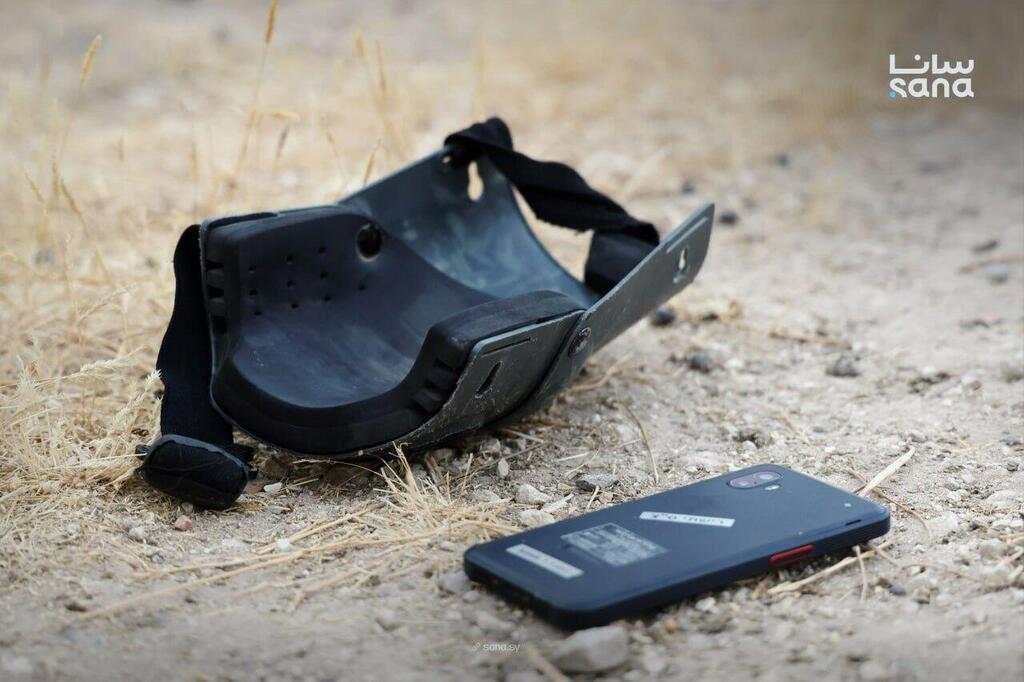
Footage from the village of Abdin, where items reportedly left behind by IDF troops after the fighting were found
As negotiations between Israel and Syria remain stalled and Syrian President Ahmed al-Sharaa gains capability and legitimacy, Damascus has increasingly voiced open opposition to the Israeli presence in the country. The issue appears in statements by senior Syrian officials, including al-Sharaa and Foreign Minister Asaad al-Shibani.
Earlier this month, the Lebanese newspaper Al-Akhbar, which is affiliated with Hezbollah, claimed that al-Sharaa warned Lebanese Prime Minister Nawaf Salam that Israel was “dragging toward gradual concessions without offering mutual guarantees, while maintaining open margins that allow Israel to expand its range of action in the future.”
In April, al-Sharaa said: “I see the European Union as responsible regarding the Israeli violations of Syrian territory. These attacks undermine stability, security and reconstruction efforts in Syria.”
Over the weekend, the Syrian Observatory for Human Rights, a London-based opposition war monitor, reported more than 60 Israeli “incursions” into Syrian territory during June. The group wrote Tuesday that Israel was gradually strengthening its hold in western Daraa, including by setting up two nearby checkpoints near Abdin, a step it said “may go beyond temporary security measures and represent a test of a new pattern of control over vital corridors and strategic geographic points.”
The Observatory said Abdin has strategic importance because of its location, and that Israel may be taking preliminary steps to assess whether a stronger military presence is needed in the area. However, it added that there are still no indications of a large or permanent military base being established.
The group described what it called an Israeli pattern of preferring control over high ground, village entrances and junctions, while maintaining freedom of air movement and the ability to carry out quick entry-and-withdrawal operations. That, it said, allows security control of the area without directly managing the population or declaring a formal occupation.
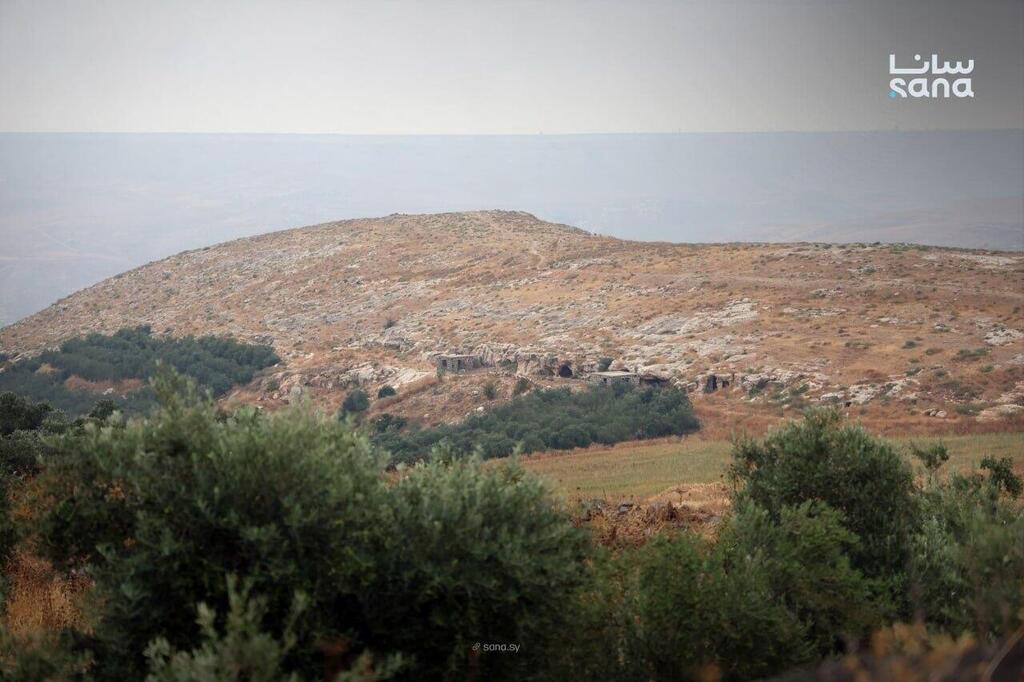
The village of Abdin
“Any future deployment, if it continues, may begin with limited field operations, such as temporary tents, frequent patrols, checkpoints and the use of surveillance and communications equipment, before gradually developing into a more permanent presence,” the Observatory wrote.
According to the report, Israel’s increased freedom of movement in western Daraa could affect the balance of power in southern Syria and limit the ability of Syrian authorities to concentrate large forces in the area or use it as a launch point for military activity toward the Sweida province.
The result, the Observatory said, could be a new equation on the ground and a long-term security reality “in which control of roads and key geographic locations replaces broad deployment and establishes the occupation.”
Lt. Col. (res.) Eyal Dror, who headed the IDF’s “Good Neighbor” administration during the Syrian civil war and was responsible for contacts between Israel and various rebel factions, said the current situation reflects the dangers of prolonged military presence among a hostile civilian population.
“It is all part of the fact that we are sinking there in the heart of the population,” he said. “Nothing good will come of that, certainly not in southern Syria. This is an area that even the regime has difficulty with. Abdin was one of the significant places for ISIS.”
According to Dror, the local population is poor, rural and more religiously extreme than other parts of southern Syria, including Quneitra and Daraa.
“In the last two years, it has also been an area without governance, and al-Sharaa has only limited influence there,” he said. “Anyone who arrives is seen as a foreigner. It is a closed area. There was also a lot of Palestinian terrorism there. It is fertile ground for ideological extremism by elements that are pro-Hamas and extreme Sunni. They have no problem confronting forces.”
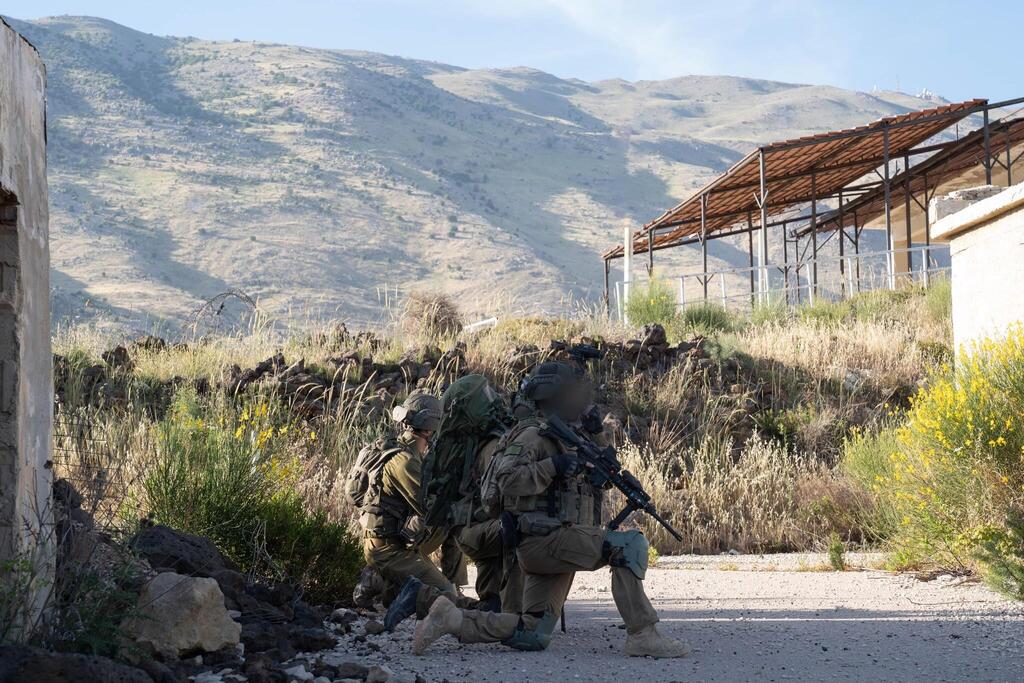
IDF troops in Syria
(Photo: IDF)
Dror recalled clashes between the IDF and residents of the village of Kuwaya in March 2025, when Israeli forces tried to enter the village in the Daraa area and later shelled it after confrontations.
“In the end, we are in a process in which, from the Syrian point of view, we have been ‘occupiers’ for almost two years,” he said. “You can describe it in military terms, that we are operationally holding the area and that the IDF built a rear access route so as not to cross through villages. All of that is true, but that is the Israeli view.”
“The Syrian view says we are occupiers,” Dror added. “The more severe view says Syria was liberated from a cruel occupier, Assad, and that the place occupied today is southern Syria.”
Against the backdrop of escalating Syrian rhetoric toward Israel and stalled negotiations, Dror said resentment will only increase the longer Israeli forces remain there.
“The anti-Israel sentiment is growing as long as we stay there,” he said.
Asked what the solution should be, Dror said: “The solution was to create a diplomatic move. There is no other choice, and today it is harder. Syria, as long as we continue to stay there, will only keep us busy. Al-Sharaa is getting stronger, and the terrorists are also getting stronger during this time. They do not lack weapons, and they are preparing and gathering intelligence. The Iranians may have less capability, time and attention to activate this sector, but they want to create chaos there again, and that is not so complicated. I believe the scope of friction will only increase.”
According to Dror, escalation can happen gradually and quickly.
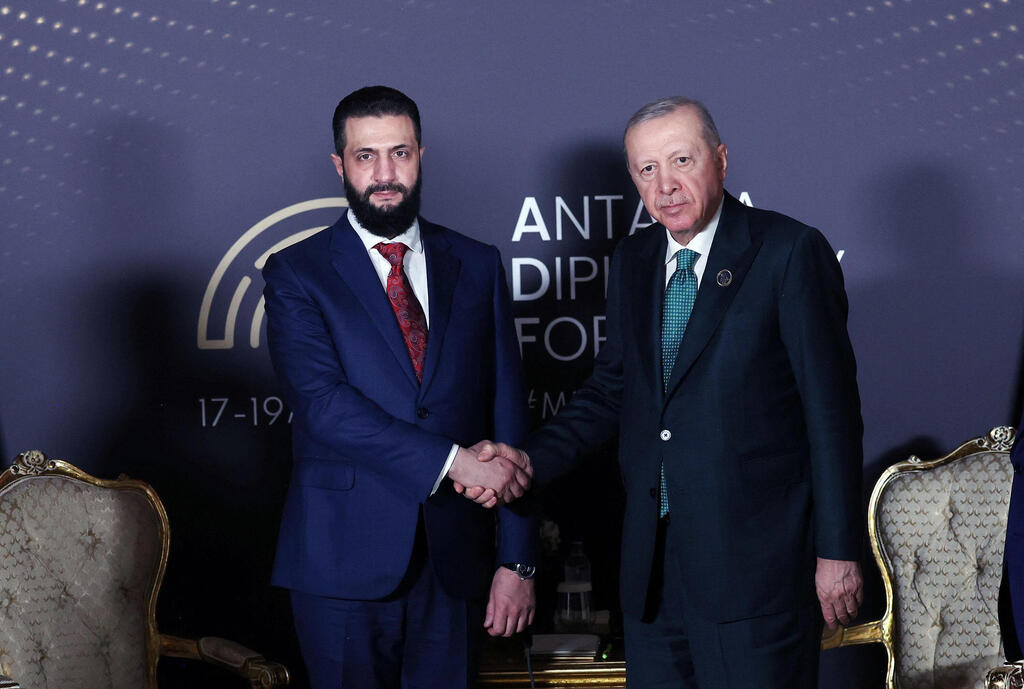
Syrian President Ahmed al-Sharaa with Turkish President Recep Tayyip Erdogan in Antalya
(Photo: AFP PHOTO / TURKISH PRESIDENTIAL PRESS SERVICE / HANDOUT)
“In the end, life has its own dynamic,” he said. “A Syrian who sees a patrol, throws a stone and sees that nothing happened, the day after tomorrow will fire an anti-tank missile. I am surprised they have not yet fired an anti-tank missile or planted an explosive device, because the Syrians there have all these things. In the end, these are people who know how to fight and have fought.”
Dror said that in the current situation, the Syrian side sees Israel as creating conflicts, including over the issue of Israeli support for the Druze in southern Syria, and that Israel lacks a diplomatic strategy for the sector.
“The situation in Syria is different from Lebanon,” he said. “In Lebanon, we need to be inside because there is an armed terrorist organization that called for our destruction. Al-Sharaa has not called for our destruction. In the world, Israel is seen as refusing peace when it comes to Syria. We are presented as warmongers.”
“In Syria, we can defend ourselves differently,” he added. “No one is saying we should withdraw immediately from everything. Al-Sharaa was more positive at the beginning than he is today. Can we now turn the situation back? Our withdrawal needs to be tied to changes there. I think Israel could have created enough security mechanisms for itself, and if we had done that two years ago, when the world was focused on the Syrian issue and was with us, it could have been leveraged. If there is eventually an agreement with them, I assume we will pay more for it, because when you are in a weaker bargaining position, you pay more.”