

Russian President Vladimir Putin was set to meet Wednesday in Moscow with Syria’s new president, Ahmad al-Sharaa, in what is believed to be their first encounter barely a year after the two were bitter enemies on opposite sides of Syria’s brutal civil war. The meeting and the future of their relationship could have major implications for the balance of power in the Middle East.
For decades, Russia was one of Syria’s closest allies, maintaining military and political ties with Damascus. Since the outbreak of the Syrian civil war in 2011, Moscow backed the rule of longtime dictator Bashar Assad, supplying weapons, diplomatic support and, starting in 2015, direct military intervention through airstrikes that helped Assad regain control over much of the country.
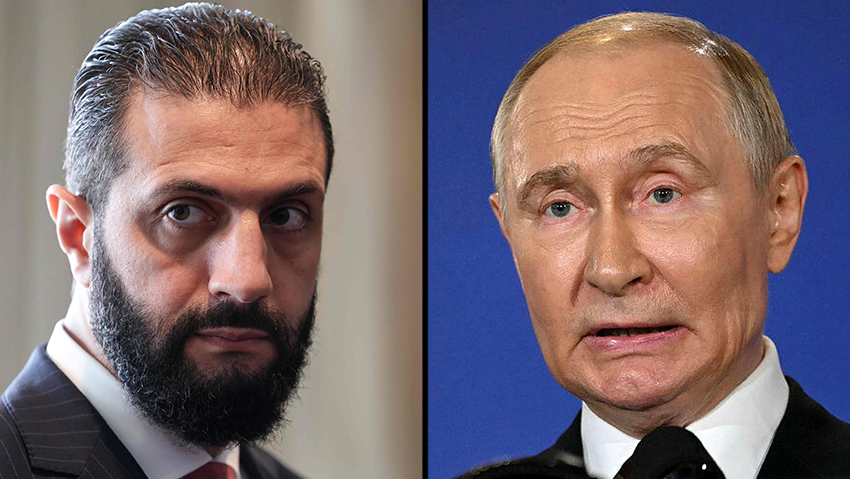
Al-Sharaa, by contrast, was once a senior commander within al-Qaida and later led the jihadist group Jabhat al-Nusra, which rebranded itself as Hay’at Tahrir al-Sham. His Islamist forces were among those targeted by Russian bombings during the height of the conflict. Last year, after Assad appeared to have secured a decisive victory, al-Sharaa’s forces launched a rapid offensive that toppled him from power and forced him to flee to Russia.
The collapse of Assad’s rule and the sudden rise of al-Sharaa were seen as a major setback for Moscow’s ambitions in the region. The developments raised questions about the future of Russia’s two large military installations along Syria’s Mediterranean coast — the Russian naval base in Tartus and the air force base in Hmeimim.
The new Syrian government has not ruled out allowing Russia to continue operating those bases, but officials in Damascus have signaled that such an arrangement would come with conditions. According to reports, Syria may demand compensation for wartime damage and possibly insist on the extradition of the ousted ruler Assad, who remains in Russian territory.
Wednesday’s meeting between Putin and al-Sharaa follows their first phone conversation in February, when the Russian leader expressed support for Syria’s “territorial integrity and sovereignty.” Since then, diplomatic contacts have continued between the two governments. In July, Syrian Foreign Minister As’ad al-Shibani visited Moscow, and in September he hosted Russia’s deputy prime minister in Damascus. During that meeting, al-Shibani denounced what he described as “the Israeli threat of repeated attacks against our land and sovereignty” and said that the threat “still exists.”
Syrian state media on Wednesday quoted an unnamed official source saying al-Sharaa plans to use his Moscow visit to formally request that Russia hand Assad over to Damascus for trial on charges of crimes against the Syrian people. The source said Putin and al-Sharaa are also expected to discuss the future of the Tartus and Hmeimim bases.
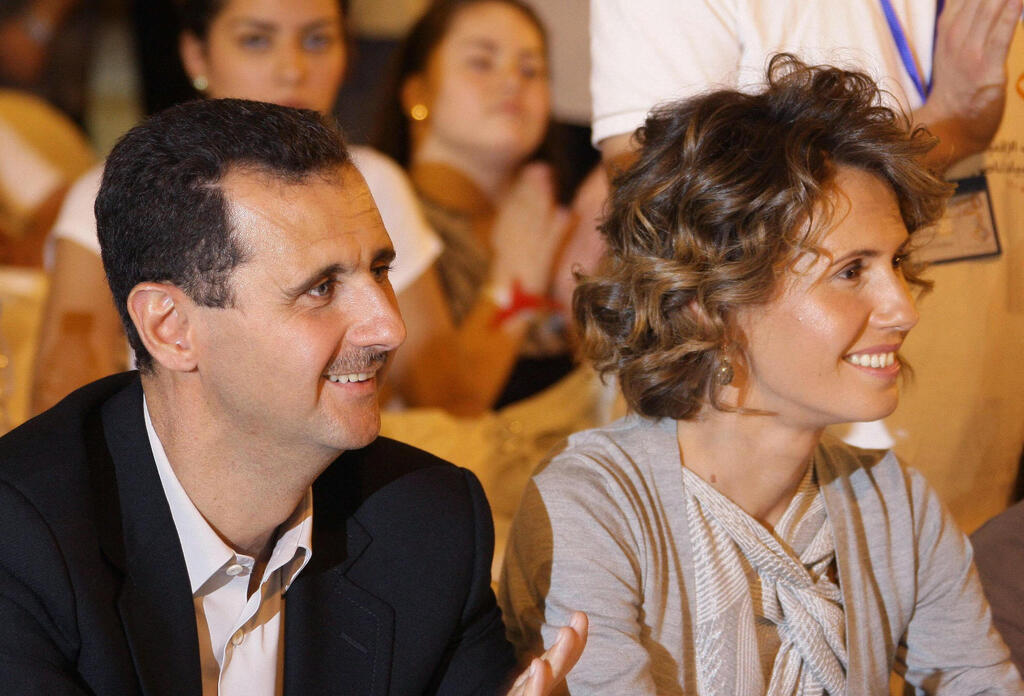
(Photo: Louai BESHARA / AFP)
Over the weekend, the German newspaper Die Zeit published what it described as new details about Assad’s life in hiding in Russia. Citing an unnamed source, the report said the former Syrian ruler and his family are living freely in Moscow, guarded by a private security company funded by the Russian government. The source claimed Assad “lives in three apartments in a tower building with a shopping mall underneath and occasionally visits the stores there.” He also said Assad “spends hours playing online video games.”
The same source told Die Zeit that Assad’s wife, Asma, is in very poor health. The former first lady, who was diagnosed last year for the second time with breast cancer after previously recovering from the disease, is now in “critical condition,” the source said.
The source added that Assad’s younger brother, Maher — once a top general in the Syrian army and accused of overseeing atrocities against regime opponents — is staying at Moscow’s Four Seasons Hotel, where he reportedly spends his time drinking and smoking hookah.