

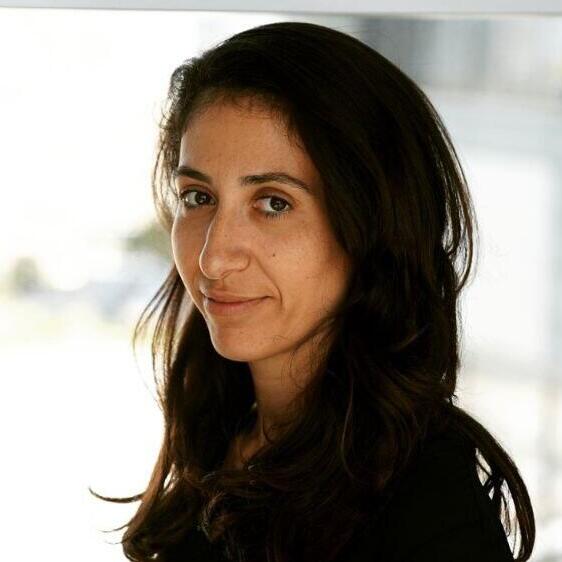
Rawan Osman has just completed another visit to Israel. It was her 20th trip since Oct. 7, 2023 — no small thing for a woman born in Syria, raised for 18 years in Lebanon’s eastern Bekaa Valley and now living in Germany. After years of building ties with Israel and Judaism, Osman is preparing for another unexpected step: She plans to convert to Judaism and immigrate to Israel.
Rawan Osman on Mount Herzl


In an interview with ynet, Osman, a social activist, said the last time she visited Syria was in 2012, when she went to see relatives. By 2015, she said, all of them had left the country, and she no longer has family there. That, she said, has allowed her to speak out for Israel and against antisemitism around the world.
A wine bar in Damascus
In 2011, Osman had plans to open a wine bar in Damascus’ Old City with a Christian friend from the hospitality industry. At the time, she said, Damascus had an interesting cultural scene, with poetry evenings and gatherings where people discussed social issues. The Assad regime allowed more public meetings then, though intelligence agents were present at such events.
“More and more Europeans were attending those events, including diplomats, and we thought the quality of the alcohol was bad. I love wine, so we wanted to open a wine bar,” she said.
But when they went to sign the lease, the landlords changed their minds and the deal collapsed. Osman said that saved her from losing all her money.
“They said they had changed their minds, and two weeks later the uprising began, in March 2011. I would have lost everything,” she said.
Still, she did not give up on the idea. She flew to France to study wine sales and waited for the situation in Syria to calm down. Instead, it deteriorated. She decided not to stay in France, moved to Cyprus and still hoped she might return to Syria or Lebanon. About a year and a half later, she moved to Germany, where she has lived since.
The issue of alcohol sales has recently returned to the headlines in Syria. The government of Ahmed al-Sharaa decided in March to ban alcohol service in restaurants and nightclubs in Damascus and limit sales to several Christian neighborhoods. Even there, alcohol may be sold only in sealed containers and by licensed stores. The restrictions sparked public criticism, while the government said they were intended to impose order.
“It’s ridiculous,” Osman said. “Maybe the only good thing about the Assad regime was that it was secular. Everything else was terrible. The current regime is not as monstrous as the Assad regime, but it wants to take Syria back to the seventh century and is contributing to the Islamization of Syria. Syria is going through a dangerous process that must be stopped.
“From my point of view, and I consider myself Israeli today, al-Jolani is very dangerous. He is not good news for us, because we have thousands of jihadists on the border.”
Osman said the average Sunni Syrian who wants a conservative leader sees al-Sharaa positively. Others, she said, are worried. She knows the issue personally: Her father is a Sunni from Damascus’ Salihiyah neighborhood, while her mother is a Shiite from the village of Niha in Lebanon’s Bekaa Valley.
‘Israel did not start it’
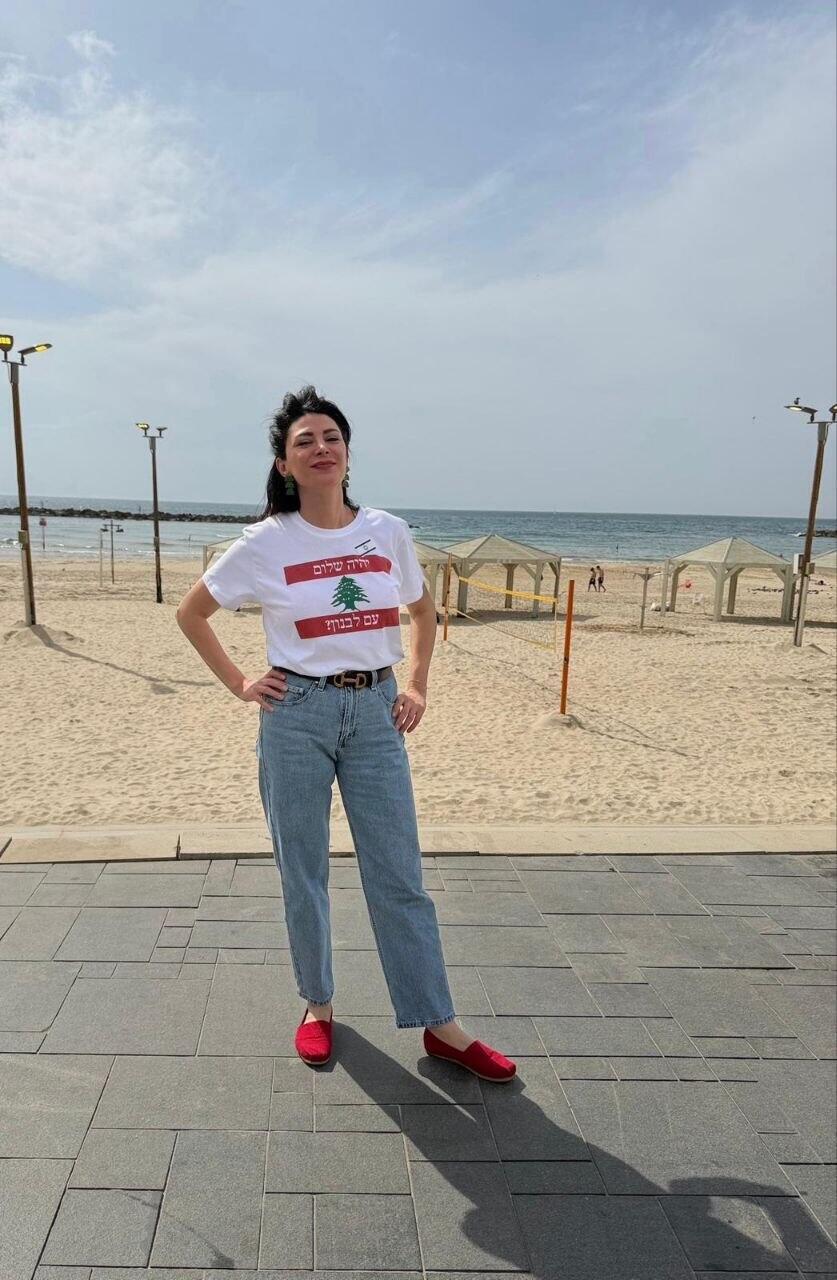
In recent weeks — on Holocaust Remembrance Day, Memorial Day and Independence Day — Osman posted content to her Instagram account as if she had grown up in Israel. She met a Holocaust survivor and documented Memorial Day events at the military cemetery on Mount Herzl.
Her connection to Israel began in France.
“When I moved there to study wine, I started the first part of my studies in Strasbourg. The place where I lived was in the Jewish Quarter, near the Great Synagogue of Peace. That was the first time I experienced Jews,” she said. “It opened my eyes because I had always imagined Jews as the enemy, as a terrible, problematic, aggressive people.”
That impression, she said, collapsed when she lived among Jews.
“They were nice to me,” Osman said. “In France, my point of view changed. I understood that the hostility that leads to wars was not started by Israel, but by the Arab world, which rejects the very existence of Israel. That made me start reading and researching organizations like Hezbollah, the Islamic Republic in Iran and the armed Palestinian factions, and understand that they are aggressive and that they choose terrorism to make Jews leave the Middle East.”
Trying to understand how the Palestinian issue could be resolved — a conflict she sees as holding back Lebanon and other countries — Osman began studying Islam and Judaism in Germany. She said she had been an atheist. In Lebanon, she attended a French Catholic school but never believed in God, Jesus, Muhammad or the Quran.
“When I studied, I understood that some of the biggest problems that led to terrorism were caused by mistaken interpretations of certain texts, and it does not have to be that way,” she said. “When I studied Judaism, my life changed completely. I fell in love with Judaism. I understood that I am Jewish. I felt that I knew the language, that it was close to me.”
She told the German rabbi who taught her that she was Jewish and intended to convert and move to Israel.
“He choked, he didn’t understand,” she said. “I told him: ‘Look, if you want to help, you’re welcome.’”
At the time, Osman had not yet visited Israel, but she was already working with Israeli and American organizations, especially after the signing of the Abraham Accords, to help build bridges between the Arab world and Israel. Still, she felt it was not enough. She said she feared the Iranian-led “axis of resistance” was preparing something terrible to stop the normalization agreements.
Understanding what Israelis go through
Then came the Oct. 7 massacre.
“After that, my life changed completely because I understood that I had been right,” she said. “But I did not imagine that something so terrible could happen.”
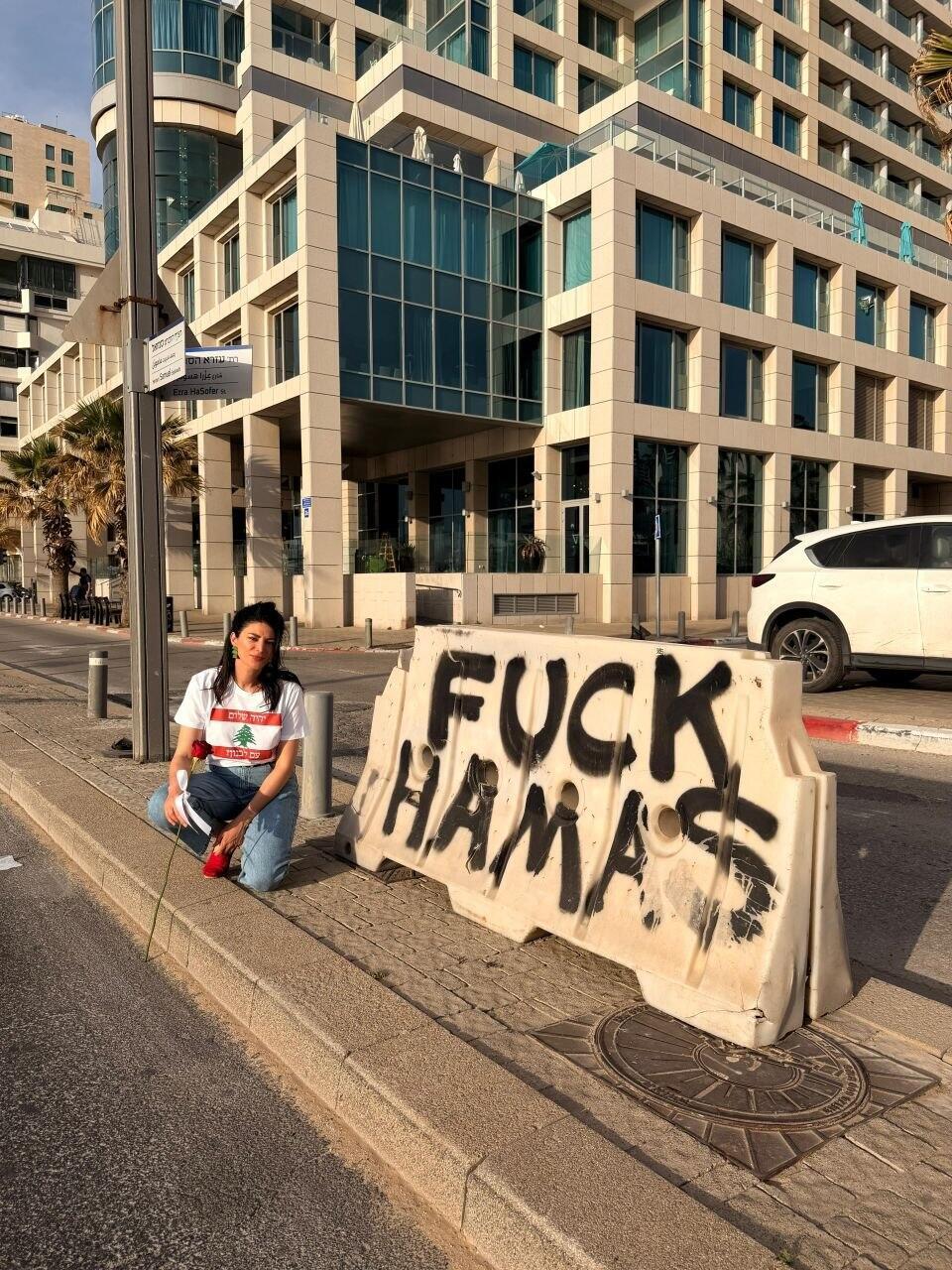
Since then, Osman has become a frequent visitor to Israel. She has little time for conversion studies, but says she is making progress. She works constantly, lecturing around the world, telling Arab audiences the stories of hostages who returned from Gaza and taking a prominent role in Israeli public diplomacy.
Her ties with her immediate family have been shaken in recent years because of her choice to side with Israel. They were cut off, renewed and recently severed again with the return of fighting in Lebanon. Osman said her family was also angry that she brought her 17-year-old son to Israel during the war with Iran “to understand what Israelis go through.”
“They are simply upset because they hate Israel,” she said.
“I know thousands of Israelis personally,” she added. “I have hundreds of Israeli friends. I have friends in intelligence, in the army, officers, soldiers, so I do not accept anyone wishing death on Israelis. But it is very common in the Arab world to wish that.”
In the Arab world, Osman said, many lies are spread about her. She said she does not care. Others, she said, quietly agree with her.
“They tell me: We support you. Thank you for what you are doing. We dream of traveling to Israel,” she said.