

Hezbollah supporters gathered in Lebanon overnight and into Sunday to mark two years since the killing of the terrorist group’s longtime leader Hassan Nasrallah in an Israeli airstrike, as the Iran-backed group confronts continued Israeli attacks and growing domestic pressure over the prospect of renewed war.
Nasrallah was killed Sept. 27, 2024, when the Israeli Air Force struck Hezbollah’s underground headquarters in Haret Hreik, in Beirut’s southern Dahieh district. Supporters gathered overnight at the site of the former command center to commemorate the anniversary of his death.
Shiite supporters also gathered in Baghdad, Iraq, where participants held portraits of Nasrallah to mark two years since his killing.
Israeli airstrike targeting Hezbollah leader Hassan Nasrallah at the group’s underground headquarters in Beirut’s southern suburbs on Sept. 27, 2024


The Beirut site, once Hezbollah’s central headquarters, was left devastated by the Israeli strike and subsequently became a pilgrimage site for Nasrallah’s supporters. Hezbollah flags and portraits of the slain arch-terrorist have been placed among the ruins, alongside images of Hashem Safieddine, the head of Hezbollah’s Executive Council who had been widely seen as a potential successor to Nasrallah.
Safieddine was himself killed in an Israeli airstrike in October 2024, weeks after Nasrallah’s death.
Additional commemorations were scheduled Sunday at Safieddine’s burial site in the southern Lebanese village of Deir Qanoun al-Nahr, where a ceremony was planned to mark the second anniversary of the deaths of Nasrallah and his would-be successor. Another rally was scheduled at Nasrallah’s burial site along the airport road in Beirut’s southern suburbs.
Nasrallah was killed in a massive Israeli strike on Hezbollah’s underground command headquarters while other senior officials were also inside. According to the IDF, more than 80 bombs were dropped on the bunker as part of an operation dubbed “New Order.”
Gallery
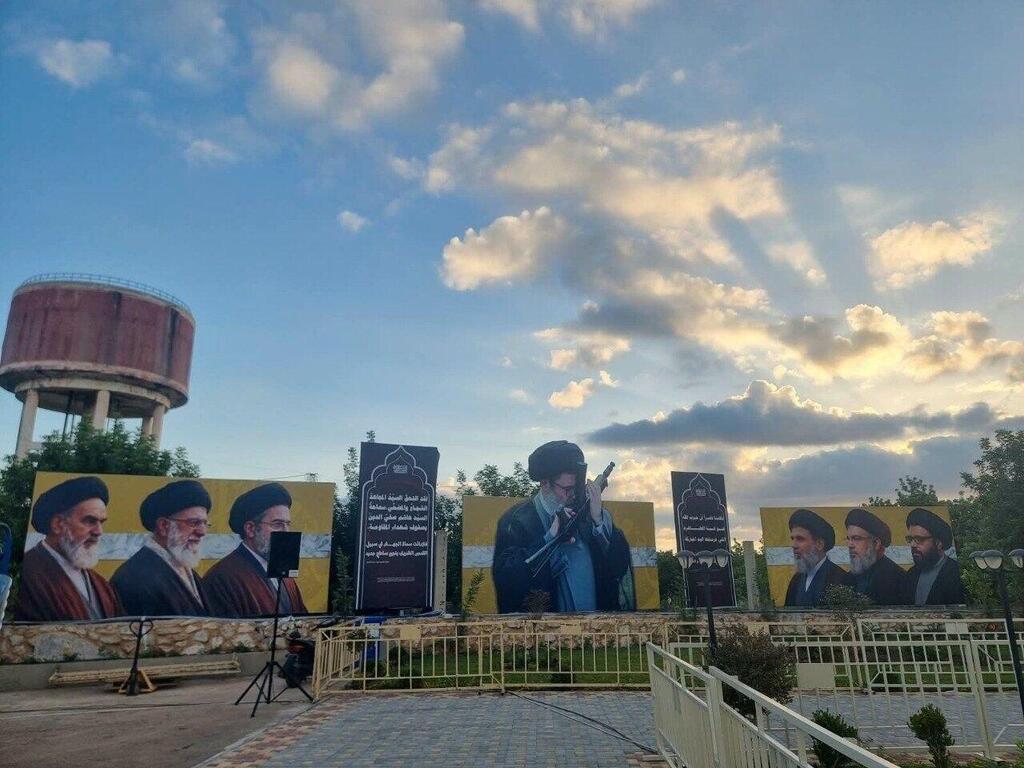
Preparations for a ceremony marking two years since the deaths of Hezbollah leaders Hassan Nasrallah and Hashem Safieddine
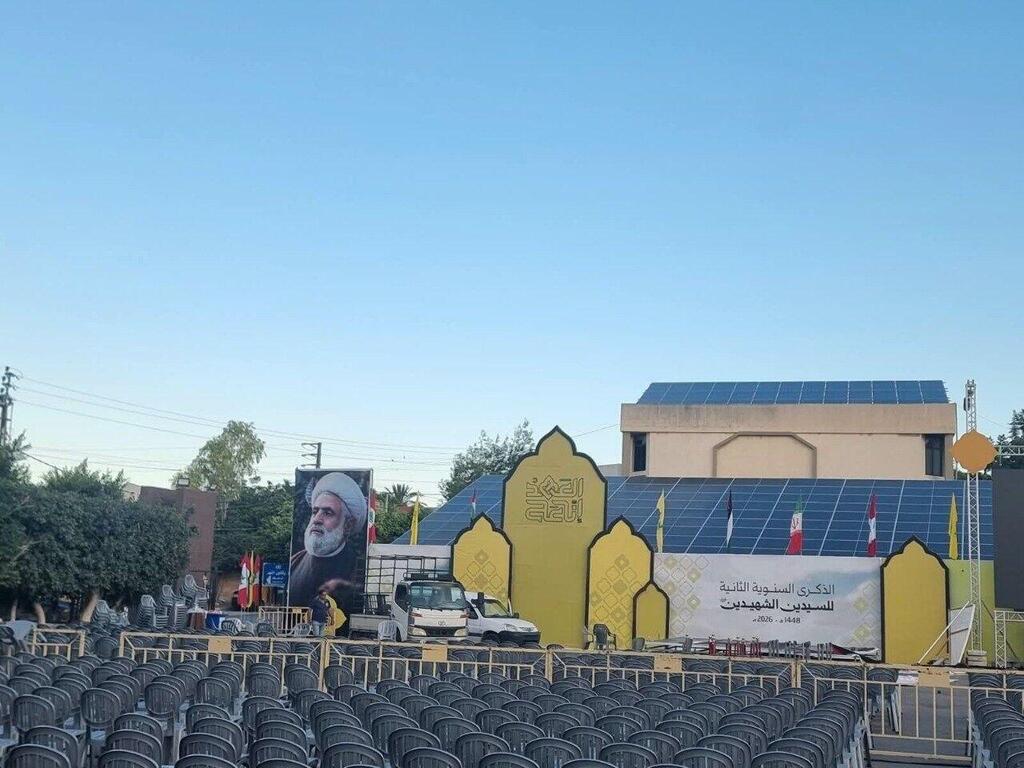
Preparations for a ceremony marking two years since the deaths of Hezbollah leaders Hassan Nasrallah and Hashem Safieddine
Ali Karaki, the commander of Hezbollah’s southern front, and other senior members of the group were also killed in the attack.
The anniversary comes as Hezbollah continues to grapple with the consequences of the 2024 war with Israel and debate over its future strategy.
Ibrahim al-Amin, editor of the Lebanese newspaper Al-Akhbar, which is closely associated with Hezbollah, addressed Nasrallah’s killing and the issue of retaliation in an article published Saturday.
“Revenge is a comprehensive mission, founded on absolute belief in its justice and on determination to achieve the best possible results,” al-Amin wrote.
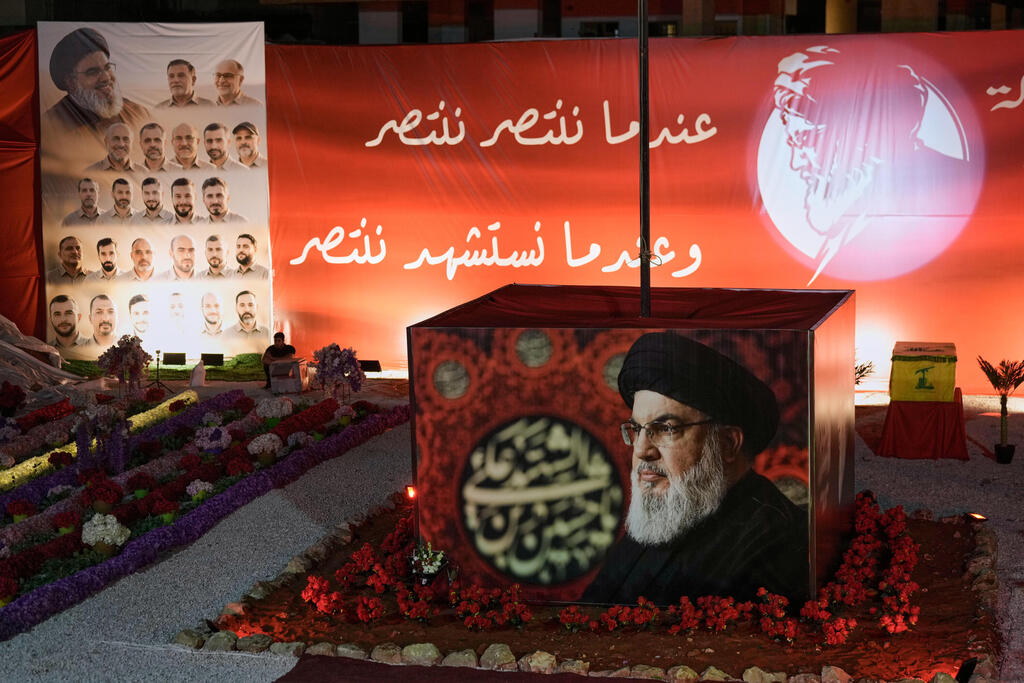
A memorial display for slain Hezbollah leader Hassan Nasrallah in Beirut
(Photo: AP Photo/Bilal Hussein)
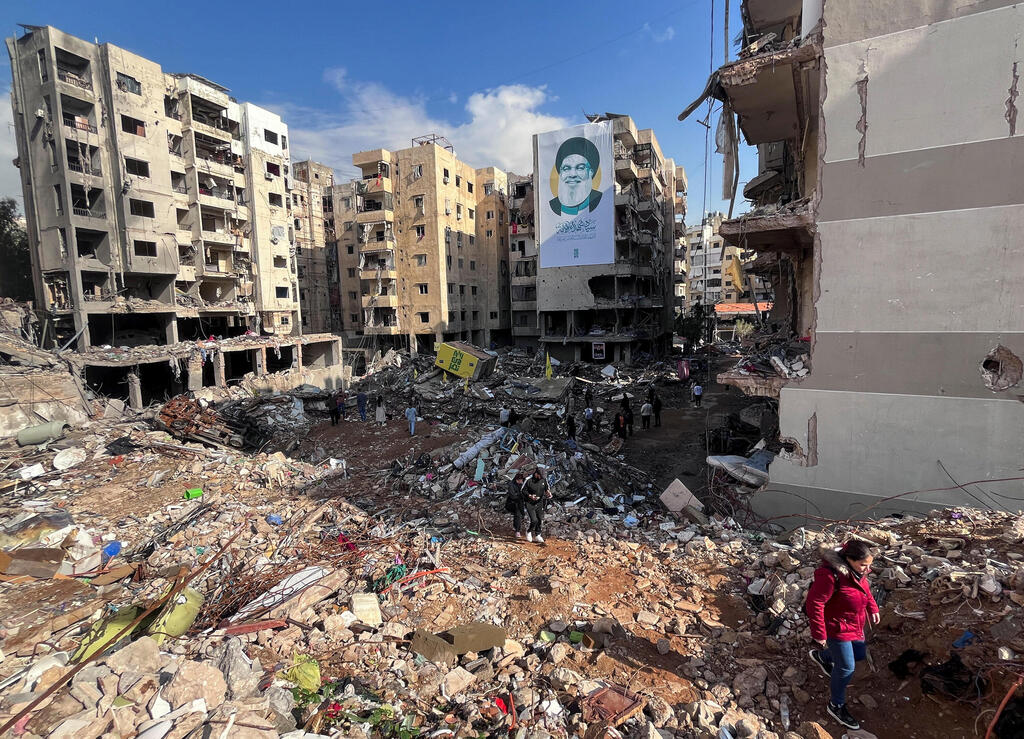
The site of the Israeli strike that killed Hezbollah leader Hassan Nasrallah in Beirut’s southern suburbs
(Photo: REUTERS/Amr Abdallah Dalsh)
He said retaliation would require a level of sophistication surpassing what he described as Israeli plotting and suggested that carrying it out could become the task of a new generation.
“The appropriate punishment for this state, its government, its people and its institutions is not something ordinary, but a major event that will ensure history remembers it as the clearest expression of justice,” he wrote.
The Qatari-owned newspaper The New Arab, meanwhile, described Hezbollah as facing a difficult strategic position, caught between Israeli military pressure and growing concerns within Lebanon about another conflict.
“Hezbollah today faces a complex and challenging situation,” the newspaper wrote, pointing to continuing Israeli strikes despite a ceasefire agreement, Israel’s presence in parts of southern Lebanon and the continued dismantling and destruction of Hezbollah military infrastructure.
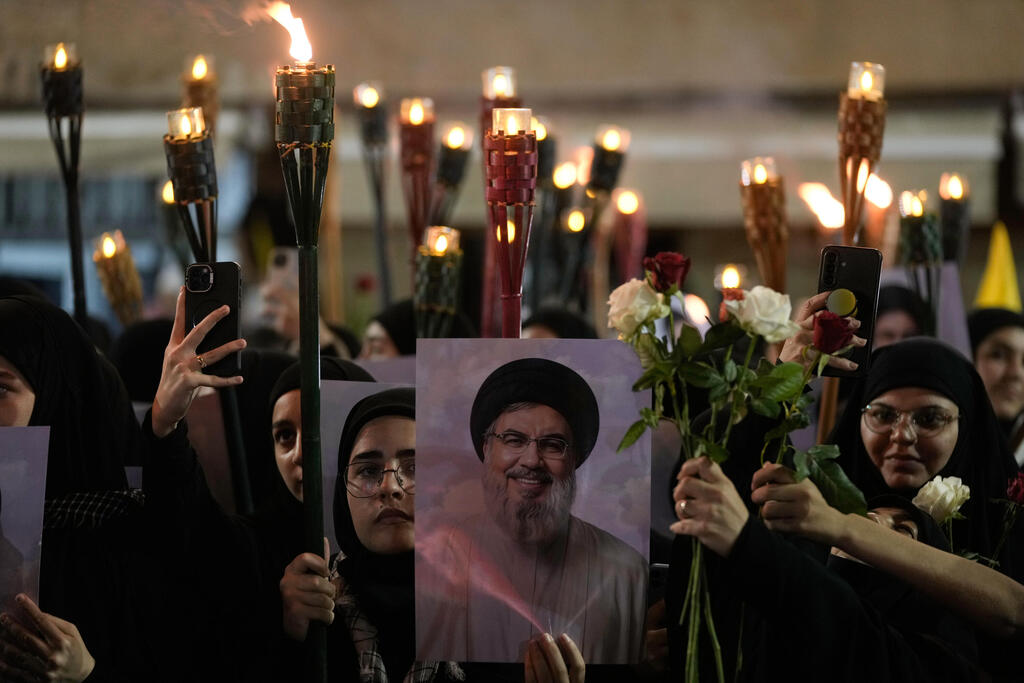
Women hold torches, flowers and a portrait of slain Hezbollah leader Hassan Nasrallah during a commemoration in Beirut
(Photo: AP Photo/Bilal Hussein)
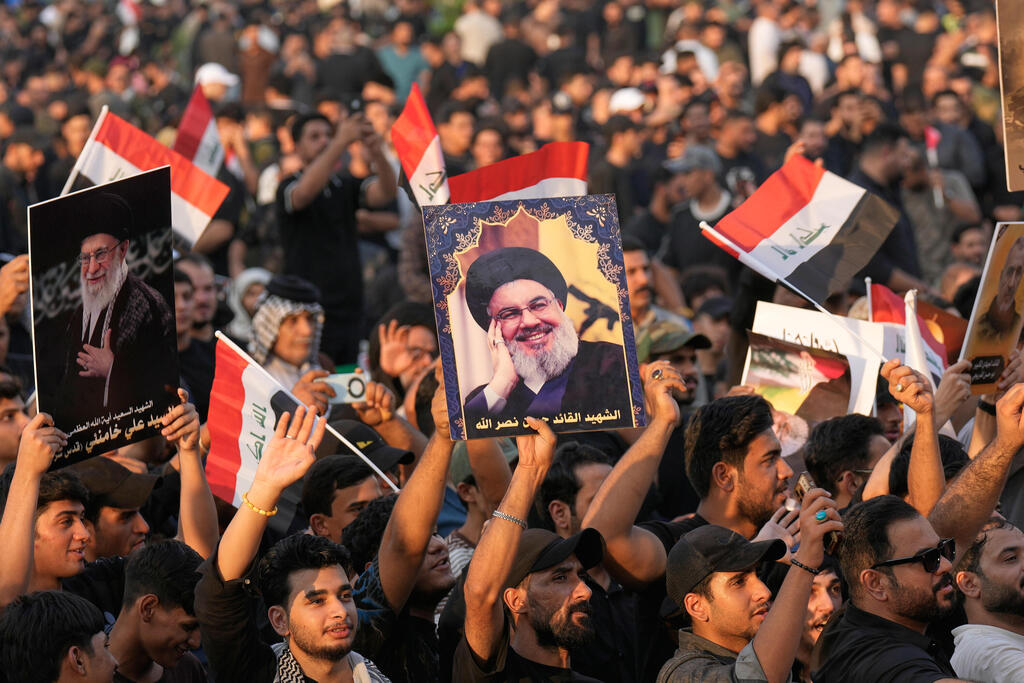
Supporters in Baghdad hold portraits of Hassan Nasrallah and Iraqi flags while marking two years since the Hezbollah leader’s death
(Photo: AP Photo/Hadi Mizban)
The newspaper said Hezbollah had yet to decide whether to respond and was also facing substantial pressure at home, including opposition from within Lebanon’s Shiite community to actions that could drag the country into another war.
Ghaleb Abu Zeinab, a member of Hezbollah’s Political Council, told The New Arab that September 2024 represented a decisive turning point for the organization.
“We see September 2024 as a crucial turning point. Hezbollah and the resistance are not what they were before,” Abu Zeinab said. “That month marked a significant stage in the conflict with the Israeli enemy.”
He acknowledged that Israel had achieved significant gains through the blows it dealt Hezbollah but said the group did not consider the confrontation over.
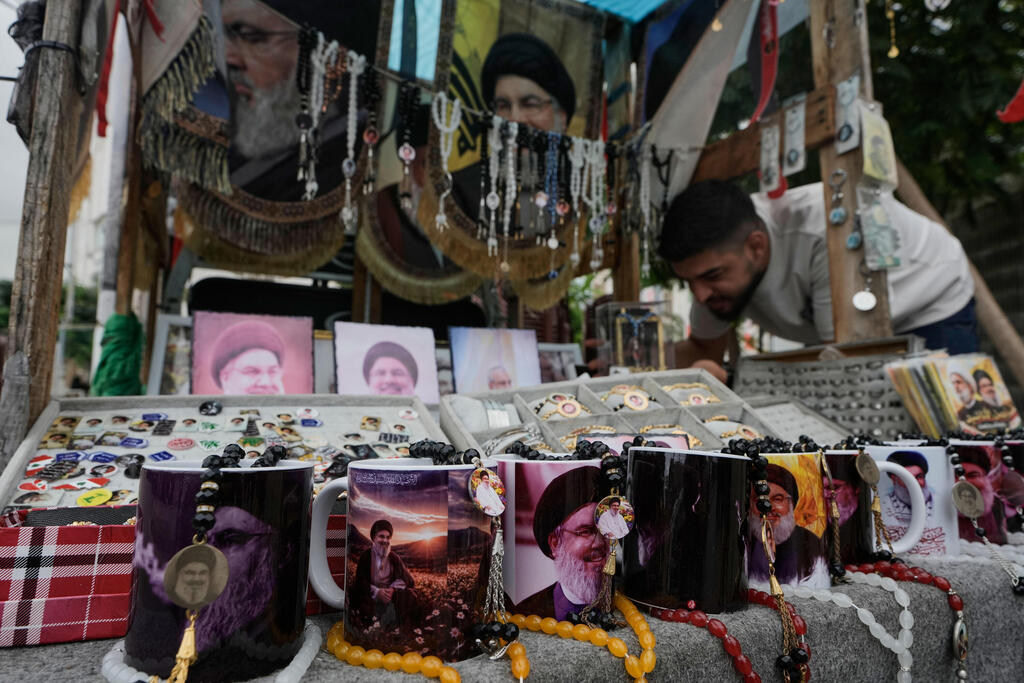
Souvenirs bearing images of Hassan Nasrallah are displayed for sale in Beirut
(Photo: AP Photo/Bilal Hussein)
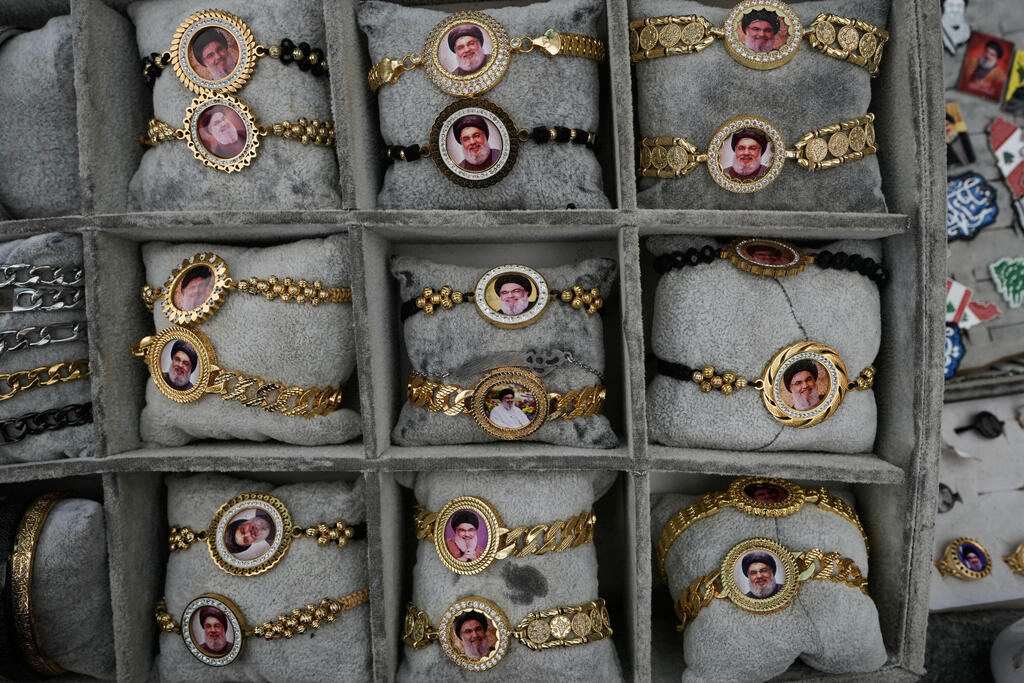
Bracelets bearing portraits of Hassan Nasrallah are displayed for sale in Beirut
(Photo: AP Photo/Bilal Hussein)
“We see the situation with the understanding that the battle with the enemy is still continuing and its end is unknown,” he said. “They may strike us in one place and we may strike them somewhere else, but this is not the end of the road, as the Israelis had hoped it would be.”
Abu Zeinab also rejected the prospect that the existing framework agreement between Lebanon and Israel would produce a lasting settlement.
“We believe the framework agreement that Lebanon signed with Israel will not lead to a real settlement,” he said. “It is unfair and gives Israel an advantage in every one of its provisions. Under no circumstances will we allow Lebanon to be left as easy prey for the enemy.”