

Talks between representatives of the Israeli government and envoys of Syrian President Ahmad al‑Sharaa resumed this month with the aim of reviving the ceasefire agreement that had been in place during the Assad father‑and‑son era from 1974 until the regime’s fall in Damascus about a year and three months ago. The IDF was not involved in the discussions, which have the potential to change the reality in the Syrian Golan Heights — a region where, in recent months, Israel has even allowed armed fighters affiliated with al‑Shaara to enter in pickup trucks.
By all indications, this is not a breakthrough dialogue toward a “new Middle East,” peace or even normalization with Syria. Rather, the negotiations appear focused on guarantees for Israel’s security in exchange for a withdrawal from nine outposts Israel built in the Syrian Golan over the past year, as well as from the strategic high ground of Mount Hermon, which Israel captured last autumn without a battle.
Activities of soldiers from the 'Mountains' Brigade and the 'Alpinists' Unit in Mount Hermon and southern Syria
(Photo: IDF Spokesperson's Unit)


The IDF has begun assessing the implications of such an arrangement, even though political officials assured last week that the army would in any case remain on the summit of Syrian Hermon — a strategic point that helps Northern Command forces oversee arms smuggling routes between Syria and Lebanon. According to reports emerging from the talks, however, there is principled agreement on an Israeli pullback and even a restriction — or ban — on IDF forces, especially the Air Force, attacking across Syria.
For years, the IDF enjoyed operational freedom in Syria during the “Between the Wars” covert campaigns aimed at thwarting Hezbollah’s buildup, and even more so after the fall of the Assad regime. The jihadist leader of the new Syria is demanding a ban on continued Israeli airstrikes and, in such a scenario, the IDF assesses it would face real difficulty preventing advanced weapons smuggling from Iraq and Iran, through Syria, to a resurgent Hezbollah.
These smuggling corridors were significantly disrupted by consistent efforts from Israeli Military Intelligence (AMAN) and the Air Force, but a renewed deal between Jerusalem and Damascus could help reopen them. Additionally, remnants of weaponry and surveillance capabilities, such as Russian‑made radars from the Assad era, remain scattered across Syria. Al‑Sharaa’s nascent army lacks the ability or expertise to operate most of this equipment, but an agreement with him could still limit the IDF from striking these residual capabilities when they appear in intelligence reports.
Al‑Sharaa is also demanding limits on IDF strikes in Hauran, the broad area starting in the Syrian Golan and extending eastward, 70–100 kilometers from the Israeli border. This zone has seen terror groups — including pro‑Iranian militias, Palestinian terrorist organizations and especially Hezbollah — establishing terror infrastructure, firing positions and observation posts under the cover of the Syrian army — sites the IDF has repeatedly targeted over the past decade. Prohibiting or restricting attacks on near‑border targets would make it even harder for the IDF to eliminate emerging threats to Golan residents.
Another contentious issue is scaling back Israeli aid to Syrian Druze communities in three areas: the outskirts of Damascus; the Druze Mountain region around As‑Suwayda in southern Syria, tens of kilometers from the Golan; and the village of Hader near the Hermon slopes, within earshot of the Israeli‑Druze town of Majdal Shams.
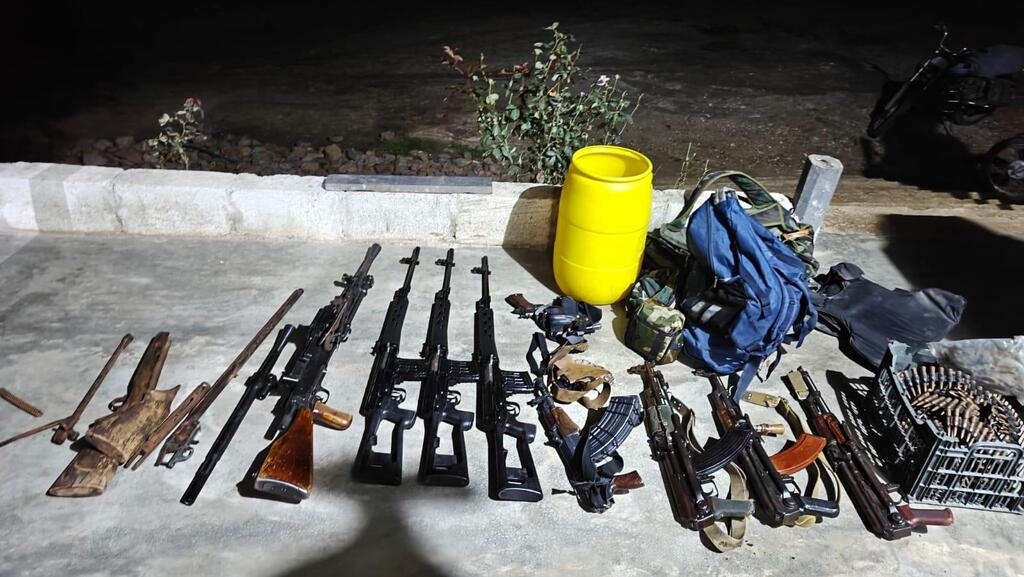
Battalion 52 forces confiscated weapons in the Rafid area in southern Syria
(Photo: IDF Spokesperson's Unit)
The extent of Israeli support over the past year — ranging from thousands of high‑quality captured weapons seized in the wars with Hezbollah and Hamas, to combat vests, to medicines and equipment — was recently exposed in foreign media. Syrian Druze are frequently attacked by extremist militias, some Bedouin and others aligned with the new regime, and their relatives in Israel — including those serving in the IDF — have demanded continued Israeli assistance. But under an al‑Sharaa government, Damascus is insisting that this assistance end entirely.
About six weeks ago, Russian representatives toured the Syrian Golan, including between IDF positions, in coordination with Northern Command. Among regional players, the idea emerged that Russia might deploy forces in the Syrian Golan — a move controversial within the IDF and lacking broad support among military leaders. For now, according to multiple sources, such a deployment is not expected to happen in the near future.
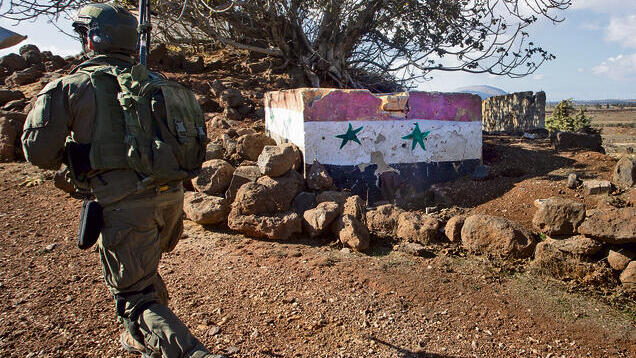
IDF soldier in the Syrian Golan Heights
(Photo: Gil Nehushtan)
Russia, it should be noted, still maintains military forces in the Alawite region in northwest Syria, and its long‑standing support for Assad against al‑Sharaa’s militias could blur if Middle East interests realign. IDF officers are advising the political echelon not to withdraw from the Syrian Golan, especially amid growing fears of a massive infiltration of terrorists from the east — from Jordan, but also from Syria — in a pattern reminiscent of October 7.
The IDF remains deeply scarred by the sense of failure during Hamas’ invasion of the western Negev, and from the army’s perspective there is no justification to abandon territory on any hostile border, at least in the foreseeable future. “It’s easier to defend communities when you are forward, on enemy territory, in a thick buffer zone,” the IDF insists as a matter of course. Still, despite concerns about the negotiations with al‑Sharaa, the military notes that even with a pullback from buffer outposts, reinforced forces — nearly doubled — would remain along the Golan border.
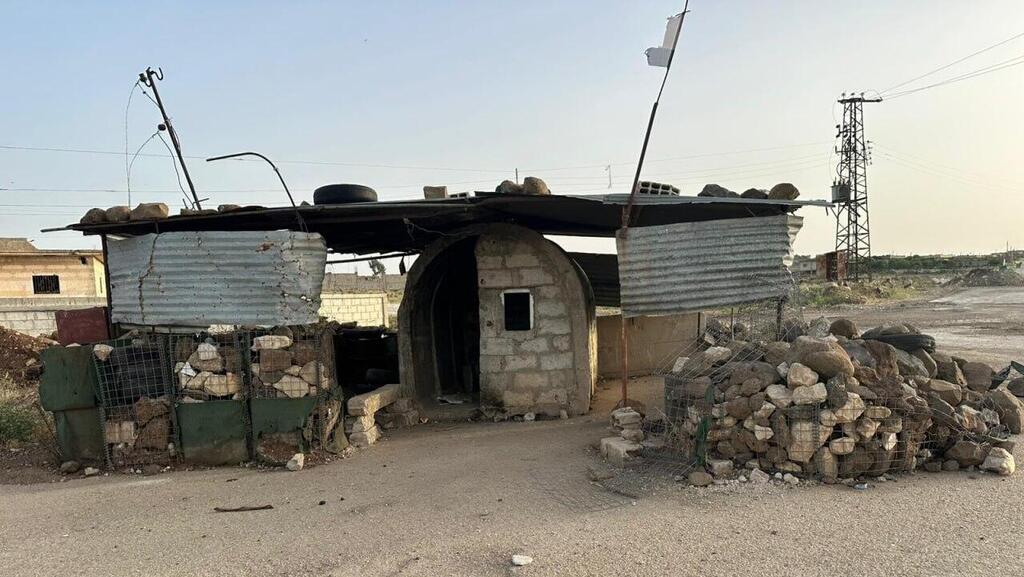
Deserted Syrian military position on the Golan Heights
( Photo: Ron Ben Yishai)
In any scenario, the IDF would retain the capability to strike an immediate threat approaching the Golan or identified nearby. But the question centers on prevention of enemy buildup and which operational model the framework will adopt: frequent unimpeded strikes against terrorists and infrastructure, like the near‑daily operations in Lebanon over the past year, or the more restrained Gazan model — now in its fourth month since the ceasefire with Hamas began — in which forces are limited to targeting Hamas buildup sites that remain unresolved despite prolonged fighting.
The few strikes that have occurred were in response to Hamas violations, which sends attackers toward IDF positions along the Yellow Line, in a reactive pattern similar to years before October 7. On this point, IDF officials recommend waiting and hoping for a gap between the written political agreement and a policy that would still allow the IDF to operate in the field and prepare updated offensive plans.