

In the evening hours, New York City residents received a text message on their mobile phones containing a warning from Mayor Zoharan Mamdani: "Mayor Mamdani has issued a State of Emergency for New York City; a TRAVEL BAN is in effect BEGINNING AT 9PM due to dangerous blizzard conditions. All NON-ESSENTIAL VEHICLES are RESTRICTED from NYC roads until 12PM on 2/23. Vehicles are only permitted for essential & emergency travel".
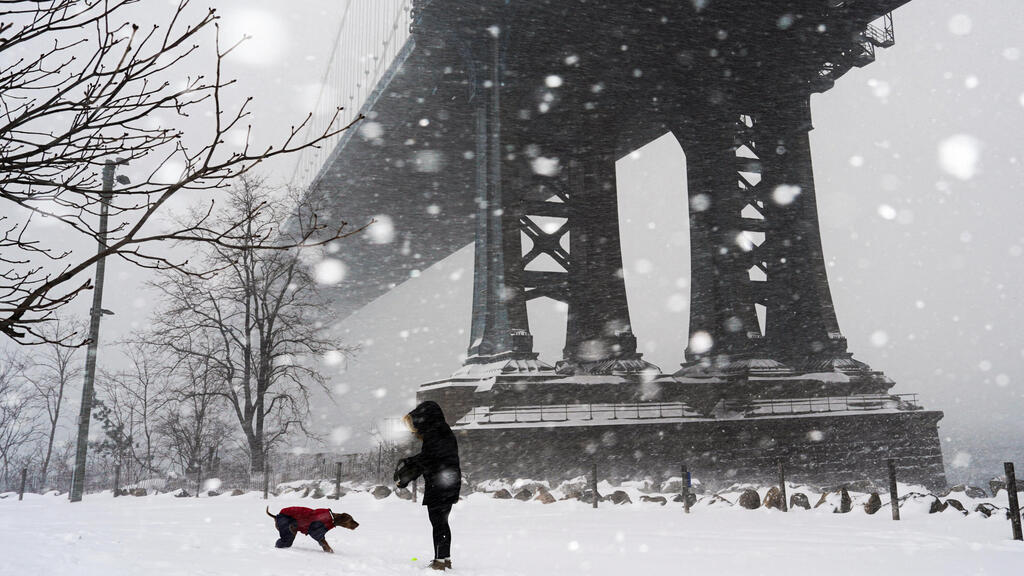
The unusual message was intended to prepare residents for the crisis situation as part of the authorities’ preparations for the powerful Nor'Easter storm that struck the Northeast region last night and effectively shut down the states of New York, New Jersey, and Connecticut. The rare blizzard combines massive snowfall with strong winds reminiscent of tropical storms, but in the dead of winter.
Blizzard in Brooklyn
(Video: Reuters, ABC AFFILIATE WABC)


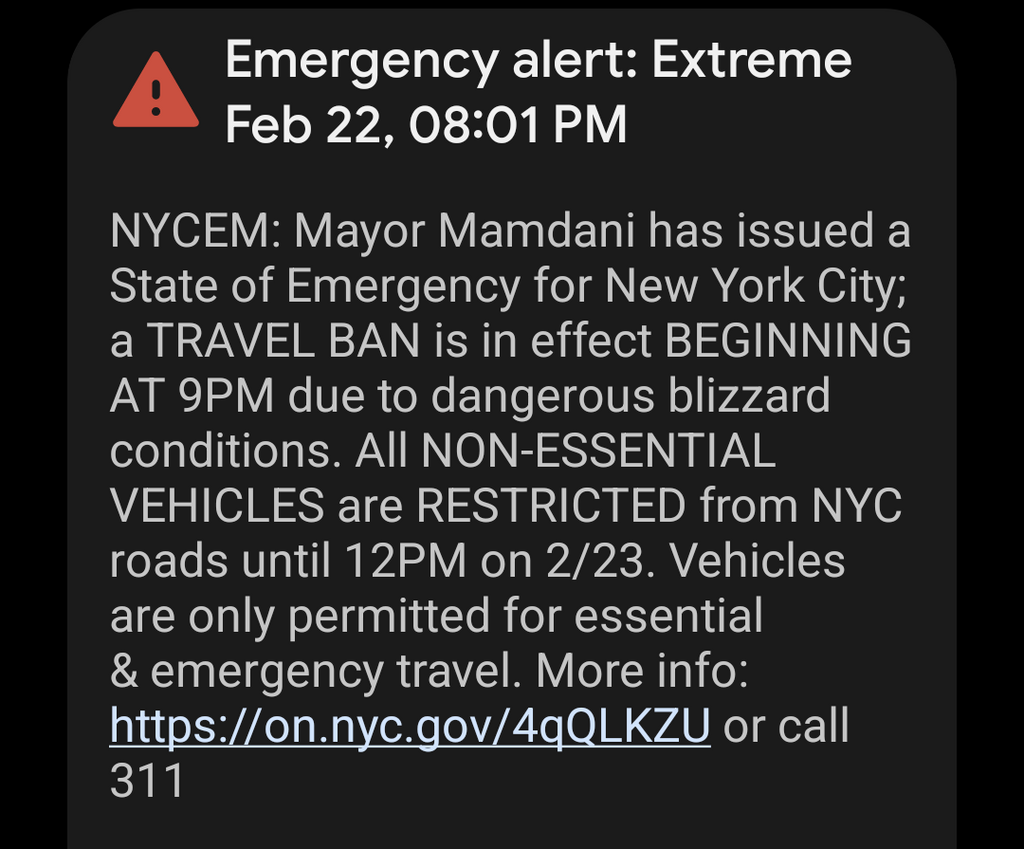
Text message warning from Mayor Zoharan Mamdani
Unlike the cold front that hit New York last week (which reached as low as minus 16 degrees Celsius), this time temperatures are not quite as low; however, the amount of snow is enormous and is piling up on sidewalks and roads. According to estimates, snowfall reached about 2 feet, making things especially difficult for municipal services, including rescue vehicles and snowplows (according to city spokespersons, approximately 2,300 snowplows were deployed throughout the city). Therefore, the city decided to order the closure of roads to private vehicle traffic from 9 p.m. on Sunday until 12 noon the following Monda.
Even before receiving the emergency notification from Mamdani, residents had already prepared for emergencies and rushed to supermarkets in advance. Some were left facing supply shortages. In addition, bars and clubs were closed, and cultural and entertainment events were canceled. The severe phase also shut down airports in the region and led to the cancellation of nearly 4,000 flights on Sunday and more than 5,000 on Monday.
The massive storm is expected to subside on Monday afternoon; however, local authorities will continue operating on high alert due to concerns over infrastructure failures, particularly the power grid. This is because the heavy snow has also accumulated on trees, which could cause them to collapse or branches to break off, posing a risk to power lines and typically resulting in outages.