


A dispute over water supplies has added to mounting tensions between Israel and Jordan, with a Jordanian analyst accusing Israel’s right-wing government of undermining bilateral relations by delaying renewal of an agreement to provide the kingdom with additional water.
Under the countries’ 1994 peace treaty, Israel supplies Jordan with 50 million cubic meters (1.8 billion cubic feet) of water annually. The current dispute centers on a separate agreement, which has not been renewed since November 2025, under which Israel sells Jordan an additional 50 million cubic meters each year at a discounted price.
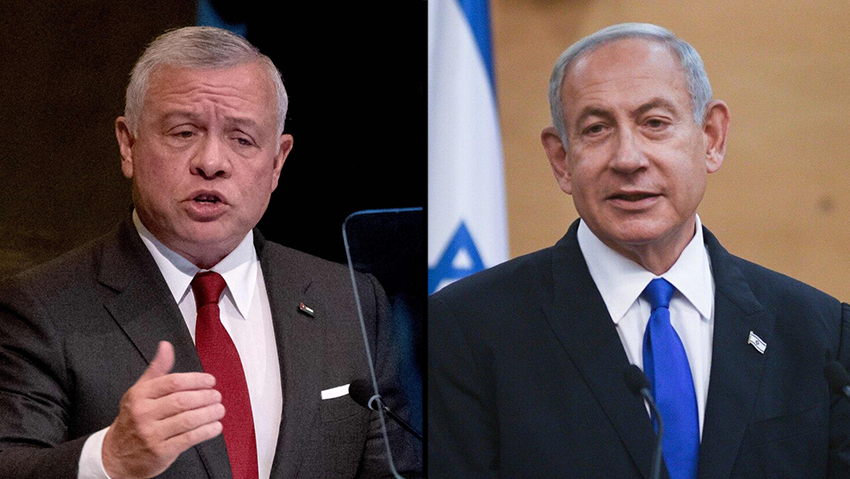
The issue comes as Israel is considering a proposal to hold a trilateral energy summit in Abu Dhabi with Jordan and the United Arab Emirates, where officials are expected to discuss several issues, including the additional water agreement. In recent years, Israel has linked renewal of the deal, in part, to repeated criticism of Israel by Jordanian Foreign Minister Ayman Safadi.
Jordanian Middle East analyst Daham Matkal al-Fayez said water should not be used as political leverage. “Water is directly linked to water security and the needs of millions of Jordanians,” al-Fayez told ynet. “If a decision has been made not to renew the additional water agreement, I see it as part of the current Israeli right-wing government’s policy of undermining relations with Jordan.”
He accused the government of repeatedly testing the countries’ peace treaty through “a series of escalating measures and statements” that have weakened mutual trust.
Jordan, he said, has continued to honor its commitments under existing agreements. “Respect for mutual commitments is the basis for maintaining stability,” al-Fayez said. “Using water as a political bargaining chip does not serve peace. It sends a negative message that agreements can become subject to domestic political considerations.”
He argued that the dispute should encourage Jordan to accelerate efforts to diversify its water sources through desalination projects so that “no government, regardless of its political orientation, can use this issue as a means of pressure.”
Jordan has been pursuing that strategy in recent years, though with limited success. In November 2023, shortly after the outbreak of the war in Gaza, Jordan withdrew from a planned “water-for-energy” agreement with Israel under which Israel would have supplied desalinated water in exchange for solar-generated electricity, citing deteriorating relations between the two countries.
Since then, Jordan has revived its long-planned National Water Carrier project, which is intended to desalinate water in the southern port city of Aqaba and transport it throughout the kingdom.
Ahmed al-Samadi, the project's technical director, recently said construction is expected to begin in the final quarter of this year after preparatory work is completed. The $5.8 billion project is expected to take about four years to complete, with water production scheduled to begin in late 2030.
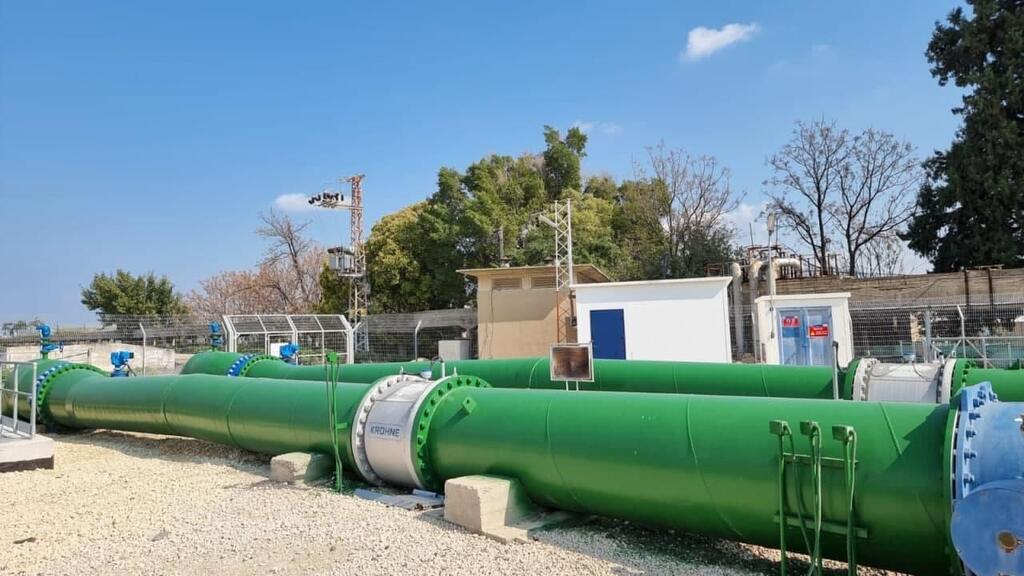
חברת מקורות בתוכנית העברת מים מישראל לירדן
According to al-Samadi, the project is designed to produce about 300 million cubic meters of water annually, enough to supply roughly 40% of Jordan's drinking water needs.
The dispute comes despite Jordan's role during the recent conflict between Israel and Iran, when the kingdom was repeatedly targeted by Iranian missiles and drones and participated in efforts to intercept incoming projectiles. During Israel's Operation Rising Lion against Iran, Iranian forces also repeatedly targeted the Al-Azraq air base in Jordan, which hosts U.S. troops.
Ronen Yitzhak, head of Middle East studies at Western Galilee College and a researcher at Tel Aviv University's Moshe Dayan Center, said the disagreement was unlikely to seriously damage relations between the two countries.
“This is not a crisis that will harm relations. It is a minor dispute in a long series of tensions,” he said.
Yitzhak noted that Israel approved the additional water allocation in 2021 but later sought to link its renewal to more moderate public statements by Jordanian officials.
“The Jordanians did not want to connect the two issues,” he said. “They felt they were being blackmailed. Public opinion in Jordan is already hostile toward Israel, and they were unwilling to appear to trade their support for the Palestinian cause in exchange for water.”
He also said the timing of the dispute was particularly problematic following the conflict with Iran.
“Jordan helped Israel and the United States more than any other country,” Yitzhak said. “Now, when public opinion in Jordan already opposed that assistance, this debate over water is being perceived as a stab in the back.”
Still, he predicted the dispute would ultimately be resolved through quiet diplomacy.
“I believe back-channel talks will continue and solve this problem,” he said. “Israel also has an interest in resolving it because it does not want to increase tensions or instability in Jordan over water. But the public debate makes it much harder for Jordanian leaders to agree to renew the agreement without appearing to compromise on the Palestinian issue.”