


The anti-Netanyahu bloc is preparing to move quickly to seize control of key Knesset positions immediately after the October 27 election, with plans to replace the parliamentary speaker and block controversial judicial overhaul laws from taking effect. But even before voters head to the polls, disagreements within the opposition are raising doubts about whether the parties can secure the votes needed to carry out their plans.
Representatives of the parties have been holding a series of meetings to coordinate their strategy for the first days after the election, drafting legislation and identifying parliamentary moves that could be carried out even before a new government is formed. Their most pressing concern is a set of laws passed by Prime Minister Benjamin Netanyahu's coalition that are scheduled to take effect after the election, leaving little time for opponents to intervene.
Gallery

Anti-Netanyahu bloc plots swift Knesset takeover after election, but internal divisions threaten plan
(צילום: ריאן פרויס)
The plan begins with gaining control of the Knesset's Arrangements Committee, which oversees parliamentary business during the transition to a new government. Opposition officials believe that controlling the committee could allow them to replace the Knesset speaker within days and begin advancing legislation to repeal or delay the coalition's laws.
But the strategy depends on cooperation from lawmakers across several parties, and that is where concerns are emerging. At a recent meeting, some representatives warned that candidates on certain opposition lists had previously supported elements of the judicial overhaul and might refuse to vote for their repeal.
The legislation at the center of the dispute includes measures concerning the attorney general, changes to the Police Internal Investigations Department that would place it under the Justice Ministry, and a law altering the composition of the Judicial Selection Committee. The latter is scheduled to take effect immediately after the election.
The latest meeting brought together Oded Forer of Yisrael Beytenu; Shaul Meridor and Orit Farkash representing Gadi Eisenkot's Yashar! party; Liran Avishar Ben-Horin and Gili Haushner from Naftali Bennett's Beyahad party; and Ram Shefa of the Democrats.
Some participants raised concerns about the decision-making process within Eisenkot's Yashar! party, particularly after its representatives asked for time to consult before providing answers on certain legislative proposals. Others pointed to previous statements by candidates on opposition lists who had publicly supported some of the coalition's judicial changes.
"Some people on these lists promoted and publicly supported the judicial overhaul laws," one source in the anti-Netanyahu bloc said. "And that's where the problem lies."
A senior figure involved in the discussions said the absence of clear positions from some parties was making it difficult to reach binding agreements before election day. "Some parties are not stating their positions clearly," the official said. "There are parties with a range of opinions, and we don't know what their guiding position is. Certain issues came up in the meetings, and there was hesitation. Not everything can be taken for granted, and there is a lack of clarity on some matters."
Despite the disagreements, working groups have begun preparing legislative proposals aimed at reversing existing laws and advancing measures they believe must be approved quickly. The goal is to complete as much of the groundwork as possible before the election, rather than spend the first days afterward negotiating over legal language and parliamentary procedure.
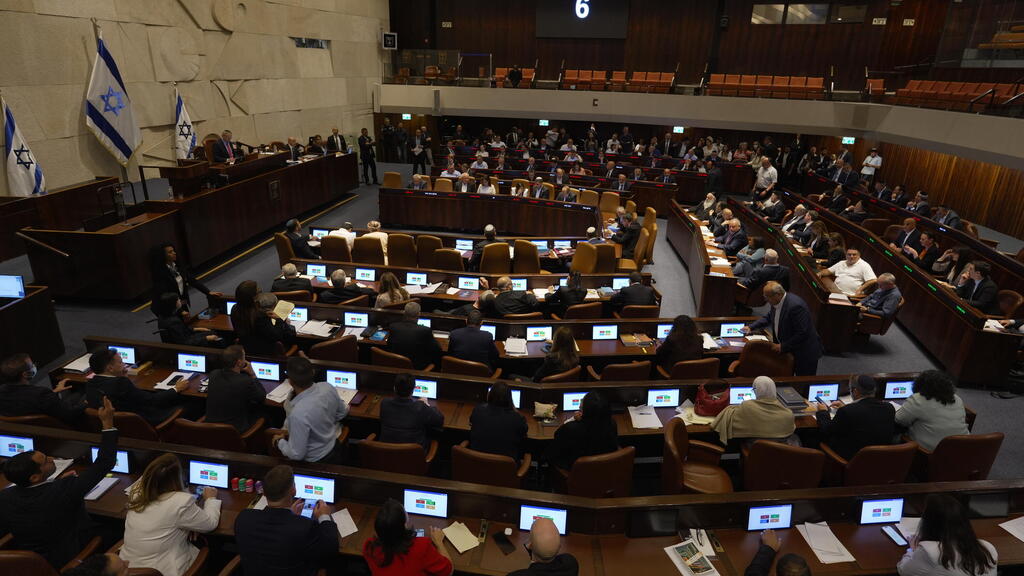
Knesset plenum
(Photo: Alex Gambourg)
The preparations also account for a possible election outcome in which neither political bloc emerges with a clear majority, but the anti-Netanyahu parties hold a narrow parliamentary advantage. Under that scenario, they hope the president would give their bloc the mandate to attempt to form a government, a development they believe could also help them secure control of the Arrangements Committee.
"Our goal is for the president to give the mandate to our bloc," opposition officials said. "The importance of receiving the mandate is not only the ability to try to form a government, but also gaining control of the Arrangements Committee. If we control the committee, we can replace the Knesset speaker within a day or two, or at the beginning of the following week."
The officials stressed that the timetable would be tight, making advance agreements essential. Closer to election day, the parties intend to assess how individual candidates are likely to vote, with particular attention to those whose positions on judicial legislation remain unclear.
That effort is also intended to prepare the bloc for political pressure from Likud. Opposition officials believe Netanyahu's party will try to persuade individual lawmakers to withhold support from efforts to repeal the coalition's legislation, potentially depriving the anti-Netanyahu camp of a majority on critical votes.
"There is legislation that must be advanced as soon as possible after the election," a senior opposition official said. "If the people we're concerned about don't vote with us, we may not be able to repeal the coalition's laws. We're certain Netanyahu will apply enormous pressure, and we need people who can withstand it."
Those concerns follow an earlier report by ynet and Yedioth Ahronoth that Likud had established a dedicated team to examine new candidates on opposition party lists, including their family connections, social circles and influential associates. The reported aim is to identify potential avenues of influence that could prevent lawmakers from voting against Likud after the election.
For the anti-Netanyahu bloc, the parliamentary battle is therefore taking shape before the election itself. Its parties are preparing to move rapidly against the outgoing coalition's legislative agenda, but their ability to do so will depend not only on the number of seats they win, but also on whether they can maintain unity when the first crucial votes are called.