

Alice Jill Edwards, who served as the UN special rapporteur on torture from August 2022 to July 2026, has sharply criticized her colleagues at the organization. In a personal opinion column published Monday in Britain's Daily Telegraph, she accuses them of an obsessive focus on one side of the Gaza conflict, undermining the UN's credibility in the process.
Edwards describes her visit to Kibbutz Kfar Aza, about 14 months after the October 7 massacre, as one of the most difficult moments of her tenure. Mandy Damari and Simona Steinbrecher, the mothers of hostages Emily Damari and Doron Steinbrecher, guided her through their daughters' destroyed homes, where bullets had struck everyday objects, including a microwave and refrigerator.
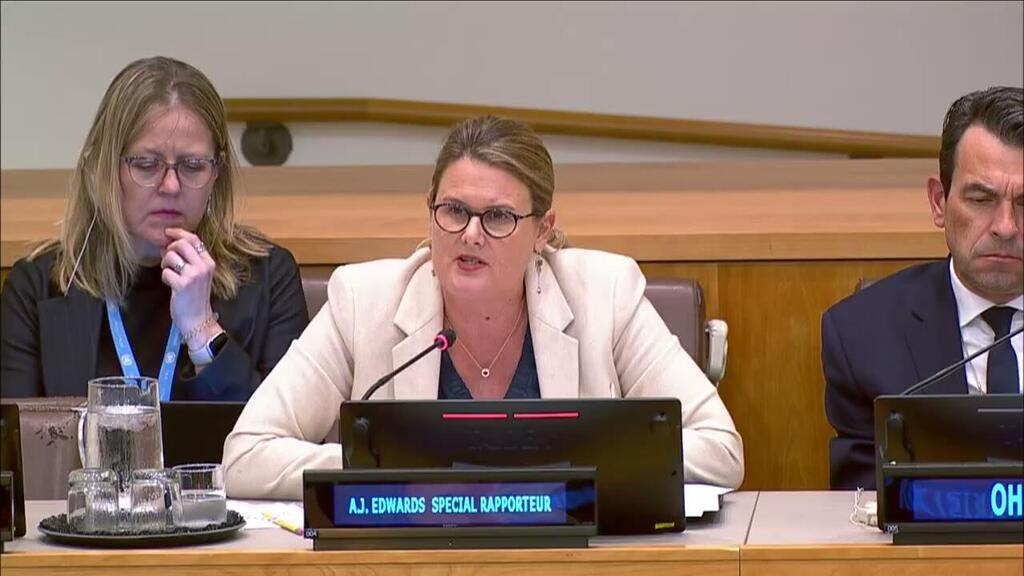
"I had a knot in my stomach as the desperate mothers of the two young women taken hostage led me through the shattered glass and rubble of their daughters’ modest, small single-floor houses," she wrote.
UN officials failed to document sexual violence
The visit led Edwards to conclude that hostage-taking should be recognized as a form of torture: "I tried to remind myself that I needed to avoid feeling too emotional. After all, I was a neutral observer – the role each United Nations special rapporteur is supposed to fulfill. Yet the suffering of these mothers made me realize that we must consider hostage-taking as a form of torture."
She argues that the victims also include the hostages' family members, who are forced to endure agonizing uncertainty over the fate of their loved ones and consequently suffer psychological torture. She adds that videos released by Hamas, including one showing hostage Evyatar David digging what appeared to be his own grave while speaking Hebrew, were intended to pressure Israel through the hostages' families, constituting another form of torture.
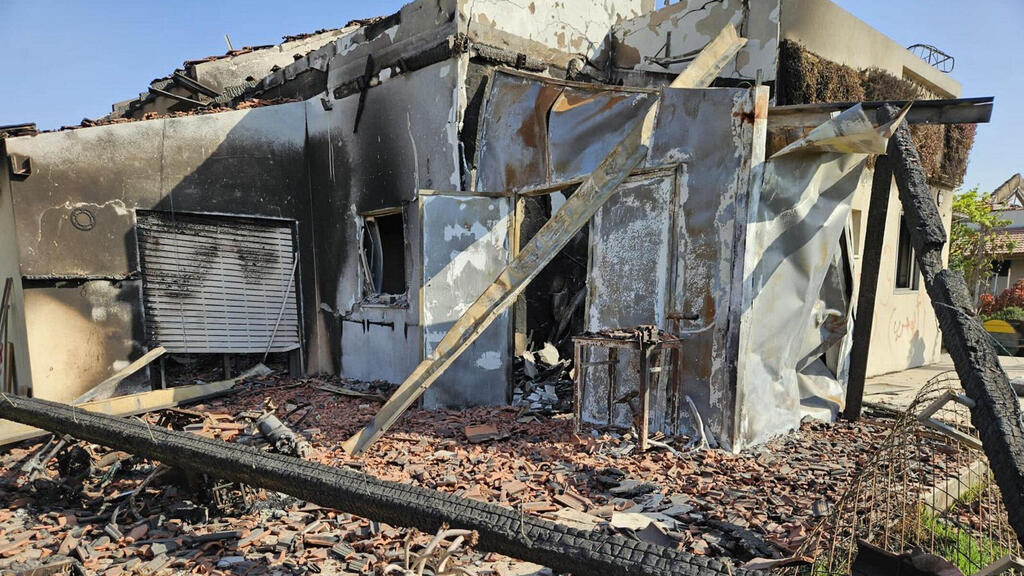
Destruction from October 7 in Kibbutz Be'eri
(Photo: Micha Brickman)
Edwards said that families and released hostages felt the UN had not done enough for them. She criticizes Francesca Albanese, the UN special rapporteur on the occupied Palestinian territories, and Reem Alsalem, the special rapporteur on violence against women, who "never formally documented these horrors, despite the growing body of evidence which to most of us is indisputable, but which they dispute."
According to Edwards, the two continued publishing reports she characterizes as one-sided and hateful, while offering explanations for their failure to address the issue that she found difficult to justify. Alsalem cited Israel's refusal to grant her entry and access as the reason she could not expand her investigation. Edwards argues that even after the hostages were released, neither official gave sufficient weight to their testimony about the torture and deprivation they had endured.
When Edwards published a report on the events of October 7, including the massacre of more than 370 young people at the Nova music festival, only one other special rapporteur agreed to sign it. Others refused, and some attempted to have material removed from the report. She said one of the significant achievements of her tenure, stemming largely from her visit to the kibbutz, was a UN General Assembly resolution requiring countries to define hostage-taking as a form of torture.
"But I feel strongly that during the Gaza-Israel war, the UN has been doing itself no favors by obsessively focusing on only one set of abuses – especially as neutrality, independence and impartiality are the cornerstones of a trustworthy UN," she wrote.
'No pro-Israel bias'
Edwards stresses that she was not influenced by pro-Israel bias. In her previous role as chief legal adviser to the UN High Commissioner for Refugees, she defended Palestinians against discrimination and heard testimony concerning Israeli violations. She drafted the UN's position on Palestinian refugees and led proceedings before Europe's highest court to protect them. This year, she published a second, detailed report on the mistreatment of prisoners in Israeli jails.
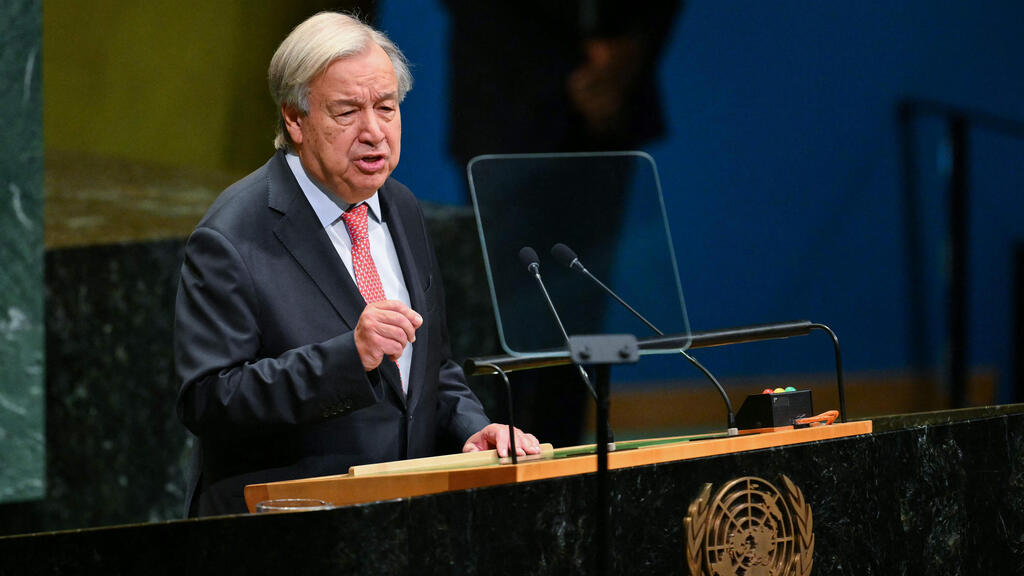
Failed to fulfill the organization's mission. UN Secretary-General Antonio Guterres
(Photo: Angela Weiss / AFP)
Edwards also describes a series of systemic failures within the UN, including an extremely limited budget, unpaid positions, excessive workloads and funding from individual countries. According to Edwards, the budget provides enough money for only one assistant and one field mission per year. She paid for her own trip to Israel and the Palestinian territories.
Edwards also raises concerns about the ability of individual countries or groups of countries to fund specific rapporteurs. Such funding, she said, could be an innocent gift or an attempt to exert influence, but at the very least it creates suspicions of political interference. Lawyers representing victims are reluctant to share confidential information with rapporteurs funded by governments accused of committing abuses.
Edwards argues that the solution would be to channel all contributions into a single central budget and distribute the money equally among rapporteurs. "However, despite these problems, and many others, there appears little appetite to fix the system – not even by the UN secretary-general, Antonio Guterres, (who, incidentally, was my former boss as UN High Commissioner for Refugees)," she wrote.
Guterres recently said in an interview that the rapporteurs were independent and that many were therefore beyond his control. "Independence is both the strength and the vulnerability of these positions, but when misused to dogmatically pursue political agendas, the UN as a whole is weakened," Edwards wrote.
Edwards sees the contest to select the next UN secretary-general as an opportunity for change. "With more wars today than at any time since the organization’s founding in 1945, the next secretary-general needs to take a more decisive role and exercise a greater amount of the power that is actually at his or her disposal.
"Guterres has in my view failed to carry out the original mandate of the UN – to step in efficiently and fairly as a mediator to dampen down international conflicts. While the blame for today’s wars can’t be laid at his feet, it’s disappointing that he has adopted a rather fatalistic posture – as though he has no sway other than to convene meeting," she wrote.
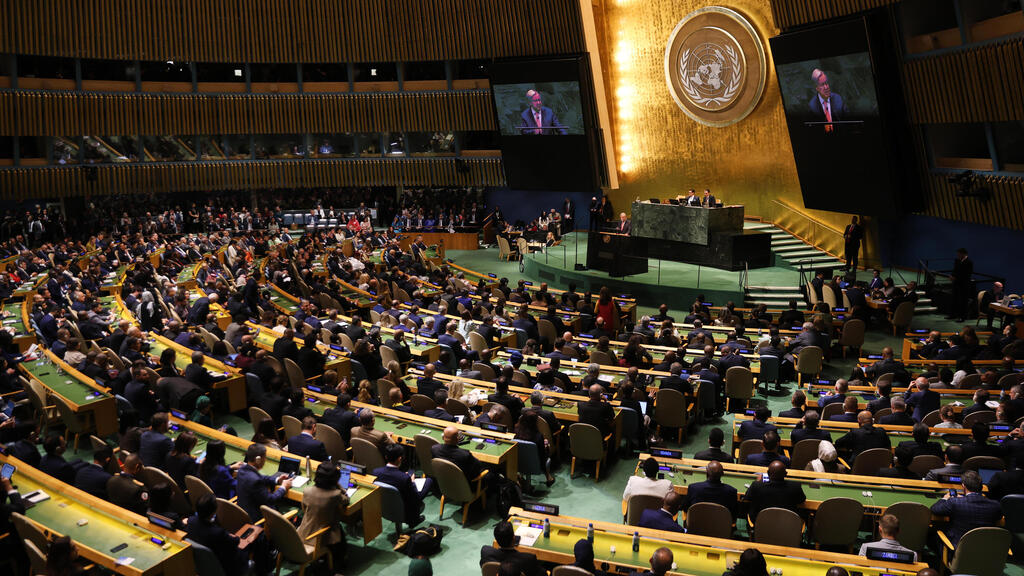
'Advancing a political agenda weakens the UN'
(Photo: Heather Khalifa/AP)
Edwards also criticizes the process of selecting the secretary-general, in which candidates must take care not to antagonize the United States, China or Russia.
She continues that she was surprised by the scale and nature of torture carried out by Russian security forces against captured Ukrainian soldiers and civilians in occupied areas of eastern Ukraine.
According to Edwards, people released in prisoner exchanges described a "system of torture" involving separate supervisors, interrogators and torturers, designed to extract information and instill fear. She compared Russia's invasion of Ukraine to the Soviet Union's invasion of Finland, which led to the Soviet Union's expulsion from the League of Nations.
Edwards also describes several personal achievements, including bringing together torture survivors from different conflicts and developing a "Survivors' Charter," written largely by the victims themselves. She said her most moving moment came when Shireen Khudeeda, a young Yazidi woman who survived captivity, sexual slavery and abuse by ISIS in Iraq and Syria, told her she had received a scholarship and passed her examinations.
Attorney Ayelet Razin Bet-Or, who works to document and secure recognition of the sexual violence committed on October 7 and during captivity, responded to Edwards' remarks.
"Dr. Edwards' clear, honest and courageous voice stands in sharp contrast to the silence and conduct of other officials within the UN's human rights mechanisms, who failed to fulfill their fundamental duty toward the victims of sexual violence and torture perpetrated by Hamas.
"Edwards' testimony is particularly important because it comes from within the system itself, from someone who has devoted her life to defending human rights, regardless of the national identity of the victims or the identity of the perpetrators. She reminds us of a truth that should have been self-evident: Human rights are not a matter of political position, and the protection of women who have suffered sexual violence cannot be selective.
"When officials entrusted with protecting women from violence choose not to give proper recognition to the testimony and suffering of Israeli victims, this is not merely a moral failure. It is a profound blow to the credibility of international institutions and to the trust that victims around the world place in the system that is supposed to protect them.
"Edwards' courage should not be the exception. It should be the standard. It is time for the UN to engage in genuine soul-searching, ensure accountability among its officials and put victims of violence, rather than political agendas, back at the center of its work."