

The U.S. military announced Wednesday that it had completed the withdrawal of its troops from Iraq, bringing an end to the 12-year mission launched to fight ISIS after the terror group swept across large parts of the country in 2014.
The final U.S. troops and equipment left the last air base where American forces had remained in northern Iraq under an agreement between Baghdad and Washington. The withdrawal also closes a chapter that Iran-backed militias had long cited as justification for retaining their weapons, though the Iraqi government has now postponed their disarmament until at least June 2027.
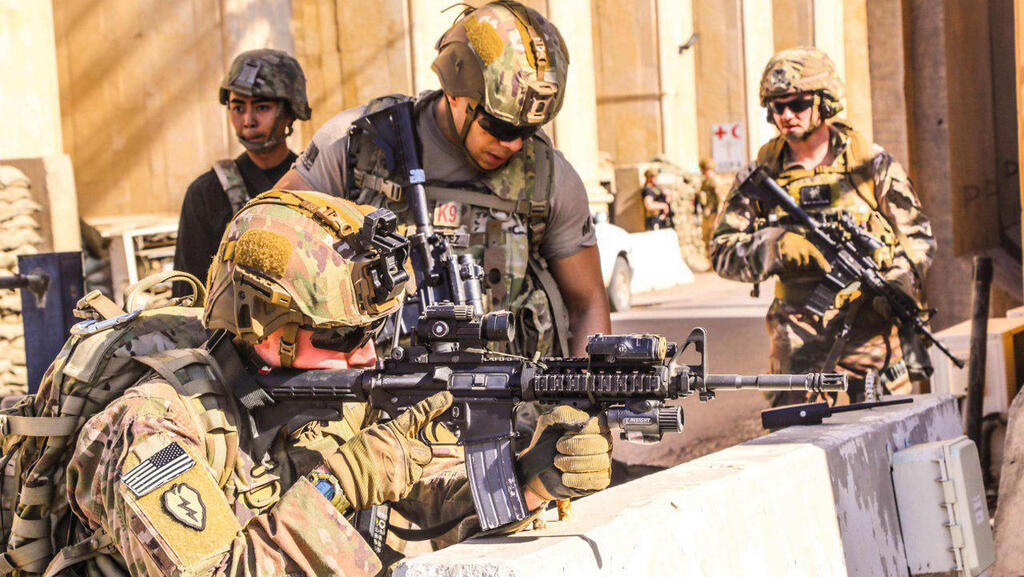
Pentagon spokesperson Sean Parnell said U.S. troops and equipment had completed an “orderly departure” from the air base in Irbil, in Iraq’s semi-autonomous Kurdish region.
“This milestone reflects the success of a 12-year campaign that defeated ISIS as an organized military threat in Iraq and across the region,” he said. “It also marks a transition from a wartime coalition mission to an Iraqi-led security effort supported by a more normal bilateral security relationship.”
Iraqi Prime Minister Ali al-Zaidi presided over the handover ceremony and described the withdrawal as the beginning of “a new phase, one defined by Iraq’s sovereignty, the strength of its institutions, the readiness of its forces, the unity of its decision-making, and balanced partnerships with its friends.”
The withdrawal comes amid the ongoing war between the United States and Iran, which has at times spilled into Iraq. Iran-backed groups welcomed the U.S. departure, while officials in the Kurdish region voiced concern, particularly over the removal of American air defense systems.
U.S. forces first invaded Iraq in 2003 and withdrew in 2011. Three years later, Baghdad invited a smaller U.S.-led force back after ISIS seized large swaths of northern and western Iraq. With the terror group later reduced largely to scattered sleeper cells, Washington and Baghdad agreed in 2024 to wind down the coalition mission.
U.S. troops withdrew from bases across most of Iraq last year, leaving a smaller contingent of several hundred soldiers in the Kurdish region. Those bases have repeatedly come under attack since the U.S.-Iran war began on Feb. 28.
The Sept. 30 withdrawal deadline had initially also been tied to a commitment to disarm armed groups operating outside state control. While several smaller militias agreed to surrender their weapons, powerful Iran-backed factions rejected disarmament or imposed conditions Baghdad was unlikely to meet.
Al-Zaidi has since pushed the deadline for militia disarmament to June 2027.
Qassem al-Araji, national security adviser to the Iraqi prime minister, hailed the end of the coalition mission as a major milestone.
“Following the negotiations and understandings that began on July 22, 2021, we arrive today at an important milestone: the end of the international coalition’s mission and the presence of its forces,” he wrote on X. “We are moving toward bilateral relations with coalition member states, a transition that strengthens sovereignty and serves the national interests and aspirations of the Iraqi people.”
Al-Araji said the end of the coalition mission did not mean the end of security ties with its members. Security and intelligence cooperation, exchanges of expertise and efforts to build Iraqi capabilities would continue through bilateral relationships, he said.
A ‘new political phase’
Iraqi forces said the coalition had completed its withdrawal from the Kurdistan region and that U.S. forces had returned home or moved to bases in neighboring countries.
They also stressed that the end of the coalition mission removed one of the principal arguments used by militias for keeping their weapons.
“It is essential that weapons be concentrated in the hands of the state. There is no justification for weapons remaining outside state institutions,” Iraqi forces said. “We respected the position of the militias that conditioned the surrender of their weapons on the withdrawal of coalition forces.”
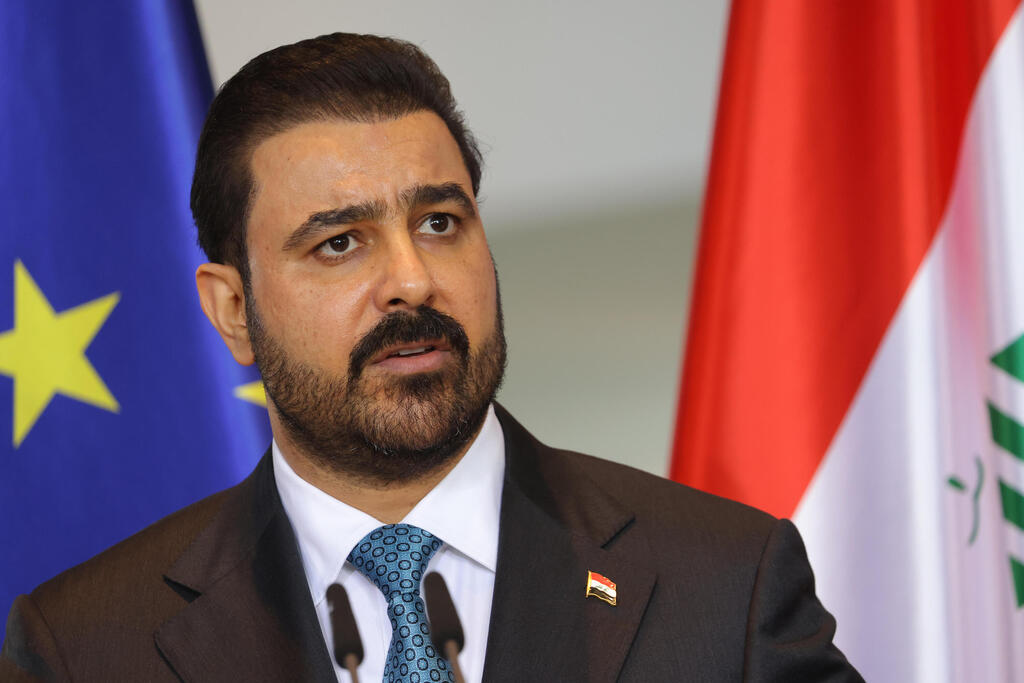
Iraqi Prime Minister Ali al-Zaidi
(Photo: Michele Tantussi/Getty Images)
The Qatari newspaper Al-Araby Al-Jadeed described Wednesday as the beginning of a “new security and political phase” for Iraq, marking the end of the U.S. combat military presence that began with the 2003 invasion, despite the eight-year interruption between the 2011 withdrawal and the return of American forces in 2014.
An Iraqi military source told the newspaper that the U.S. military had transferred its remaining equipment out of the country, including material used for housing and troop welfare, to Kuwait, Turkey and Jordan.
But the effects of the withdrawal are unlikely to be felt equally across Iraq. Officials in the Kurdish region have expressed particular concern over the removal of U.S. air defense capabilities at a time of heightened regional conflict.
The Kurdish regional government’s Peshmerga Ministry said the region had faced more than 1,000 drone and ballistic missile attacks during the recent U.S.-Iran conflict.
“The departure of the United States from the Kurdistan Region under these complex regional circumstances, without the provision of a defense system, is a matter of concern,” the ministry said.
‘The occupation is not over’
Iran-backed factions, by contrast, celebrated the withdrawal while making clear they do not view it as the end of their confrontation with Washington.
Abu Mujahid al-Assaf, a security official with the powerful Kataib Hezbollah militia, called the departure of U.S. forces “the beginning of full sovereignty.”
“The expulsion of the occupation forces, defeated, from the land of Iraq is the beginning of full sovereignty,” he said.
He also warned al-Zaidi’s government against implementing what he described as American plans.
“Any government that does not work for the benefit of the people will be overthrown by all means,” he said.
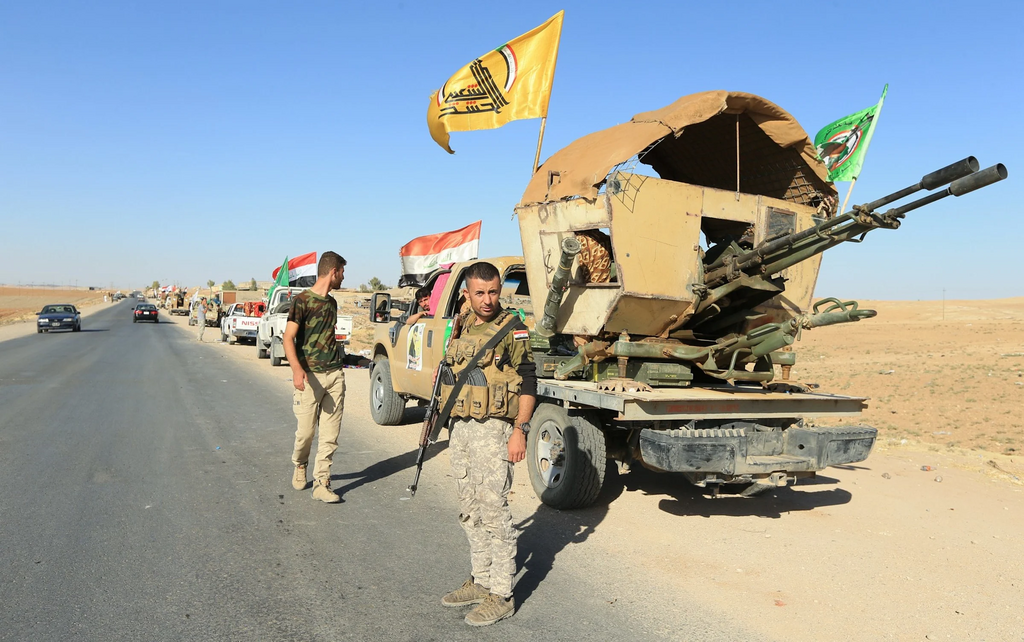
Iran-backed militia in Iraq
(Photo: Reuters)
Al-Assaf has also threatened action if restrictions on Iranian flights remain in place after Oct. 1, saying Iran-aligned factions could move to close access routes to countries participating in what he called a blockade of Iran. He said the “Islamic Resistance” would monitor Iraqi airspace, issue warnings to aircraft it deemed hostile and then seek to shoot them down.
Other opponents of the United States in Iraq argue that the military withdrawal does not end American influence over the country.
The Hezbollah-affiliated Lebanese newspaper Al-Akhbar highlighted that argument Wednesday under the headline “Iraq: The day of incomplete sovereignty,” quoting an analyst who claimed that Washington still exercised influence over Iraqi political, economic and security decision-making.
Sources close to the militias told the newspaper that their definition of sovereignty goes beyond the departure of American troops and includes ending all foreign military deployments in Iraq, including Turkey’s presence, as well as rejecting outside influence over the country’s economic decisions.