

U.S. President Donald Trump and his top aides are concerned that Israel’s recent strike on Hamas leaders in Qatar may have derailed hostage negotiations permanently, according to a Friday report by Politico.
The administration’s frustration with Prime Minister Benjamin Netanyahu has deepened since the attack on Tuesday, according to a person close to the president’s national security team and a U.S. official familiar with the matter, both speaking anonymously. Trump and his aides now question whether Netanyahu, who authorized the strike and has threatened further attacks, was intentionally undermining the talks, the source said. “Every time they’re making progress, it seems like he bombs someone,” the source added. “That’s why the president and his aides are so frustrated with Netanyahu.”
Gallery
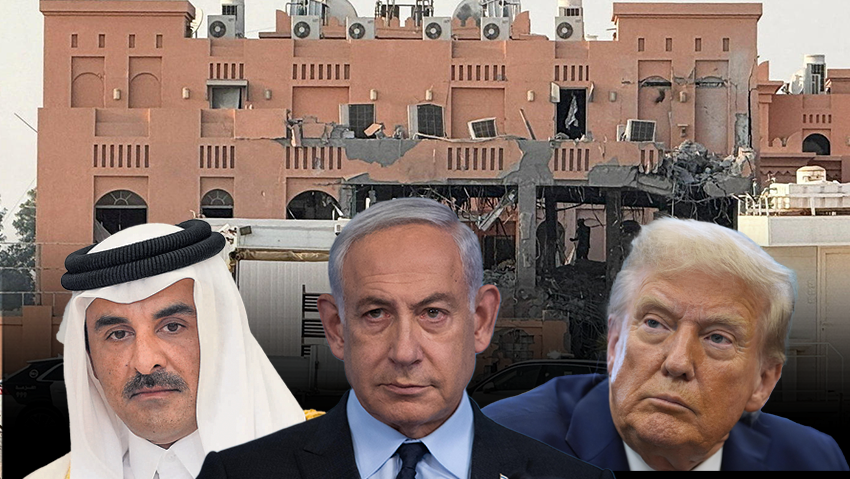
Sheikh Mohammed bin Abdulrahman bin Jassim Al-Thani, Benjamin Netanyahu, Donald Trump
(Photo: AP/Alex Brandon, Reuters/Ibraheem Abu Mustafa, Alex Kolomoisky)
Although the White House is pushing to resume ceasefire talks between Israel and Hamas, President Donald Trump and his top aides are concerned that Israel’s recent strike on Hamas leaders in Qatar may have derailed negotiations permanently.
Reports from the region suggest that Israel missed its intended targets but struck other Hamas members in Doha. Meanwhile, the White House has been working to reassure the Qataris, whose leaders described the Israeli strike as “barbaric.”
Qatar’s prime minister is scheduled to visit New York and Washington on Friday, expected to meet Trump, Vice President JD Vance, Secretary of State Marco Rubio, and Trump peace envoy Steve Witkoff to discuss the strike and the status of ceasefire talks.
Footage of the scene in Doha
(Video: Reuters)


The source close to Trump’s national security team said Rubio has also recently spoken with Qatari Premier Sheikh Mohammed bin Abdulrahman bin Jassim Al-Thani about prioritizing a plan to expand U.S.-Qatar defense cooperation. Rubio is scheduled to visit Israel next week, though it is unclear whether he will stop in Qatar.
At Tuesday’s briefing, White House spokesperson Karoline Leavitt highlighted Trump’s frustration over Israel’s operation in Qatar, a key U.S. partner and host of a major American military base. The administration emphasized that it learned about the strike from the U.S. military and that Israel provided minimal prior consultation.
Leavitt initially stated that U.S. officials had warned Qatar ahead of the strike. After a Qatari official publicly contradicted this, Trump amended her statement on social media, saying Israel had failed to give the White House adequate notice and that calls from special envoy Steve Witkoff to Qatari officials came “too late.”
The Israeli strike in Doha
A defense official, speaking anonymously, called the warning “wholly insufficient” and lacking “the specifics needed to adequately warn regional partners.”
Trump’s statement went further than Leavitt’s, directly blaming Netanyahu: “Unilaterally bombing inside Qatar, a Sovereign Nation and close Ally of the United States, that is working very hard and bravely taking risks with us to broker Peace, does not advance Israel or America’s goals.”
“That was the most publicly critical I’ve seen a Republican president be of an Israeli leader in quite some time,” said the source close to Trump’s national security team.
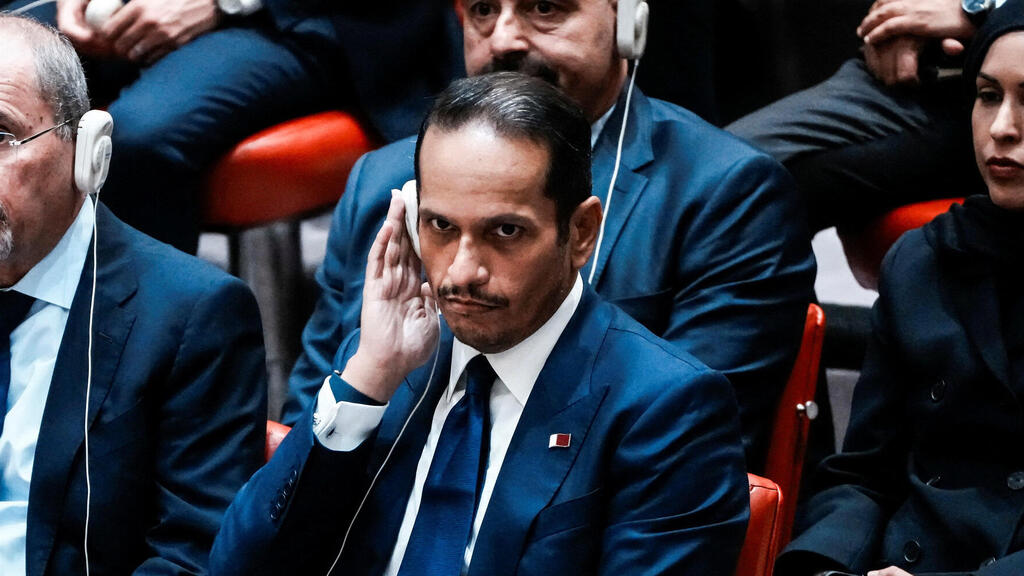
Sheikh Mohammed bin Abdulrahman bin Jassim Al-Thani
(Photo: Reuters/Eduardo Munoz)
Trump’s phone call with Netanyahu on Tuesday, the first of two since the strike, was described as “heated.” “The president was very displeased, and he made that known,” the source said.
During Trump’s Middle East trip in May, he opted not to visit Israel and expressed frustration with Netanyahu to leaders in Saudi Arabia, Qatar, and the UAE. According to the U.S. official, Trump’s “inability to control Netanyahu” is particularly troubling when the Israeli prime minister takes actions that directly affect U.S. relations in countries like Syria and Qatar, though there are no known plans to penalize Netanyahu.
The Israeli strike has angered many Arab nations that had relied on Qatar-led mediation to end fighting in Gaza, raising concerns about domestic stability in these countries. Netanyahu’s recent threats to strike any nation hosting Hamas representatives could further complicate U.S.-allied mediation efforts.
There is also uncertainty over whether Hamas will still engage in talks.
A Qatari official said, speaking anonymously, “The focus is on our national security and sovereignty, which were directly threatened by this attack. All other political considerations have taken a back seat. When one party chooses to bomb the mediator and one of the negotiating delegations, what kind of talks can be considered valid?”