

U.S. President Donald Trump warned that Iran could be destroyed “in one night,” as Tehran rejected a U.S.-backed ceasefire proposal and negotiations showed signs of breaking down.
“The entire country can be taken out in one night, and that night might be tomorrow night,” Trump said at a White House news conference, referring to a deadline he set for Iran to reopen the Strait of Hormuz.
US President Donald Trump
(Video: White House)


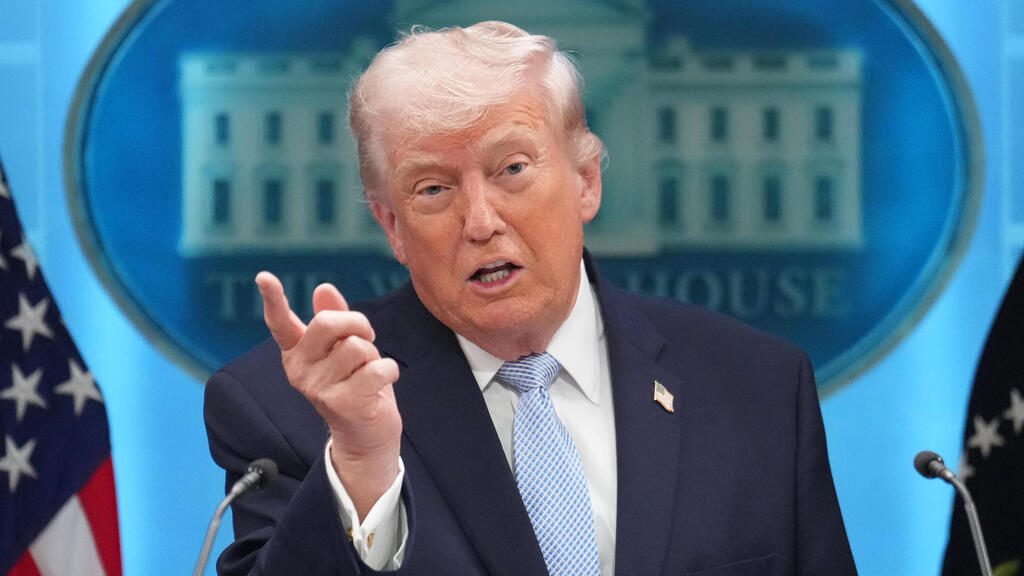
Trump said the Tuesday deadline is final, adding that Iran’s proposal was “significant” but “not good enough.”
“They made a proposal, and it’s a significant proposal. It’s a significant step. It’s not good enough,” he said. “It could end very quickly, the war, if they do what they have to do. They know that.”
He warned Tehran would face consequences. “I am very upset. They are going to pay a big price for that,” Trump said, adding that Iran still retains “some missiles and drones.”
“They got a lucky shot,” he added, without specifying the incident.
At the same time, Trump signaled mixed intentions about U.S. involvement.
“If I had my choice, I would take the oil,” he said, while adding that “unfortunately, the American people want to see us come home.”
“We could leave right now, but I want to finish it up,” he said, while also expressing hope the conflict would end soon. “Hopefully, it will be over with quickly.”
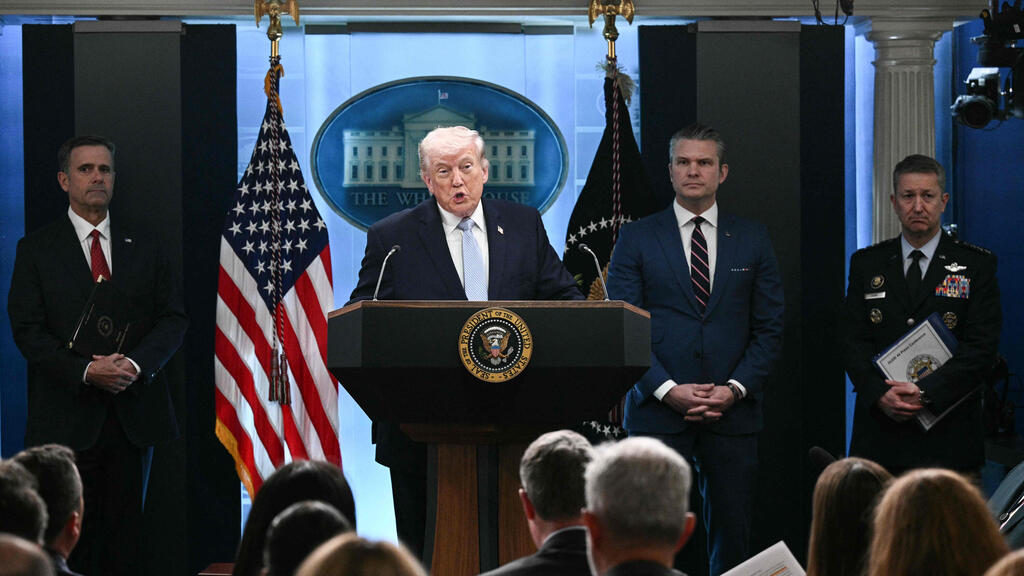
(Photo: Brendan Smialowski/ AFP)
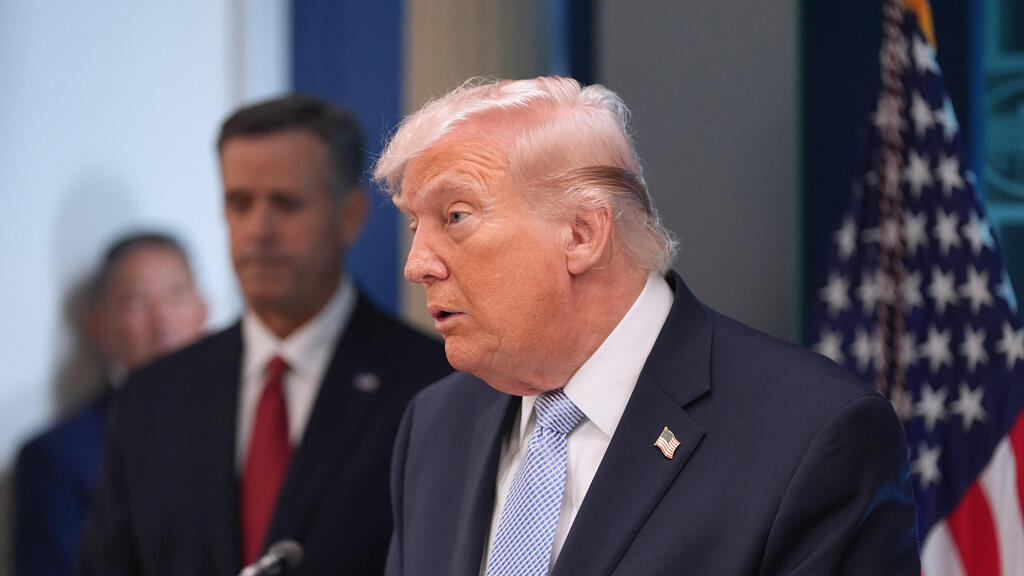
(Photo: Alex Brandon/ AP)
Trump opened his remarks by highlighting what he described as a major military success, referring to the rescue of two U.S. airmen whose F-15E fighter jet was shot down in Iran.
“This is a rescue that is very historic,” he said, calling it “one of the largest, most complex, most harrowing combat searches ever attempted by the military.”
“We were helped by a lot of people, a lot of great people,” he added, without elaborating. Israel reportedly played a role in the recovery effort.
“We got a little luck too,” Trump said, praising the rescued airmen.
Trump also said the United States had attempted to send weapons to Iranian protesters.
“They don’t have guns,” he said, arguing that fear of retaliation limits public opposition to the regime.
“We sent some guns, lot of guns. They were supposed to go to the people so they could fight back against these thugs,” he said.
“You know what happened? The people that they sent them to kept them, because they said, ‘What a beautiful gun, I think I’ll keep it.’ So I’m very upset with a certain group of people, and they’re going to pay a big price for that.”
The administration has previously said its goal is not regime change, but Trump suggested the situation has already shifted.
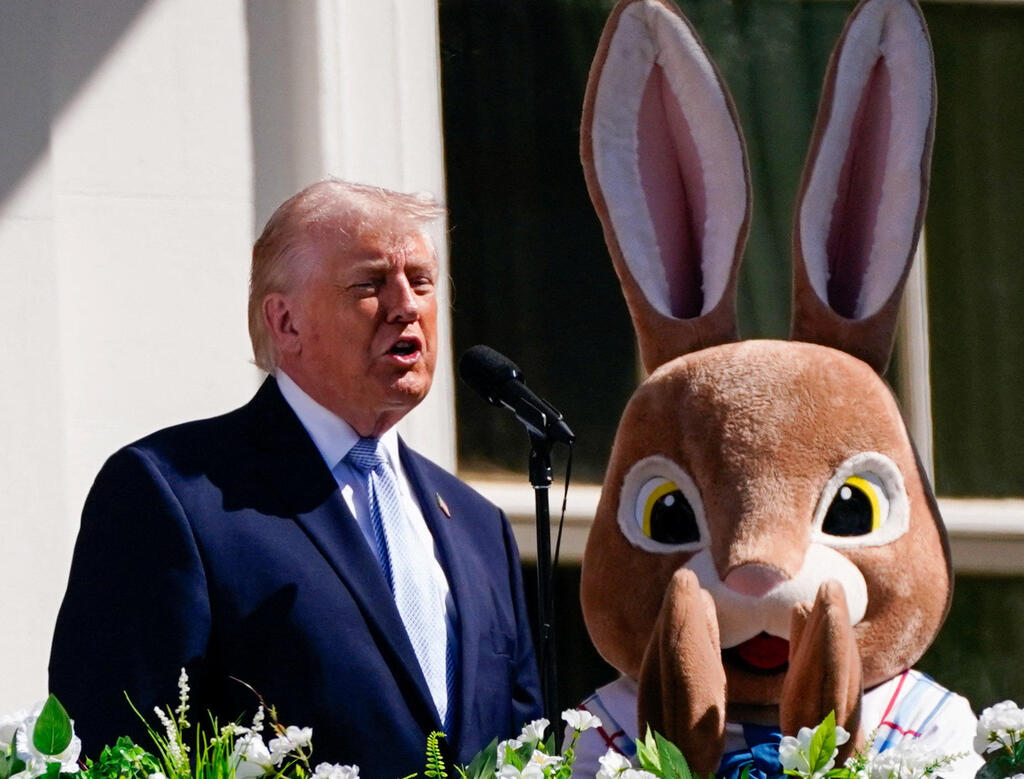
Trump with the Easter Bunny at a White House holiday event
(Photo: Nathan Howard/ Reuters)
“I call it regime change,” he said. “The first regime was taken out, the second regime was taken out. Now, the third group of people that we’re dealing with is not as radicalized, and we think they’re actually much smarter.”
Earlier Monday, Iran rejected a U.S.-backed proposal for a temporary ceasefire, instead demanding a permanent end to the war and broader regional changes, according to the state news agency IRNA.
After two weeks of deliberations, Tehran conveyed a formal response through Pakistan, a key mediator in the talks. The reply, outlined in 10 clauses, rejects a proposed 45-day ceasefire and calls for a full and lasting end to the conflict.
Iran’s response also includes demands to end “conflicts in the region,” a reference Israeli officials interpret as linking any deal to the war with Hezbollah in Lebanon. Tehran is also insisting on a new framework for safe passage through the Strait of Hormuz, along with sanctions relief and reconstruction commitments.
Messages reaching Israel indicate that the United States is eager to secure a temporary ceasefire, in line with its timeline for the war and following what it views as the completion of key military objectives.
Prime Minister Benjamin Netanyahu spoke overnight with Trump for about 30 minutes, as U.S. envoy Steve Witkoff continues to update Israel on contacts with Pakistani mediators and Iranian Foreign Minister Abbas Araghchi.
A senior Israeli official said shortly before Iran’s response was delivered that Washington’s main difficulty was the lack of a clear answer from Tehran.
“It could go either way,” the official said. “Our assessment is that it will end in an explosion. Mojtaba Khamenei has not provided a response, and the Revolutionary Guards are difficult to move away from their extremist ideology. They are not willing to open the Strait of Hormuz.”
Sources familiar with the matter said Khamenei’s son has been injured and has not responded quickly.
Israeli officials say Trump’s final decision remains unclear, and Israel is preparing for both scenarios: a temporary ceasefire followed by negotiations, or a significant escalation.
Another Israeli official said, “It’s heading toward an explosion,” attributing the assessment to Iranian conduct in the talks.
At the same time, Israeli officials assess that Iran is struggling to accurately target critical infrastructure inside Israel, including energy and national systems, and has so far failed to inflict significant damage on key assets.
Separately, The Associated Press reported that Iran and the United States received a draft proposal for a 45-day ceasefire, under which the Strait of Hormuz would be reopened and both sides would enter negotiations aimed at ending the war by agreement.
The proposal was put forward by Egyptian, Pakistani and Turkish mediators, who hope the temporary pause would allow time for broader talks toward a permanent ceasefire.
The draft was delivered overnight to Witkoff and Araghchi. A White House official confirmed to NBC that such a proposal had been presented but cautioned that it remains one of several options under discussion and has not yet been approved by the president.